TL;DR

Get furniture and decor delivered free with Prime
- Fast, free delivery on millions of items
- Prime Video, Amazon Music and more included
- Member-only deals all year
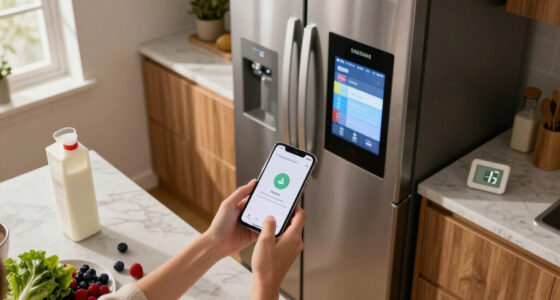
Apple’s $299 HomeView is designed as a fixed, shared display for household controls and information, rather than a tablet that moves around with one person. A Verge report argues that its always-available design may be its strongest feature, though the author has not yet tested the device and key details about its performance remain unverified.
Apple’s $299 HomeView is a smart display built to stay in one place and serve as a shared household interface, and a Verge report argues that this simplicity may be its strongest feature, as explored in a hands-on look at HomeView. The device brings home controls and family information to an always-powered, always-available screen, rather than asking household members to find a personal phone or tablet.
The report’s author says HomeView is not an ideal smart-home dashboard for every purpose, but could fit the needs of Apple-centric households that want a common place to check a calendar, manage smart-home devices or access music. The author’s view is based on an initial impression, not a completed hands-on test. The central argument is that a device’s fixed location and shared access may matter more than offering features unavailable elsewhere.
HomeView is designed to be wall-mounted or placed in the home, with no detachable screen or battery. The report contrasts that approach with using an iPad as a communal controller: its author says an earlier iPad-based setup for smart-home controls, a family calendar and music did not work well. The report also says HomeView can act as an Apple Home hub and offers user profiles, while household members can control devices such as smart lights.
The device’s other proposed uses include household video calls and access to personal information through Siri AI. The report says the AI features require an AI-capable iPhone and are intended to draw on information such as messages and email for as many as six household members. Those capabilities, and how reliably they work in everyday use, have not been independently tested in the report.
The case for HomeView is less about adding new tasks than making common ones easier to reach. A permanent shared screen could let someone check a family schedule or adjust a thermostat without locating the right phone, unlocking it and opening an app. That may be useful in homes where personal devices are often elsewhere, out of battery or deliberately kept off the dinner table.
The design also addresses a practical challenge with household technology: a device intended for everyone needs to be available to everyone. The Verge author says iPads are not well suited to multiuser use when they remain tied to one person’s iCloud account, while HomeView is designed with profiles. Whether that makes it genuinely easier for families will depend on how switching, privacy and shared controls work in practice.
HomeView enters a category with established products from Amazon and Google, including Echo Show and Nest Hub displays. The report notes that households already buy shared screens such as those products and Skylight Calendars, suggesting an audience for the format. Apple’s approach may appeal to customers who want a shared interface within Apple Home, but the report’s argument does not establish that it will outperform competing devices or replace tablets.
As an affiliate, we earn on qualifying purchases.
Apple’s Home-Focused Smart Display
HomeView is part of what the report describes as Apple’s largest smart-home push yet. The product is positioned not as a portable tablet, but as a communal device for a fixed spot in the home. That distinction shapes the comparison: a phone or tablet can do many of the same things, but usually travels with its owner and may not be ready for another household member to use.
Apple executives connected the product’s timing to developments in Siri AI. Kaiann Drance, Apple’s vice president of product marketing for home, said the combination of Siri AI’s personal context features and a device designed for home use made a new experience possible. Lilian Rincon, Apple’s vice president of product marketing for AI, pointed to more conversational interaction, including asking Siri to change a thermostat’s temperature in natural language.
The report’s author also sees a possible role in family communication, describing attempts to reach a daughter whose phone is dead or silent. Apple’s presentation suggested that calls could ring on HomeView when she is home. The article compares this with the drop-in function on Echo devices, but actual call handling and household use still need testing.
“With the magic of Siri AI, it comes together in a way that we haven’t been able to deliver before.”
— Kaiann Drance, Apple vice president of product marketing for home, as quoted by The Verge
Everyday Use Still Needs Testing
The Verge author explicitly says HomeView still needs to be tested. Its initial appeal rests on the product’s described design and Apple’s presentation, not extended use in a household. It remains unclear how well the multiuser profiles, smart-home controls, video calling and Siri AI features will work day to day, including whether all household members can use them as easily as Apple suggests.
The source does not provide independent measurements of performance, privacy safeguards, software support duration or how HomeView compares with competing displays. It also does not establish whether personal-context features will consistently find the right information, or how users will manage access to messages and email across household profiles. The report’s claim that Siri asks fewer follow-up questions is based on demonstrations and the author’s experience with Siri AI on iPhone, not a full HomeView evaluation.
Hands-On Reviews Will Test the Pitch
The next useful evidence will come from hands-on testing of HomeView in real homes. Reviews will need to examine whether its fixed placement makes shared tasks faster, whether profiles and controls work for different household members, and how the device performs as an Apple Home hub. Testing should also clarify how calls, calendars and Siri AI behave outside a product demonstration.
Until then, the strongest conclusion supported by the report is a design argument: HomeView may be valuable because it stays in the same place and is meant for shared use. Its practical value will depend on reliable software and useful privacy controls, as well as whether families prefer a dedicated screen over their existing phones, tablets or smart displays.
Key Questions
What is Apple HomeView?
HomeView is Apple’s $299 smart display, designed as a fixed, shared interface for household information and smart-home controls.
Why does the report say simplicity may be its best feature?
The Verge report argues that HomeView is always powered and kept in one place, making it easier for household members to approach than a phone or tablet that belongs to one person and may not be nearby.
Can HomeView replace an iPad?
Not necessarily. The report says HomeView may suit shared household tasks better, but it has not established that the display can replace an iPad for general use. Its author says hands-on testing is still needed.
What can Siri AI do on HomeView?
Apple says Siri AI can handle natural-language requests, such as changing a thermostat setting, and offer personal information. The report says the AI features require an AI-capable iPhone; their real-world performance remains to be tested.
What is still unknown about HomeView?
The report does not independently verify how well HomeView’s profiles, smart-home hub, video calls or personal-context features work in everyday use. Privacy controls and long-term software support also remain unanswered in the supplied source.
Source: rss
Halloween Picks
halloween
As an affiliate, we earn on qualifying purchases.