To zone your outdoor room for dine, lounge, and play, start by evaluating your space and identifying key areas needing attention. Use natural and hardscaping features like pathways, hedges, or borders to define each zone clearly. Incorporate different materials, textures, and lighting to distinguish purposes and create a seamless flow. Balancing privacy and accessibility guarantees everything feels inviting and functional. Keep exploring ways to optimize each zone for comfort and style as you continue adjusting your outdoor space.
Key Takeaways
- Define distinct zones using natural boundaries like shrubs, trellises, or pathways to separate dining, lounging, and play areas.
- Contrast materials and textures, such as paving for dining and grass for play, to visually differentiate each zone.
- Incorporate lighting and decorative elements to enhance boundaries and create inviting transitions between zones.
- Use furniture and decor styles suited for each activity, like dining tables, comfortable lounge seating, and play equipment.
- Plan for functional storage solutions and natural elements to keep each zone organized and visually cohesive.
Assessing Your Outdoor Space and Identifying Needs

Before designing your outdoor room, you need to evaluate your space to understand what it can offer and what you want to achieve. Walk through your yard and note existing features like trees, pathways, or structures. Think about how much space you need for different activities, such as lounging or gardening. Consider incorporating garden art to add personality and style, but also plan for outdoor storage to keep clutter out of sight. Identify areas that need improvement or transformation, like overgrown sections or bare patches. This assessment helps you determine the best layout and features for your outdoor space. Additionally, understanding your space’s cookie categories and their purposes can help you manage privacy and functionality effectively. By understanding your space’s potential and your needs, you’ll create a functional, inviting environment that reflects your lifestyle.
Establishing a Dining Area for Entertaining

Creating a dedicated dining area in your outdoor room transforms it into the perfect space for entertaining guests. To define this zone, choose a sturdy table and chairs suited for outdoor use. Incorporate garden art nearby to add visual interest and personality. Use outdoor storage solutions to keep essentials like plates, utensils, and tablecloths organized and within reach. Consider placing a sideboard or storage bench to minimize clutter. Use the table below to help plan your setup:
| Element | Purpose |
|---|---|
| Garden Art | Enhances ambiance and style |
| Outdoor Storage | Keeps dining essentials organized |
| Dining Furniture | Provides comfort and functionality |
This setup creates an inviting, functional dining area perfect for memorable gatherings. Self Watering Plant Pots can also be integrated nearby to add greenery with minimal maintenance, creating a more vibrant and inviting atmosphere.
Creating a Comfortable Lounge Zone for Relaxation

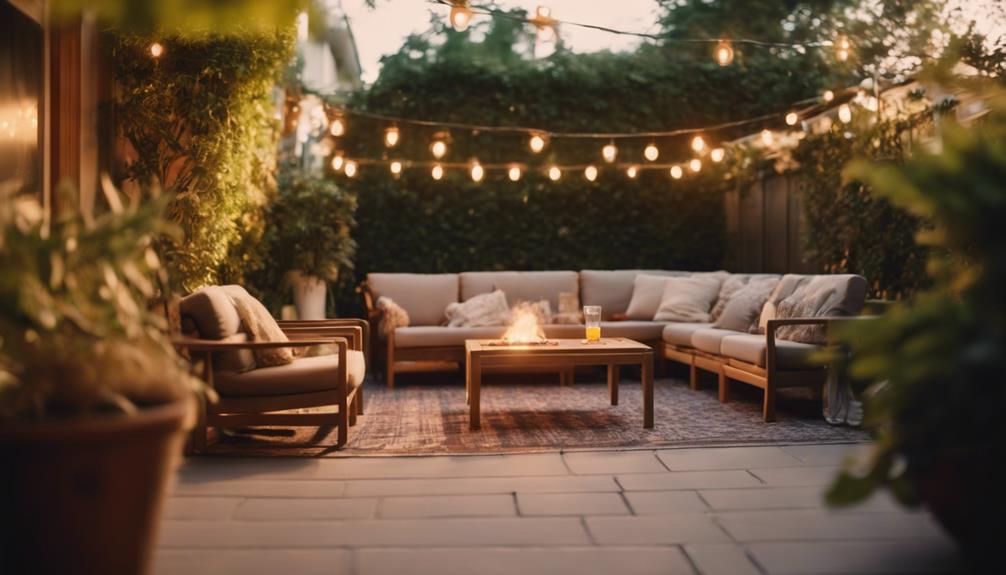
To turn your outdoor space into a relaxing retreat, focus on designing a comfortable lounge zone that invites you to unwind. Select cozy seating like cushioned sofas or lounge chairs, and add weatherproof cushions for extra comfort. Incorporate outdoor cooking areas nearby to make it easy to prepare snacks or drinks without leaving the space. Enhance the ambiance with garden art—sculptures, decorative planters, or hanging lanterns—that reflect your style and add visual interest. Use soft lighting, such as string lights or lanterns, to create a warm, inviting atmosphere in the evenings. Keep the area clutter-free with storage solutions, so your lounge stays relaxing and welcoming. Incorporate elements like rustic decor and vintage accessories to enhance the outdoor ambiance and give it a charming farmhouse feel. This combination of comfort, functionality, and aesthetic details helps transform your outdoor zone into a perfect relaxation spot.
Designing a Play Section for Kids and Activities
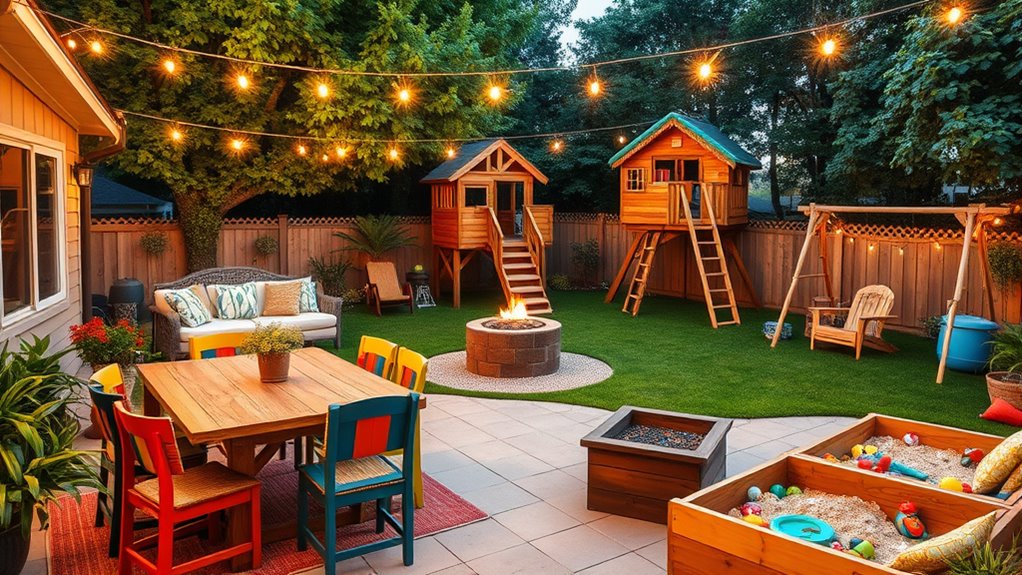
When designing a play area, you want to choose safe, durable equipment that keeps kids protected. Creating designated zones for different activities helps keep the space organized and fun. Adding natural elements like trees and rocks can enhance play and make the area more inviting. Considering size and comfort factors ensures the play area is accessible and enjoyable for children of various ages.
Safe Play Equipment Choices
Have you considered how essential it is to choose safe, durable play equipment for your outdoor space? Prioritizing children’s safety guarantees your kids can play confidently without unnecessary risks. Look for equipment made from sturdy, weather-resistant materials that withstand frequent use and the elements. Check for smooth edges, secure fastenings, and non-toxic finishes to prevent injuries and exposure to harmful substances. Always verify that the equipment meets safety standards and has appropriate safety surfacing underneath. Investing in high-quality, durable gear not only enhances safety but also ensures long-term enjoyment. Remember, well-chosen, reliable play equipment creates a secure environment where children can explore, develop, and have fun without worry. Your thoughtful choices make your outdoor zone both fun and safe.
Designated Activity Zones
Creating designated activity zones in your outdoor space helps organize play and encourages varied activities. For a kids’ play area, consider adding colorful garden art to make the space inviting and stimulating. Incorporate outdoor storage solutions nearby to keep toys, sports equipment, and art supplies neatly contained, reducing clutter and safety hazards. Use durable surfaces like rubber mulch or grass for safety and easy maintenance. Clearly define the play zone with borders or contrasting ground materials, making it easy for children to know where their space begins and ends. This setup not only fosters active play but also keeps your yard tidy. Proper raw food preparation methods can also influence outdoor activities by promoting healthy eating habits among family members. Thoughtful zoning ensures your outdoor room remains functional, appealing, and safe for all ages.
Incorporate Natural Elements
Incorporating natural elements into your outdoor play area enhances its beauty and creates a more engaging environment for kids. You can add garden herbs like basil or mint to provide sensory experiences and encourage exploration. Incorporate outdoor sculptures to add artistic interest and inspire imaginative play. Using natural materials like logs, stones, or driftwood creates a rustic, inviting space. Consider planting a small flower or vegetable garden to teach kids about nature and sustainability. Adding elements such as a sandbox with natural borders or a teepee made from branches can also foster creativity. These touches blend functionality with aesthetics, making your play zone more vibrant and inviting. Natural elements not only beautify the space but also stimulate kids’ senses and curiosity, especially when integrated with diverse plant options that support a variety of sensory and educational activities.
Using Landscaping and Hardscaping to Define Zones

You can create clear zones in your outdoor space by using natural boundaries like shrubs, trees, or flower beds to mark different areas. Adding material and texture contrasts, such as smooth paving next to rough stone, helps visually separate spaces. These techniques make your yard feel organized and inviting without the need for fences or barriers. Incorporating visual cues like lighting or decorative elements further enhances the distinction between zones.
Natural Boundaries and Edges
Have you ever noticed how natural boundaries like trees, shrubs, or changes in terrain can subtly shape the flow of an outdoor space? These features create clear edge definition, helping you distinguish different zones without fencing. Using landscaping and hardscaping, you can enhance these natural boundaries to define your outdoor areas effectively. Incorporating hardscape features like patios, walkways, or retaining walls can further emphasize these boundaries and create a cohesive outdoor design.
Material and Texture Contrast
By contrasting different materials and textures, you can clearly define outdoor zones and add visual interest. Using material contrast, such as combining smooth paving with rough stone or soft grass with hard concrete, creates distinct boundaries that guide your eye and function. Texture variation, like pairing sleek wood decking with textured gravel or lush planting beds, enhances the sense of separation and depth. These contrasts make each zone—dining, lounging, or playing—stand out while maintaining harmony within your outdoor space. Incorporating local landscape features, such as native plants and regional stone, further grounds your design in the surrounding environment. Strategic use of landscaping and hardscaping elements emphasizes the purpose of each area and creates a dynamic environment. Ultimately, thoughtful material and texture contrast help you design a cohesive, inviting outdoor room that feels intentional and well organized.
Incorporating Furniture and Decor to Differentiate Areas

Incorporating furniture and decor is essential for visually defining different zones in your outdoor room. It helps create a sense of purpose and separation without walls. To enhance each area, consider using distinct furniture styles, like sleek dining tables for eating zones or cozy lounge chairs for relaxation. Add outdoor art and garden sculptures to serve as focal points and give each space personality. You might also include colorful cushions or rugs to set a mood, or planters to subtly mark boundaries. These elements make each zone inviting and functional while maintaining harmony across your outdoor room. By carefully choosing and placing decor, you guide visitors naturally through your space, emphasizing its different uses effortlessly.
Enhancing Privacy and Intimacy in Each Zone

To create a sense of privacy and intimacy in each outdoor zone, you need to thoughtfully use natural and structural elements that shield and enclose the space. Privacy barriers like tall hedges, trellises, or fencing define intimacy zones and block unwanted views. Incorporate screens or lattice panels to create secluded corners for lounging or dining. Strategically placing potted plants or vertical gardens also adds visual separation without closing off the area completely. These elements not only enhance privacy but also foster a cozy atmosphere, encouraging relaxation and conversation. Additionally, integrating body awareness techniques can help you better understand how different elements influence the sensation of enclosure and comfort in your outdoor space. By carefully designing your privacy barriers, you can tailor each zone’s level of intimacy, making your outdoor space feel more inviting and personalized. This approach ensures each zone serves its purpose while maintaining a comfortable sense of enclosure.
Ensuring Smooth Transitions Between Spaces

You want your outdoor spaces to flow seamlessly, so consider how pathways and flooring create natural links between zones. Choosing complementary materials and designs helps avoid jarring shifts. Using visual or functional boundaries can also define areas without disrupting the overall harmony.
Pathways and Flooring Choices
Smooth progressions between outdoor spaces hinge on choosing the right pathways and flooring. You want surfaces that guide visitors naturally while complementing your overall design. Consider incorporating decorative patterns to add visual interest and define each zone subtly. Color coordination is key; choose hues that blend seamlessly or create striking contrasts for emphasis. When selecting materials, think about durability and maintenance—stone, brick, or stamped concrete are popular choices. You can also mix textures to enhance tactile variety. For example:
- Use patterned pavers to add decorative flair.
- Match flooring colors to outdoor furniture for cohesion.
- Incorporate gravel or mulch for informal, budget-friendly zones.
- Opt for contrasting materials to delineate spaces clearly.
Balancing style and function ensures your outdoor room flows effortlessly from one area to the next.
Visual and Functional Boundaries
Creating clear visual and functional boundaries is essential for guiding movement and defining different zones within your outdoor room. These boundaries help prevent chaos, making each space purposeful. Use garden art, like sculptures or decorative planters, to serve as focal points that delineate areas. Incorporate outdoor storage solutions to keep clutter out of sight, creating a seamless flow. Consider the following layout:
| Zone Type | Boundary Feature | Purpose |
|---|---|---|
| Dining | Low wall or hedge | Defines dining space |
| Lounge | Garden art or planters | Separates lounge from play |
| Play | Fencing or screen | Keeps play area contained |
| Transition | Pathways or rugs | Guides movement between zones |
| Storage | Built-in cabinets | Maintains organization |
These strategies guarantee smooth transitions, making your outdoor room functional and inviting.
Lighting Strategies for Functionality and Ambiance

Effective lighting is essential for transforming your outdoor room into a functional and inviting space. It sets the mood and guarantees safety during evening use. Consider using solar powered fixtures for eco-friendly, hassle-free illumination. They’re easy to install and require no wiring. String lighting options add charm and atmosphere, perfect for dining or relaxing areas. To optimize your lighting, think about layering different types:
- Solar lanterns for subtle ambient glow
- String lights for visual interest and warmth
- Spotlights to highlight key features
- Path lights to guide movement and enhance safety
Mixing these options creates a balanced environment suited for lounging, dining, or play. Keep in mind that smart placement and choosing the right brightness levels will help you achieve both functionality and ambiance effortlessly.
Maintaining Flexibility for Changing Uses

To guarantee your outdoor room adapts easily to different activities, it’s important to incorporate versatile design elements that can be reconfigured as needed. Use moveable furniture, adjustable shading, and modular zones to accommodate seasonal adjustments, like changing temperatures or weather. Incorporate natural barriers or plantings that can be easily added or removed to create privacy or define spaces. Consider wildlife considerations by choosing features that discourage unwanted visitors, such as bird feeders that attract local species without encouraging pests. Keep the layout open enough to switch between lounging, dining, or play areas without major overhaul. Flexibility ensures your outdoor space remains functional and inviting year-round, regardless of changing needs or environmental conditions.
Frequently Asked Questions
How Can I Incorporate Sustainable Materials Into My Outdoor Zones?
To incorporate sustainable materials into your outdoor zones, opt for recycled furnishings like tables and chairs made from reclaimed wood or recycled metal. Use natural fabrics such as organic cotton or hemp for cushions and covers, which are eco-friendly and durable. These choices reduce environmental impact, add stylish touches, and create a cozy, sustainable space where you can relax, dine, or entertain confidently knowing you’re supporting eco-conscious practices.
What Are Some Budget-Friendly Ways to Define Outdoor Spaces?
Imagine you’re in a vintage film scene—then get practical. You can define outdoor spaces cheaply with DIY decor like string lights, painted rocks, or plant pots. Repurposed furniture, such as old pallets turned into a sofa or crates as tables, adds charm without breaking the bank. These ideas help create clear zones for dining, lounging, or playing, making your outdoor area inviting and functional without a hefty price tag.
How Do I Maintain Consistency in Design Across Different Zones?
To maintain design consistency across your outdoor zones, focus on color harmony and furniture styles. Choose a cohesive color palette that flows seamlessly from one area to another, and select furniture styles that complement each other, whether modern, rustic, or classic. Keep materials and finishes consistent, and add similar decorative elements like cushions or lighting. This approach unifies your outdoor spaces, making them feel like one well-designed area.
Can I Add Heating or Cooling Solutions to Extend Outdoor Usability?
You can definitely add outdoor heating and cooling solutions to extend usability. Some outdoor heating options, like infrared heaters or fire pits, provide cozy warmth without clutter. For cooling, outdoor fans or misters keep the space comfortable during hot days. While some worry about installation or weather durability, choosing weatherproof, energy-efficient options guarantees your outdoor room stays inviting year-round, no matter the season.
What Safety Considerations Should I Keep in Mind for Each Zone?
You should prioritize fire pit safety by keeping it away from flammable materials and supervising children around it. Child-proof your outdoor zones by installing secure barriers and using safety covers for electrical outlets. Guarantee proper lighting in all zones to prevent trips and falls, and choose weather-resistant furniture with smooth edges. Regularly check all heating and cooling devices for safety compliance, and educate everyone on safe outdoor practices to prevent accidents.
Conclusion
As you blend your outdoor zones seamlessly, you’ll find that each space naturally supports your lifestyle—whether dining, lounging, or playing. When you create these areas thoughtfully, it’s no surprise how smoothly they flow into one another, almost as if they were meant to be together. Ultimately, your outdoor room becomes a reflection of your needs and personality, proving that good design often feels effortless when the right elements come together at just the right moment.