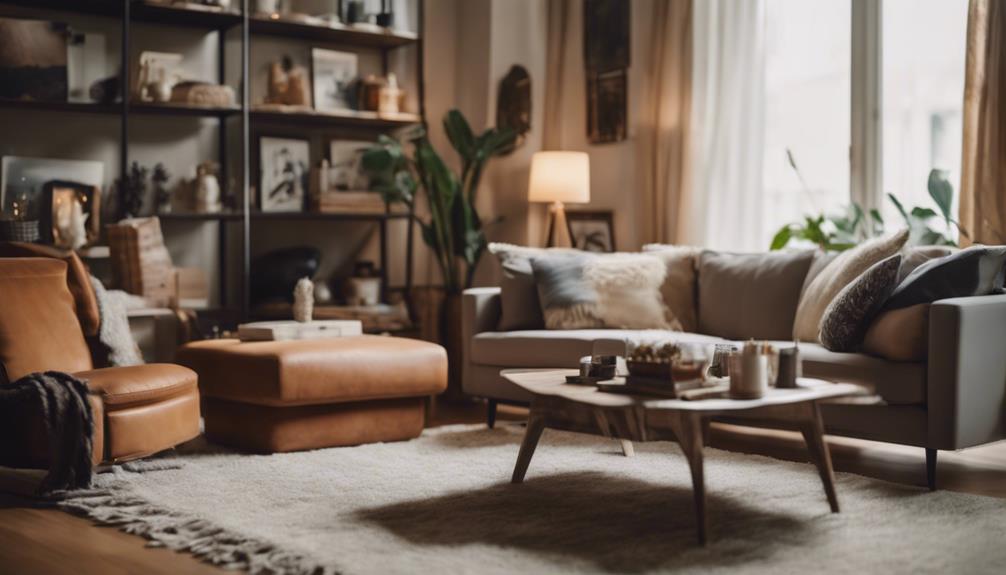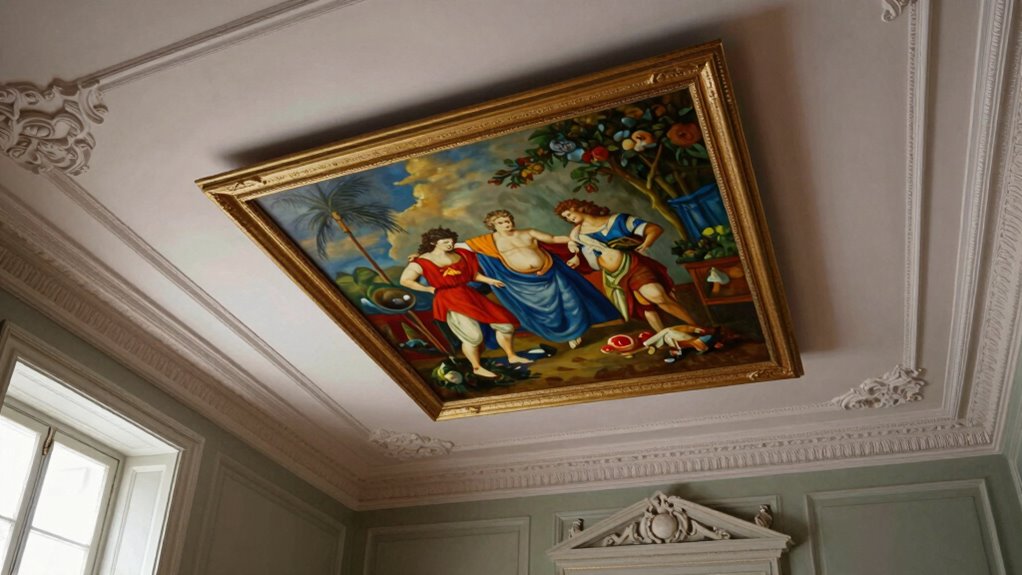
Placing artwork too high on the wall is a common mistake that makes ceilings feel lower than they really are. When you hang art above eye level, your space can seem cramped and less open. To avoid this, position artwork at around 57-60 inches from the floor, aligning it with your eye level. Keeping this tip in mind helps create a more balanced, airy feel. If you want to make your ceilings seem taller, there’s more to discover about clever art placement techniques.

Get furniture and decor delivered free — and shop member deals
- Fast, free delivery on millions of items
- Access to Prime Big Deal Days deals on October 6–7
- Prime Video, Amazon Music and more included
Key Takeaways
- Hanging artwork too high on the wall can elevate eye level and make ceilings appear lower.
- Placing artwork near the top of walls draws attention upward, reducing the sense of height.
- Using small, isolated pieces instead of larger or grouped artwork diminishes space openness.
- Improper lighting that casts shadows upward can accentuate ceiling height, making it seem lower.
- Framing choices that create visual boundaries or heaviness can close in space, lowering perceived ceiling height.
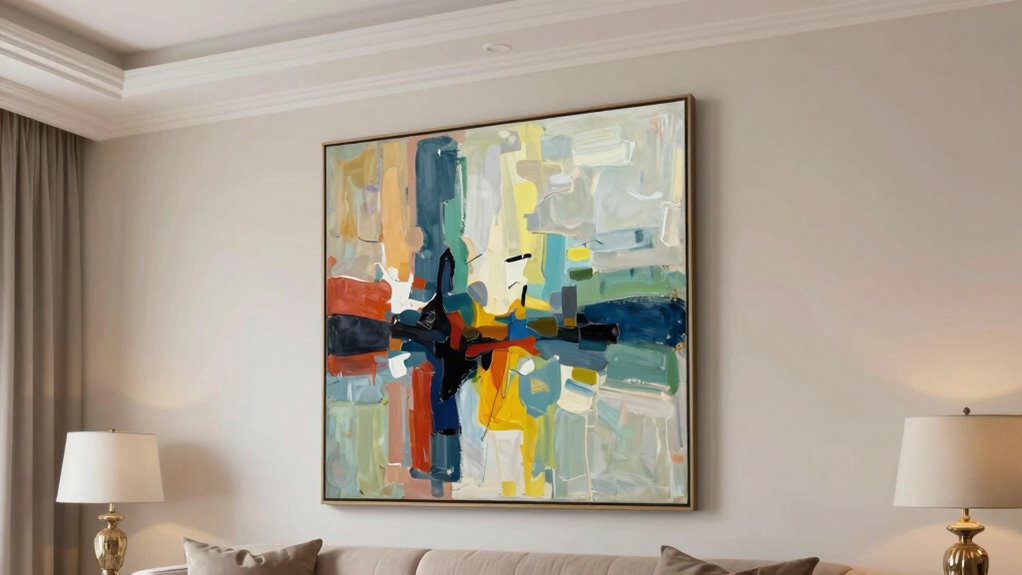
When it comes to decorating your space, placing artwork can seem straightforward, but a simple mistake in art placement can considerably diminish its impact. One common error is positioning artwork too high on the wall, which can make your ceilings feel lower than they are. Instead of creating a sense of openness, this placement tricks the eye into perceiving a cramped, oppressive space. To avoid this, you want to consider the relationship between your artwork, your ceiling height, and the overall room proportions. Proper art placement can enhance your space’s harmony and make it feel larger and more inviting. A key aspect to focus on is gallery lighting. Proper lighting not only enhances the artwork itself but also influences how the space feels. When you install gallery lighting, aim for a soft, even glow that highlights the piece without casting harsh shadows or drawing attention to the ceiling. Good lighting can elevate the artwork, making it feel integrated into the room rather than floating awkwardly or emphasizing the ceiling height negatively. Avoid overly bright or directional lighting that directs the eye upward, as this can inadvertently accentuate the ceiling’s height and make it seem lower. Another overlooked detail is your choice of frame styles. The frames you select have a significant impact on how your artwork interacts with the space. Thick, ornate frames tend to draw the eye inward and downward, anchoring the art piece firmly on the wall. Conversely, slim, minimalist frames create a feeling of continuity and openness, helping the artwork blend into the surroundings and making the ceiling seem taller. When you opt for frames that are too bulky or elaborate, you risk creating visual clutter that emphasizes the boundaries of the wall and, by extension, the ceiling’s limitations. Placement height is crucial, too. The ideal position for your art is typically at eye level, which varies depending on the room’s function and ceiling height. For most rooms, this means hanging artwork so that its center is approximately 57-60 inches from the floor. This positioning prevents the eye from being directed upward, which can make ceilings appear lower. If you’re working with very high ceilings, consider grouping multiple pieces or using larger artwork to fill the wall thoughtfully—this prevents the ceiling from feeling oppressive. Additionally, visual balance can be achieved by mixing different sizes and shapes of artwork, which helps distract from any perceived ceiling limitations. Incorporating visual hierarchy in your display can further guide the viewer’s eye and create a more dynamic and harmonious space. Paying attention to the room proportions and how artwork interacts with the overall space can significantly contribute to a more open feel. To further enhance this effect, you might also experiment with color schemes and wall finishes that complement your artwork. In the end, it’s about creating a balanced visual flow. Combining well-chosen gallery lighting with the right frame styles and proper placement height helps your artwork serve as a visual anchor, rather than a distraction that emphasizes a lower ceiling. When you pay attention to these details, your space will feel more open, inviting, and proportionate.
art hanging hardware for gallery walls
As an affiliate, we earn on qualifying purchases.
As an affiliate, we earn on qualifying purchases.
Frequently Asked Questions
How Can I Visually Raise My Ceiling Without Renovations?
To visually raise your ceiling without renovations, use color contrast and vertical lines strategically. Paint the ceiling a lighter shade to create a sense of height. Incorporate vertical lines, like tall, slim art pieces or striped wallpaper, to draw your eyes upward. These elements trick your mind into perceiving a higher ceiling, making your space feel more open and airy without the need for structural changes.
Are There Specific Colors That Make Ceilings Appear Higher?
They say “a picture is worth a thousand words,” and choosing the right colors can make a big difference. Light shades like soft whites, pale blues, and gentle pastels create ceiling illusions that make ceilings feel higher. Color psychology plays a role here—cool, light colors reflect more light, enhancing space. Use these hues strategically to lift your room visually, giving an airy, open feel without any renovations.
Does Furniture Placement Affect Ceiling Perception?
Yes, furniture placement profoundly affects ceiling perception through ceiling illusions. Proper furniture alignment can draw the eye upward, making ceilings seem higher. Avoid bulky or low-hanging pieces near walls, as they can create a sense of confinement. Instead, opt for taller furniture and arrange pieces to guide your gaze upward. This strategic furniture placement enhances space, making your ceilings feel more open and airy, improving the overall room feel.
Can Lighting Tricks Influence Ceiling Height Perception?
Lighting tricks can markedly influence how you perceive ceiling height, almost like illusions in a magic show. Lighting illusions, such as upward-facing lights or well-placed spotlights, draw your eyes upward, making ceilings seem higher. Additionally, color perception plays a role; lighter, brighter lighting enhances the sense of space, while darker lighting can make ceilings feel lower. Use strategic lighting and color choices to create an airy, open atmosphere.
What Are Common Decorating Mistakes That Lower Ceilings?
You lower ceilings with heavy ceiling textures and busy wall patterns that draw your eye downward. Avoid textured finishes like popcorn or thick coatings, which can make the space feel cramped. Instead, choose smooth or subtle textures. Also, steer clear of large, bold wall patterns; opt for light, simple designs that keep your eyes moving upward. These choices help create an airy, open atmosphere and make your ceiling appear higher.
Conclusion
So, next time you’re choosing art for your ceilings, remember: placement is everything. Don’t let that one mistake cast a shadow over your space’s true height. Think of your ceilings as your canvas—where the right art can lift, inspire, and elevate the entire room. Avoid the trap of misplaced art, and watch how your ceiling seems to stretch endlessly, inviting endless possibilities. After all, isn’t a room’s true height measured by the eye of its art?
Fall Picks
fall essentials
As an affiliate, we earn on qualifying purchases.