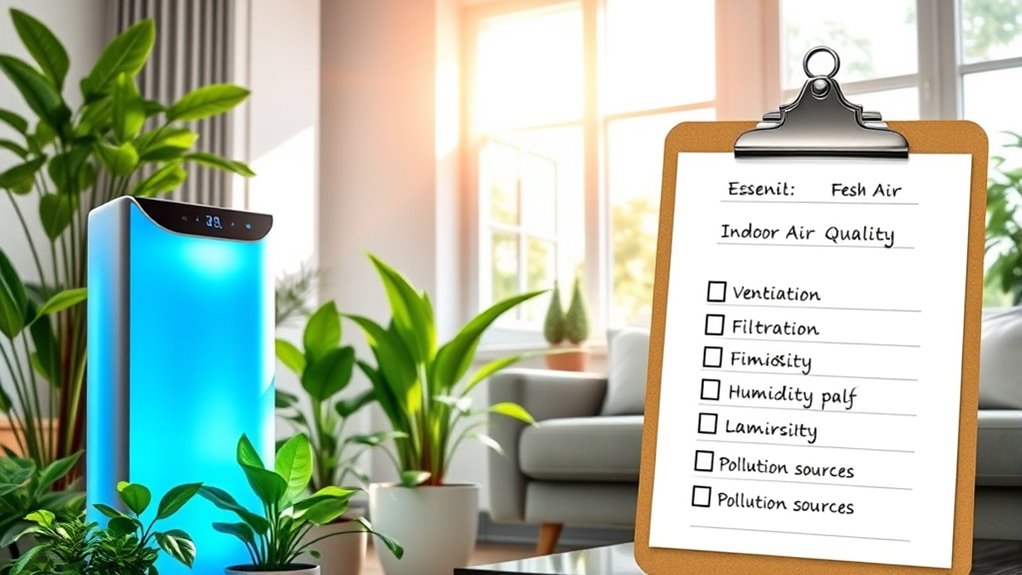

To guarantee good indoor air quality, you should assess air circulation and ventilation, monitor humidity levels, and control allergens like dust mites and pet dander. Regularly change filters, use effective purification devices, and keep an eye out for signs of pollution like odors or dust buildup. Address leaks and mold promptly, and incorporate natural ways to filter toxins. Staying proactive with these steps helps create a healthier environment—discover more tips to improve your indoor air quality.
Key Takeaways
- Recognize signs of poor air quality, such as odors, dust, and allergy symptoms, and identify common causes like mold, pet dander, or chemicals.
- Assess and optimize air circulation, ventilation, and filtration systems, including proper vent placement and regular filter maintenance.
- Monitor and control indoor humidity (30-50%) to prevent mold growth and manage allergens like dust mites.
- Identify indoor pollutants like VOCs, mold, and dust, and implement cleaning and filtration strategies to reduce exposure.
- Maintain HVAC systems, use air purifiers with HEPA and activated carbon filters, and incorporate proactive prevention methods for healthy indoor air.

COSMO COS-63175S 30 in. Vista Collection 380 CFM Ducted Wall Mount Range Hood, Touch Controls, LED Lights, Stainless Steel
EFFICIENT AIRFLOW: 380 CFM removes smells and odors with ease for a clean kitchen. Ducted range hood vents...
As an affiliate, we earn on qualifying purchases.
Assessing Air Circulation and Ventilation
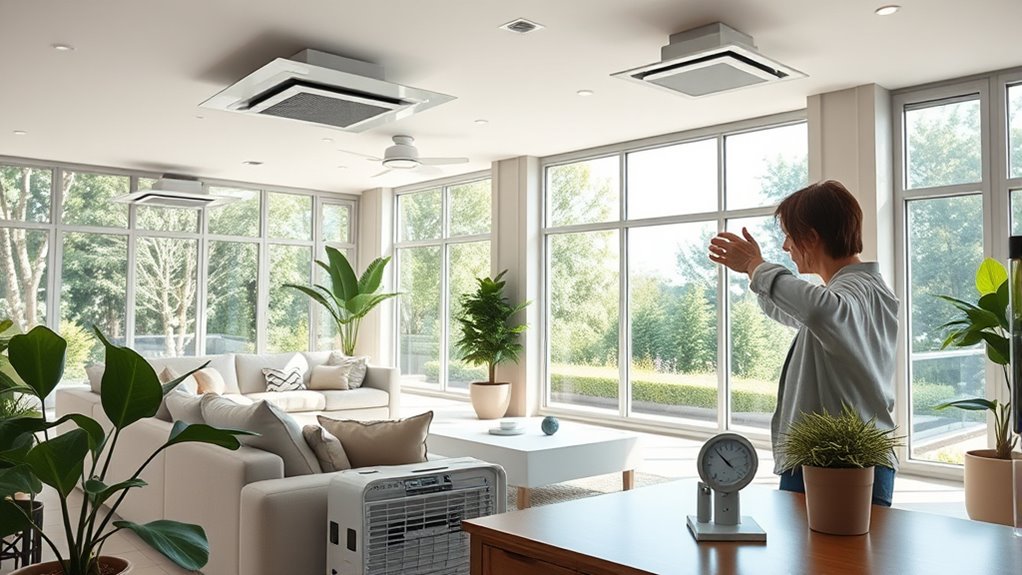
To guarantee good indoor air quality, you need to evaluate how well your space circulates and vents air. Start by examining airflow patterns throughout each room. Are the air currents smooth and consistent, or do you notice stagnant zones? Proper airflow ensures pollutants are dispersed and fresh air replaces stale air efficiently. Next, focus on vent placement. Vents should be strategically positioned to promote even distribution and prevent drafts. Avoid blocking vents with furniture or curtains, as this hampers airflow. Ensure supply vents are near windows or doors to draw in fresh air, while exhaust vents remove indoor pollutants. Regularly check that vents are clean and unobstructed. Incorporating fabric decorating markers can help label and organize vent covers for maintenance. Optimizing airflow patterns and vent placement helps maintain a healthy, well-ventilated indoor environment.

IKTCH 30-inch Wall Mount Range Hood 900 CFM Ducted/Ductless Convertible, Kitchen Chimney Vent Stainless Steel with Gesture Sensing & Touch Control Switch Panel, 2 Pcs Adjustable Lights(IKP02-30'')
【Modern Design】: IKTCH Wall Mount Range Hood is made from stainless steel, which has an elegant appearance and...
As an affiliate, we earn on qualifying purchases.
Monitoring and Managing Humidity Levels
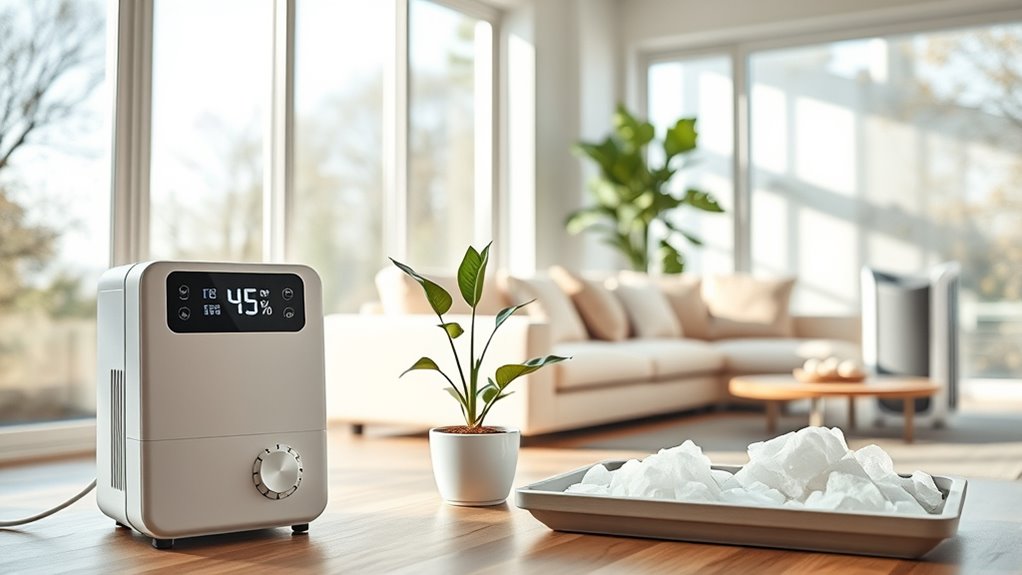
Maintaining proper humidity levels is essential for indoor air quality, as both excessive and low humidity can cause health issues and damage to your home. To achieve effective humidity control and moisture management, you should:
Proper humidity levels are vital for health and home integrity.
- Use a hygrometer to regularly monitor indoor humidity levels, aiming for 30-50%.
- Adjust humidity with humidifiers during dry seasons or dehumidifiers when it’s too moist.
- Address sources of excess moisture, like leaks or condensation, promptly to prevent mold growth.
- Incorporate AI-driven sensors to monitor environmental conditions more accurately and automate adjustments as needed.
Consistently tracking humidity helps prevent problems like respiratory issues, mold, and structural damage. Proper moisture management ensures a healthier, more comfortable environment. Regular monitoring and adjustments keep indoor air quality excellent and protect your home from humidity-related issues.

Hermitlux Range Hood 30 inch Stainless Steel, Wall Mount Vent Hood for Kitchen with Charcoal Filter, Ducted/Ductless Convertible
【ENERGY-EFFICIENT LIGHTS】2 energy efficient 1.5W LED lights, provide enough brightness to help illuminate your cooking space. A sensitive...
As an affiliate, we earn on qualifying purchases.
Identifying Common Indoor Pollutants

Indoor pollutants can quietly diminish air quality and pose health risks if left unchecked. Common indoor pollutants include volatile organic compounds (VOCs), mold spores, and particulate matter. Chemical emissions, often from cleaning supplies, paints, and furniture, release toxic fumes into the air. You should be aware of sources like air fresheners, tobacco smoke, and building materials that emit chemicals over time. Identifying these pollutants involves checking labels for chemical content, observing mold growth, and noticing unusual odors. Pay attention to signs such as persistent mustiness or chemical smells that can indicate pollutant presence. Regular inspection helps you recognize potential hazards early, so you can take steps to improve your indoor air quality and protect your health. Additionally, understanding the signs of spoilage in household products can help prevent exposure to harmful substances.

VIKIO HOME Wall Mount Range Hood 30 inch, 580 CFM, Ducted/Ductless Convertible, Stainless Steel Kitchen Vent Hood with 3-Speed Fan and LED Lights
【Dual Intake, 20% More Airflow】This motor features dual-sided air intake, increasing airflow by 20% compared to single-sided systems....
As an affiliate, we earn on qualifying purchases.
Controlling Allergens and Dust
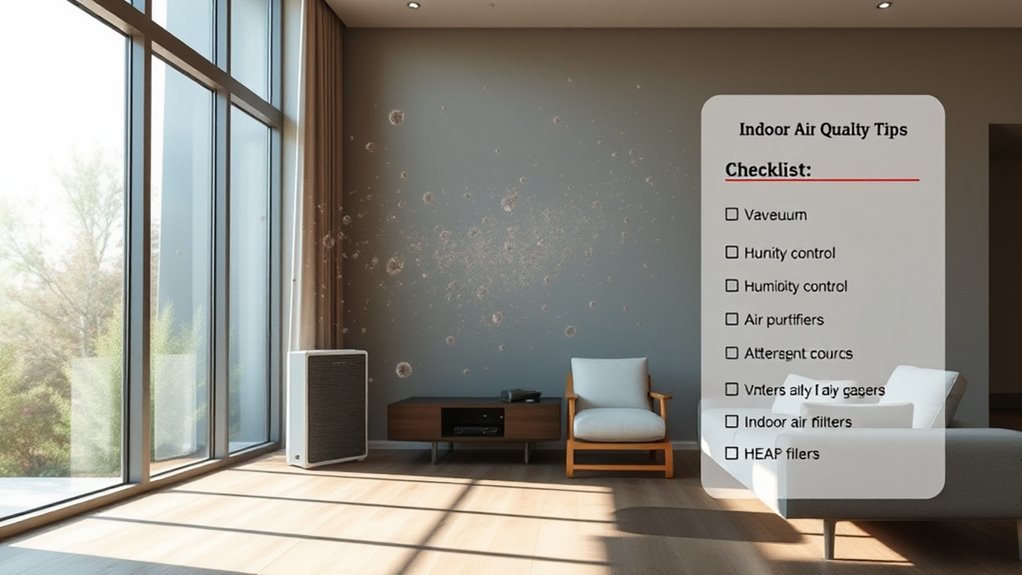
Since many indoor pollutants can trigger allergies and worsen respiratory issues, controlling allergens and dust is essential for maintaining healthy indoor air. Airborne allergens like pollen, pet dander, and dust mites can accumulate quickly. To reduce their presence, consider these steps:
- Wash bedding and linens weekly to eliminate dust mites and remove allergens.
- Vacuum regularly with a high-efficiency particulate air (HEPA) filter to trap airborne allergens and dust.
- Maintain humidity levels between 30-50% to inhibit dust mite growth and prevent mold development.
- Incorporate air purification systems that utilize advanced automation technology to continuously monitor and improve indoor air quality.
Ensuring Proper Filtration and Air Purification
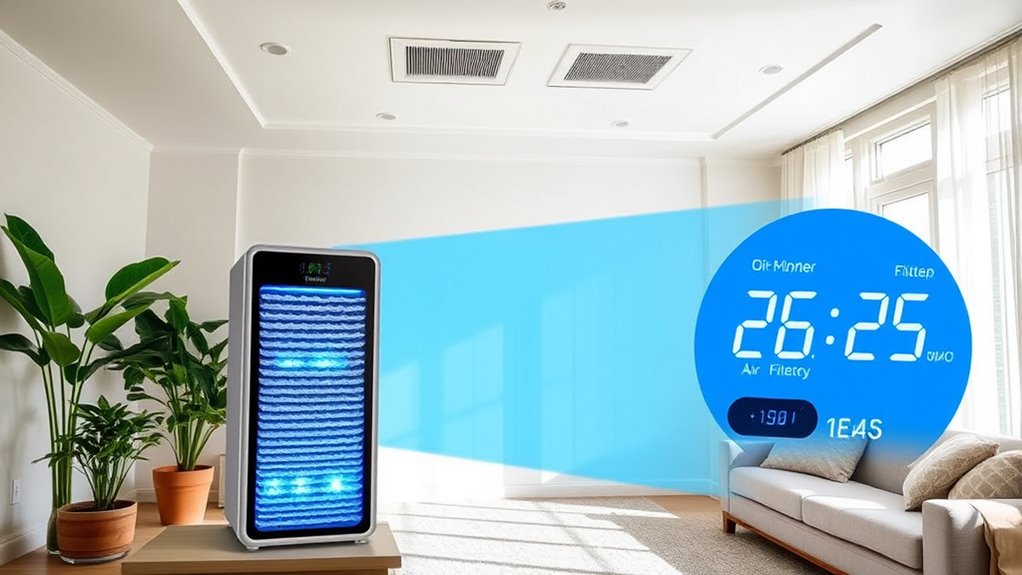
To guarantee your indoor air stays clean, it’s important to choose the right filters and air purifiers. Understanding different filter types and their effectiveness helps you make informed decisions, while selecting the right technology improves air quality. Regular maintenance and timely replacement keep your systems working efficiently and your air purified. For optimal performance, consider researching air purification technologies to find the most effective solutions for your needs.
Filter Types and Effectiveness
Choosing the right filter is essential for maintaining effective air purification in your home. HEPA filters trap particles like dust, pollen, and pet dander, providing high efficiency for allergens. Activated carbon filters excel at absorbing odors, gases, and volatile organic compounds. To understand their effectiveness, consider these options:
- HEPA filters: Capture 99.97% of particles ≥0.3 microns, ideal for allergy sufferers.
- Activated carbon: Reduces odors and chemical pollutants, improving air freshness.
- Combo filters: Combine HEPA and activated carbon layers for all-encompassing purification.
- Fathers’ guidance and shared experiences can inspire better choices in maintaining a healthy living environment.
Air Purifier Technologies
Modern air purifier technologies utilize advanced filtration systems to effectively remove pollutants and improve indoor air quality. HEPA filters are a key component, capturing airborne particles as small as 0.3 microns, including dust, pollen, and pet dander. They considerably reduce allergens and airborne contaminants, making the air safer to breathe. Activated carbon filters complement HEPA filters by absorbing odors, volatile organic compounds (VOCs), and chemical fumes. This combination ensures thorough purification, tackling both particles and gaseous pollutants. When choosing an air purifier, look for models that incorporate HEPA and activated carbon filters for maximum efficiency. These technologies work together to create a cleaner, healthier indoor environment, especially in spaces with high pollution levels or sensitivities to allergens and odors.
Maintenance and Replacement
Regular maintenance and timely replacement of filters are essential to keep your air purifier functioning effectively. Neglecting this can strain your HVAC system and reduce air quality. To ensure peak performance:
- Check filters monthly and replace them as recommended, usually every 3-6 months.
- Schedule air duct cleaning annually to remove debris and improve airflow.
- Inspect your HVAC system regularly for dust buildup or mold, replacing filters immediately if necessary.
- Consider using multi-stage filtration units that combine technologies like HEPA and activated carbon filters for comprehensive air purification.
Keeping filters clean prevents dust and pollutants from circulating, while air duct cleaning ensures no hidden contaminants linger. Proper maintenance extends equipment lifespan and maintains healthy indoor air. By staying proactive, you reduce allergens, improve air quality, and keep your system running efficiently.
Recognizing Signs of Poor Indoor Air Quality
You can often tell there’s a problem when unpleasant odors stick around or your allergies worsen without explanation. Notice if dust seems to settle quickly on surfaces or if you see it accumulating visibly. Recognizing these signs helps you identify when your indoor air quality needs improvement. Additionally, poor air circulation can lead to stagnant air, further degrading indoor air quality.
Unpleasant Odors Linger
Unpleasant odors that linger in your home are often a clear sign of poor indoor air quality. If you notice a persistent smell, it’s likely due to hidden odor sources or insufficient ventilation. To restore a fresh scent, identify and eliminate these sources.
Here are common causes:
- Cooking fumes – Strong odors from food can linger if not ventilated properly.
- Mold or mildew – Damp areas release musty smells that stick around.
- Pet odors – Fur, dander, and accidents can create lasting smells if not cleaned thoroughly.
Addressing these odor sources and improving airflow helps eliminate stale smells, creating a fresher indoor environment. Recognizing the signs of lingering odors is a vital step toward maintaining good indoor air quality.
Increasing Allergy Symptoms
When indoor air quality declines, allergy symptoms often become more frequent and severe. You might notice increased sneezing, congestion, or itchy eyes. These signs indicate you’re exposed to airborne irritants and allergy triggers like dust mites, mold spores, pet dander, and pollen. Recognizing these symptoms early helps you address the source of poor air quality. Use this table to identify common allergy triggers:
| Airborne Irritants | Symptoms You Might Experience |
|---|---|
| Dust mites | Sneezing, nasal congestion |
| Mold spores | Coughing, itchy eyes |
| Pet dander | Asthma flare-ups, runny nose |
| Pollen | Watery eyes, sinus pressure |
| Cigarette smoke | Shortness of breath, coughing |
Stay alert to these signs to improve your indoor environment and reduce allergy symptoms effectively. Monitoring indoor air quality is crucial for maintaining a healthy living space.
Visible Dust Accumulation
Visible dust accumulation is one of the clearest signs that indoor air quality is deteriorating. When dust gathers on surfaces, it often indicates poor air circulation or inadequate cleaning. This dust can harbor dust mites and pet dander, which worsen allergy symptoms and respiratory issues. To spot trouble early, check for:
- Dust on furniture, shelves, and electronics
- Layers of dust around vents and baseboards
- Visible dust clouds when disturbed or during cleaning
These signs suggest that airborne particles are settling and not being effectively removed. Regular cleaning, proper ventilation, and air filtration can help reduce dust buildup and improve your indoor air quality. Understanding filtration systems, like HEPA filters, can also significantly improve air cleanliness. Addressing visible dust is an essential step toward creating a healthier living environment.
Implementing Maintenance and Preventative Measures
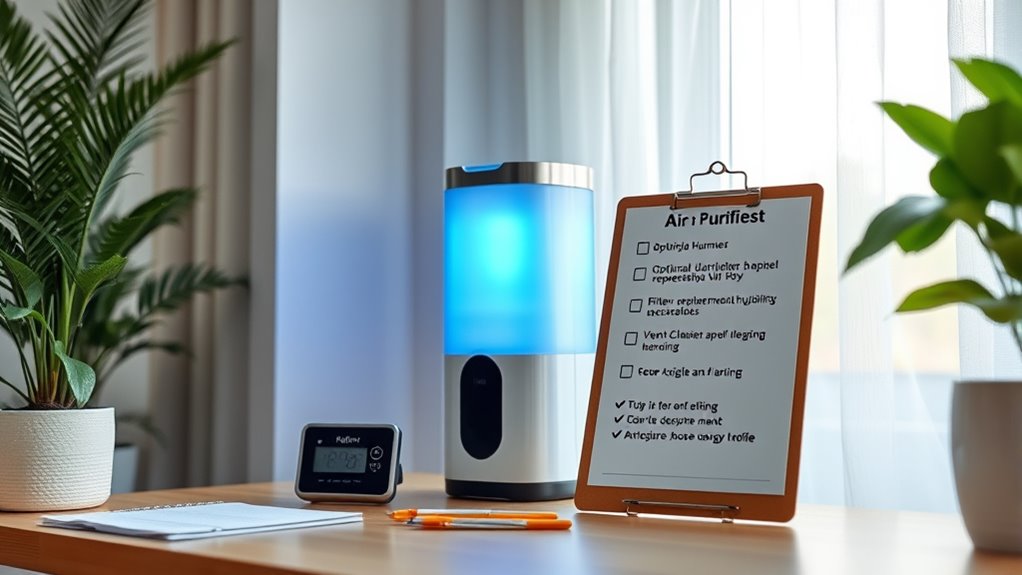
To maintain ideal indoor air quality, implementing regular maintenance and preventative measures is essential. Start by cleaning or replacing HVAC filters to reduce dust and VOC emission sources. Incorporate indoor plant benefits by adding greenery, which can naturally filter toxins and improve air quality. Keep windows open when possible to increase ventilation and expel indoor pollutants. Regularly inspect for mold growth and address leaks promptly to prevent moisture buildup. Avoid using harsh cleaning chemicals that can release VOCs; opt for natural or low-emission products instead. By staying proactive, you minimize airborne contaminants, creating a healthier environment. Consistent upkeep ensures that indoor air remains fresh, reducing health risks and enhancing overall comfort in your space.
Frequently Asked Questions
How Often Should Indoor Air Quality Be Professionally Tested?
You should schedule professional air quality monitoring and testing every 1 to 3 years, depending on your environment. If you notice symptoms like allergies or respiratory issues, increase testing frequency to at least once a year. Regular testing helps you identify pollutants early and maintain healthy indoor air. Keep an eye on ventilation and potential sources of contamination to guarantee your home’s air quality stays safe and fresh.
What Are the Health Effects of Long-Term Exposure to Indoor Pollutants?
Indoor toxins are like silent shadows, quietly impacting your health over time. Long-term exposure can lead to chronic health issues such as respiratory problems, allergies, and even cardiovascular diseases. You might not notice immediate effects, but these toxins can accumulate, causing lasting harm. Protect yourself by ensuring good ventilation and reducing pollutants, because your lungs deserve clean air to keep your body strong and healthy in the long run.
Can Indoor Plants Improve Air Quality Effectively?
Indoor plants can effectively improve air quality through natural filtration, offering numerous plant benefits. They absorb pollutants like formaldehyde and benzene, helping to reduce airborne toxins. By increasing humidity and releasing oxygen, plants create healthier indoor environments. You’ll notice fresher air and a more inviting space. Incorporating indoor plants is a simple, eco-friendly way to boost indoor air quality and enjoy the benefits of natural filtration daily.
Are There Specific Air Purifiers Recommended for Allergy Sufferers?
Yes, as an allergy sufferer, you should look for air purifiers with HEPA filters and UV sterilizers. HEPA filters trap common allergens like pollen, pet dander, and dust mites effectively, while UV sterilizers kill bacteria and mold spores, improving overall air quality. Choose a purifier with these features for better relief, especially during allergy seasons or if you have sensitivities to airborne irritants.
How Does Building Age Influence Indoor Air Quality Concerns?
Did you know that older buildings often have 30% worse indoor air quality? The age of a building impacts air quality because outdated building materials can release toxins, and ventilation systems may be less effective. When you live in an older structure, you might encounter more pollutants and must consider upgrading your ventilation to improve air quality and reduce health risks. Stay proactive about evaluating and improving your indoor environment.
Conclusion
Improving your indoor air quality isn’t just about comfort—it’s essential for your health. Did you know that indoor air can be up to five times more polluted than outdoor air? By following this checklist, you can create a safer, healthier environment for yourself and your loved ones. Taking small steps today can prevent long-term health issues tomorrow. Start implementing these tips now, and breathe easier knowing you’re protecting your well-being.