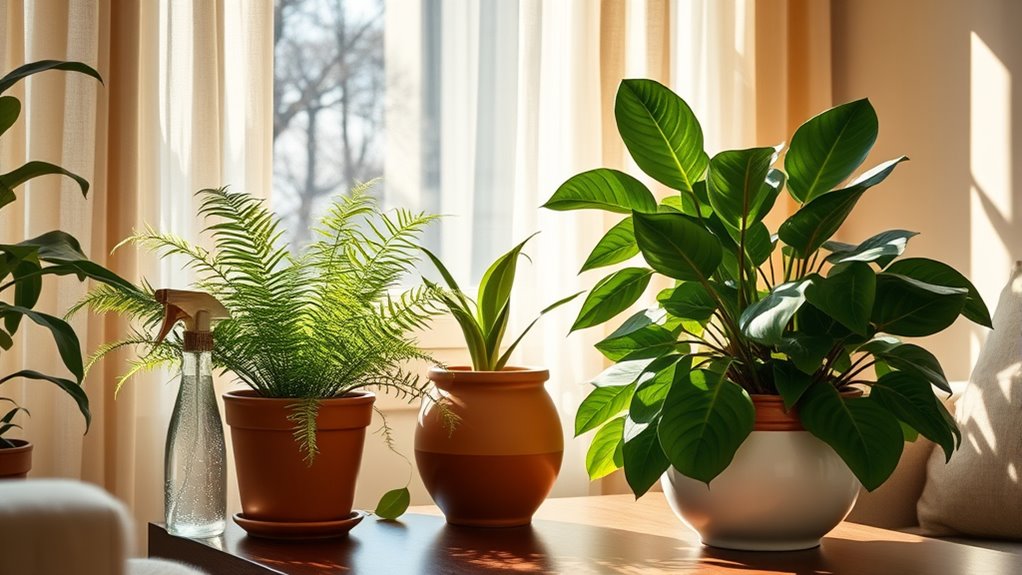

To care for indoor plants and achieve a lush home, first, understand their needs for light, water, and humidity. Place plants according to their light requirements—bright, indirect light for tropical species, and direct sunlight for succulents. Water only when the top 1-2 inches of the soil feel dry, using room temperature water. Keep humidity levels high for tropical plants by misting or using a humidifier. Follow these guidelines, and you’ll uncover even more essential tips for plant care.
Key Takeaways
- Understand each plant’s specific light, water, and humidity needs to ensure optimal growth and health.
- Water plants when the top 1-2 inches of soil feel dry, using room temperature water.
- Use well-draining potting mixes to prevent root rot and promote healthy root systems.
- Maintain humidity by using humidifiers, grouping plants, or placing pots on trays with water and pebbles.
- Fertilize during active growing seasons with a balanced fertilizer, and repot every year or two for nutrient replenishment.
Understanding Plant Needs

When caring for indoor plants, it’s vital to understand their specific needs, as each type has its own unique requirements.
Different houseplants thrive in varying light conditions—some love bright, direct sunlight, while others prefer low or indirect light. Regularly checking the soil moisture is important; only water when the top 1-2 inches feel dry. Additionally, consider using self-watering planters to maintain consistent moisture levels and reduce the risk of overwatering. Self-watering pots utilize a reservoir system to help prevent over-saturation and promote healthy root growth. Creating cozy spaces for your plants can also enhance their overall well-being.
Different houseplants have unique light needs; monitor soil moisture and water only when the top layer is dry.
For healthy growth, use well-draining potting mixes that retain moisture but have drainage holes to prevent root rot.
Humidity is another key factor, especially for tropical plants that thrive in high humidity. You might consider using humidifiers or grouping plants to enhance moisture levels. Additionally, be mindful of water requirements as larger plants generally need more water due to their increased leaf surface area.
Optimal Light Conditions

Light is a crucial factor in the health of indoor plants, as each species has its own specific light preferences.
To guarantee ideal light conditions, consider the following:
- Bright Indirect Light: Ideal for Monstera and pothos, place them near south or west-facing windows. These plants can also benefit from antioxidants present in their environment, which may enhance their overall vitality. Additionally, providing seasonal themes can help create a more stimulating environment for your plants. Ensuring proper color accuracy in the light used can also support the vibrant growth of your plants. It’s worth noting that some indoor plants can also thrive when exposed to probiotics in soil, similar to the health benefits of frozen yogurt.
- Direct Light: Cacti and succulents thrive in bright, direct sunlight; confirm they’re in a well-lit spot.
- Low Light: ZZ plants and snake plants can tolerate low light, making them suitable for north or east-facing windows.
- Seasonal Adjustments: Rotate plants occasionally for even light exposure, preventing issues like leaf discoloration or leggy growth. Additionally, some essential oils like eucalyptus oil can be beneficial in promoting a healthier indoor environment, indirectly supporting plant health.
Watering Techniques

To keep your indoor plants thriving, mastering the art of watering is essential. Water your plants when the top 1 to 2 inches of soil feels dry, and adapt the frequency based on each plant’s specific needs.
Always use room temperature water to prevent shocking the roots. Water until excess moisture drains from the pot’s drainage hole to prevent root rot. Avoid watering leaves directly, as this can lead to mold growth and leaf discoloration.
Consider seasonal changes; your plants will generally need less water during the dormant winter months compared to their active growing season in spring and summer.
Finally, keep an eye on the humidity in your home, as it can also affect your plants’ watering requirements. Additionally, be cautious of overwatering your plants, as it can lead to issues such as root rot, particularly in varieties like Aloe Vera.
Maintaining Humidity Levels

How can you create the ideal environment for your indoor plants? Maintaining humidity is essential, especially for tropical varieties that thrive between 40% and 60% humidity levels.
Here are some effective ways to boost humidity:
- Use a humidifier in the room to greatly improve moisture levels.
- Group plants together to create a microclimate; their transpiration helps retain humidity.
- Place pots on trays filled with pebbles and water to raise humidity without waterlogging roots.
- Monitor humidity levels regularly and mist plants that prefer higher moisture, but avoid overdoing it to prevent mold.
Fertilizing and Soil Care
Creating the right humidity levels sets the stage for healthy indoor plants, but proper fertilizing and soil care are just as important for their growth.
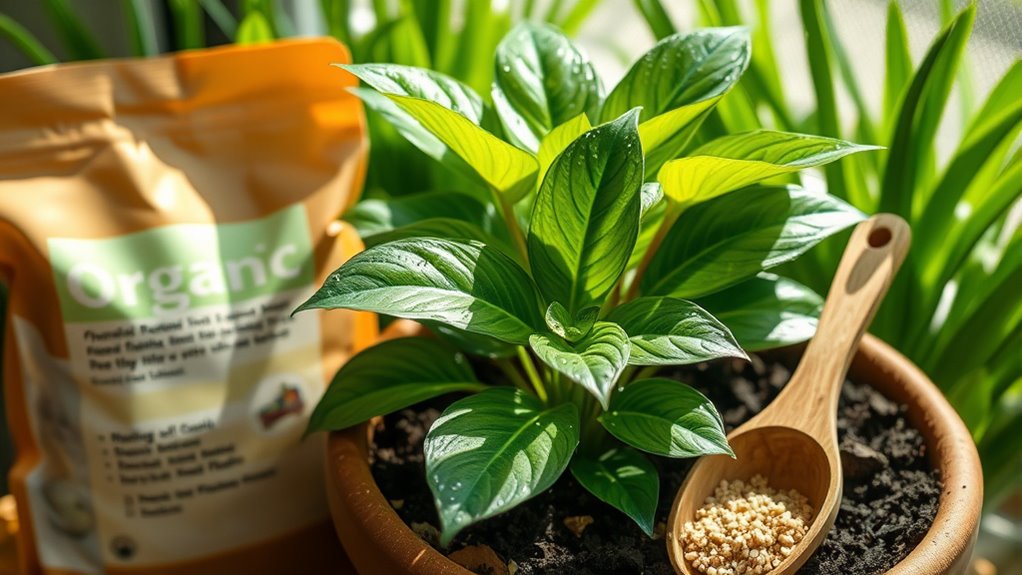
Start with a well-aerated indoor potting mix that retains moisture while ensuring good drainage, preventing root rot. During active growing seasons in spring and summer, use a balanced fertilizer according to label instructions to promote healthy growth without risking root burn.
Don’t forget to monitor soil moisture levels; water when the top one to two inches feel dry. Repot plants every year or two with fresh potting soil to replenish nutrients.
For flowering plants, opt for a fertilizer with equal nitrogen, phosphorus, and potassium to support their vibrant blooms.
Monitoring Plant Health
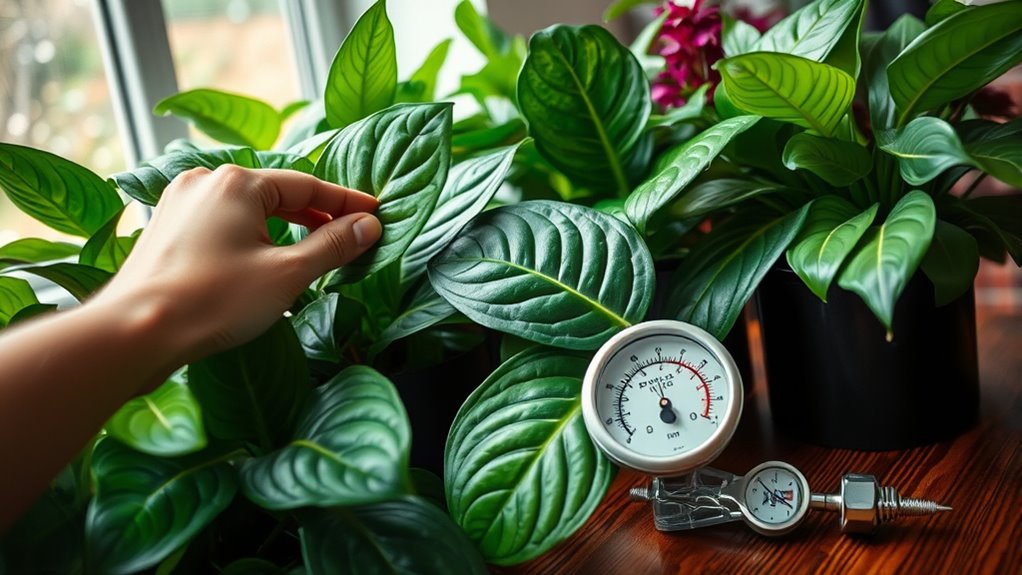
What signs should you look for to gauge the health of your indoor plants? Regularly inspecting houseplants is essential for early detection of issues.
Here are key indicators to monitor:
- Soil Moisture: Check the top 1-2 inches for dryness to prevent overwatering.
- Light Levels: Adjust plant placement if you notice leggy growth or leaf drop, indicating insufficient light.
- Signs of Declining Health: Watch for wilting, yellowing leaves, or leaf spots to address problems promptly.
- Insect Pests: Examine leaves and stems to detect insect pests, ensuring effective treatment and preventing infestations.
Maintaining a clean environment around your plants enhances light absorption and reduces the risk of disease.
Frequently Asked Questions
How Do You Make Indoor Plants Lush?
To make your indoor plants lush, start by placing them in spots with the right light, like bright, indirect sunlight for tropical varieties.
Water them when the top soil is dry, and don’t forget to maintain humidity levels with a humidifier or by grouping plants.
Fertilize during the growing season and prune regularly to promote new growth.
Cleaning the leaves will help them absorb more light, enhancing their overall health and vibrancy.
What Plant Removes 78% of Airborne Mold?
You’re looking for a plant that effectively removes airborne mold? The Peace Lily is your answer!
It’s known to eliminate up to 78% of mold spores from the air, making it a fantastic choice for healthier indoor environments.
This easy-to-care-for plant thrives in low to medium indirect light and prefers consistently moist soil.
Plus, it adds a lovely touch to your home while purifying the air around you.
How Do I Make My Indoor Plants Thrive?
To make your indoor plants thrive, start by giving them the right light.
Place them in spots that match their specific needs. Water them only when the top 1-2 inches of soil dry out, and maintain humidity levels for tropical varieties.
Don’t forget to fertilize during their growing season and regularly clean leaves to boost light absorption.
These steps will help guarantee your plants stay healthy and vibrant throughout the year.
How to Properly Care for Indoor Plants?
To properly care for your indoor plants, start by gauging their needs.
Check soil moisture by sticking your finger in the dirt; if it’s dry within an inch, it’s time to water.
Position them based on light requirements—tropical plants love bright, indirect light, while others thrive in low light.
Keep an eye on humidity levels, and regularly inspect for pests.
Pruning dead leaves helps maintain their health and appearance.
Conclusion
By nurturing your indoor plants with the right light, water, and care, you’re not just tending to greenery; you’re cultivating a vibrant sanctuary that breathes life into your home. Each leaf unfurls like a whisper of nature, reminding you of the beauty surrounding us. So, embrace these tips and watch your space transform into a lush oasis, where every plant thrives and flourishes, painting your world with shades of green and joy. Happy planting!

Mason – Your Product Expert Mason is your go-to product expert, carefully selecting each item in our collection to ensure it meets your comfort, functionality, and style needs. With his attention to detail and commitment to quality, he ensures that every product we offer enhances your home experience.