
To control fungus gnats naturally, identify signs like tiny flies near moist soil and look for wriggling larvae. Use beneficial nematodes or natural predators to target soil pests, and employ sticky traps or diatomaceous earth to catch adults. Improve soil drainage and avoid overwatering to prevent breeding environments. You can also make homemade sprays with oils like peppermint or neem to repel gnats. Keep pests at bay and promote healthy plants—learn more tips ahead.
Key Takeaways
- Identify fungus gnat signs early by inspecting soil moisture, adult flies, and larvae presence to target control effectively.
- Use beneficial nematodes and natural predators like Stewart’s mites to control soil-dwelling pest larvae organically.
- Employ physical traps such as yellow sticky traps and apple cider vinegar to capture adult gnats and reduce populations.
- Adjust watering habits, improve soil drainage, and aerate soil to discourage gnat breeding and promote plant health.
- Apply homemade repellents with essential oils and organic soil amendments to repel pests and strengthen plant resilience naturally.
Identifying Fungus Gnat Infestations
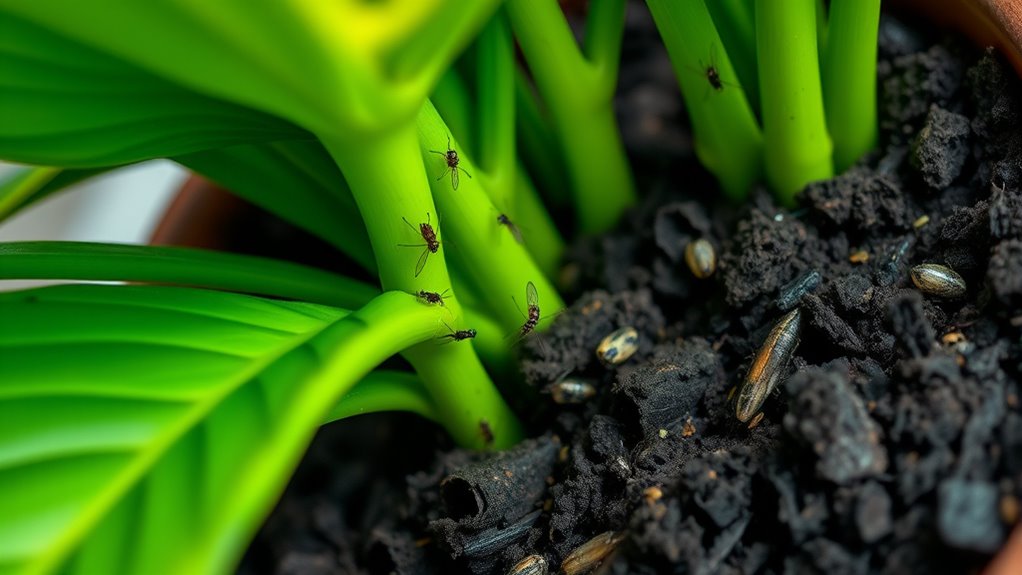
How can you tell if you have a fungus gnat infestation? Look closely at your indoor plants or moist outdoor soil. Tiny, dark flies hovering near the soil surface are a clear sign. You might also notice small larvae wriggling in the topsoil, especially if the soil feels consistently damp. Beneficial insects, like predatory nematodes, can help control them naturally, but identifying the problem early is key. Keep an eye on soil moisture levels; overly moist soil encourages fungus gnat breeding. If your soil remains wet for extended periods, it creates an ideal environment for these pests. Regularly inspecting your plants and managing soil moisture can help you catch an infestation before it spreads, making natural control easier and more effective. Monitoring environmental conditions is also crucial for preventing future issues.
Understanding the Life Cycle of Fungus Gnats
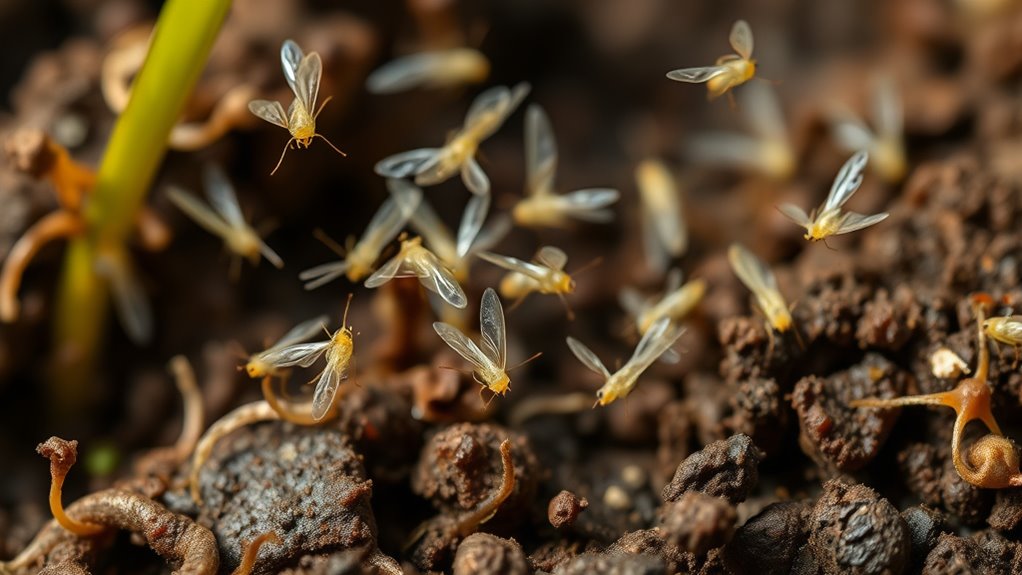
Understanding the life cycle of fungus gnats is essential for effective control because it reveals when and how these pests reproduce and spread. The pest development stages happen quickly, often completing within 3-4 weeks. The cycle begins with eggs laid in moist soil, hatching into larvae that feed on organic matter and roots. After growing, larvae pupate in the soil, transforming into adult gnats. Adults are short-lived but reproduce rapidly, restarting the cycle. Recognizing these stages helps you target the pest at its most vulnerable points. Here’s a breakdown of the pest development stages:
| Stage | Duration | Key Characteristics |
|---|---|---|
| Egg | 2-3 days | Laid in moist soil, hatch into larvae |
| Larva | 7-10 days | Feed on organic matter, roots, grow rapidly |
| Adult | 7-10 days | Mate, lay eggs, reproduce quickly |
Understanding the life cycle of fungus gnats allows for targeted interventions during the most critical periods.
Using Beneficial Nematodes to Combat Soil Pests
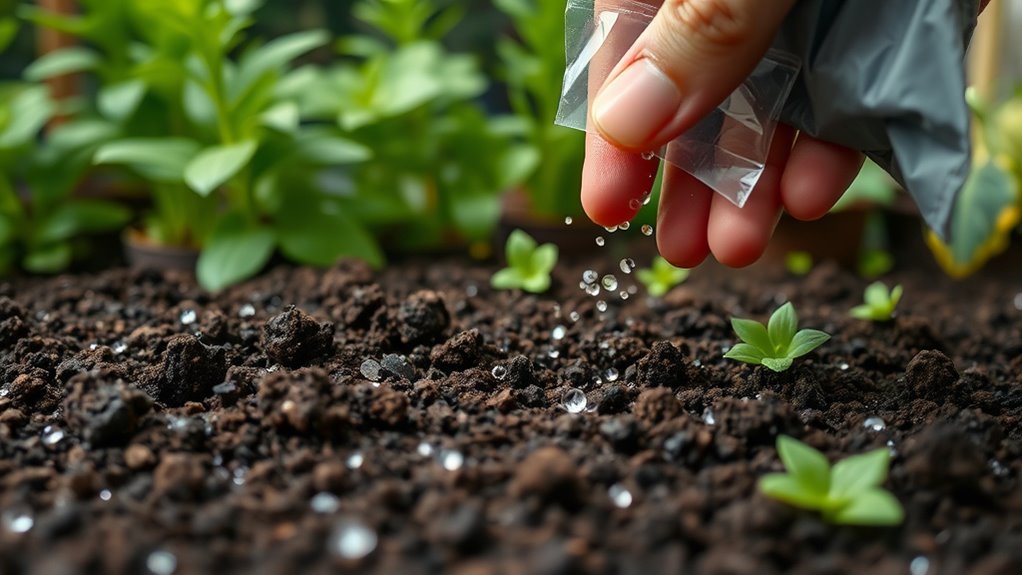
Beneficial nematodes are tiny allies that target soil-dwelling pests effectively. To get the best results, you need to apply them correctly and at the right time. Using nematodes not only controls pests but also promotes a healthier, more resilient garden. For optimal performance, choose high-quality vetted products to ensure effectiveness and safety.
How Beneficial Nematodes Work
Beneficial nematodes are microscopic worms that attack and eliminate soil-dwelling pests effectively. They enter pests’ bodies through natural openings like mouth, anus, or spiracles, releasing bacteria that kill the pests within 24 to 48 hours. These nematodes target pests such as fungus gnats, root maggots, and cutworms, providing a natural pest control method. When you introduce beneficial nematodes into your soil, they actively seek out pests, reducing the need for chemical pesticides. Their presence also promotes soil health by encouraging a balanced ecosystem beneath the surface. Because they’re sensitive to environmental conditions, it’s essential to understand how they work to maximize their effectiveness. Overall, beneficial nematodes are a powerful tool for maintaining healthy, pest-free soil naturally.
Applying Nematodes Properly
To maximize the pest-fighting power of beneficial nematodes, proper application is key. Start by moistening the soil thoroughly, as nematodes need moisture to move effectively. Mix the nematodes with water according to the package instructions, ensuring even distribution. Apply the solution directly to the soil where pests are active, focusing on areas rich in soil amendments or composting techniques that attract pests like fungus gnats. Avoid applying in direct sunlight or during extreme heat, which can harm the nematodes. To improve their effectiveness, incorporate soil amendments that promote healthy microbial activity, helping nematodes survive longer. For optimal results, consider using Volkswagen Tuning techniques to enhance the overall health of your soil ecosystem, which can support beneficial organisms like nematodes. Consistent, targeted application guarantees the beneficial nematodes reach pests underground, providing a natural, effective pest control method.
Benefits for Garden Health
Using beneficial nematodes offers significant advantages for your garden’s overall health by naturally controlling soil pests without relying on chemical treatments. They target pests beneath the surface, reducing damage to roots and promoting healthier plant growth. This method complements practices like companion planting, which can enhance pest resistance and improve biodiversity. Additionally, nematodes help maintain soil aeration by encouraging natural soil activity, preventing compaction, and promoting nutrient uptake. Healthier soil creates an ideal environment for beneficial microbes and plants to thrive. By reducing pest populations naturally, you minimize the need for chemical interventions, leading to a more resilient, eco-friendly garden. Incorporating soil biodiversity into your gardening practices can further enhance ecosystem resilience and plant health. Overall, integrating beneficial nematodes supports soil vitality, promotes plant health, and fosters a balanced, sustainable garden ecosystem.
Applying Diatomaceous Earth as a Natural Barrier
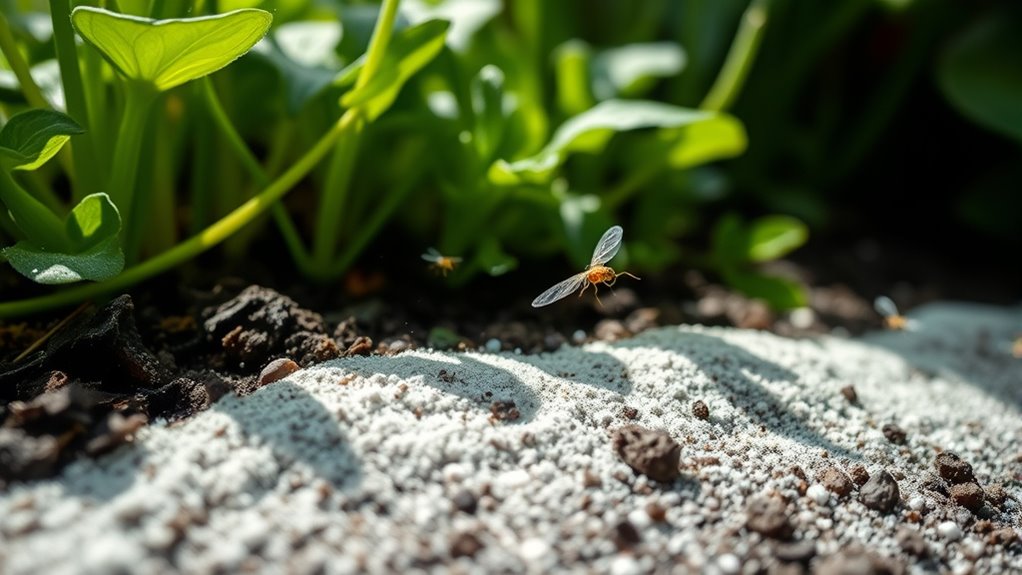
Have you considered applying diatomaceous earth as a natural barrier to keep pests at bay? This fine, abrasive powder acts as a pest barrier by damaging the exoskeletons of insects like fungus gnats. To use effectively:
- Sprinkle a thin layer of diatomaceous earth around plant bases and soil surfaces.
- Reapply after watering or rain, as moisture reduces its effectiveness.
- Focus on areas where pests are most active for targeted control.
- Avoid inhaling the dust, and wear a mask during application for safety.
- Regularly monitor and replace the diatomaceous earth to maintain its pest control effectiveness.
Diatomaceous earth provides a non-toxic way to deter pests without chemicals. Its sharp particles cut through pests’ exoskeletons, leading to dehydration and death. Use it regularly to create a persistent pest barrier around your plants.
Employing Sticky Traps to Capture Adult Gnats

To effectively use sticky traps against adult gnats, you need to choose the right ones that attract these pests. Proper placement is key—position traps near infested plants and areas where gnats are most active. By selecting suitable traps and placing them strategically, you increase your chances of catching more gnats quickly.
Choosing Effective Traps
When it comes to controlling adult gnats, sticky traps are a highly effective and straightforward option. To choose the best trap, consider these factors:
- Trap selection – pick traps with bright colors like yellow or blue, which attract gnats.
- Bait options – some traps come with attractants or you can add apple cider vinegar or a sweet syrup to lure adults.
- Trap size and design – ensure the trap is large enough and easy to access for gnats.
- Placement – place traps near infested soil or plants, but avoid direct sunlight.
- Incorporate natural repellents – using essential oils such as peppermint or eucalyptus around the trap areas can enhance effectiveness by deterring gnats while attracting them to the traps.
Placement Strategies
Effective placement of sticky traps substantially increases their ability to catch adult gnats. Position traps near moist soil, especially where you use mulch layering or practice companion planting, as these attract gnats. Place traps at different heights—near plant foliage and close to the soil surface—to target various gnat stages. Consider the table below for strategic locations:
| Near mulch layers | Under plant leaves | Close to water sources |
|---|---|---|
| Companion planting zones | Around potted plants | Near drainage areas |
Using these strategies helps intercept gnats before they lay eggs, reducing their population naturally. Proper trap placement, combined with mulch layering and companion planting, creates an effective integrated approach to pest control. Additionally, understanding the farmhouse bedroom environment can help you create a pest-resistant space by minimizing excess moisture and clutter.
Watering Practices to Reduce Gnat Breeding Grounds

Proper watering practices are essential for preventing gnat infestations, as excessive moisture creates ideal breeding grounds. Keeping soil moisture balanced stops fungus gnats from laying eggs in your plants. To achieve this:
- Water only when the top inch of soil feels dry.
- Avoid overwatering; ensure pots have good drainage.
- Use watering practices that prevent water from pooling on the soil surface.
- Reduce frequency during cooler months when plants need less moisture.
- Incorporate mindful watering techniques to further reduce conditions conducive to gnat breeding.
Controlling soil moisture levels discourages gnat larvae from thriving. Consistent watering practices help keep your soil at the right moisture level, making it less inviting for pests. Remember, healthy plants with proper watering are less susceptible to infestations and promote overall garden health.
Introducing Natural Predators to Your Garden
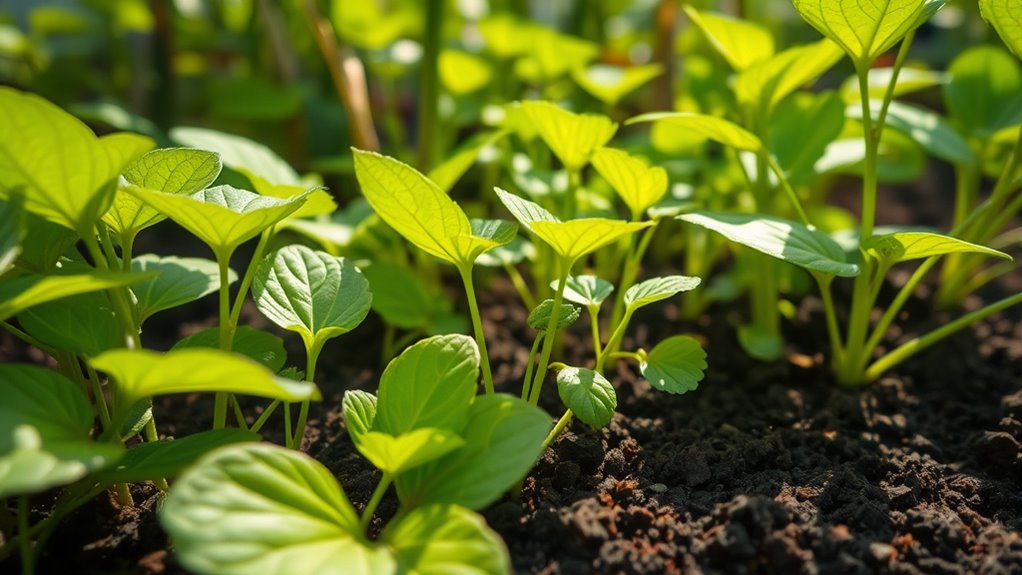
Introducing natural predators into your garden is a highly effective way to control pest populations without relying on chemical treatments. Biological control involves predator introduction, where beneficial insects are released to target pests like fungus gnats. For example, you can introduce predatory nematodes or Stewart’s mites, which feed on gnat larvae in the soil. These predators help keep pest numbers in check naturally, reducing the need for chemical pesticides. When using biological control, guarantee you choose the right predators for your specific pest problem and follow application instructions carefully. Predator introduction not only manages pests effectively but also promotes a balanced ecosystem in your garden. By integrating natural predators, you create a sustainable pest management system that’s safe for your plants, pets, and the environment.
Making Homemade Gnat Repellent Sprays
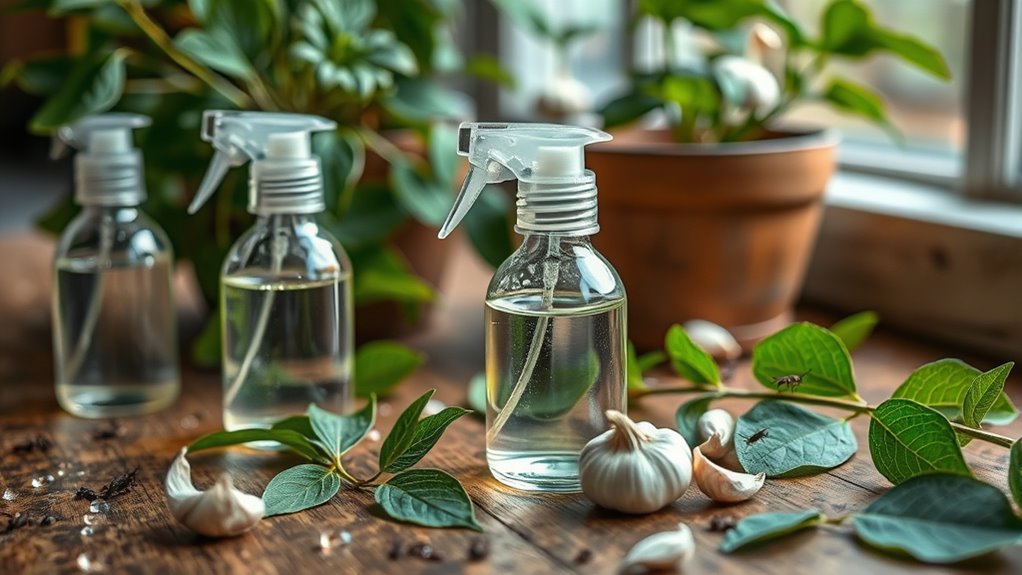
If natural predators aren’t enough to keep gnats at bay, homemade repellent sprays offer a quick and affordable solution. DIY sprays are easy to make using common ingredients and essential oils known for repelling insects. Here are some ideas:
- Mix water with a few drops of tea tree or peppermint oil for a strong scent that deters gnats.
- Combine apple cider vinegar, dish soap, and a few drops of citronella oil to trap and repel.
- Create a spray with neem oil diluted in water for a natural insecticide.
- Use lemon essential oil diluted in water to create a invigorating, gnat-repelling mist.
Apply these sprays to infested areas or around plants to keep gnats away effectively.
Improving Soil Drainage for Pest Prevention
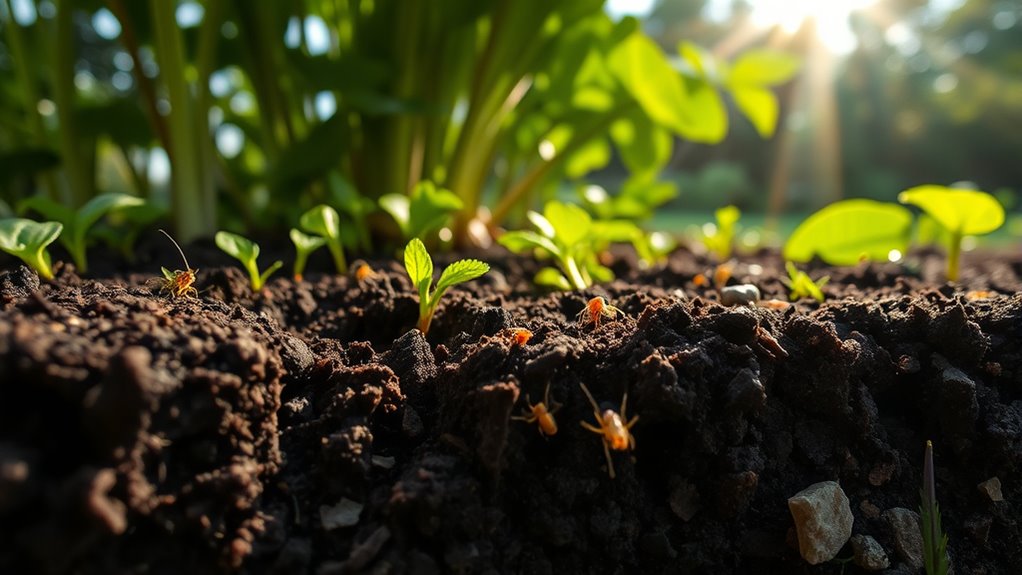
Poor soil drainage creates ideal conditions for pests like fungus gnats and mold, so improving how your soil drains is essential for pest prevention. You can enhance soil drainage by increasing plant soil aeration, which allows excess moisture to escape and air to reach plant roots. Incorporate organic composting into your soil mix; compost helps improve soil structure, preventing water from pooling. Avoid compacting the soil by regularly loosening it with a garden fork or aerator. Well-drained soil reduces excess moisture that attracts pests and promotes healthy root systems. Additionally, using organic amendments can support soil health and resilience against pests. By focusing on these practices, you create an environment less hospitable to fungus gnats and mold, helping to naturally protect your plants without chemical interventions. Proper soil management is a key step in maintaining a pest-resistant garden.
Maintaining Plant Health to Resist Pest Attacks
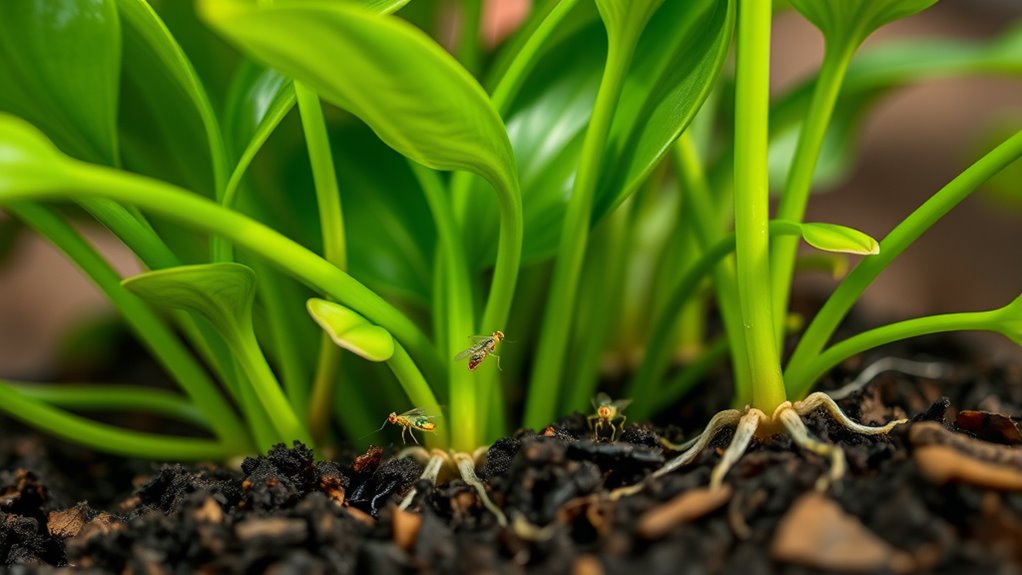
Maintaining plant health is essential for building natural defenses against pests. Healthy plants are better equipped to resist invasions and reduce infestations. To strengthen your plants, consider these strategies:
- Practice companion planting to deter pests naturally.
- Regularly sterilize soil to eliminate harmful pathogens.
- Ensure proper watering and nutrient balance to promote vigor.
- Keep your garden clean, removing debris and fallen leaves.
Frequently Asked Questions
Are Fungus Gnats Harmful to Indoor Plants or Just a Nuisance?
Fungus gnats are mainly a nuisance, but they can harm your indoor plants if their larvae damage roots, affecting soil health and plant watering. While adults don’t do much harm, their presence signals overwatering or excess organic matter. To protect your plants, reduce watering, improve soil drainage, and use natural remedies. Keeping soil healthy and avoiding overly moist conditions helps prevent future infestations, ensuring your indoor garden stays thriving.
Can Natural Remedies Completely Eliminate a Severe Fungus Gnat Infestation?
Natural remedies can markedly reduce a severe fungus gnat infestation, but complete elimination might require a combination of methods. You should use biological control agents like beneficial nematodes or predatory mites to target larvae. Additionally, habitat modification—such as allowing the soil to dry out between waterings—can make your environment less hospitable. Persistence and combining these approaches increase your chances of effectively controlling the gnats without chemicals.
How Long Does It Typically Take to See Results Using Natural Pest Control Methods?
Think of natural pest control as planting seeds of change; it takes time to see them bloom. Typically, you’ll notice results within one to three weeks, depending on the severity of the infestation and your consistency. While effectiveness timeline varies, patience is key. With regular application of natural remedies, you’ll gradually see fewer fungus gnats, and your plants will thank you for the gentle yet persistent care you’re providing.
Are There Specific Plant Types More Susceptible to Fungus Gnat Problems?
Certain plants are more susceptible to fungus gnat problems, especially those with dense foliage or organic-rich soil, like houseplants such as ferns and African violets. Plant susceptibility depends heavily on soil conditions; moist, organic soil attracts gnats. To minimize issues, guarantee proper drainage and avoid overwatering. Regular inspection helps catch infestations early, and adjusting soil conditions can make your plants less attractive to fungus gnats.
Is It Safe to Use Natural Pest Control Methods Around Children and Pets?
Think of natural pest control as a gentle breeze in a garden of safety—you can breathe easy knowing it’s safer for child safety and pet protection. Many natural remedies, like neem oil or sticky traps, are non-toxic and eco-friendly, making them safe around children and pets. However, always follow instructions carefully to avoid accidental ingestion or contact. When used properly, you protect your loved ones while effectively managing pests.
Conclusion
By tackling fungus gnats naturally, you not only protect your plants but also support a healthier environment. While chemical solutions promise quick results, they often come with hidden costs. Embrace organic methods, and you’ll find resilience in your garden’s ecosystem—where balance replaces damage. In choosing natural fixes, you create a thriving sanctuary, proving that sometimes, patience and care are the most powerful pest control tools you have.