
To match plants to your windows, start by understanding how natural light varies in your space. Observe whether your windows provide direct, indirect, or low light throughout the day and across seasons. South-facing windows offer plenty of bright light, perfect for sun-loving plants, while north-facing or shaded spots suit shade-tolerant species. Proper assessment helps you pick the right plants and placement, ensuring healthy growth. Keep exploring for more tips to maximize your space and plant success.
Key Takeaways
- Assess natural light by observing sunlight duration, intensity, and shadows at different times to determine your window’s light level.
- Match plants to light conditions: low-light plants like pothos for shaded spots, and sun-loving plants like succulents for direct sunlight.
- Use window treatments and reflective surfaces to modify light exposure, creating ideal conditions for your chosen plants.
- Supplement natural light with artificial grow lights in low-light or winter months to support plant health.
- Regularly monitor plant responses and adjust placement or lighting to ensure optimal growth and prevent stress or damage.
Understanding Different Types of Natural Light in Your Home

Natural light varies throughout the day and across different areas of your home, affecting both ambiance and energy use. You’ll notice that some spaces get direct sunlight, while others only receive diffused or indirect light. Seasonal variations also play a role, as longer summer days bring more natural brightness, and winter months reduce daylight. Understanding these differences helps you optimize your lighting choices and plant placement. During low-light periods, you might rely more on artificial lighting, but be mindful of how it interacts with natural light. Recognizing the types of natural light in each room allows you to match plants to their specific needs and reduces unnecessary energy consumption. This awareness guarantees your home stays bright, welcoming, and energy-efficient year-round.
How to Assess the Light Levels at Your Windows
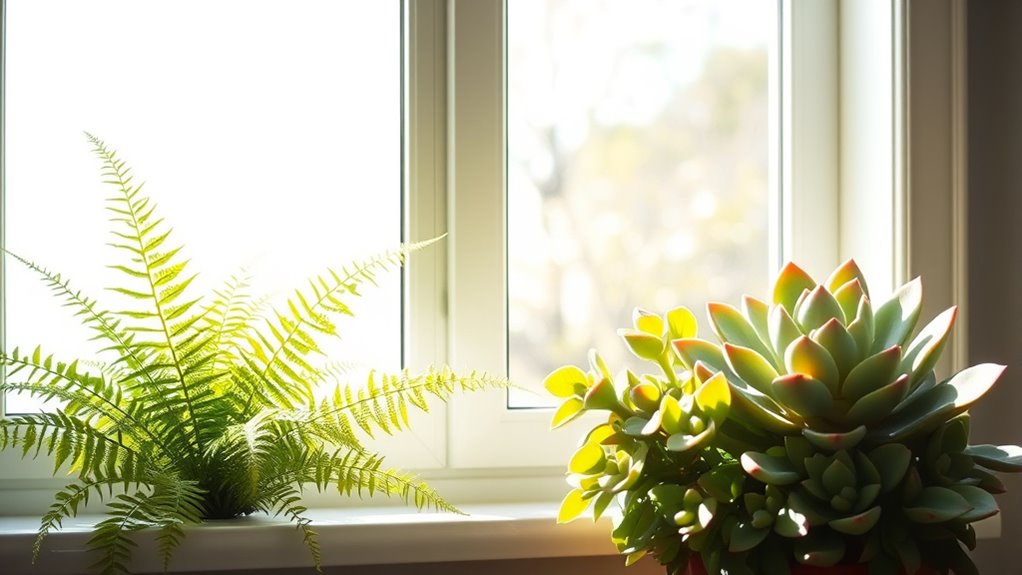
To accurately assess the light levels at your windows, start by observing how sunlight enters the room at different times of day. This helps you gauge the intensity and duration of natural light. Use a light measurement device, like a light meter, for precise readings, especially if you’re unsure about the brightness. Pay attention to window orientation—north-facing windows tend to receive less direct sunlight, while south-facing windows get the most. East and west-facing windows offer strong morning or afternoon light, respectively. Take note of how shadows fall and how bright the space feels during various times. Recording these observations will help you determine the light level, ensuring you choose plants that thrive in your specific environment. For those interested in vehicle enhancements, understanding the concept of tuning can provide insights into optimizing performance and style.
Identifying Low Light Areas and Suitable Plants

When you identify low light areas in your home, it’s important to recognize that these spots receive minimal direct sunlight and often have subdued brightness throughout the day. To find suitable plants, focus on plant placement that accounts for these conditions. Use light measurement tools or observe how much natural light the area gets—if a space rarely receives direct sunlight, it qualifies as low light. Look for plants labeled as shade-tolerant or low-light varieties, like snake plants, pothos, or ZZ plants. These species thrive in subdued lighting and don’t require intense sunlight. Proper plant placement ensures they’ll grow healthily without needing extra artificial light, making your space both lively and low-maintenance. Additionally, understanding color temperature can help you choose the right lighting conditions or plant placement to enhance growth and appearance.
Recognizing Bright, Direct Sunlight Spots and Ideal Plant Choices
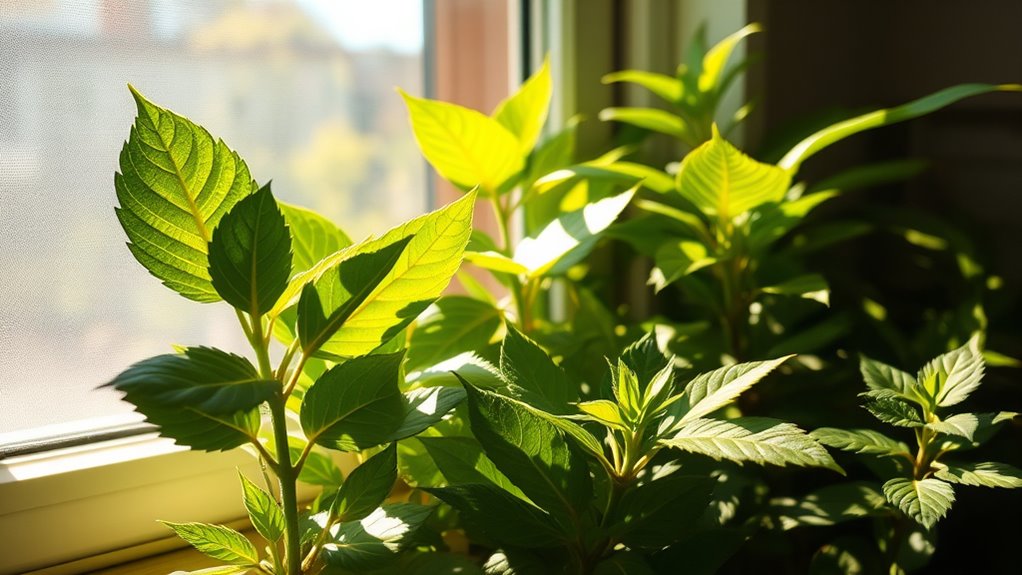
You’ll notice bright, direct sunlight shining on certain spots in your space, often during specific times of the day. These areas are perfect for sun-loving plants that thrive in full light. Choosing the right plants for these spots makes certain they flourish and brighten up your environment. Incorporating good lighting, such as natural sunlight, is essential to support plant health and growth.
Spotting Bright Sun Areas
Have you ever wondered how to identify areas that receive bright, direct sunlight? Spotting these spots is key to choosing the right plants. Look for areas where sunlight hits directly for several hours daily, especially during peak hours. Keep in mind that seasonal variations affect sunlight exposure—what’s bright in summer might be shady in winter. Artificial lighting can’t replace natural sun in these spots, so rely on actual sunlight to assess brightness. To determine if an area gets full sun, observe these signs:
- Intense, consistent sunlight during midday
- Shadows that are sharp and well-defined
- Plants thriving in that spot, indicating high light
- No obstruction from nearby objects or curtains
- Sunlight exposure can vary depending on your window orientation and obstructions, so monitoring over several days provides a more accurate assessment.
Understanding these cues helps you match plants to their ideal light conditions confidently.
Suitable Plants for Sun
Recognizing bright, direct sunlight spots allows you to select the best plants that thrive under full sun conditions. These plants typically need consistent watering schedules to prevent drought stress, especially during hot months. Consider species like succulents, cacti, or flowering plants such as marigolds and petunias, which flourish in direct sunlight. Proper watering helps maintain healthy growth and reduces the risk of pests that often target stressed plants. Keep an eye out for pests like aphids or spider mites, which are more prevalent when plants become weakened. Ensuring your plants receive adequate sunlight and appropriate watering not only promotes vibrant growth but also minimizes pest problems. With the right choices, your sunny spots will become thriving, pest-resistant garden features.
The Best Plants for Indirect and Filtered Light Conditions
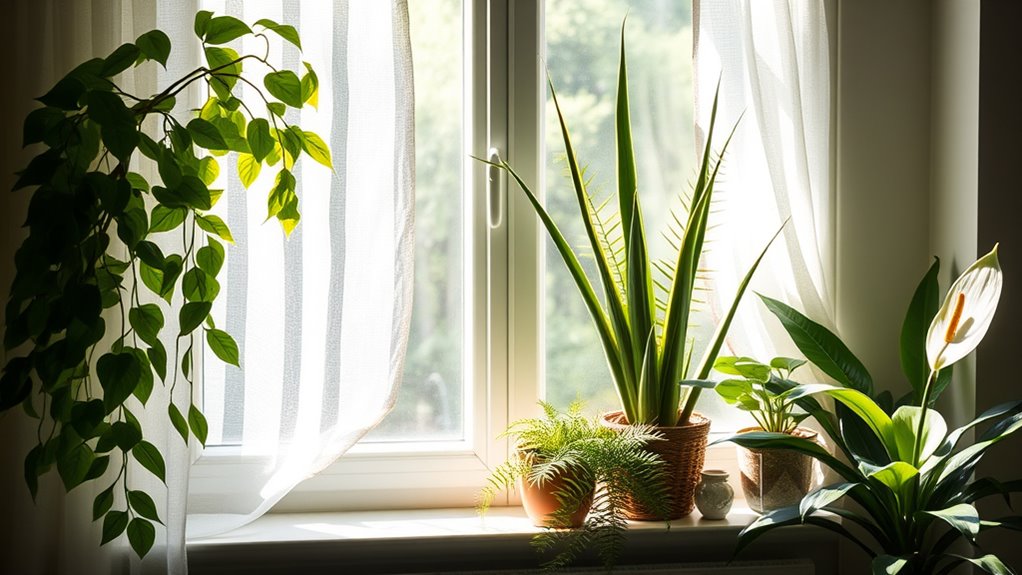
If your space offers indirect or filtered light, choosing the right plants can make all the difference. You’ll want to focus on ideal plant options, effective light filtering techniques, and simple care tips for shaded areas. These strategies will help your plants thrive even without direct sunlight. Additionally, understanding how to maintain vibrational energy around your plants can enhance their growth and vitality, aligning with natural light conditions.
Ideal Plant Choices
When selecting plants for indirect or filtered light, it’s essential to opt for species that thrive in lower light conditions. These plants tend to require less frequent plant watering and are generally less prone to pest problems when properly maintained. Some excellent options include:
- Snake Plant
- ZZ Plant
- Pothos
- Peace Lily
These plants adapt well to shaded areas, making them perfect for spots away from direct sun. Regular pest management and careful watering help keep them healthy. Snake plants and ZZ plants tolerate infrequent watering, reducing upkeep. Peace lilies and pothos also flourish with some attention to pest control, like checking for spider mites or mealybugs. Choosing the right plant for your space ensures vibrant growth and minimizes maintenance challenges in low-light environments. Additionally, selecting plants that are non-toxic for pets is crucial if you have cats or dogs in your home.
Light Filtering Techniques
Filtering sunlight effectively transforms a bright, harsh space into a gentle, inviting environment for your plants. Light filtering techniques help you achieve this by reducing direct rays and creating softer, indirect light. Window treatment options like sheer curtains, blinds, or frosted films are simple ways to diffuse sunlight without blocking it entirely. These solutions allow you to control the intensity of light reaching your plants, making them ideal for species that thrive in filtered conditions. When choosing window treatments, consider the amount of natural light and the plant’s needs. Proper filtering not only protects delicate leaves from scorching but also encourages healthy growth. With the right light filtering techniques, you’ll create a cozy, well-lit space perfect for your plants to flourish.
Care Tips for Shade
Many plants thrive in indirect and filtered light conditions, making them ideal choices for shaded spots in your home or garden. To keep these plants healthy, ensure they receive proper plant nutrition, even in low light. If natural light is limited, consider supplementing with artificial lighting designed for plant growth. This can be especially beneficial in uncovering hidden mysteries and mysterious environments, much like exploring shaded indoor gardens. This helps maintain their vibrant foliage and encourages steady growth. Remember, overwatering can harm shade-loving plants, so let the soil dry slightly between waterings. Regularly rotate your plants to promote even light exposure. Additionally, monitor their leaves for signs of insufficient light, such as pale color or leggy growth. Proper care tailored to shaded environments will keep your plants lush and thriving, even with minimal direct sunlight.
Tips for Adjusting Your Space to Optimize Plant Health
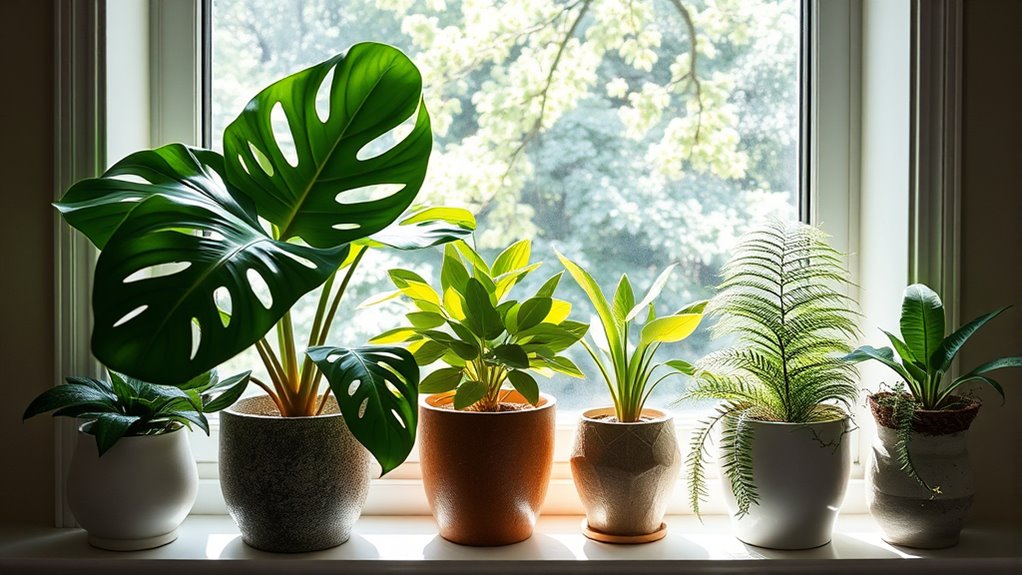
Adjusting your space to optimize plant health involves careful consideration of light levels and positioning. To compensate for seasonal variations, you might need to supplement natural light with artificial lighting during shorter winter days. Use grow lights or LED bulbs to provide consistent illumination, especially if your windows don’t offer enough sunlight year-round. Position plants near windows that match their light needs, rotating them regularly to ensure even exposure. Keep an eye on how sunlight shifts throughout the day and season, adjusting your plants’ placement accordingly. For indoor spaces with limited natural light, creating a dedicated grow area with proper artificial lighting can dramatically improve plant health. Small changes in placement and supplemental lighting make a significant difference in maintaining vibrant, healthy plants year-round. Monitoring signs of spoiled lemon juice can help prevent accidental ingestion of harmful substances, emphasizing the importance of proper storage and handling of perishable items.
Common Mistakes When Matching Plants to Light Conditions

One common mistake is misjudging a plant’s light needs and placing it in conditions that are either too bright or too dim. This can lead to overwatering issues, as plants in low light often require less water, but you might overcompensate, causing root rot. Conversely, too much direct sun can stress plants, making them vulnerable to pests and disease. To avoid these pitfalls, pay close attention to your plant’s response, adjusting placement accordingly. Be mindful that insufficient light can also make pest management harder, as stressed plants weaken defenses. Additionally, understanding lighting requirements helps optimize plant health and growth.
Maintaining and Caring for Plants in Varying Light Environments
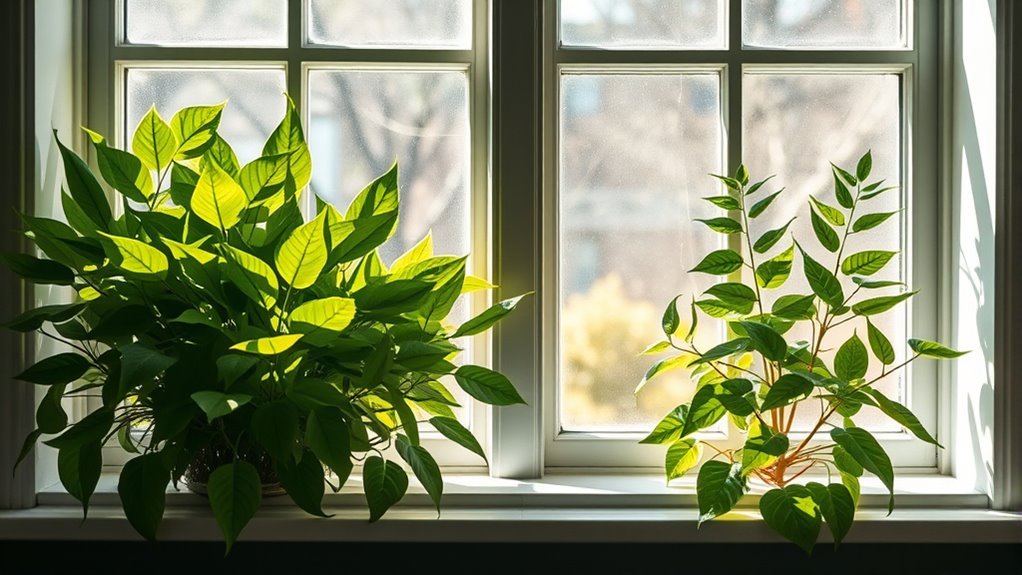
Caring for plants in varying light environments requires attentive observation and timely adjustments to guarantee they thrive. Monitor your plants closely to spot signs of stress or slow growth, which often indicate they aren’t receiving the right amount of light. Adjust their position or provide supplemental lighting if needed. Understanding the light spectrum is vital, as different plants respond to specific wavelengths; for example, some thrive in full-spectrum light, while others prefer low or indirect light. Rotate plants regularly to ensure even growth, and consider using reflective surfaces to maximize available light. Proper care in changing light conditions promotes healthy plant growth, enhances their appearance, and prolongs their lifespan. Staying proactive ensures your plants adapt well to their environment. Additionally, integrating AI-powered monitoring devices can help detect subtle changes in light levels and plant health, enabling more precise care.
Frequently Asked Questions
How Can I Tell if My Windows Get Indirect or Direct Sunlight?
To determine if your windows get indirect or direct sunlight, observe the window orientation and light intensity. South and west-facing windows usually receive direct sunlight, especially during peak hours, while north-facing ones tend to have indirect light. Pay attention to how strong and direct the sun’s rays feel on your window during different times of day. If the sunlight is harsh and creates shadows, it’s direct; softer, diffused light indicates indirect sunlight.
What Signs Indicate My Plant Is Not Receiving Enough Light?
You might notice your plant isn’t thriving when its leaves show signs of discoloration or it develops leggy growth, stretching toward the light. These subtle cues suggest it’s longing for more sunlight. If your plant’s leaves fade or become pale and stems become elongated and weak, it’s a gentle reminder that it needs brighter, more consistent light. Adjust its placement to help it regain its health and vibrancy.
Are There Window Treatments That Can Help Control Light Levels?
Yes, you can use window treatments like window film and light diffusers to control light levels for your plants. Window film reduces harsh sunlight and prevents scorching, while light diffusers scatter direct light, creating a softer environment. These options help you tailor the amount of light your plants receive, ensuring they stay healthy without overexposure. Adjusting these treatments allows you to optimize conditions based on your plant’s needs.
How Does Seasonal Variation Affect Plant Light Needs?
You’ll notice seasonal sunlight changes, which substantially impact your plant’s light needs. During winter, the light intensity variation decreases, so your plants might need closer proximity to windows or supplemental light. In summer, increased sunlight means you can give your plants more space from direct rays. Keep an eye on how the seasons shift, and adjust your plant placement accordingly, ensuring they get the right amount of light year-round.
Can Artificial Lighting Supplement Natural Light for My Plants?
Yes, you can use artificial lighting like LED grow lights to supplement natural light for your plants. Choose LED grow lights with a full light spectrum to mimic natural sunlight, which helps your plants thrive year-round. Position the lights appropriately and keep them on for the recommended hours to guarantee your plants get adequate light, especially during winter or in low-light spaces. This way, your plants stay healthy and vibrant.
Conclusion
By mastering your light levels, you’ll turn your home into a jungle of thriving, happy plants that practically dance with joy! No more guesswork or plant heartbreak—just lush, vibrant greenery that makes your space feel like a tropical paradise. When you match the right plants to your windows, you’ll discover the secret to plant perfection. Get ready to become the legendary plant parent everyone envies, with a house bursting with life and color!