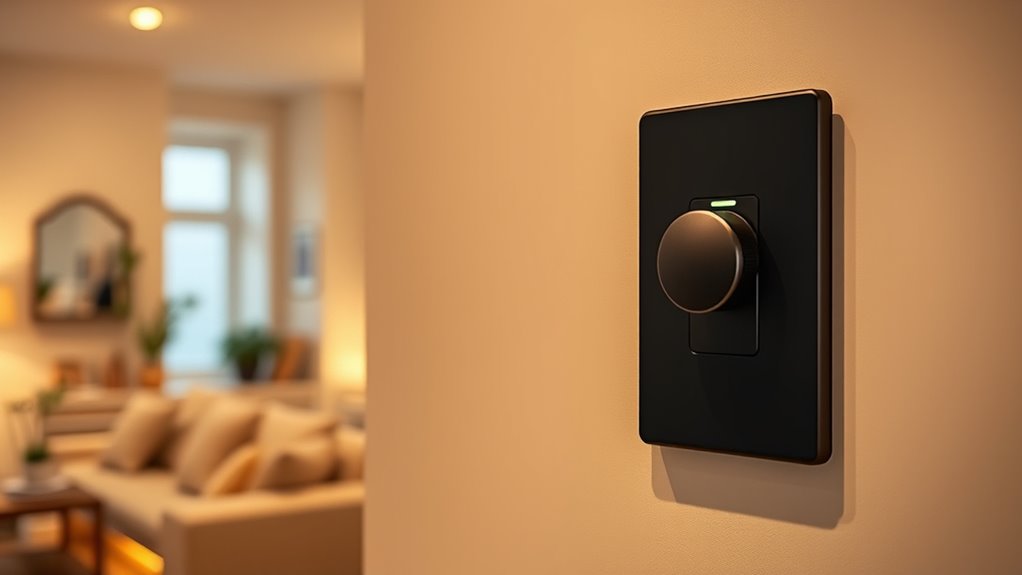

To guarantee a safer and smarter dimmer switch install, you need to pick the right type for your bulbs, assess your electrical system, and follow proper wiring steps. Make sure the switch matches your fixture, check circuit capacity, and turn off power before installation. Proper wiring avoids hazards like flickering or shorts. Knowing these key steps helps you optimize energy, create the perfect lighting ambiance, and prevents common issues—keep going to learn more details.
Key Takeaways
- Choose the right dimmer type (leading-edge, trailing-edge, or smart) compatible with your bulb and electrical system.
- Properly assess your electrical wiring and circuit capacity before installation to ensure safety and performance.
- Follow manufacturer instructions carefully during installation, securing all wiring connections and turning off power beforehand.
- Use dimmers suitable for LED, CFL, or incandescent bulbs to prevent flickering, buzzing, or damage.
- Troubleshoot issues like flickering or overheating by checking wiring, bulb compatibility, and consulting professionals if needed.
Understanding Different Types of Dimmer Switches

While there are several types of dimmer switches available, understanding their differences is key to choosing the right one for your needs. Not all dimmer switches are compatible with every lighting fixture, so checking dimmer switch compatibility is essential. The main types of dimmer switches include leading-edge, trailing-edge, and smart dimmers. Leading-edge dimmers work well with incandescent bulbs but may cause flickering with LEDs. Trailing-edge dimmers are more versatile, suitable for LEDs, CFLs, and incandescent bulbs, providing smoother dimming. Smart dimmers connect to your Wi-Fi, offering remote control and automation features. Knowing the types of dimmer switches and their compatibility helps you select the best option for your lighting setup, ensuring safe, efficient, and reliable dimming performance. Additionally, understanding lighting fixture compatibility is crucial to prevent issues and optimize performance.
Assessing Your Electrical System Before Installation

Before installing a dimmer switch, you need to assess your electrical system to guarantee compatibility and safety. Checking your system ensures electrical safety and confirms it can handle the dimmer’s power capacity. Start by inspecting your existing wiring for any damage or outdated components. Verify the circuit’s amperage rating matches the dimmer’s requirements. Determine if your switches are controlling LED, CFL, or incandescent bulbs, as this affects compatibility. Finally, ensure your electrical panel has enough capacity to support the additional load without overloading. Proper assessment of your electrical system is essential to prevent potential hazards and ensure your dimmer switch functions correctly.
Assess your electrical system for compatibility and safety before installing a dimmer switch.
- Review your circuit breaker’s amperage rating
- Confirm wiring type and condition
- Identify bulb types controlled by the switch
- Check total power capacity of your electrical system
Selecting the Right Dimmer Switch for Your Needs

Choosing the right dimmer switch depends on the type of bulbs you plan to control and the features you need. There are various dimmer switch types designed for different lighting setups, such as incandescent, LED, and CFL bulbs. Making an electrical system assessment helps determine compatibility and guarantees safe, effective operation. For example, LED-compatible dimmers prevent flickering and buzzing, while traditional dimmers may not work well with modern bulbs. Consider features like remote control, smart home integration, or adjustable fade rates based on your preferences. Additionally, understanding the importance of air quality improvement and how it can impact your overall health can guide you in selecting compatible smart dimmers that support modern lighting systems. By matching the dimmer switch type to your lighting needs and conducting a thorough electrical system assessment, you’ll ensure a safe, reliable, and efficient dimming experience tailored to your space.
Step-by-Step Guide to Safe Installation

Installing a dimmer switch safely starts with turning off the power at the circuit breaker. Before beginning, verify that the switch is compatible with your wiring and check for wireless compatibility if you want smart features. Always guarantee your hands are dry and use insulated tools for safety. Follow these steps for a smooth installation:
- Turn off the circuit breaker and test the switch to confirm power is off.
- Remove the existing switch, noting wire connections.
- Connect the wires to the new dimmer switch according to the manufacturer’s instructions, paying attention to compatibility with your wiring.
- Secure the switch, restore power, and test its function, including any wireless features for smart control. Proper wiring connections are crucial for safety and optimal performance.
This process ensures proper installation safety and sets the stage for a smarter lighting experience.
Common Wiring Mistakes to Avoid

One of the most common wiring mistakes when installing a dimmer switch is misconnecting the live, neutral, or ground wires, which can cause malfunction or electrical hazards. To avoid this, prioritize wire connector safety by ensuring all connections are secure and properly insulated. Double-check wire colors and follow the switch placement instructions carefully. Incorrect wiring can lead to short circuits or damage the switch, so take your time and verify each connection before powering up. Avoid twisting wires together without connectors, as loose connections are dangerous. Proper switch placement within your wiring setup guarantees safe operation and easy troubleshooting later. Remember, a cautious approach with correct wiring practices keeps you safe and guarantees your dimmer switch functions smoothly.
Compatibility With Bulb Types and Fixtures

Ensuring your dimmer switch is compatible with your bulb types and fixtures is key to achieving ideal performance. Not all dimmers work with every bulb or fixture, so checking compatibility is essential. You need to match the dimmer with the right bulb compatibility to avoid flickering or reduced dimming range. Additionally, consider fixture types, as some may require specific dimmer models. Properly functioning self watering plant pots depend on correct compatibility between components, just as dimmer switches require matching with bulbs and fixtures. Read manufacturer guidelines to confirm fixture and bulb compatibility before installation
Maximizing Energy Efficiency With Dimmers

By adjusting brightness levels with dimmers, you can save energy and reduce your electricity bills. Lowering unnecessary light output also helps extend the lifespan of your bulbs. Using dimmers effectively makes your lighting both more efficient and cost-effective. Additionally, incorporating lighting control techniques can optimize your entire lighting setup for maximum energy savings.
Adjust Brightness Levels
Have you ever wondered how to get the most energy savings from your lighting? Adjusting brightness levels with your dimmer switch is key. Modern dimming technology allows you to fine-tune light output, reducing energy use without sacrificing comfort. Using brightness presets, you can quickly switch between ideal settings for different activities or times of day. Additionally, choosing high-quality dimmers designed for energy efficiency can further optimize your lighting system. Best Heat Pump
Save Electricity Costs
Adjusting the brightness levels on your dimmer switch not only enhances comfort but also substantially reduces electricity costs. Unlike historical lighting systems that used fixed wattage, modern dimmer switches allow you to control energy consumption directly. Lowering the brightness during the day or when full illumination isn’t needed decreases power use, saving you money on your electricity bill. Quality dimmer switch brands offer precise control and compatibility with energy-efficient bulbs, maximizing savings. By optimizing lighting levels, you prevent unnecessary energy waste and extend the lifespan of bulbs, which further cuts costs. Incorporating dimmer switches into your home is a smart step towards energy conservation, helping you reduce expenses while maintaining the ideal ambiance.
Extend Bulb Lifespan
Using dimmer switches can considerably extend the lifespan of your light bulbs, making your energy efficiency efforts more effective. When you adjust brightness levels, you reduce the stress on bulbs, increasing their bulb longevity. To maximize these benefits, make certain your dimmer is compatible with your fixture and bulb type. Proper fixture compatibility prevents flickering and damage, protecting your investment. Additionally, using dimmers with LED bulbs often results in lower heat production, which helps bulbs last longer. Regularly adjusting brightness instead of turning lights on and off repeatedly also contributes to bulb longevity. By choosing compatible fixtures and managing brightness levels wisely, you optimize energy use and extend your bulbs’ lifespan, saving money and reducing waste over time.
Using Dimmer Switches for Smarter Lighting Control

Using dimmer switches gives you more control over your lighting, letting you adjust the light intensity to suit your needs. This not only saves energy but also helps create the perfect ambiance for any space. With smart dimmers, you can easily customize lighting to enhance comfort and efficiency. Additionally, understanding lighting control systems can further optimize your home’s lighting setup.
Adjusting Light Intensity
Ever wonder how to create the perfect lighting mood in your space? Adjusting light intensity with your dimmer switch is simple and effective. You can fine-tune brightness to match your activity, set a relaxed atmosphere, or highlight specific areas. Use lighting automation to program different levels for different times of day, or pair your dimmer with voice control for hands-free adjustments. To achieve the ideal ambiance, consider these tips:
- Gradually turn the dimmer knob or slider for precise control
- Use preset scenes for quick mood changes
- Sync dimmers with your smart home system for automation
- Experiment with different brightness levels for various tasks
Mastering light adjustments enhances comfort and convenience in any room.
Energy Efficiency Benefits
Dimmer switches can considerably reduce your energy consumption by allowing you to adjust lighting levels precisely to your needs. When used correctly, they prevent unnecessary energy waste by dimming lights when full brightness isn’t needed. Some dimmer switch myths suggest they use more energy or are less efficient than regular switches, but this isn’t true—modern dimmers actually save energy. Historically, dimmer designs relied on bulky, less efficient mechanisms, but today’s models are sleek and optimized for energy efficiency. By lowering light levels instead of turning lights off completely, you reduce power use and extend bulb life. This smarter control helps you save on electricity bills and supports environmental conservation, making dimmer switches a practical addition to your home for energy-conscious living. Additionally, choosing energy-efficient designs can further enhance your savings and reduce your carbon footprint.
Creating Ambiance
Have you considered how lighting can transform the mood of a room? Dimmer switches allow you to create the perfect ambiance for any occasion, from cozy nights to lively gatherings. To achieve this, verify switch compatibility with your existing wiring and bulbs. Proper installation safety is key—double-check that the switch is rated for your lighting load and follow manufacturer instructions. Adjusting brightness levels helps set the tone, whether you want soft, relaxing light or bright illumination. You can also save energy by dimming lights when full brightness isn’t necessary. Understanding dimmer switch ratings is essential to ensure safe and effective installation. With the right dimmer switch, you gain control over your space’s atmosphere while enhancing safety and efficiency. Experiment with different settings to find the perfect mood for every moment.
Troubleshooting Common Dimmer Switch Issues

When a dimmer switch isn’t working properly, troubleshooting can help identify the root cause and restore functionality quickly. Start by checking the bulbs; incompatible or faulty bulbs are common dimmer issues. If the lights flicker or won’t dim properly, it could be a wiring problem or the dimmer isn’t compatible with your bulbs. Turn off the power and inspect connections for loose wires or corrosion. If the dimmer feels hot or sparks, turn off the circuit immediately—this indicates a serious issue. Sometimes, the dimmer switch itself is faulty, requiring replacement. For persistent problems, consult the manufacturer’s instructions or call a professional. Proper dimmer switch troubleshooting guarantees safe, efficient operation and prevents further issues down the line.
Frequently Asked Questions
Can I Install a Dimmer Switch Without Turning off the Power?
No, you shouldn’t install a dimmer switch without turning off the power. Electrical safety is vital, and failure to do so can cause shocks or short circuits. Always follow proper installation procedures by switching off the circuit breaker before starting. This guarantees you avoid any accidental contact with live wires. Taking these safety precautions helps protect you and ensures a safe, successful installation.
Are Dimmer Switches Compatible With All Types of Light Bulbs?
Think of dimmer switches like a puzzle; not all pieces fit together perfectly. You’ll need to check bulb compatibility and choose the right dimmer types. Incandescent and halogen bulbs usually work well, but LED and CFL bulbs might need specific dimmers designed for them. Always verify your bulbs’ compatibility with your dimmer switch to confirm smooth, flicker-free operation and avoid potential damage.
How Do I Reset a Dimmer Switch That Isn’T Working Properly?
To reset a malfunctioning dimmer switch, start with the reset procedure by turning it off and then back on after a few seconds. If it still doesn’t work, try troubleshooting tips like checking for loose wiring or replacing the bulbs. You might also need to reset the switch by turning it off, waiting 10 seconds, then turning it back on. This process helps clear any glitches causing the issue.
What Is the Maximum Wattage My Dimmer Switch Can Handle?
Your dimmer switch’s maximum wattage usually ranges between 600 and 1000 watts, depending on the model. Check the manufacturer’s specifications for your particular switch to guarantee proper wattage limits and avoid overloads. Staying within these wattage limits is vital for installation safety, preventing overheating or damage. Always verify the switch’s capacity before installing or adjusting lights to keep your setup safe and functioning at its best.
Can Dimmer Switches Be Used With Smart Home Systems?
Yes, you can use dimmer switches with smart home systems. Many modern dimmers now feature smart home integration and voice control compatibility, making it easy to control lighting remotely or through voice commands. Just confirm the dimmer switch you choose is compatible with your specific smart home platform, like Alexa or Google Assistant, and supports the features you’re looking for. This setup offers convenience and enhanced control over your lighting.
Conclusion
By understanding your options, preparing properly, and installing correctly, you transform your space with smarter lighting. Dimmer switches aren’t just switches—they’re your ticket to comfort, efficiency, and control. So, why settle for duller moments when a simple upgrade can brighten your life? Embrace the power of the right dimmer, and let your home shine brighter, safer, and more energy-wise. After all, a well-lit home isn’t just seen—it’s felt.