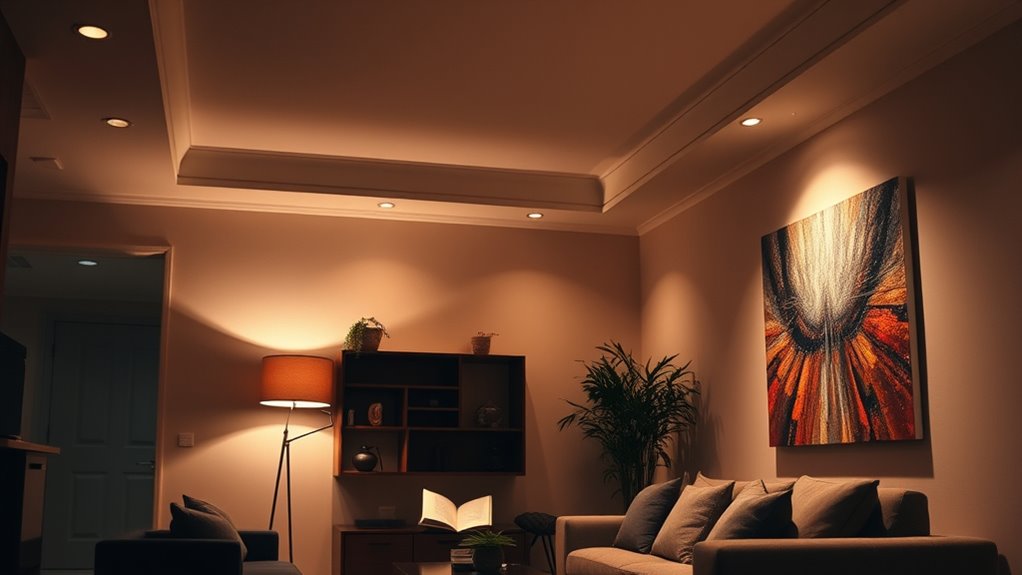

To make layered lighting simple, start by combining ambient lights like soft LEDs for overall brightness, task lights such as focused halogens for specific activities, and accent lights to highlight features or add depth. Match bulb colors for a cohesive look, place fixtures thoughtfully, and use dimmers for flexibility. Balancing these layers creates a warm, inviting space that suits any mood or purpose. Keep exploring to learn how to perfect each layer for your home.
Key Takeaways
- Understand the purpose of each layer: ambient for general light, task for specific activities, and accent for highlighting features.
- Choose appropriate bulbs and fixtures for each layer, considering bulb types and wiring needs.
- Place fixtures strategically: ambient centrally, task near work areas, and accent to emphasize design features.
- Use dimmers to adjust brightness and create desired moods across all layers.
- Balance color temperatures and natural light with artificial layers for a cohesive, inviting space.
LED ambient ceiling lights
As an affiliate, we earn on qualifying purchases.
As an affiliate, we earn on qualifying purchases.
Understanding the Three Types of Layered Lighting

Layered lighting is essential for creating a functional and visually appealing space, and understanding its three main types helps you design effectively. The core of this understanding involves knowing the different bulb types and wiring techniques that suit each layer. For ambient lighting, you might select soft, diffused bulbs like LEDs with warm color temperatures, wired using simple circuits to evenly distribute light. Task lighting requires brighter, focused bulbs such as halogen or adjustable LEDs, with wiring techniques ensuring direct, efficient illumination for activities. Accent lighting calls for smaller, decorative bulbs like spotlights or track lights, often wired separately to highlight specific features. Mastering these bulb types and wiring techniques allows you to tailor your layered lighting, creating a balanced, inviting environment. Additionally, choosing energy-efficient lighting options like solar-powered fixtures can help reduce overall energy consumption and promote sustainability in your lighting design.
adjustable task desk lamps
As an affiliate, we earn on qualifying purchases.
As an affiliate, we earn on qualifying purchases.
How to Combine Ambient, Task, and Accent Lights Effectively

To create a cohesive and inviting space, you need to carefully blend ambient, task, and accent lighting so they complement each other without overpowering the room. Start by choosing fixtures with compatible color temperatures; for example, warm tones (2700K-3000K) create a cozy atmosphere, while cooler tones (3500K-4100K) boost alertness. Proper fixture placement is key—position ambient lights centrally, task lights near work areas, and accent lights to highlight artwork or architectural features. Make certain each layer enhances the others without clashing. Dimmer switches can help you adjust brightness levels, allowing you to fine-tune the mood. Considering lighting fixture placement and fixture style can greatly influence the overall aesthetic and functionality of your space. By paying attention to color temperature and fixture placement, you’ll craft a balanced, functional, and inviting lighting scheme.
accent spotlight track lighting
As an affiliate, we earn on qualifying purchases.
As an affiliate, we earn on qualifying purchases.
Tips for Creating a Balanced and Inviting Lighting Scheme

Creating a balanced and inviting lighting scheme involves thoughtful planning and attention to detail. Start with lighting fundamentals—understand how different light layers work together to set the mood. Use a mix of ambient, task, and accent lighting to create depth and interest. Pay close attention to color temperature; warmer tones (2700K-3000K-3000K) foster coziness, while cooler tones (4000K-5000K) promote alertness. Avoid overly harsh or dim lighting that can make spaces feel unwelcoming. Dimmer switches help you adjust brightness and maintain balance throughout the day. Keep in mind the natural light coming in and complement it with your artificial lighting. To achieve a truly harmonious design, consider layered lighting to blend all elements seamlessly. By balancing light layers and color temperature, you’ll craft a space that’s both functional and inviting.
dimmable LED light switches
As an affiliate, we earn on qualifying purchases.
As an affiliate, we earn on qualifying purchases.
Frequently Asked Questions
Can Layered Lighting Be Energy-Efficient and Eco-Friendly?
Yes, layered lighting can be energy-efficient and eco-friendly. You can choose sustainable lighting options like LED fixtures, which consume less energy and last longer. Use eco-friendly fixtures made from recycled or sustainable materials. Incorporate smart controls such as dimmers and motion sensors to reduce unnecessary energy use. By selecting these eco-conscious choices, you’ll create a layered lighting setup that balances functionality and environmental responsibility effectively.
What Are Some Budget-Friendly Options for Layered Lighting?
Did you know that LED bulbs use up to 75% less energy? For budget-friendly layered lighting, try DIY tips like using inexpensive string lights or repurposing lamps with dimmable LEDs. Incorporate current lighting trends such as smart bulbs or vintage Edison fixtures for style and savings. You don’t need to spend a lot—simple swaps and creative ideas can make your space well-lit and eco-friendly without breaking the bank.
How Do I Choose the Right Fixtures for Each Lighting Layer?
You should focus on fixture selection that matches your lighting styles and room needs. For ambient lighting, choose ceiling-mounted fixtures or recessed lights that provide even coverage. For task lighting, pick adjustable or focused fixtures like desk lamps or under-cabinet lights. Accent lighting benefits from spotlights or wall sconces that highlight artwork or architectural features. Always consider the fixture’s size, style, and brightness to guarantee they complement your overall decor and functional requirements.
Is It Possible to Automate Layered Lighting Systems?
Absolutely, you can automate layered lighting systems today, just like a modern tech wizard. The automation potential is vast, enabling you to control ambient, task, and accent lights effortlessly. Using smart control systems, you can set schedules, adjust brightness, or change scenes with a voice command or app. This convenience not only simplifies your life but also enhances energy efficiency and ambiance, making your space smarter and more adaptable.
How Does Layered Lighting Impact Mood and Productivity?
Layered lighting markedly impacts your mood and productivity by using different lighting zones to tailor the environment. According to color psychology, warm tones create comfort and relaxation, boosting mood, while cooler tones enhance focus. Properly layered lighting helps you switch effortlessly between zones, reducing eye strain and increasing efficiency. You’ll find that adjusting lighting based on activity and mood creates a balanced space that feels welcoming and energizing.
Conclusion
So, go ahead—master all three lighting layers and create that perfect atmosphere. After all, who wouldn’t want their space to feel perfectly lit, right? Just remember, even with all these tips, sometimes the real magic happens when you embrace a little chaos—like stumbling into a dimly lit corner or accidentally over-illuminate. Because, in the end, a little imperfection keeps your space feeling authentic and inviting, not just expertly lit.