
Quantum dot, OLED, MicroLED, laser systems, and nanowire LEDs are emerging technologies set to replace traditional LEDs. Quantum dots provide vibrant colors and energy efficiency, making them perfect for vivid displays. OLEDs, requiring no backlight, offer thin, flexible designs with rich colors. MicroLEDs offer high resolution, energy efficiency, and customizable layouts. Laser systems provide precise illumination with increased efficiency. Nanowire LEDs promise superior brightness and color purity. These advancements indicate a shift in lighting technology, suggesting a future beyond traditional LEDs.
Key Takeaways
- Quantum Dot Lighting: Offers vibrant colors and high efficiency for displays.
- OLED Technology: Thin, flexible panels with vibrant colors and energy efficiency.
- MicroLED Innovation: Microscopic LEDs for superior resolution and brightness.
- Laser Lighting Systems: Precise illumination and energy efficiency through laser diodes.
- Nanowire LED Advancements: Enhanced brightness, resolution, and energy efficiency for displays.

FURNIMAT 2025 Massage Chair Full Body, Zero Gravity Massage Chair with 10 Fix Rollers, Heating, Foot Massage, Auto Modes, Bluetooth Speaker, Touch Screen Controller (Upgraded Version)
[FULL BODY MASSAGE CHAIR]: After inviting hundreds of massage therapists to test and experience, we launch this upgraded...
As an affiliate, we earn on qualifying purchases.
Quantum Dot Lighting
Quantum dot lighting revolutionizes traditional lighting technology by utilizing semiconductor nanocrystals to produce vibrant and tunable colors. These semiconductor nanocrystals enable the generation of colors that are strikingly vivid and can be adjusted to meet specific requirements. Quantum dot lighting excels at achieving high color rendering indexes (CRI), ensuring that colors are represented naturally and accurately. When it comes to efficiency, this technology offers significant benefits by converting a greater proportion of energy into visible light, resulting in energy savings.
Beyond illumination, quantum dot lighting holds promise for various applications, particularly in displays. The technology's ability to deliver vibrant colors and high efficiency makes it appealing for signage, screens, and other display purposes. Quantum dot LEDs have demonstrated the capacity to offer a broad color gamut, surpassing the capabilities of traditional LED lighting while also enhancing efficiency. As quantum dot lighting continues to evolve, its impact on the lighting industry and display technologies is expected to be profound.

FURNIMAT 2025 Massage Chair Full Body, Zero Gravity Massage Chair with 10 Fix Rollers, Heating, Foot Massage, Auto Modes, Bluetooth Speaker, Touch Screen Controller (Light Gray)
[FULL BODY MASSAGE CHAIR]: After inviting hundreds of massage therapists to test and experience, we launch this upgraded...
As an affiliate, we earn on qualifying purchases.
Organic Light-Emitting Diodes (OLED)
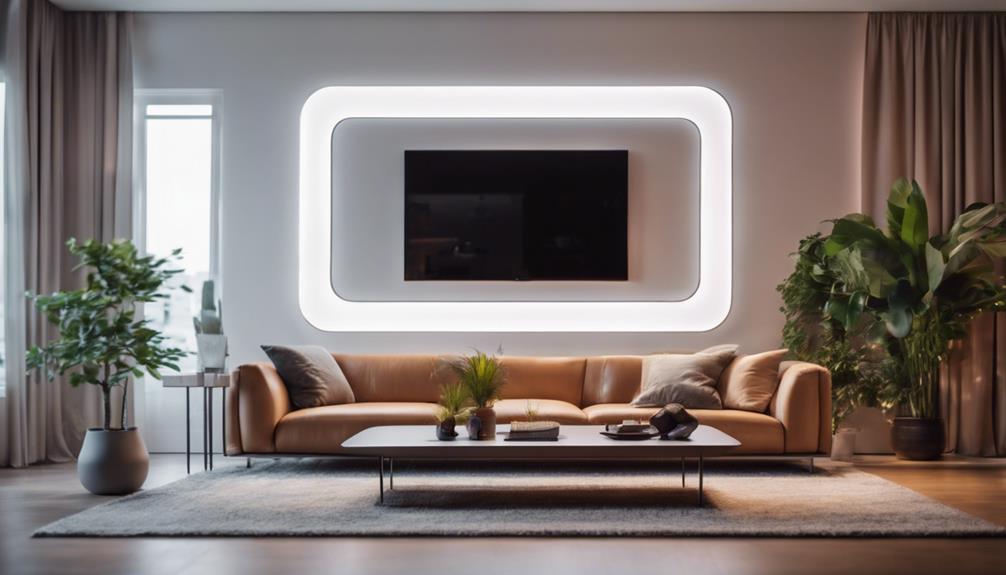
Organic Light-Emitting Diodes (OLED) technology utilizes organic compounds to emit light when an electric current is applied. OLED displays offer higher contrast ratios and wider viewing angles compared to traditional LED displays. Here are some key points about OLED technology:
- No Backlight: OLEDs don't require a backlight, leading to thinner and more flexible display options.
- Design Flexibility: OLED lighting panels can be made to be transparent, allowing for innovative design possibilities.
- Energy Efficiency: OLED technology is seen as the future of lighting due to its energy efficiency.
- Improved Display Quality: The use of organic compounds in OLED technology results in displays with vibrant colors and deep blacks.
OLED technology is paving the way for the future of lighting and display technologies, offering not only energy-efficient solutions but also unmatched design flexibility. With its ability to create thin, flexible, and high-quality displays, OLED is set to revolutionize the way we experience lighting and visual content.

FURNIMAT 2025 Massage Chair Full Body, Zero Gravity Massage Chair with 10 Fix Rollers, Heating, Foot Massage, Auto Modes, Bluetooth Speaker, Touch Screen Controller (Brown Premium)
[FULL BODY MASSAGE CHAIR]: After inviting hundreds of massage therapists to test and experience, we launch this upgraded...
As an affiliate, we earn on qualifying purchases.
MicroLED Technology
Emerging as a cutting-edge advancement in display technology, MicroLED technology harnesses microscopic LEDs to deliver exceptional resolution and brightness. Each pixel in a MicroLED display consists of individual red, green, and blue LEDs, enabling precise color control and vibrant visuals. Compared to traditional LED displays, MicroLED displays offer superior energy efficiency and a longer lifespan. The small size of MicroLEDs not only contributes to their high resolution but also allows for flexible and customizable display designs suitable for various applications.
Tech giants such as Apple and Samsung are heavily investing in MicroLED technology for future display innovations. The potential of MicroLED to revolutionize the display industry is evident in its ability to provide stunning visuals with unmatched clarity and brightness. As this technology continues to advance, consumers can anticipate even more impressive and immersive display experiences across a range of devices.

Massage Chair Full Body,Zero Gravity 3D SL-Track Shiatsu Massage Recliner Chair Built-in Heat System Airbag Massage with Body Scan, Deep Yoga Stretch, Calfrest Extension And Foot And Back massage
Zero Gravity & Sleep Cabin Design – One-touch zero gravity mode combined with a shading sleep cabin blocks...
As an affiliate, we earn on qualifying purchases.
Laser Lighting Systems
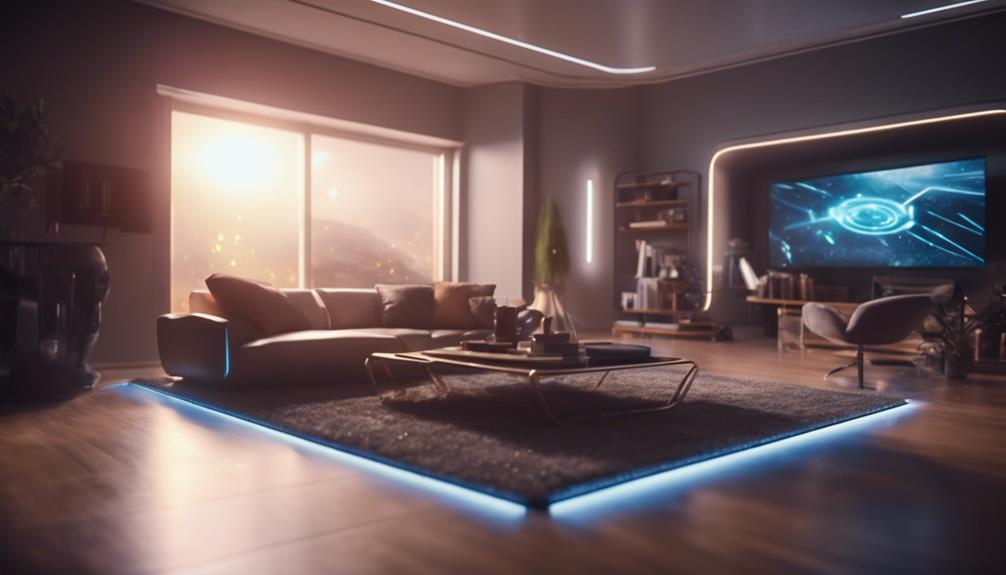
Laser lighting systems, utilizing laser diodes to produce light, offer a highly efficient and precise illumination solution for various applications. These systems have the potential to be more energy-efficient than traditional LED lighting sources. Laser lighting systems can provide intense, focused illumination for applications like automotive headlights and projectors. The technology behind laser lighting systems allows for compact designs and the potential for innovative lighting solutions.
- Laser lighting systems use laser diodes for light generation.
- They're more energy-efficient compared to traditional LED lighting.
- These systems offer intense and focused illumination.
- The technology enables compact designs and innovative lighting solutions.
While still in the development stages, laser lighting systems show promise for future advancements in lighting technology. With their efficiency and precision, they may become a significant player in the domain of innovative lighting solutions.
Nanowire LED Technology
Utilizing nanowire technology, LED systems have achieved remarkable advancements in efficiency and precision for lighting applications. Nanowire LED technology utilizes extremely thin wires to emit light efficiently and with high precision. These nanowires enable LEDs to produce light at a microscopic scale, leading to enhanced energy efficiency. Additionally, nanowire LEDs have the potential to revolutionize display technologies by creating ultra-high-resolution screens. The use of nanowires in LED manufacturing also results in improved color purity and brightness compared to traditional LEDs. Researchers are actively exploring nanowire LED technology for applications in quantum computing and advanced optical communication systems.
| Advantages of Nanowire LED Technology | ||
|---|---|---|
| High Energy Efficiency | Enhanced Precision | Revolutionizing Display Technologies |
| Improved Color Purity | Potential for Quantum Computing |
Frequently Asked Questions
What Technology Will Replace LED Lights?
While LED lights are widely used now, the future might see Organic Light Emitting Diodes (OLEDs) taking over. OLEDs offer flexibility, transparency, and energy efficiency, along with superior color reproduction and thinner designs compared to LEDs.
They don't require a backlight, leading to slimmer displays and improved energy efficiency. Though cost and lifespan challenges exist, ongoing research aims to establish OLEDs as the next-generation lighting technology.
Will LED Lights Be Replaced?
It's uncertain whether LED lighting will be fully replaced by emerging technologies like OLED and micro-LEDs.
While advancements in OLED and micro-LEDs offer benefits such as flexibility and energy efficiency, LED technology continues to evolve.
The competition drives innovation in the lighting industry. LEDs remain a dominant player for now, but the future could see a shift towards newer technologies as research and development efforts progress.
What Is the New Alternative to LED Lights?
A new alternative to LED lights is OLED (Organic Light-Emitting Diode) technology. OLEDs offer thin, flexible, and even transparent lighting solutions without the need for a backlight, potentially leading to more energy-efficient and versatile options.
With higher color accuracy and contrast compared to LEDs, OLED technology is increasingly being adopted in various applications such as TVs, smartphones, and lighting fixtures. The future of lighting may see OLEDs replacing LEDs due to their innovative features.
What Is the Future of LED Lighting Technology?
In the future, LED lighting technology is poised to offer human-controlled lighting with color tuning and circadian rhythm alignment features.
LED advancements deliver exceptional energy efficiency, converting up to 70% of energy into light and saving up to 90% compared to incandescent bulbs.
With internet-enabled systems allowing remote control and smart building capabilities, LEDs lead the way in energy savings and enhanced functionality, making them a sustainable and cost-effective lighting solution for the future.
Conclusion
To sum up, the future of lighting technology looks bright with advancements like Quantum Dot, OLED, MicroLED, Laser, and Nanowire LED technologies on the horizon. These emerging technologies offer improved energy efficiency, color accuracy, and longevity compared to traditional LED lighting.
With these innovations, the possibilities for lighting design and functionality are truly limitless. The rapid pace of development in this field is nothing short of revolutionary, paving the way for a dazzling and sustainable future in illumination.