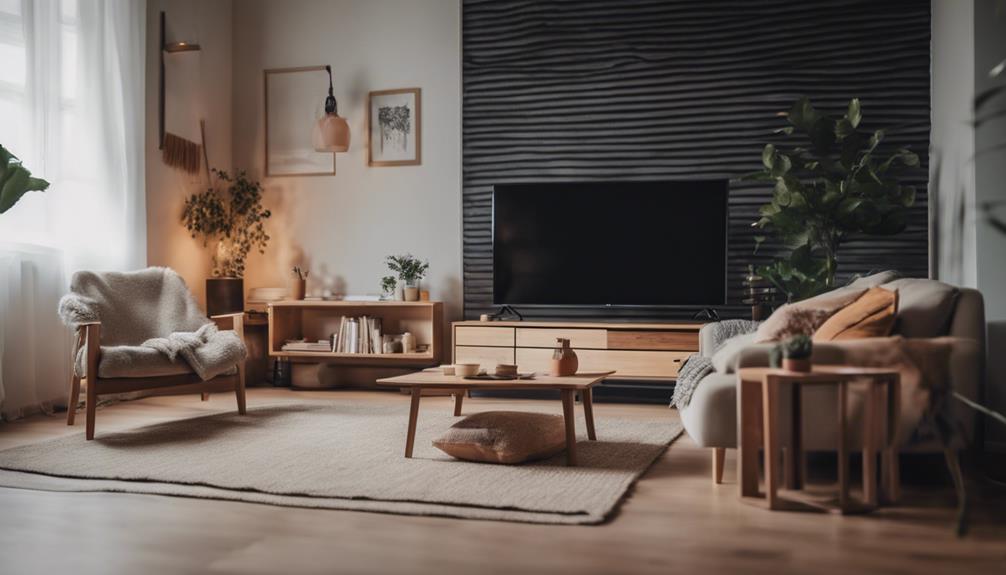
Minimalist decor focuses on simplicity, clean lines, and neutral colors to create calming, uncluttered spaces that promote clarity. In contrast, maximalist decor uses bold colors, layered textures, and vibrant patterns to evoke energy and showcase personality. While minimalism offers tranquility and order, maximalism brings visual richness and emotional expression. Understanding these styles helps you choose what best reflects your personality and ambiance preferences. If you explore further, you’ll discover how to blend and personalize these contrasting styles for unique spaces.
Key Takeaways
- Minimalist decor focuses on simplicity, neutral colors, and uncluttered spaces, promoting calm and order.
- Maximalist decor embraces bold colors, layered textures, and abundant accessories for energetic, expressive environments.
- Minimalism emphasizes clean lines and functional furniture, while maximalism features ornate, layered furnishings.
- Combining both styles can create personalized spaces that balance tranquility with vibrant personality.
- Consider your desired atmosphere—calm and spacious or lively and eclectic—when choosing between minimalist and maximalist decor.

DEKIMOW Accent Chairs Set of 2, Mid-Century Modern Chair with Polyester Upholstery, Wood Base with Walnut Finish, Minimalist and Stylish Accent Seating for Living Room, Bedroom, Balcony, Walnut
【Modern Minimalist Design】Featuring a sleek, minimalist aesthetic, this chair seamlessly blends into any contemporary or transitional space. Its…
As an affiliate, we earn on qualifying purchases.
As an affiliate, we earn on qualifying purchases.
The Foundations of Minimalist and Maximalist Styles
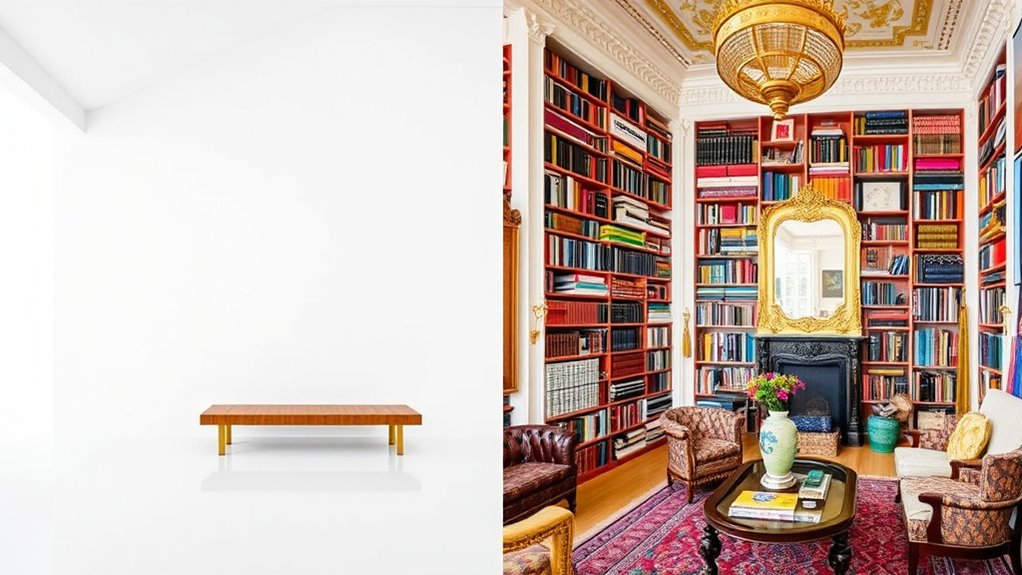
Understanding the foundations of minimalist and maximalist styles helps you appreciate their distinct approaches to decor. Minimalism focuses on simplicity, using space utilization to create a calm, uncluttered environment. Every piece has a purpose, and negative space enhances the overall aesthetic. This approach often evokes feelings of tranquility and order. In contrast, maximalism embraces abundance, layering textures, colors, and patterns to fill every inch of space. It aims to make a bold statement, creating a lively and energetic atmosphere. The emotional impact of maximalist decor comes from its rich visual complexity, inviting curiosity and excitement. By understanding these core principles, you can better choose a style that aligns with your personality and the mood you want to cultivate in your space. Additionally, emotional impact plays a significant role in how each style influences the atmosphere of your environment.

97 Decor Eclectic Wall Art Framed – Modern Maximalist Wall Decor, Unique Colorful Prints For Wall Decorations Aesthetic Pictures, Retro Framed Gallery Wall Art Set Artsy Room Posters For Home Bedroom (BLACK FRAME)
Eclectic Black Framed Poster: Elevate your space with eclectic decor, eclectic wall decor, and eclectic home decor aesthetic…
As an affiliate, we earn on qualifying purchases.
As an affiliate, we earn on qualifying purchases.
Key Elements and Design Principles
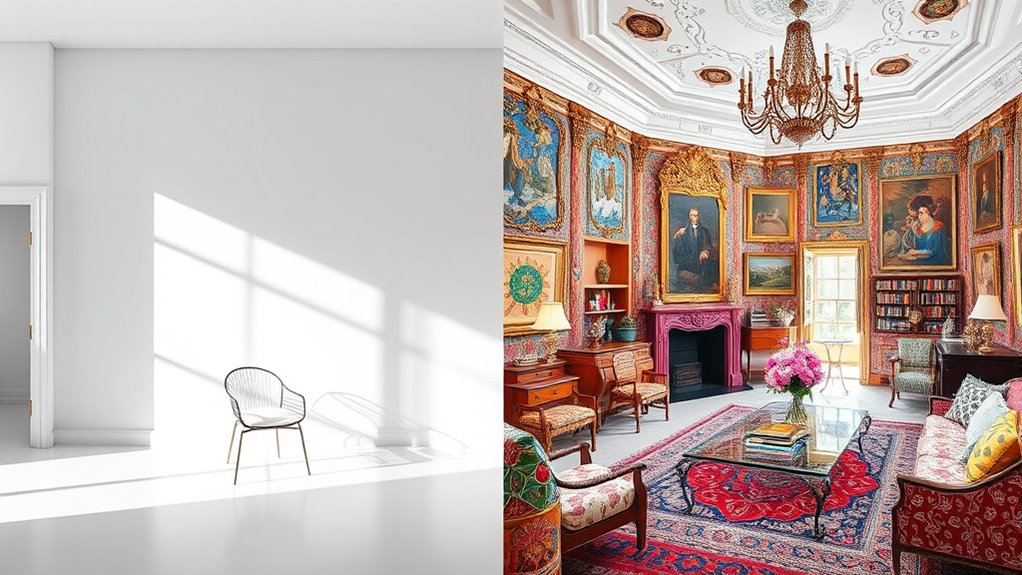
You’ll want to focus on simplicity and clarity to create a cohesive look, whether you prefer minimalism or maximalism. Balance and contrast help emphasize key elements and keep the space engaging. Mastering these principles guarantees your decor reflects your style perfectly. Additionally, incorporating greenhouse-inspired design elements can unify your indoor and outdoor spaces, enhancing your overall aesthetic.
Simplicity and Clarity
Simplicity and clarity serve as the foundation of effective minimalist and maximalist decor, guiding how elements are chosen and arranged. In both styles, you focus on space utilization to create a clean, organized environment that enhances the room’s purpose. Minimalist decor emphasizes open space, with fewer pieces that serve a clear function, while maximalist decor uses space more freely, highlighting bold statements. Lighting techniques are essential—they help define the mood and emphasize key features, whether through natural light or strategic fixtures. In minimalist spaces, lighting is subtle and unobtrusive, reinforcing clarity. Maximalist spaces often employ layered lighting to showcase intricate details and vibrant decor. Overall, balancing simplicity with strategic lighting enhances clarity, making each style visually appealing and purposeful. Additionally, understanding how asset division and tax implications can influence space planning may be beneficial when considering long-term decor investments.
Balance and Contrast
Balance and contrast are essential elements that define the harmony and visual interest of both minimalist and maximalist decor. In minimalist spaces, you achieve balance through clean lines, neutral colors, and careful placement of simple pieces, allowing your artistic expression to shine without clutter. Maximalist decor, on the other hand, relies on contrasting textures, bold colors, and layered patterns to create lively, dynamic spaces that showcase your personality. Both styles use contrast to generate visual excitement while maintaining spatial harmony. By thoughtfully balancing elements—whether subtle or striking—you guarantee your space feels cohesive and inviting. Mastering this interplay lets you express your unique style while keeping your environment visually engaging and well-organized. Additionally, understanding design principles can help you refine your approach to achieving harmony and contrast in your space.

MIULEE Pack of 4 Couch Throw Pillow Covers 18×18 Inch Neutral Soft Decorative Chenille Pillow Covers Farmhouse Boho Cushion Covers for Mid Century Modern Spring Home Decor Sofa Bedroom Living Room
Premium Chenille Material: Made of solid thick durable chenille, very comfortable and super soft. Our pillow covers are…
As an affiliate, we earn on qualifying purchases.
As an affiliate, we earn on qualifying purchases.
Color Palettes and Material Choices
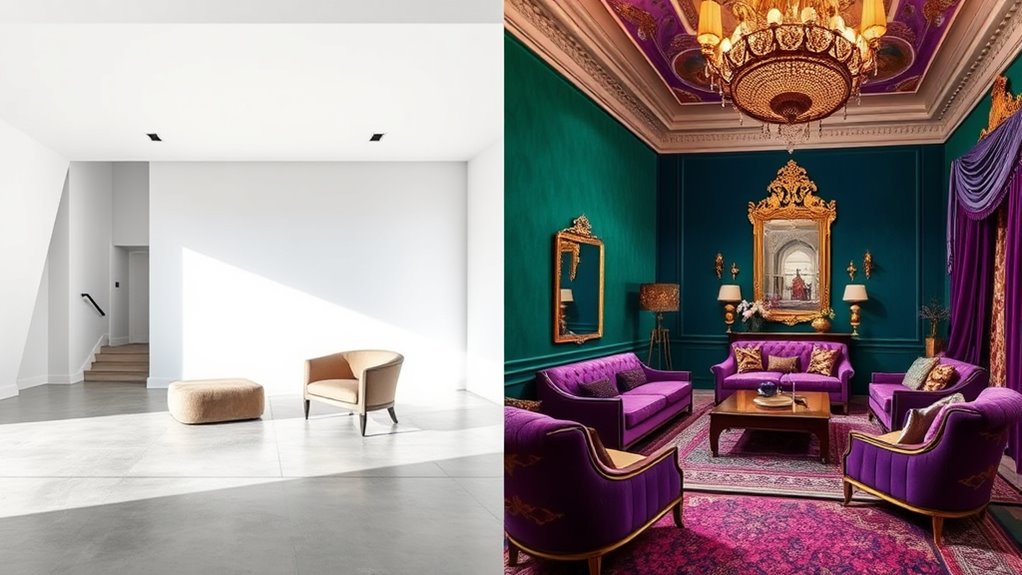
In minimalist decor, neutral tones like whites, grays, and beiges create a calm, uncluttered look. Maximalist styles often use bold color accents to add energy and personality. Your choice of materials, from sleek metals to rich textiles, further shapes the overall mood of the space. Incorporating decorative elements can also enhance the aesthetic, making the environment more inviting and expressive.
Neutral Tones Dominance
Neutral tones have become the hallmark of both minimalist and maximalist decor, shaping the overall ambiance through carefully chosen color palettes and materials. These shades create a sense of calm and balance, emphasizing color harmony and simplicity. In minimalist spaces, you’ll find soft beiges, whites, and grays that enhance the feeling of openness. Maximalist designs incorporate neutral tones to anchor bold patterns and textures, preventing overwhelm. To achieve a cohesive look, pay attention to material choices like natural wood, stone, and linen, which complement neutral hues. This balance allows you to enjoy a versatile environment that feels both sophisticated and inviting. Ultimately, neutral tones serve as a versatile foundation, unifying diverse decor styles seamlessly. Incorporating color palettes that emphasize harmony can further enhance the overall aesthetic.
Bold Color Accents
While neutral tones set a calm foundation, bold color accents bring energy and personality to a space. Incorporating bold color accents creates striking visual focal points that draw the eye and add vibrancy. You can choose vivid hues for furniture, artwork, or accessories to make a statement. Material choices like glossy finishes, textured fabrics, or metallic surfaces enhance these accents, making them stand out even more. Maximalist decor often uses contrasting shades and layered patterns to amplify the effect, while minimalist spaces may opt for a single bold piece to avoid overwhelming the senses. The key is balancing the vivid accents with neutral surroundings, ensuring they serve as eye-catching focal points without cluttering the environment. Ultimately, bold color accents inject life into any decor style. Incorporating color accents can be especially effective in a farmhouse bedroom, where they can complement rustic elements while adding a modern twist.

SHACOS Soft Cozy Fluffy Arch Pattern High-Low Pile Textured Area Rug 5'3"x7'3" Non Slip Washable Modern Geometric Rug Stain Resistant Contemporary Carpet for Living Room Bedroom Dining Room, Beige
Rainbow Arch Textured Rug with High Low Tuft Piles: This scandinavian rug is not printed, it is woven…
As an affiliate, we earn on qualifying purchases.
As an affiliate, we earn on qualifying purchases.
Furniture and Accessory Curation
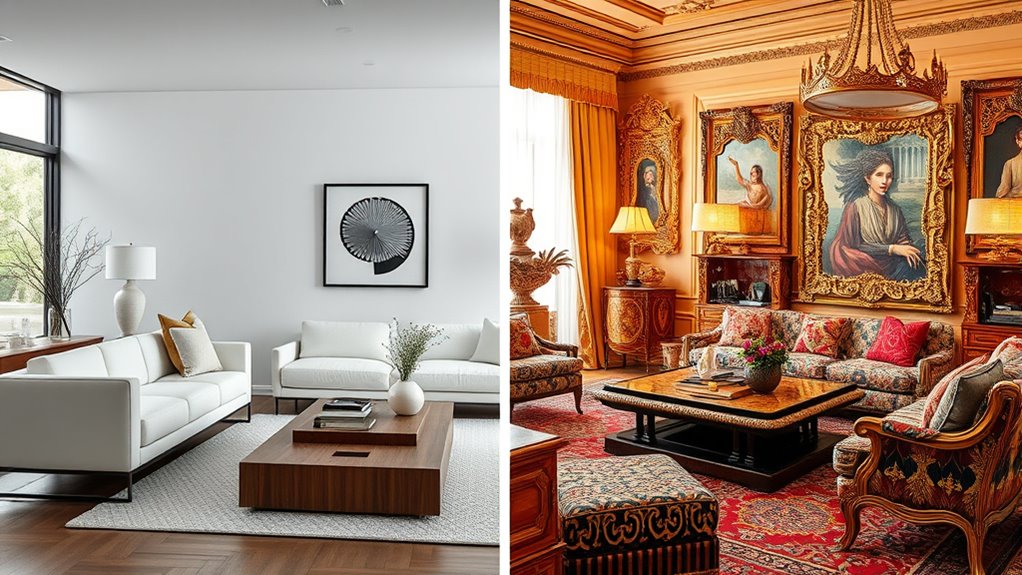
Choosing furniture and accessories is where minimalist and maximalist styles truly diverge. In a minimalist space, you’ll select sleek furniture with clean lines, focusing on quality over quantity. Accessories are kept to a minimum, often including statement pieces like a bold wall art or a unique sculpture. Maximalists, on the other hand, fill their space with a mix of vibrant textiles, layered wall art, and ornate furniture, creating a rich visual tapestry. Artificial lighting plays a key role—minimalists prefer subtle, integrated fixtures, while maximalists embrace layered lighting to highlight their collections. To make your decor stand out, consider these tips:
- Use wall art to express personality
- Incorporate statement furniture pieces
- Layer artificial lighting for ambiance
- Mix textures and patterns for maximal impact
Including layered lighting can also help create a more dynamic and inviting atmosphere in maximalist spaces.
Advantages and Challenges of Each Approach
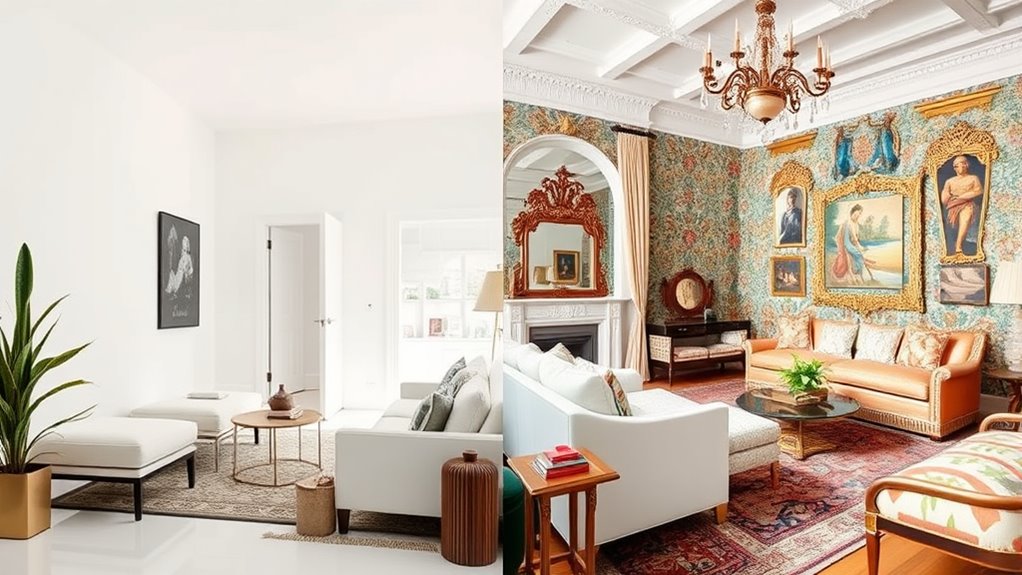
Minimalist decor offers the advantage of creating a calm, uncluttered environment that promotes relaxation and simplicity, making spaces feel larger and more organized. Its focus on space optimization enhances functionality while reducing visual chaos. However, this approach can sometimes feel cold or impersonal if not balanced carefully. Maximalist decor, on the other hand, provides a rich emotional impact through layered textures and bold colors, creating a warm, inviting atmosphere. Yet, it can challenge space management, risking clutter and overwhelming the senses. The table below highlights these strengths and challenges:
| Approach | Advantages | Challenges |
|---|---|---|
| Minimalist | Space optimization, tranquility | Can feel sterile or impersonal |
| Maximalist | Emotional impact, personality expression | Risk of clutter, reduced space perception |
Blending Minimalist and Maximalist Aesthetics

Blending minimalist and maximalist aesthetics offers a dynamic way to create personalized spaces that balance simplicity with bold expression. You can achieve this by using decorative layering to add depth without clutter, combining clean lines with statement pieces. This approach allows you to optimize space by carefully selecting items that serve both functional and aesthetic purposes. In this style, you might pair a sleek sofa with vibrant artwork or mix understated furniture with eye-catching accessories. It’s about striking harmony between minimalism’s calm and maximalism’s energy. Experiment with contrasting textures and colors to highlight your personality. Remember, the key is deliberate choices that emphasize your unique taste while maintaining balance. Incorporating decorative layering techniques can further enhance the visual interest of your space. This method guarantees your space feels curated, lively, and true to you.
Tips for Personalizing Your Decor Style

Personalizing your decor style turns a generic space into a reflection of who you are. To achieve this, focus on personal expression by incorporating items that hold meaning or showcase your interests. Display artwork, souvenirs, or family photos that tell your story. Don’t be afraid to experiment with seasonal updates; swapping out pillows, throws, or decorative accessories keeps your space fresh and engaging throughout the year. Use color, texture, and unique accents to highlight your personality. Whether you prefer minimalist simplicity or maximalist flair, personalized touches make your space truly yours. Remember, small changes like adding favorite books or meaningful objects can make a big difference in creating a space that feels authentic and inviting. Incorporating decorating styles like minimalist or maximalist can help guide your personal expression.
Frequently Asked Questions
How Do Minimalism and Maximalism Impact Interior Lighting Choices?
You shape your interior lighting choices based on your style, whether minimalism or maximalism. With minimalism, you prefer simple fixtures that create a clean lighting ambiance, emphasizing functionality and subtlety. Maximalism calls for bold fixtures that add drama and character, enhancing the overall vibe. Your fixture selection directly influences the lighting ambiance, helping you achieve the desired mood and complementing your decor style effortlessly.
Can Small Spaces Effectively Incorporate Maximalist Elements?
Think of your small space as a canvas, ready for a vibrant mosaic. You can effectively incorporate maximalist elements by focusing on space optimization and decorative layering. Use clever furniture placement, multi-functional pieces, and strategic accents to avoid clutter. Layer patterns, textures, and colors thoughtfully to create visual interest without overwhelming. This way, your compact area transforms into a dynamic, cozy haven full of personality and depth.
What Are Common Misconceptions About Minimalist and Maximalist Decor?
You might believe decor style myths that minimalist decor is cold or boring, or that maximalist decor is cluttered and chaotic. These decorating stereotypes aren’t true; both styles can be sophisticated and inviting. Many people think you must stick to one approach, but mixing elements creates unique spaces. Don’t let misconceptions limit your creativity—embrace the versatility of both styles to craft a personalized, balanced home.
How Do These Styles Influence Mood and Psychological Well-Being?
You’ll notice that minimalist decor can promote calmness and focus, positively affecting your emotional state, while maximalist styles stimulate excitement and creativity, enhancing your mood. These styles influence your cognitive responses by either reducing stress through simplicity or inspiring energy through vibrant, layered elements. Your environment shapes your psychological well-being, so choosing a style aligned with your emotional needs can foster a balanced, supportive atmosphere in your space.
Are There Sustainable Practices Unique to Each Decor Style?
Imagine your home as a garden—each choice plants seeds for sustainability. With minimalist decor, you embrace eco-friendly designs by using sustainable materials like reclaimed wood and simple, durable pieces. Maximalist styles thrive on sustainable practices through upcycling and selecting vibrant, eco-conscious textiles. Both styles can bloom beautifully with eco-friendly designs, making your space not just stylish but also kind to the planet.
Conclusion
Imagine your home as a garden. Minimalism is like tending to a few carefully chosen flowers—each piece breathes and blooms with purpose. Maximalism is a vibrant jungle, bursting with color and texture, inviting exploration. Whether you prefer the calm of a single path or the adventure of a wild landscape, your style reflects your personality. Embrace what feels right, blending elements if you like—your space should always feel like your personal sanctuary.