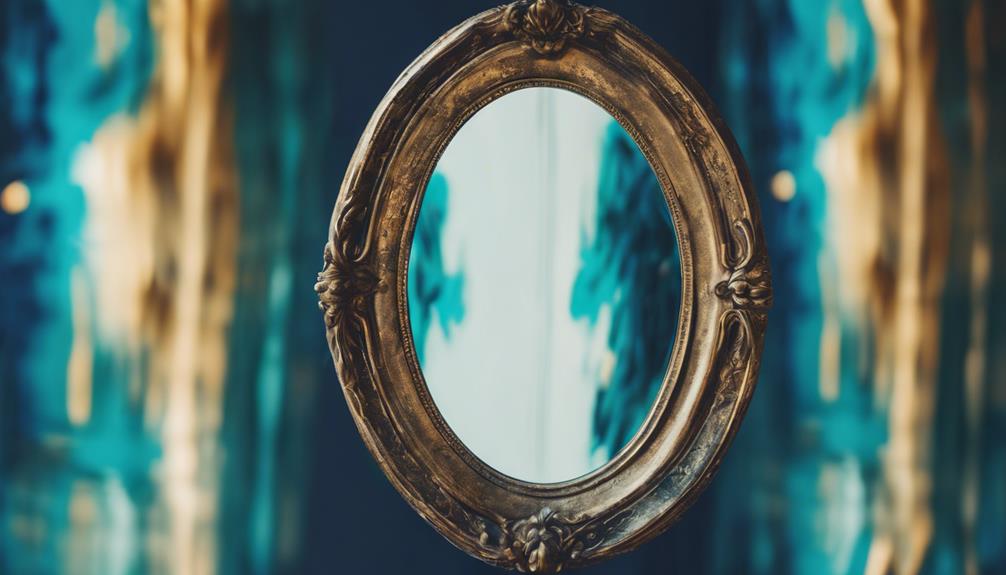

When it comes to mirror painting techniques, preparing the mirrored surface is crucial. Clean the mirror with a damp microfiber cloth, then prime it with white gesso to guarantee paint adhesion. Gather essential tools like acrylic paint, water-soluble pencils, and painter's tape. Apply a base coat of gesso, followed by thin, even layers of acrylic paint. Use water-soluble pencils to sketch designs, and add texture with a spray bottle. Remember to seal your masterpiece with a clear coat to maintain its beauty and extend its lifespan. With these techniques, you'll be well on your way to creating a stunning, one-of-a-kind mirror – and there's more to explore when you're ready to take your skills to the next level.

Get furniture and decor delivered free with Prime
- Fast, free delivery on millions of items
- Prime Video, Amazon Music and more included
- Member-only deals all year
Key Takeaways
• Clean and prime the mirror surface with white gesso to ensure smooth paint adhesion and a strong bond.
• Apply acrylic paint in thin, even layers, allowing each layer to dry for a flawless finish.
• Use water-soluble pencils to sketch designs and add texture with a spray bottle for visual interest.
• Seal the painted mirror with a clear sealer in thin, even coats to maintain beauty and extend lifespan.
• Adapt painting techniques to the mirror's shape, considering angles and curves for a professional finish.
As an affiliate, we earn on qualifying purchases.
Preparing the Mirrored Surface
Before you begin creating your mirror masterpiece, thoroughly clean the mirror's surface with a dampened microfiber cloth to remove dirt and debris that may interfere with the painting process. This vital step guarantees a smooth, even surface for your paint to adhere to. Failure to clean the mirror properly can lead to uneven paint distribution, ruining the overall aesthetic of your artwork.
Once the mirror is clean, you're ready to prime the surface for painting. Applying a layer of white gesso to the areas you plan to paint creates a smooth, primed surface for your artwork. Let the gesso dry for 24 hours to ensure proper adhesion of the paint. This step is crucial, as it allows the paint to bond with the mirror's surface, creating a durable, long-lasting finish.
Essential Painting Tools Needed
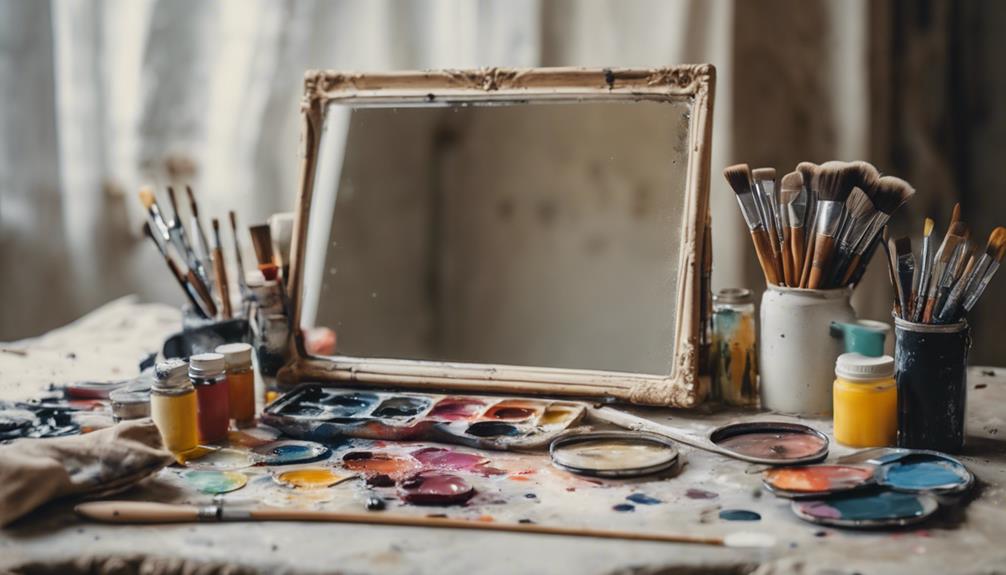
Gather the essential tools of the trade, including acrylic paint, water-soluble pencils, gesso, brushes of various sizes, and painter's tape, to guarantee a successful mirror painting experience. You'll be amazed at how these tools come together to create a stunning masterpiece.
Acrylic paint, with its quick-drying properties and vibrant colors, is the perfect choice for mirror painting. Water-soluble pencils are ideal for sketching designs on mirrors before painting, allowing you to visualize your design.
Gesso, used as a base coat, helps the acrylic paint adhere better and enhances the final colors. Don't forget painter's tape, which is essential for masking off areas on the mirror frame to prevent paint seepage and ensure clean edges.
Applying Primer for Adhesion
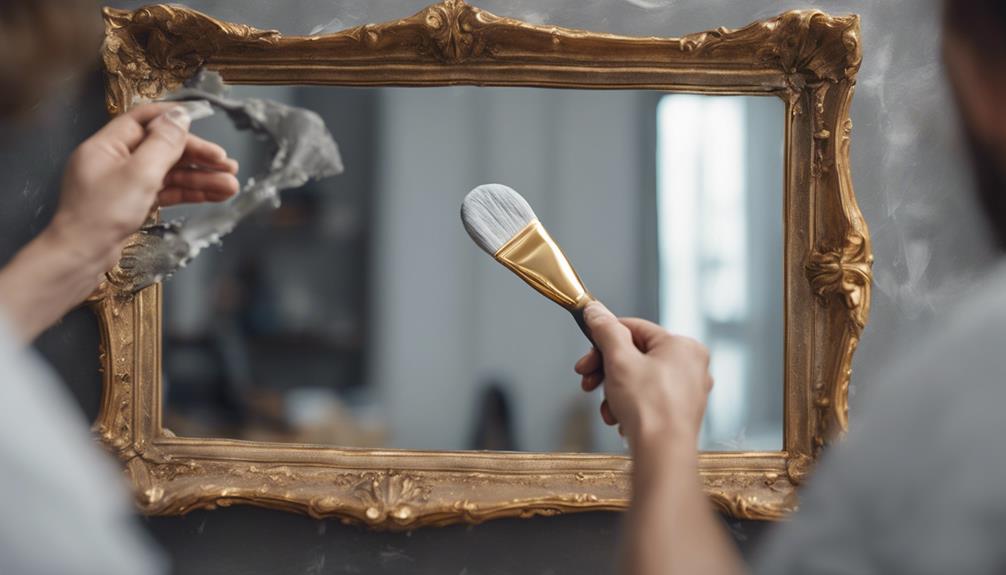
With your tools in hand, you're ready to take the next step in creating a stunning mirror painting: applying primer to guarantee a strong bond between the paint and the mirrored surface. This vital step guarantees that your paint adheres properly, preventing peeling or flaking over time.
By applying primer, you create a smooth and even base for the paint to adhere to, which is essential for a long-lasting finish. Proper adhesion is essential, as it prevents the paint from chipping or cracking, and primer helps achieve this. Additionally, primer improves the durability of the paint job, resulting in a professional and polished finish.
In addition, it enhances the vibrancy and richness of the paint colors, making your mirror painting truly stand out. By taking the time to apply primer, you'll be rewarded with a beautiful, long-lasting finish that will make your mirror painting a true masterpiece.
Painting Techniques for a Flawless Finish
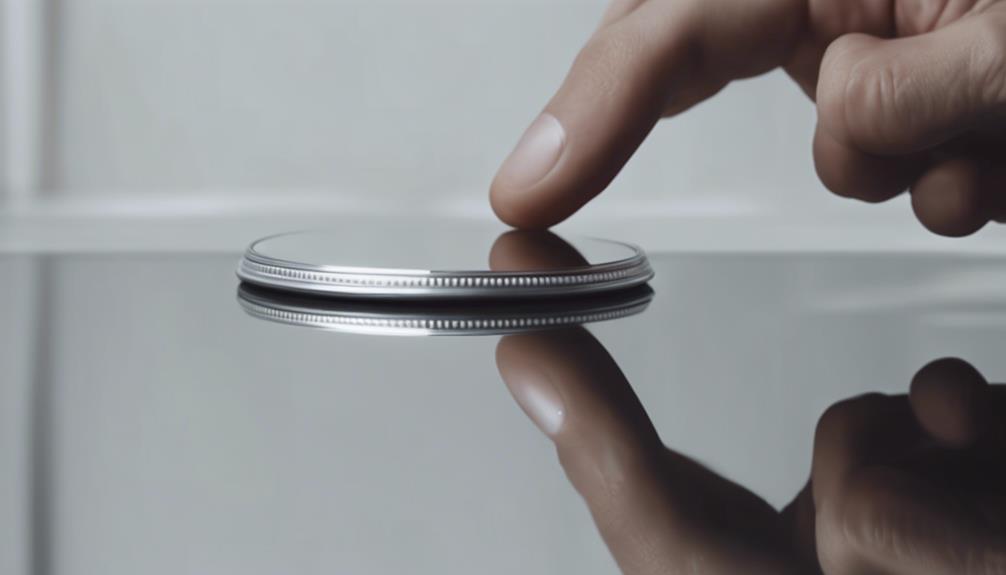
Now that your primer is fully dry, you're prepared to ignite your creativity and start painting, using techniques that will guarantee a flawless finish and make your mirror artwork truly shine.
To achieve a professional-looking frame, begin by applying a base coat of gesso to enhance paint adhesion and color intensity. Next, use acrylic paint to add thin, even layers, starting with darker areas to create depth and dimension. Consider using water-soluble pencils to sketch your design onto the mirror, allowing for precise lines and details.
As you work, remember to allow each layer to dry completely before applying the next, ensuring a smooth, even finish. To add texture and visual interest, you can use a spray bottle to create subtle, mottled effects.
Removing Excess Paint Safely
As you move forward with removing excess paint from your mirror, it's important to do so safely and effectively.
You'll want to think about the best paint removal methods, such as using a razor blade or craft knife, and implement safe cleaning practices to avoid damaging the mirror.
Paint Removal Methods
By the time you're ready to remove excess paint, you'll need to exercise caution to avoid damaging the mirror surface. Removing excess paint safely is important to achieving a professional-looking finish. You'll want to take your time and work carefully to avoid scratching or damaging the mirror.
To remove excess paint, you can use a razor blade or craft knife with Windex to gently scrape off the residue. Be careful not to apply too much pressure, as this can scratch the mirror.
Here are some tips to keep in mind:
- Use a razor blade or craft knife with Windex to carefully remove excess paint
- Gently scrape off excess paint residue from the mirror to ensure a clean finish
- Take care when removing excess paint to avoid scratching or damaging the mirror
After removing excess paint, clean the mirror surface thoroughly to achieve a polished look. Properly removing excess paint ensures a professional and flawless mirror painting outcome.
Safe Cleaning Practices
When removing excess paint from a mirror, you'll need to employ safe cleaning practices to avoid damaging the surface. To do this, you'll want to use a razor blade or craft knife, along with a gentle glass cleaner like Windex. This combination will allow you to carefully scrape off the excess paint without applying too much pressure, which can scratch or damage the mirror.
Work in small, controlled motions to gradually lift off the excess paint, taking care not to harm the mirror underneath. Remember to wipe the mirror surface clean with a soft cloth after removing the excess paint to maintain a smooth and clear finish.
Taking your time and being patient during the removal process is crucial, as this will help preserve the integrity and appearance of the mirror. By following these safe cleaning practices, you'll be able to remove excess paint effectively without damaging your mirror.
Minimizing Messy Spills
Scrape off excess paint immediately to prevent it from drying and setting on the mirror surface, making removal more difficult. When working on your mirror painting project, it's crucial to minimize messy spills to achieve a professional-looking finish.
To remove excess paint safely, you'll need a few tools.
- Use a razor blade or craft knife along with Windex to carefully remove excess paint from the mirror surface without causing damage.
- Gently scrape off any spilled paint on the mirror using the razor blade while being cautious not to scratch the glass.
- Wipe the mirror clean with a soft cloth or paper towel after removing excess paint to guarantee a clear and streak-free finish.
Remember to take your time and work slowly when removing excess paint to achieve a clean and polished look on the mirror surface. If you need to remove the mirror from the mirror frame, do so carefully to avoid damaging the frame or the mirror.
Distressing for a Vintage Look
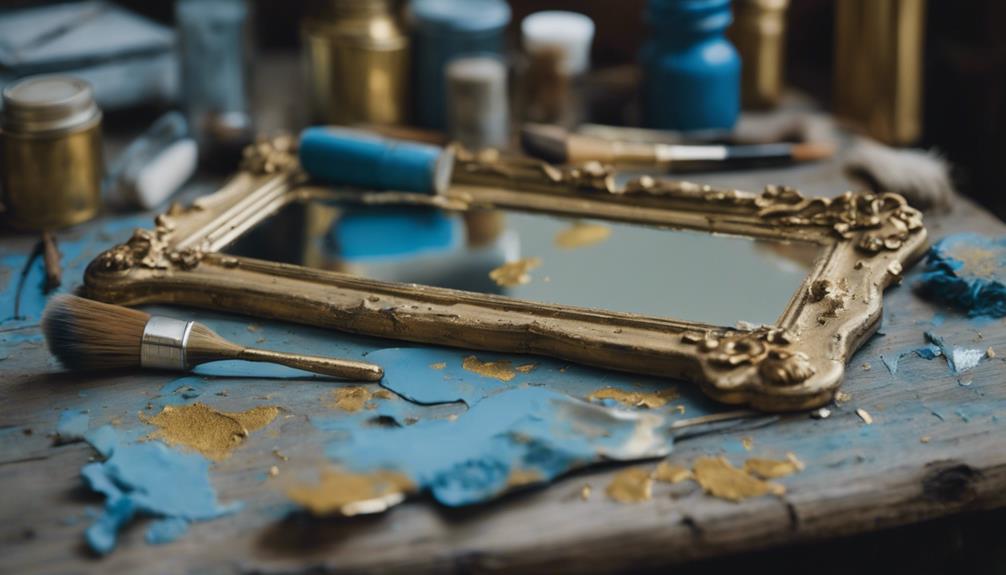
As you explore the art of distressing, you'll discover that it's all about creating a soft, worn look that exudes faded beauty.
To achieve this, you'll focus on softening the edges, which involves subtly blending the paint to create a gentle, aged appearance.
Softening the Edges
To achieve a genuinely vintage look, you'll want to soften the edges of your mirror frame by distressing them, a technique that creates a beautifully worn, aged appearance. This process, known as distressing, involves using sandpaper or a sanding block to wear down the edges, revealing the underlying layers of paint or wood.
Here are some tips to keep in mind:
- Focus on corners and high-contact areas for a natural distressed effect.
- Lightly sand along the edges to reveal the underlying layers of paint or wood.
- Use a variety of grits to achieve the desired level of distressing, from coarse to fine.
Worn, Faded Beauty
With a little creativity and some clever techniques, you can distress your mirror frame to achieve a beautifully worn, faded beauty that exudes vintage charm. One of the most effective distressing techniques is to apply Vaseline to specific areas of the frame before painting.
Once the paint dries, use sandpaper to gently rub off the areas with Vaseline, revealing the underlying surface and creating a worn, faded effect. This technique adds character to your mirror frame, giving it a unique, weathered finish that's perfect for a vintage look.
By experimenting with different distressing methods, you can achieve a one-of-a-kind, aged appearance that adds depth and personality to your mirror. Remember, the key to achieving a truly vintage look is to embrace imperfection and irregularity. Don't be afraid to get creative and try new things – after all, it's the imperfections that make a piece truly unique.
With practice and patience, you can master the art of distressing and create a stunning, one-of-a-kind mirror that's full of character.
Sealing Your Masterpiece
You've invested time and creativity into transforming a plain mirror into a stunning piece of art, and now it's important to seal your masterpiece to protect it from wear and tear.
Sealing your painted mirror is vital to maintain its beauty and extend its lifespan.
To guarantee a professional finish, follow these essential steps:
- Choose a clear sealer to maintain the mirror's reflective surface, allowing your artwork to shine.
- Apply the sealer in thin, even coats for best results, ensuring a smooth, uniform finish.
- Consider using polyurethane or wax to seal the painted frame, adding an extra layer of protection and durability.
Painting Different Mirror Shapes
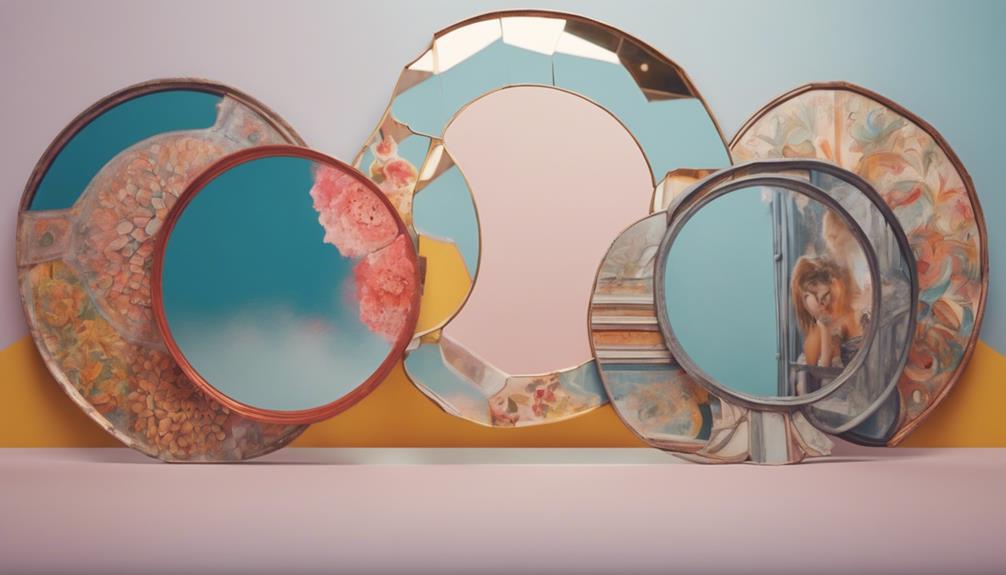
When tackling unique mirror shapes, begin by evaluating the frame's angles and curves to determine the best approach for painting. You'll need to adapt your technique to suit the mirror's shape, ensuring a flawless finish.
Circular mirrors, for instance, require a steady hand and attention to detail to maintain symmetry and smooth edges. Spray painting a mirror of this shape can be challenging, but the result is worth the effort.
Rectangular mirrors, on the other hand, offer straight lines that can be easily painted with clean, crisp edges for a polished look.
Oval mirrors provide a unique challenge, requiring careful brushwork for a smooth finish.
And if you're feeling adventurous, irregularly shaped mirrors offer creative opportunities to experiment with patterns, designs, and colors for a custom look.
Whatever shape you're working with, remember to prepare the mirrored surface carefully before you paint a mirror, and be patient – the end result will be a stunning work of art.
Common Mistakes to Avoid
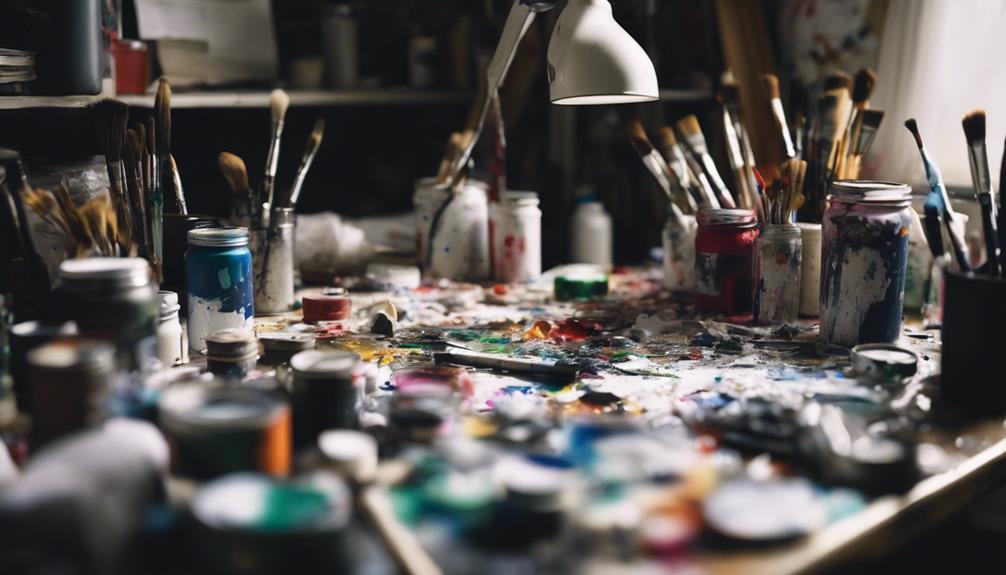
Painting a mirror can be a delicate process, and neglecting essential steps or using the wrong techniques can lead to disappointing results. To achieve a beautiful, professional-looking finish, it's important to avoid common mistakes that can ruin your mirrored masterpiece.
Here are some common mistakes to steer clear of:
- Don't apply painter's tape directly to the mirror's surface, as this can damage the mirror or leave residue.
- Always make sure the mirror is clean and dry before painting to prevent dirt and moisture from affecting the paint's adhesion.
- Apply thin layers of paint to prevent drips and achieve a smooth finish on the mirrored surface.
Maintaining Your Newly Painted Mirror
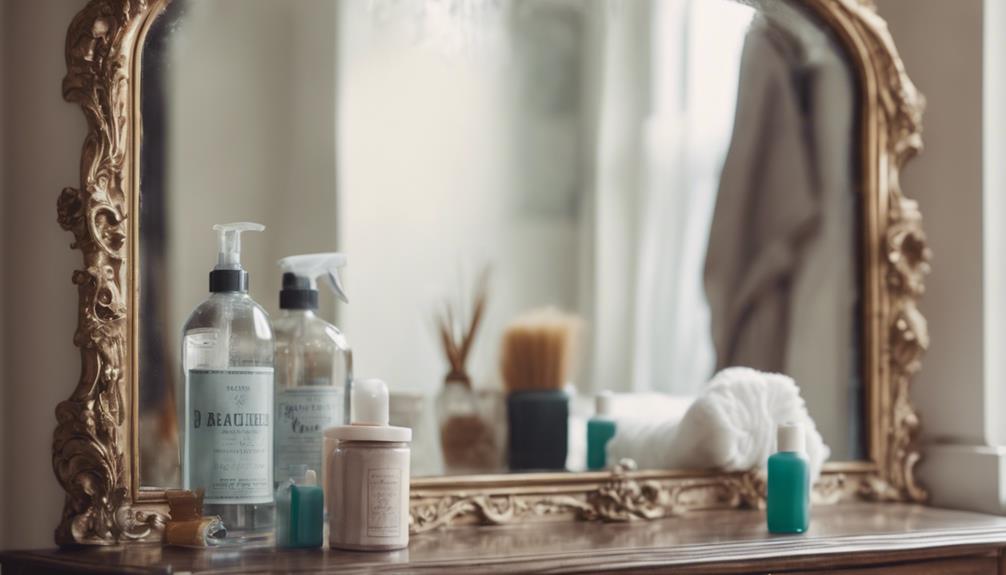
As you enjoy your newly painted mirror, remember that regular maintenance is important to preserving its beauty and longevity.
To keep your mirror looking its best, you'll want to establish a daily cleaning routine.
Learn effective mirror protection methods, and know how to avoid common mistakes that can damage your mirror's finish.
Daily Cleaning Routine
To maintain the beauty and longevity of your newly painted mirror, you should establish a daily cleaning routine that includes wiping it down with a damp microfiber cloth to remove dust and smudges. This simple yet effective habit will help preserve the quality of your painted mirror and prevent damage to the painted surface.
Here are some additional tips to keep in mind:
Avoid using harsh chemicals or abrasive cleaners that can damage the painted surface of the mirror.
Regularly inspect the painted area for any signs of wear or chipping to address any maintenance needs promptly.
Gently dust the painted mirror frame with a soft brush or cloth to maintain its appearance and cleanliness.
Mirror Protection Methods
You've taken the first step in preserving your mirror's beauty by establishing a daily cleaning routine, and now it's time to implement additional measures to safeguard your newly painted mirror from damage.
To guarantee your mirror remains in pristine condition, consider applying a clear sealant or wax to protect the painted surface from scratches and moisture. This extra layer of protection will provide peace of mind and maintain the mirror's appearance.
When hanging your mirror, use felt pads or bumpers on the back to prevent it from scratching against the wall. Regularly dust the painted mirror with a soft cloth to maintain its cleanliness and appearance.
You can also use painters tape to mask off areas you don't want to paint, ensuring a crisp, clean finish. By taking these precautions, you'll be able to enjoy your beautifully painted mirror for years to come.
Avoiding Damage Tips
When handling your newly painted mirror, exercise extreme care to prevent damage, as even the slightest mishap can ruin the entire piece. You've invested time and effort into creating a beautiful, one-of-a-kind mirror, so it's crucial to take the necessary steps to maintain its appearance.
To keep your mirror looking its best, remember:
- Avoid using abrasive cleaners or tools on the surface of the mirror, as they can scratch or damage the paint.
- Remove any dust or debris that accumulates on the surface of the mirror using a soft, dry cloth, and gently wipe it clean.
- Handle the mirror with care when moving or hanging it, as bumps or knocks can cause chipping or scratching.
Frequently Asked Questions
How to Do Mirror Painting?
When you want to try mirror painting, start by prepping the surface – clean the mirror thoroughly with a damp cloth to guarantee paint adhesion.
Sketch your design with a water-soluble pencil, then apply gesso as a base for acrylic paint. Use thin coats, starting with darker areas, and let each layer dry completely.
What Kind of Paint Do You Use on a Mirror?
As you stand in front of your blank mirror, brush poised, you wonder what kind of paint to use. You imagine the vibrant colors and glossy finish you want to achieve.
To bring your vision to life, you'll need the right paint. Acrylic paint is a top choice, offering quick drying times and rich colors. Alternatively, enamel craft paints provide a durable, glossy finish.
How Do You Paint and Distress a Mirror?
When painting and distressing a mirror, you'll want to start with a clean slate, literally. Clean the mirror thoroughly to make sure the paint adheres properly.
Apply Vaseline to areas you want to distress, then paint and let it dry. Use a dark wax and a rag to add an aged look.
You can also experiment with overlay painting techniques for a unique, two-tone effect. Remember to be patient and gentle when handling the mirror to avoid scratches or breaks.
Can I Use Acrylic Paint on a Mirror?
You're wondering if you can use acrylic paint on a mirror. The answer is yes, you can! Acrylic paint is a great choice for mirror painting projects due to its quick drying time and versatility.
Just remember to apply thin coats, starting with darker areas for better coverage, and allow each layer to dry completely before adding more.
Conclusion
As you now possess the skills to transform mirrors into stunning works of art, remember that patience and attention to detail are key.
Did you know that, according to a study, a well-placed mirror can make a room appear 10% larger?
With your newfound expertise, you can create a masterpiece that not only adds aesthetic value but also creates an optical illusion, making your space feel more expansive.
Halloween Picks
halloween
As an affiliate, we earn on qualifying purchases.