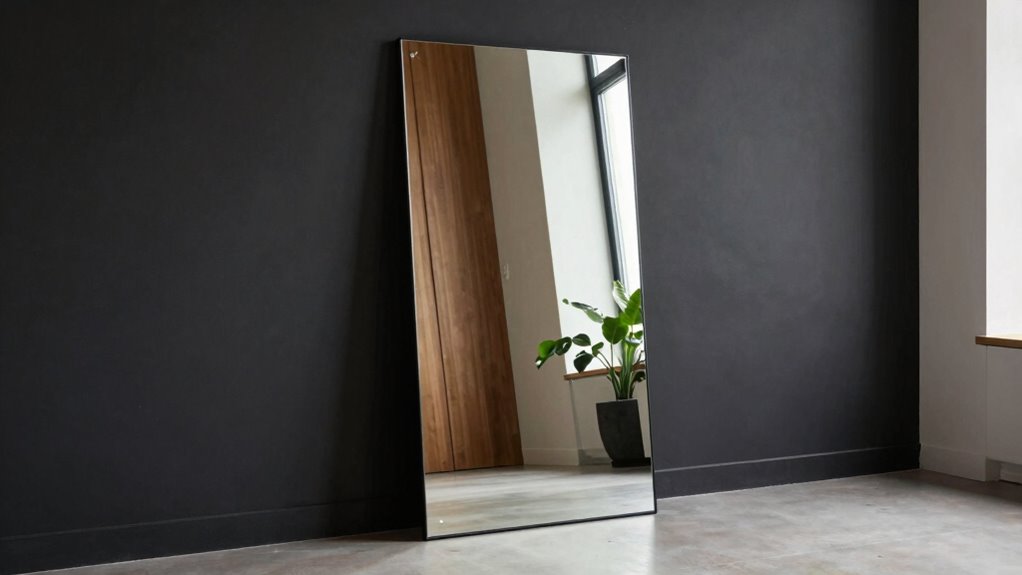

To open up dark walls, place mirrors opposite the light source or dark wall to reflect more light and create a sense of spaciousness. Use large or elongated mirrors to maximize light reflection and make the room feel brighter and more open. Experiment with different angles and heights to find what works best for your space. Keep exploring different placement tips to transform your room’s atmosphere—there’s more to discover that can make a real difference.

Get furniture and decor delivered free — and shop member deals
- Fast, free delivery on millions of items
- Access to Prime Big Deal Days deals on October 6–7
- Prime Video, Amazon Music and more included
Key Takeaways
- Place large mirrors opposite windows to reflect natural light and create an illusion of more space.
- Use sleek, light-colored frames to contrast dark walls and enhance brightness.
- Hang mirrors at eye level or slightly above to maximize light reflection and visual openness.
- Combine multiple mirrors or gallery arrangements to add depth and dynamic light distribution.
- Position mirrors at angles that redirect light toward darker areas, brightening and expanding the room.
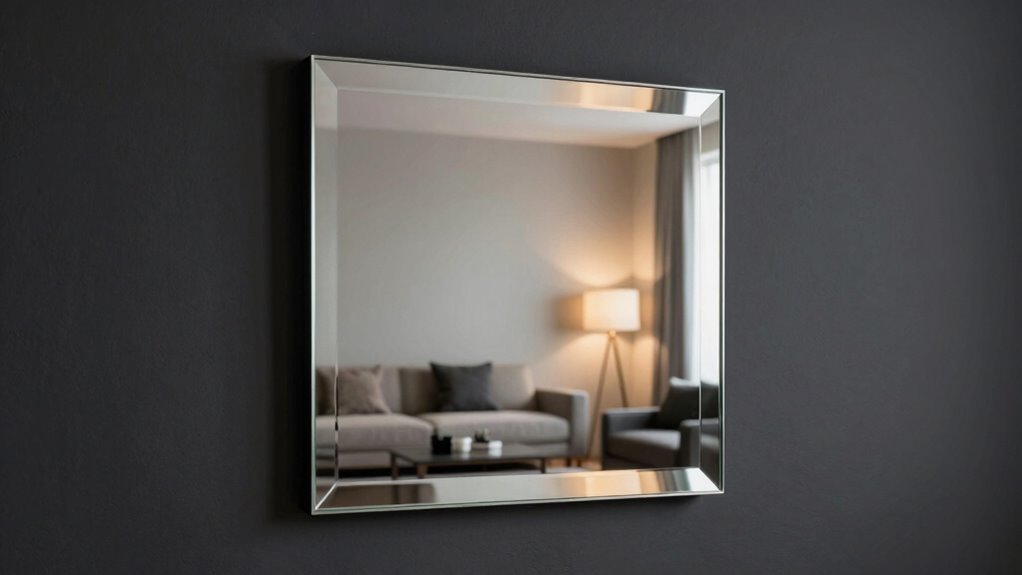
Have you ever wondered how the right mirror placement can transform a room? If you’re dealing with dark walls that make your space feel smaller or gloomier than you’d like, strategically positioning a mirror can be a game-changer. When you place a mirror thoughtfully, it does more than just reflect; it enhances lighting and creates a sense of openness that can brighten even the darkest corners. The key is to contemplate how the mirror interacts with your existing lighting and color scheme. By reflecting natural or artificial light, your mirror amplifies the light in the room, making the space feel more inviting and less confined. Positioning it opposite a source of light, such as a window or a lamp, maximizes this lighting enhancement, transforming your dark walls into an asset rather than a flaw. Additionally, understanding how mirrors reflect light can help you strategically position them for optimal brightness. Color coordination also plays a critical role in making this trick work. If your walls are painted in deep or muted tones, a mirror with a sleek, light-colored frame can provide a stark contrast that draws the eye and adds visual interest. Alternatively, a mirror with a frame that matches or complements your wall color can create a seamless look that visually expands the space without overwhelming it. You don’t have to stick to traditional shapes—consider elongated or irregularly shaped mirrors that add a modern touch while still reflecting light effectively. The size of the mirror matters, too; larger mirrors naturally reflect more light and open up the room, especially when placed correctly. Proper mirror placement is crucial to achieving the desired effect, so consider experimenting with different angles and heights to find what works best for your space. Placement is essential. Hang your mirror at eye level or slightly above to make the most of its reflective power. If you’re working with a dark wall, positioning the mirror in a way that captures the best light source will help bounce light around the room, making it feel airier. You can also experiment with multiple mirrors or a gallery wall of smaller ones to create a dynamic focal point that redirects attention away from the darkness. The right placement not only boosts lighting enhancement but also balances the room’s color palette, tying everything together beautifully. Incorporating interior design principles can further help you achieve a balanced and inviting atmosphere. Furthermore, considering the psychological impact of light can help you select the most effective placement to improve mood and ambiance. Additionally, using mirrors thoughtfully aligns with space-enhancing techniques that optimize room proportions and visual flow.
Frequently Asked Questions
How Do Mirrors Affect Room Lighting and Ambiance?
Mirrors, as reflective surfaces, profoundly enhance room lighting and ambiance by bouncing natural and artificial light around the space. They facilitate light diffusion, making rooms appear brighter and more open. When placed strategically, mirrors can amplify existing light sources, reducing dark spots and creating a warm, inviting atmosphere. You’ll notice a more spacious, lively feel in your room as reflective surfaces work their magic to optimize your lighting and ambiance.
Can Mirror Placement Impact Room Perceived Size?
Yes, mirror placement can considerably impact your room’s perceived size. By strategically positioning a mirror to reflect natural light or a focal point, you create a wall illusion that makes the space appear larger. The mirror reflection tricks your eye into seeing more depth, effectively opening up dark walls and making the room feel more spacious and inviting. Proper placement enhances both light and perceived room dimensions.
What Safety Considerations Are There for Mirror Placement?
Imagine a mirror falling and shattering, like a fragile glass storm—safety is key. Always secure your mirror with a sturdy wall anchor, especially if it’s large or heavy. Use safety glass to prevent dangerous shards if it breaks. Guarantee proper placement away from high-traffic areas or children’s reach. Prioritizing these safety measures keeps your space beautiful and secure, avoiding accidents and giving you peace of mind.
Are There Specific Mirror Styles Best for Dark Walls?
For dark walls, you should choose mirrors that enhance your decor style, like sleek frameless designs for modern spaces or ornate frames for traditional looks. Opt for mirror materials such as glass with reflective coatings that brighten the room. These styles and materials help create contrast, reflect light, and make your dark walls appear more inviting and spacious, no matter your decor style.
How Often Should I Clean and Maintain Mirrors?
You should clean your mirrors weekly to keep them spotless and reflective. Regular mirror cleaning prevents dust, smudges, and streaks from building up, ensuring they stay bright and effective. Follow a consistent maintenance schedule, like every 7 days or after noticeable fingerprints or dust accumulation. Use a gentle glass cleaner and a soft cloth to avoid streaks, keeping your mirrors clear and enhancing your space’s overall brightness.
Conclusion
By strategically placing mirrors, you can turn dark, empty walls into stunning focal points, making your space feel brighter and more inviting. Don’t be afraid to experiment with different angles and sizes to find what works best for your room. Remember, a mirror is like a window that reflects light and personality—think of it as hitting two birds with one stone: enhancing your decor while brightening your day. Trust your instincts and have fun with it!
Fall Picks
fall essentials
As an affiliate, we earn on qualifying purchases.