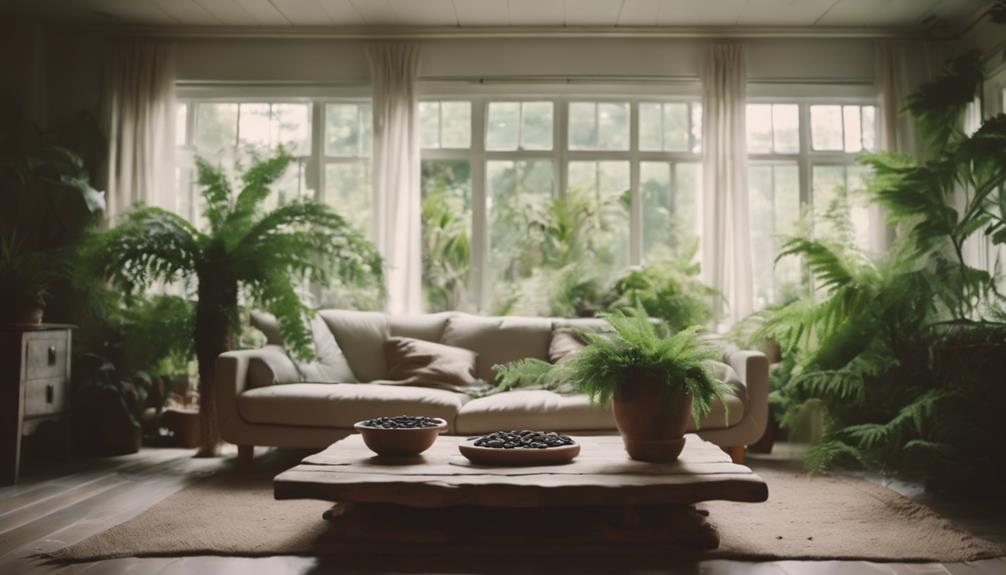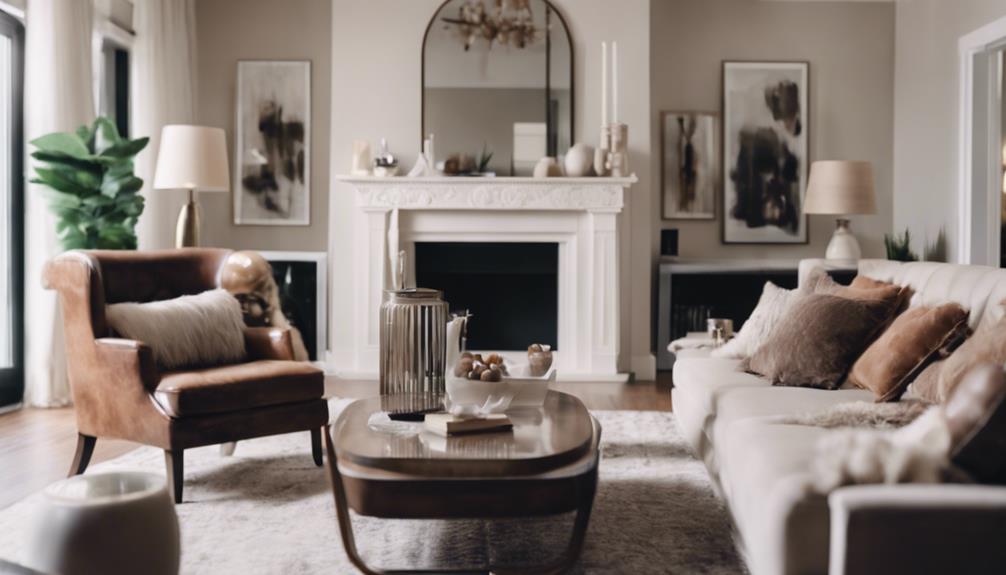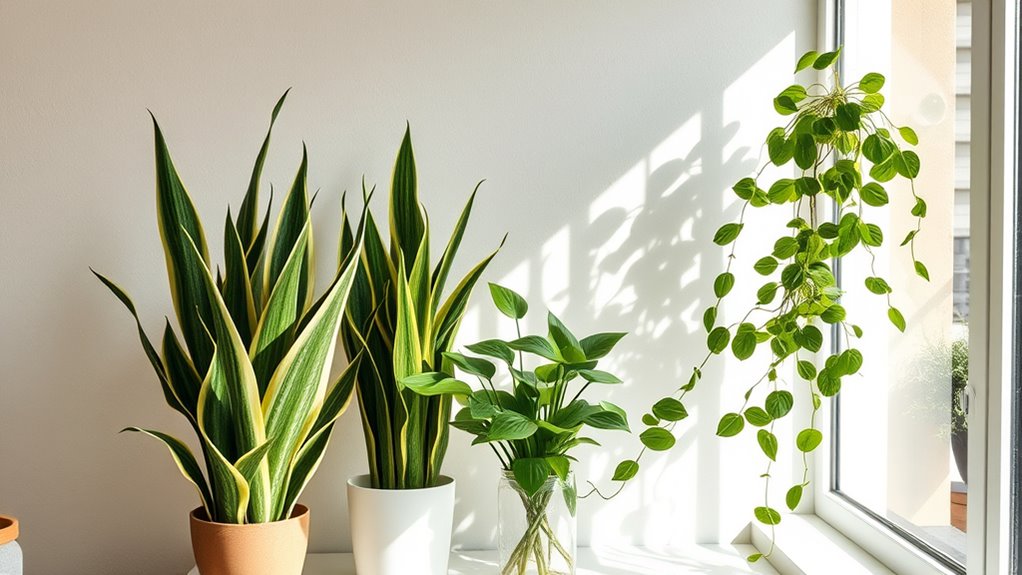

To style plants for visual balance, focus on creating harmony with thoughtful placement, pairing tall and short plants, and mixing textures and colors that complement each other. Use symmetry or asymmetry to guide the eye and avoid clutter by carefully arranging elements. Incorporate containers and stands to add height and interest, and group similar plants for cohesion. Mastering these principles will help you craft a stunning, balanced space—continue to explore these tips for more insights.

Get furniture and decor delivered free with Prime
- Fast, free delivery on millions of items
- Prime Video, Amazon Music and more included
- Member-only deals all year
Key Takeaways
- Achieve harmony by balancing plant heights, sizes, and textures to create cohesive visual arrangements.
- Use symmetry, asymmetry, and focal plants to develop visual harmony and steady structure.
- Group plants with similar colors, textures, and ground covers to unify the design.
- Incorporate taller plants at the back or center and fill gaps with smaller, complementary plants.
- Elevate and frame arrangements with stands, containers, or pathway plantings to guide movement and enhance balance.
As an affiliate, we earn on qualifying purchases.
Understanding the Principles of Visual Balance
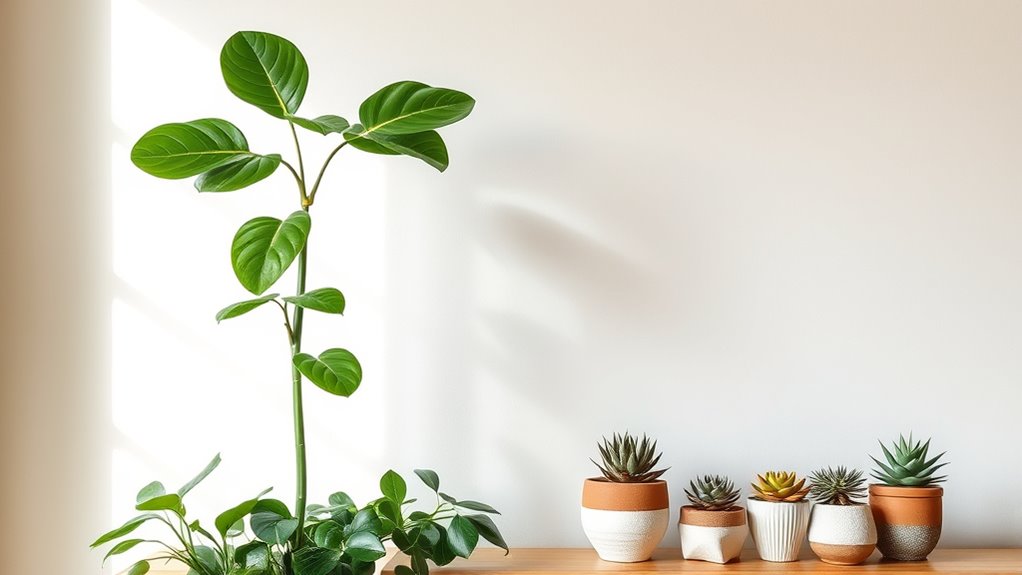
Achieving visual balance is essential for creating appealing plant arrangements that feel harmonious and natural. Botanical symmetry plays a key role, as it helps you distribute plants evenly, preventing one side from feeling heavier than the other. Focus on creating a sense of proportion by pairing taller plants with shorter ones, maintaining a visual flow. Color harmony also matters; choose plants with complementary or analogous hues to unify your display. Avoid clutter by carefully arranging plants so that no single element overpowers the rest. Pay attention to the overall shape and structure, ensuring your arrangement feels steady and cohesive. By mastering botanical symmetry and color harmony, you’ll craft arrangements that naturally draw the eye and evoke a sense of balance.
Selecting the Right Plants for Your Space
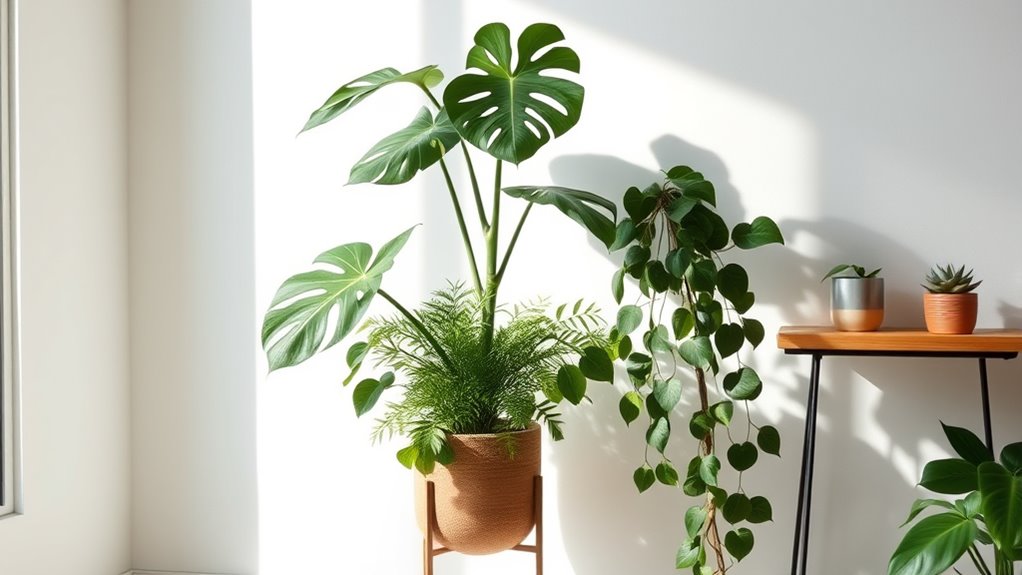
When choosing plants for your space, consider how much light they need to thrive and whether your environment meets those conditions. You should also match their size and scale to your available area to create a balanced look. Don’t forget to think about maintenance, so you pick plants that fit your time and effort level comfortably. Incorporating some natural elements can also boost mood and productivity, making your space more inviting.
Light Requirements
Choosing the right plants for your space starts with understanding their light needs. Different plants thrive in various lighting conditions, which directly affect their growth and appearance. For example, plants that need full sun often produce vibrant flower colors, making them ideal for bright spots. In contrast, shade-loving plants adapt to lower light levels, showcasing more subdued hues. Consider your space’s natural light when selecting plants. Also, keep in mind soil types, as they influence how well plants absorb nutrients and handle moisture. Some plants with bright flowers prefer well-draining soil, while others thrive in more moisture-retentive soil. Additionally, understanding the light requirements of your chosen plants helps prevent issues like overexposure or insufficient light, ensuring they stay healthy and attractive. By matching light requirements with your environment, you’ll ensure your plants flourish and maintain balanced, visually appealing foliage.
Size and Scale
Selecting the right plants for your space involves more than just their appearance; size and scale play a key role in creating a balanced and harmonious environment. Pay attention to plant height to ensure tall varieties complement shorter ones, preventing visual overpowering. Consider plant volume as well—full, bushy plants add richness, while slender species maintain openness. Proper scale guarantees that each plant fits comfortably within your space without overwhelming or getting lost. For example, large-leafed plants work well as focal points, while smaller plants can fill in gaps. Matching plant size to your space’s dimensions creates a cohesive look and avoids clutter. Additionally, understanding plant size and scale can help you select the most suitable plants for your environment, ensuring a balanced and inviting atmosphere.
Maintenance Needs
Understanding the maintenance needs of your plants is fundamental to guarantee they thrive with minimal effort. You should consider your watering schedule carefully, as over- or under-watering can harm soil health and plant vitality. Select plants that match your routine; some need frequent watering, while others prefer drier conditions. Maintaining good soil health is crucial—use quality soil and avoid compaction to promote root growth. Regularly check moisture levels and adjust your watering accordingly. Additionally, choose plants suited to your environment’s light and humidity conditions to reduce care demands. Being mindful of your spiritual practices can also create a calming environment that supports plant health and your well-being. By selecting plants aligned with your maintenance capacity and understanding their specific needs, you guarantee they stay healthy and vibrant with less effort. This approach simplifies plant care and enhances your space’s overall balance.
Varying Plant Sizes and Heights for Dynamic Composition

Using plants of different sizes and heights creates visual interest and keeps your arrangement lively. Layering these variations adds depth, making your display feel more dynamic. Plus, strategic height differences help you establish focal points that draw the eye. Incorporating design principles such as balance and contrast can further enhance your plant styling, ensuring your arrangement is both appealing and harmonious.
Layering for Depth
To create a visually engaging plant arrangement, layering different sizes and heights is essential. Start by placing taller plants, like those trained on garden trellises, at the back or center to add vertical interest. Medium-sized plants fill in the middle layer, creating a seamless progression between height levels. Use low-growing plants or ground covers near outdoor furniture to anchor the design and add texture. This layering technique adds depth, making your space feel more dynamic and inviting. Varying plant heights guides the eye across the arrangement, preventing flatness. Remember, strategic placement of taller elements near focal points enhances balance. By thoughtfully layering plants, you craft a lively, multidimensional environment that combines form and function effortlessly.
Focal Point Creation
Creating a focal point in your plant arrangement draws the eye and adds visual interest. To achieve this, vary plant sizes and heights within your container selection. Using taller plants or those with bold foliage creates a striking centerpiece. Incorporate:
- Large, eye-catching flowering plants
- Plants with contrasting textures
- Tall, upright varieties for height
- Compact, low-growing greenery
- Strategically placing taller plants at the back or center
This dynamic composition guides the viewer’s gaze naturally, emphasizing the focal point. When choosing a container, consider one that complements the plants’ scale and style, enhancing the visual balance. Play with plant heights to add depth and movement, ensuring your arrangement feels lively and engaging. The right mix makes your flower arrangement truly stand out. For added stability and support, consider using mid-drive motors or other reliable components to ensure your plant display remains balanced and secure.
Using Symmetry and Asymmetry to Create Harmony
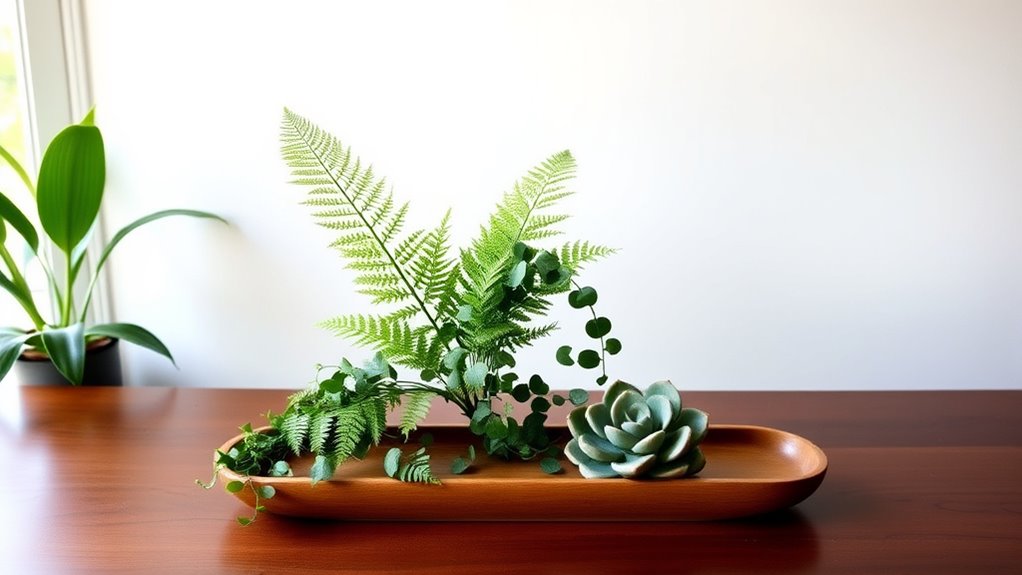
Symmetry and asymmetry are powerful tools for achieving visual harmony in plant styling. Plant symmetry involves mirroring plants or arrangements on either side of a central axis, creating a balanced and orderly look. This technique works well when you want a formal, polished appearance. Conversely, asymmetric design introduces visual interest by balancing different plants and elements unevenly, yet harmoniously. You might place a tall plant on one side and a cluster of shorter plants on the other, ensuring the overall composition feels balanced. Using these techniques allows you to craft a space that feels cohesive and inviting. Incorporating decorative elements such as sculptures or lighting can enhance the balance and appeal of your arrangement. Whether you choose symmetry for structure or asymmetry for dynamism, both methods help create a visually pleasing environment that guides the eye naturally.
Strategically Placing Plants to Enhance Flow
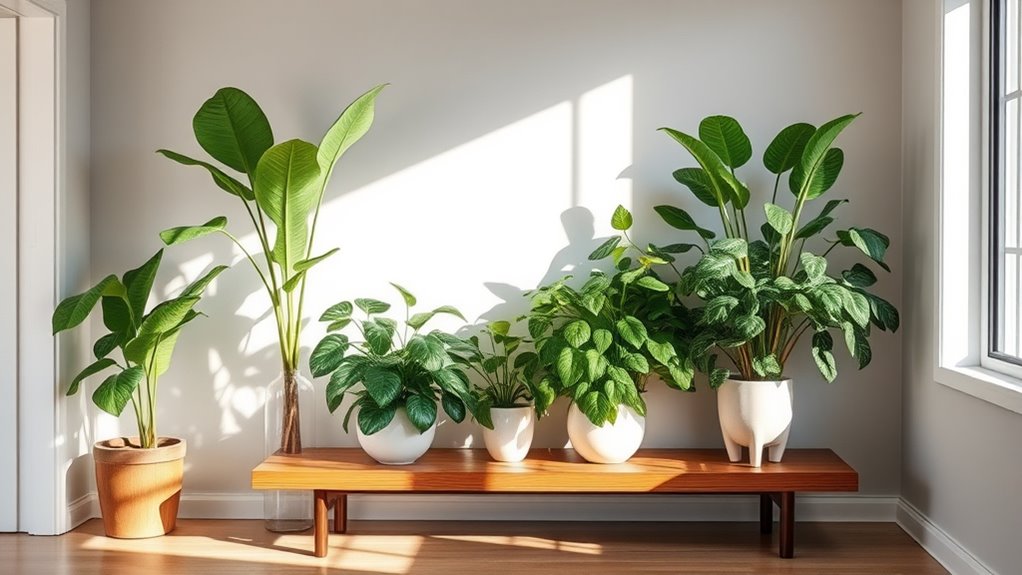
To improve the flow of your space, start by anchoring key areas with focal plants that draw the eye. Incorporate pathway planting to guide movement naturally and comfortably through your garden. Make sure to balance heights and sizes so your plants complement each other and create a cohesive, inviting environment.
Anchor With Focal Plants
Strategically placing focal plants can substantially improve the flow of your garden by drawing attention and guiding movement naturally. These plants serve as visual anchors, creating points of interest that keep the eye moving smoothly across your space. To achieve this, consider grouping plants with similar ground cover to establish container harmony and balance. Position your focal plants at key points, such as garden entrances or centerpieces, to direct foot traffic and focus. Use taller, striking plants as anchors near seating areas or pathways, anchoring the design. Remember, well-placed focal plants help create a cohesive look and prevent your garden from feeling scattered or cluttered. Incorporating visual balance techniques can further enhance the overall harmony of your garden design.
Use Pathway Planting
Pathway planting is a powerful way to guide visitors smoothly through your garden. By thoughtfully placing plants along garden pathways, you create natural visual cues that lead the eye and encourage movement. Use plant bed borders to define the edges of your pathways, ensuring a clear separation between walking space and planting zones. Select plants with varied textures and colors that complement the overall design, helping to create a flowing, cohesive look. Tall or arching plants can frame the pathway entrances, while low-growing varieties keep the path unobstructed. Strategically placed plants not only enhance the flow but also add interest and softness to the landscape. Incorporating vetted plant varieties ensures your garden feels inviting, balanced, and visually appealing from every angle.
Balance Heights and Sizes
Placing plants with varying heights and sizes creates a dynamic rhythm that guides the eye naturally through your garden. To achieve balance, consider the visual weight of each plant, much like arranging a flower bouquet for harmony. Use taller plants as focal points or backdrops, while smaller ones fill in gaps and add texture. Incorporate different textures and leaf shapes to enhance flow. Proper height variation also helps with pest control by reducing hiding spots. For a cohesive look, group similar sizes and heights thoughtfully. This strategic placement enhances visual flow and prevents overcrowding. Additionally, understanding visual balance principles can further improve your plant arrangements. Remember, a well-balanced garden invites exploration and makes your plant styling more engaging and aesthetically pleasing.
Mixing Different Textures and Colors for Visual Interest
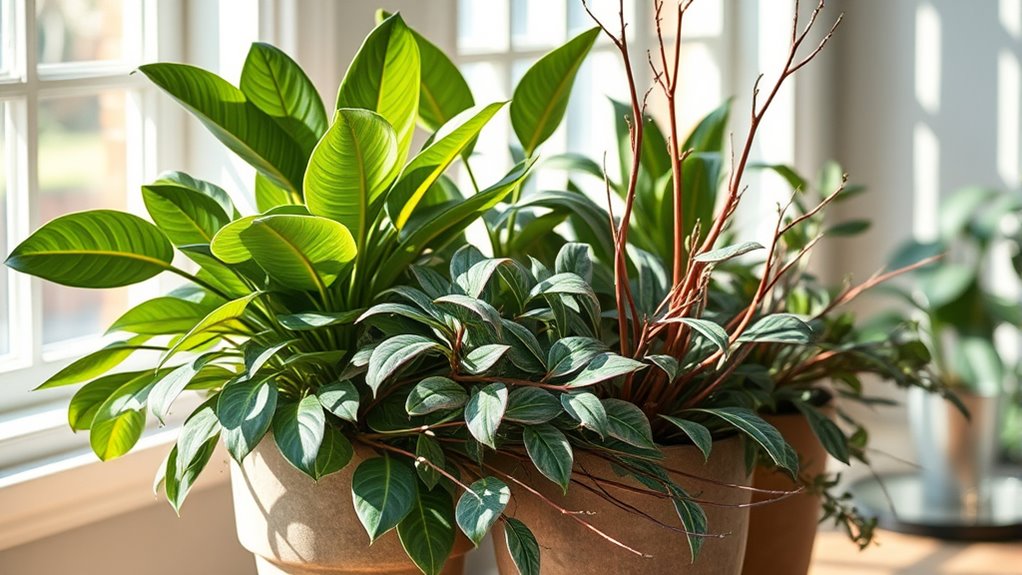
To create visual interest in your plant styling, mixing different textures and colors is essential. Textural contrast adds depth, making each plant stand out while complementing others. Pair smooth, glossy leaves with rough, velvety foliage to create dynamic visual layers. Incorporate a variety of colors that work together through color harmony, ensuring they don’t clash but instead enhance each other’s beauty. Use bold, vibrant hues alongside muted tones to draw attention and create balance. Combining different textures and colors keeps your arrangement lively and engaging, guiding the eye naturally across the display. This approach not only highlights individual plants but also creates a cohesive, attractive space that feels thoughtfully curated and visually balanced.
Incorporating Plant Stands and Containers to Elevate Design
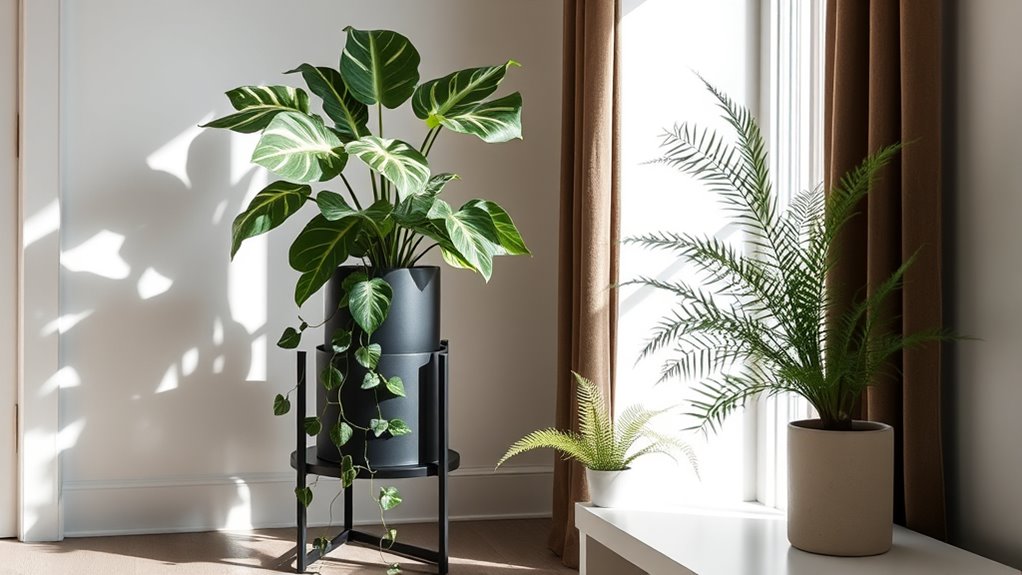
Using plant stands and containers transforms your arrangements from simple displays into thoughtfully designed focal points. Proper plant stand placement creates visual height and balance, drawing the eye naturally across your space. When choosing container materials, consider options like ceramic, metal, or wood to complement your decor and add texture. Mixing different container styles can add visual interest and contrast. Keep in mind:
- Place taller stands at strategic corners or behind furniture
- Use varied heights to create a dynamic display
- Select container materials that match your interior or outdoor style
- Incorporate lightweight stands for easy rearrangement
- Balance plant sizes with stand proportions for harmony
Grouping Plants for Cohesion and Impact
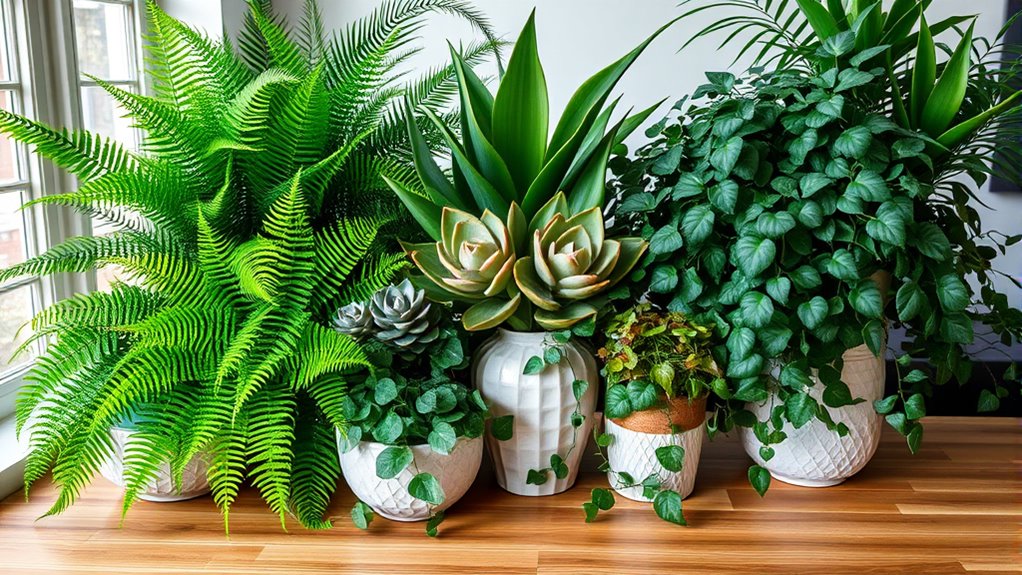
Grouping plants creates a unified look that enhances your space’s visual appeal. When you cluster plants thoughtfully, they work together to create striking flower arrangements and a cohesive design. On outdoor patios, grouping adds depth and interest, making the area feel more inviting. Use plants with similar colors or textures to guarantee harmony, or mix contrasting foliage for bold impact. Varying heights and sizes within your groups also add dimension, drawing the eye naturally across the space. Whether you’re arranging potted plants for a centerpiece or creating a lush corner garden, grouping helps establish a sense of order and balance. This strategy assures your outdoor patio feels intentional and well-designed, making your plant styling both functional and aesthetically pleasing.
Balancing Light and Shadow With Plant Placement
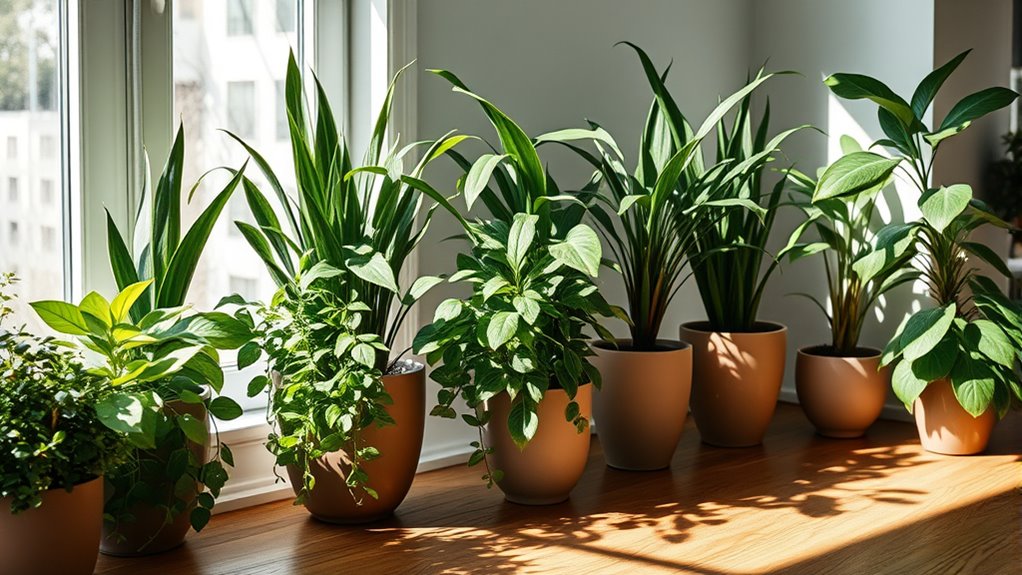
Balancing light and shadow is essential for creating a dynamic and inviting plant display. To achieve this, consider how plant color and pot material influence the overall look. Light highlights vibrant plant colors, making them pop, while shadows add depth and intrigue. Position plants with variegated leaves or bright foliage where they’ll catch sunlight, and place darker-leaved varieties where shadows create contrast. Use pot material to enhance this effect—glossy ceramics reflect light, emphasizing brightness, whereas matte finishes absorb light, deepening shadows. Arrange taller plants in shadowed areas to add layers, and cluster smaller, colorful plants where light hits directly.
- Use light to emphasize contrasting plant colors
- Choose pots in reflective or matte finishes
- Place light-loving plants where they get maximum sun
- Position shadowed plants to create depth
- Balance with varying pot materials for visual interest
Maintaining Balance Through Regular Pruning and Care
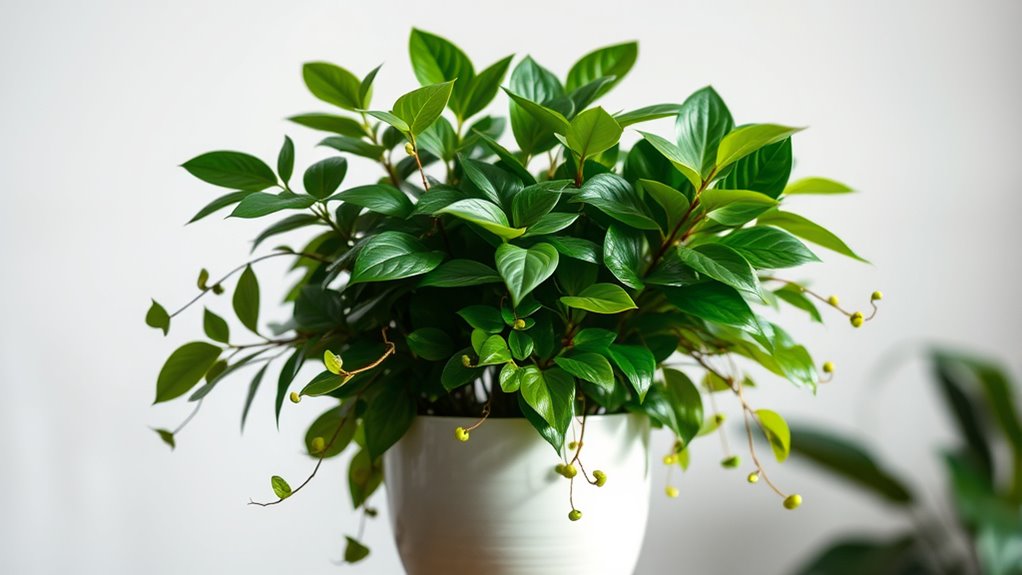
Regular pruning and attentive care are essential for keeping your plants healthy and visually appealing. Seasonal pruning helps maintain shape, encourages new growth, and prevents overgrowth that can disrupt balance. By trimming dead or damaged leaves, you promote healthier development and an even, harmonious look. Pest management is equally important; regularly inspecting your plants for pests and acting swiftly keeps infestations in check, preserving both health and appearance. Consistent care also involves watering appropriately and fertilizing when needed, ensuring your plants remain vigorous. When you stay on top of pruning and pest control, you prevent uneven growth and keep your plant styling balanced. This ongoing maintenance creates a visually pleasing environment while supporting your plants’ overall robustness.
Frequently Asked Questions
How Do I Balance Plants in Small or Oddly Shaped Rooms?
To balance plants in small or oddly shaped rooms, you should use vertical layering to create height and depth, making the space feel more cohesive. Place a focal point, like a tall plant or a unique pot, to draw attention and anchor the room’s design. Distribute plants evenly, balancing larger and smaller ones, so the eye moves smoothly across the space without feeling cluttered or lopsided.
What Are Common Mistakes That Disrupt Visual Balance?
Jumping the gun on plant placement can throw off your room’s harmony. Avoid neglecting plant symmetry, which is key to visual balance, and ignore color coordination, making the space look chaotic. Overcrowding or uneven distribution of plants disrupts flow, while mismatched sizes or styles create visual clutter. To keep things in check, plan your layout carefully, balance heights, and select complementary colors—don’t let your plants become an afterthought.
How Can I Incorporate Seasonal Changes Into Plant Styling?
To incorporate seasonal changes into your plant styling, you should plan seasonal plant rotations, swapping out plants to match the current season. Adjust your color schemes to reflect seasonal hues, like warm tones in fall or pastels in spring. This approach keeps your space vibrant and balanced year-round, ensuring your plant arrangements feel fresh and aligned with the changing environment. Regular updates make your plant styling dynamic and visually appealing.
Are There Specific Plants That Naturally Create Visual Harmony?
You can create visual harmony by choosing plant pairings that complement each other’s shapes and colors. Opt for plants with similar foliage or contrasting textures to enhance balance. Focus on color coordination by combining shades that work well together, like greens with vibrant blooms or soft pastels. These natural pairings and thoughtful color choices will help your plant styling achieve a cohesive, harmonious look effortlessly.
How Do I Maintain Balance When Adding New Plants Over Time?
You can maintain balance by regularly evaluating your plant arrangement, noting that taller plants should be positioned strategically to avoid overwhelming smaller ones. Use color coordination to create harmony, pairing plants with complementary hues. When adding new plants, consider their height and foliage to keep visual weight even across your space. This mindful approach ensures your plant display remains balanced and visually appealing over time.
Conclusion
By understanding the principles of visual balance, selecting the right plants, varying sizes and heights, and strategically placing everything, you create harmony in your space. Use symmetry and asymmetry to add interest, incorporate stands and containers for elevation, group plants for cohesion, and balance light and shadow for depth. Keep your arrangement vibrant and inviting through regular pruning and care. Embrace these techniques to craft a plant display that feels balanced, beautiful, and uniquely yours.
Halloween Picks
halloween
As an affiliate, we earn on qualifying purchases.