TL;DR
Decorative throw pillows can add comfort, color, and texture without replacing your furniture. Choose sizes that suit the sofa or chair, pair covers with inserts that meet your comfort and care needs, and mix patterns through a shared color palette and varied scales. For an easy refresh, replace removable covers instead of buying whole new pillows.
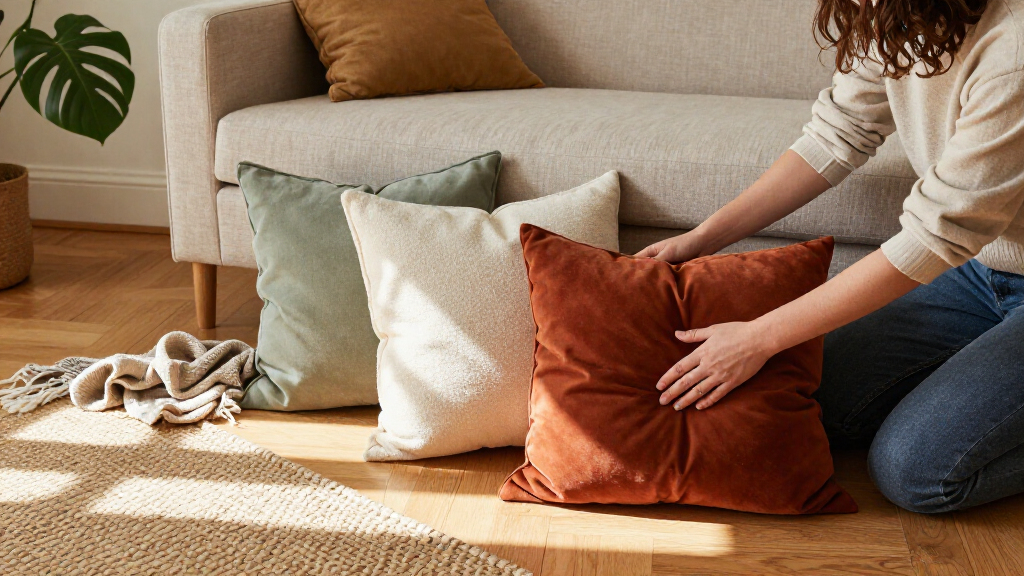
A sofa can feel brand new after a small change: a rust-colored pillow, a nubby cream cover, and one long lumbar cushion can shift the whole room. Decorative throw pillows are a quick way to add color, texture, and comfort without hauling home a new sofa or repainting the walls.

Get furniture and decor delivered free with Prime
- Fast, free delivery on millions of items
- Prime Video, Amazon Music and more included
- Member-only deals all year
The trick is choosing pillows that work beyond the photo. You’ll learn how to match their size and shape to your furniture, pick inserts and fabrics that suit your household, and combine colors and patterns without making the room feel busy. You’ll also find practical care tips and ways to refresh your look by changing covers with the seasons or when your style evolves.
Think of pillows like the seasoning in a favorite meal: a little contrast can bring everything to life, but every ingredient needs to work together. A soft seat, easy-care cover, and a pattern you love can turn the spot where you drop your bag into the place you choose for a quiet evening.
Measure your seat and leave enough clear space for people to sit comfortably.
Choose an insert for how you use the pillow: soft and shapeable for lounging, firmer for support.
Mix patterns by sharing colors and varying print scale, then add a solid or subtle texture for balance.
Check cover care instructions, seams, zipper, and household suitability before buying.
Refresh the room by replacing covers while keeping inserts that still fit and feel good.
Choose pillow sizes that leave room to sit
Decorative throw pillows look best when their scale suits the furniture: large cushions can anchor a roomy sofa, while smaller pillows leave a compact chair feeling open. Common square sizes include 18, 20, and 22 inches. A lumbar or bolster pillow adds a different shape and can support your lower back.
Start with the seat, not the pillow display you saw online. For example, a narrow reading chair may feel crowded with two 22-inch squares, while one 18-inch pillow makes a useful backrest without swallowing the seat. On a wide sofa, a pair of 20-inch pillows at the arms and a lumbar cushion in the middle can add variety and still leave room to stretch out.
Measure the seating area before you shop, especially if you want several pillows. Then arrange them and sit down. If you have to move a cushion every time someone takes a seat, the arrangement has taken up too much room. Comfort is the point; a tidy sofa should still invite you to flop onto it.
A slightly larger insert can help a cover look full: an insert about 1 to 2 inches larger than the cover often works for a square pillow. A stiff cover or firm insert may need a different fit, so check how easily the corners fill before you buy.
Products Worth Considering

Roborock Qrevo S Pro Robot Vacuum and Mop with 18,500 Pa Suction

Samsung 55-Inch M70H Series 4K HDR Mini-LED Smart TV with HDMI Cable and 12-Month CPS Warranty

Ring Wired Doorbell Pro (3rd Gen) and Indoor Cam Plus Bundle, White
As an affiliate, we earn on qualifying purchases.
Pick an insert that feels right after a long day
The right insert depends on whether you want a pillow to look polished, feel soft, or support your back. Down and feather inserts are soft and easy to reshape, while polyester fill often costs less and may suit people who prefer synthetic materials. Firmer foam or other supportive fills can work well for a pillow you actually lean against.
Imagine two people sharing a sofa after work. One likes to tuck a cushion behind their back; the other wants to bunch it into a soft nest while reading. A flexible down or feather insert may suit the reader who likes to reshape it, while a firmer fill can hold its form for the person who wants reliable support. Each option has tradeoffs: softer fills often need fluffing, and synthetic fills can flatten with use.
Consider allergies and maintenance before choosing. Someone with allergies may prefer a synthetic fill, while someone who loves a plush, moldable pillow may accept the extra upkeep of down. Check the product details and care instructions rather than relying on the cover’s appearance to tell you what’s inside.
Buy the insert and cover as a pair when you can, or confirm their measurements separately. A cover that is too loose can look saggy; one that is too tight can stress the seams. A zipper that moves smoothly makes it easier to change the cover or replace a worn insert later.
Mix fabrics and patterns without making the sofa look busy
A shared color palette and a mix of pattern scales make different pillows feel like a set. Pair one large print with a smaller pattern and a solid or quiet texture. Colors already present in the room—perhaps the olive in a rug or the warm brown of a wooden table—can tie the arrangement together.
For a real living-room example, start with a striped sofa in muted blue. Add a large floral pillow that includes the same blue, a smaller check in cream and rust, and a solid linen cover to give the eye somewhere to rest. It works because the prints differ in scale and share a few colors; they do not have to match perfectly.
Fabric changes the feel as much as color does. Cotton and linen bring an easy, relaxed look, velvet adds a plush surface, and wool or chunky knits create texture. A calm palette can still look interesting when one cover has embroidery or a nubby weave. Think of texture as a quiet melody underneath the color.
Choose fabrics for how you use the room. A pale, delicate cover may suit a formal sitting room, while performance fabric can be a practical choice for a busy household. Claims about stain resistance and recycled fibers vary by product, so read the manufacturer’s specifications before buying. Touch the material if possible; a pillow that looks beautiful but feels scratchy against your skin may spend more time on the floor than the sofa.
Arrange pillows in a few simple steps
Arrange pillows by starting with the largest ones and leaving a clear place to sit. This gives you a flexible base: you can stop when the sofa looks balanced, or add a smaller accent if the arrangement still feels bare.
- Check your space. Measure the seat and decide how much of it needs to stay open. A small loveseat may need only two pillows.
- Place the largest pillows first. Set square cushions near the arms or corners, using sizes that fit the sofa’s height and depth.
- Add a different shape. Try one lumbar pillow in the middle or beside an arm. It can add back support and break up a row of squares.
- Balance color and pattern. Repeat a color from the rug or artwork, then vary the print scale with a smaller pattern or solid cover.
- Sit down and adjust. Move anything that crowds your shoulder or needs constant rearranging. Your everyday setup should feel comfortable, not staged.
For example, a three-seat sofa might hold two 20-inch squares, one smaller accent, and a lumbar pillow. If the sofa’s arms are narrow or people sit shoulder to shoulder, remove one. There is no universal pillow count; the comfortable number is the one that leaves space for the people using the sofa.
For a chair, one well-sized square or lumbar pillow may be enough. On a bed, you can layer larger pillows behind smaller decorative ones, then remove the extras at bedtime. Let the furniture and routine guide the arrangement.
Choose covers that can handle your household
A pillow is easier to live with when its cover and care instructions suit the room. Removable covers can make cleaning and style changes simpler, but not every fabric is machine washable. Check the label before you buy, and follow its directions for both cover and insert.
Picture a family-room sofa where a child eats toast and a dog curls up for naps. A durable, removable cover may be more practical there than a pale fabric that calls for professional cleaning. A patterned or darker color can disguise minor marks, but it cannot make any fabric completely stain-proof. For a quiet guest room, a delicate cover may be an easier choice.
Care needs also depend on how often you handle a pillow. A cushion that sits untouched in a formal room needs a different routine from one that gets hugged, leaned on, or exposed to pets and snacks. Follow the care label and clean it when use calls for it; there is no single washing schedule that suits every household.
Before purchase, look at the seams, zipper, and fit. A cover should not strain around the insert, and the zipper should open smoothly. Keep decorative pillows away from open flames and heat sources. If your household includes young children or people with allergies, check the materials and care details with those needs in mind.
Refresh the room by swapping covers
Changing pillow covers is a simple way to update a room without replacing the inserts. Keep a few covers in different colors or textures and rotate them when the seasons change or your style evolves. This approach can also reduce the space you need for storage.
Imagine a neutral sofa in a bright living room. In cooler months, you might use a deep terracotta cover and a chunky knit; when spring arrives, switch to lighter cotton or linen in muted blue and cream. The furniture stays put, but the room feels different—like opening the curtains on a clear morning after a long grey stretch.
Choose cover changes that connect with the rest of the space. If your rug, curtains, or artwork already carry strong patterns, a solid or textured pillow can calm the room. If your furniture is neutral, a bolder print can become the small accent that gives your eye somewhere to land. You can make that shift with one cover; a full matching set is not required.
Store clean covers folded in a dry place and keep track of their care labels. When shopping, compare the cost and care of new covers with buying complete pillows. The best refresh is one you will actually use: an easy-to-store cover that fits your insert and feels good in your home is more useful than a trend you have to tiptoe around.
Frequently Asked Questions
How many throw pillows should I put on a sofa?
Use enough to add comfort and color while leaving clear seating space. A small sofa may suit two or three pillows, while a larger one can hold more; sit down to check whether the arrangement feels crowded.
What pillow sizes look best on a couch?
Common square sizes include 18, 20, and 22 inches, but the right scale depends on your sofa. Many arrangements combine larger squares with a smaller lumbar pillow; measure the seat and avoid covering too much of it.
Should a pillow insert be larger than its cover?
A slightly larger insert—often about 1 to 2 inches larger in each dimension—can help a square cover look fuller. Fabric stretch, insert firmness, and the shape you want affect the best fit, so check the product measurements.
Are down or synthetic pillow inserts better?
Down and feather inserts are soft and easy to reshape, though they may need frequent fluffing and may not suit people with allergies. Synthetic fills often cost less and can be easier to maintain, while firmer fills may provide more support. Choose for your comfort, care needs, and budget.
How do I mix pillow patterns without making the room look busy?
Choose patterns that share one or more colors, then vary their scale. For instance, combine a large floral, a smaller stripe, and a solid or textured cover. The solid gives your eye a quiet place to rest.
How should I clean decorative throw pillows?
Check the care label before washing. Some removable covers can go in the washing machine, while others need gentle or professional cleaning; clean inserts only as their instructions allow.
Can throw pillows work in homes with pets or children?
Yes. Removable, easy-care covers can make pillows more practical in busy rooms, and darker or patterned fabrics may disguise minor marks. Check care details and fabric claims, since no cover is completely stain-proof.
Conclusion
Choose pillows for the way you live, then style them to suit the room. Start with the right size, pick a cover you can care for, and use a shared color or texture to bring the arrangement together. When the season changes or your taste shifts, a new cover can do the work of a much larger makeover.
Keep the cushions people reach for, and move the ones that never leave their corner. A good sofa should look inviting—and still have room for you.