
You can create a seamless flow between open rooms by focusing on cohesive color palettes and consistent lighting. Choose shades that complement each other and carry neutral tones through different spaces to unify the look. Use warm or cool lighting styles consistently to set a harmonious mood throughout your home. These elements work together to tie your rooms visually and atmospherically, making your space feel thoughtfully connected—keep exploring to discover more ways to enhance your design.

Get furniture and decor delivered free with Prime
- Fast, free delivery on millions of items
- Prime Video, Amazon Music and more included
- Member-only deals all year
Key Takeaways
- Consistent color palette creates visual harmony across open spaces.
- Uniform lighting styles and color temperatures unify the overall atmosphere.
- Repeating decor elements like rugs, artwork, or accents establish visual connection.
- Similar furniture styles and architectural details promote design continuity.
- Cohesive textures, patterns, and motifs link different areas seamlessly.
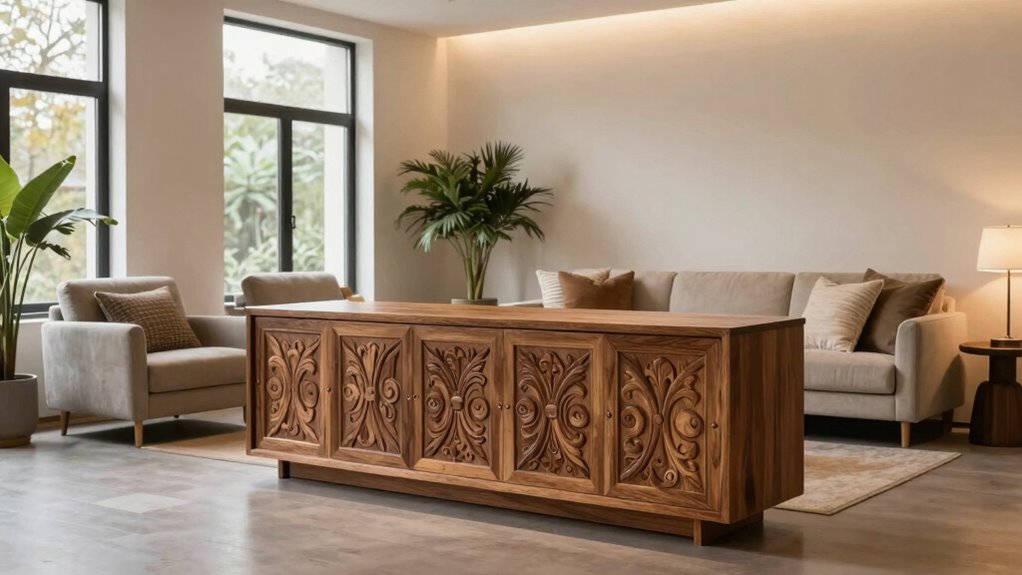
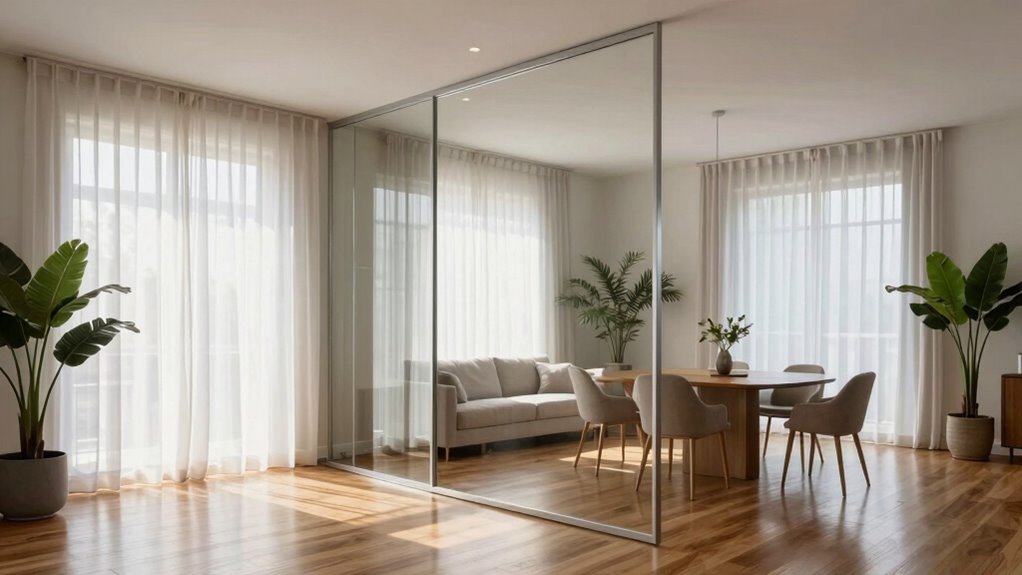
When you have open-plan spaces, finding a decor element that seamlessly ties the rooms together can make your home feel more cohesive and inviting. One of the most effective ways to achieve this is through thoughtful color coordination and lighting consistency. These elements serve as the visual and atmospheric threads that connect different areas, creating a unified look without sacrificing individual room personalities.
Start by establishing a cohesive color palette that flows naturally from one space to another. Instead of using completely different colors in adjacent rooms, choose shades that complement each other or belong to the same color family. For example, if your living room features soft neutrals, carry those tones into the dining area with a slightly darker or lighter variation. This subtle transition helps your eyes move smoothly across the open space, preventing jarring shifts that can break the visual connection. Incorporating accent colors sparingly across rooms—such as in throw pillows, artwork, or small furniture pieces—also reinforces the sense of unity. Paying attention to decor repetition by choosing similar textures, patterns, or materials across spaces further strengthens the visual connection.
Use a unified color palette with subtle variations and accents to seamlessly connect open-plan spaces.
Lighting plays a pivotal role in tying open rooms together. Consistent lighting styles and color temperatures create a harmonious ambiance and reinforce the visual connection. If you prefer warm lighting, use the same warm-toned bulbs or fixtures throughout the space to evoke a cozy, inviting atmosphere. Conversely, if your style leans toward cooler, more modern vibes, keep the lighting consistent with cool white or daylight bulbs across all areas. Consider installing dimmer switches so you can adjust the lighting intensity based on the time of day or mood, ensuring each room feels connected regardless of how you set the lighting. Additionally, lighting consistency enhances the overall sense of flow and cohesion in open-concept layouts. Paying attention to design continuity through consistent furniture styles or architectural details can also help unify the open layout. Introducing visual harmony with recurring elements like artwork, rugs, or decorative accents can further streamline the transition between spaces.
Ultimately, by paying close attention to color coordination and lighting consistency, you create a visual flow that makes your open-plan space feel intentionally designed rather than disjointed. These elements work together to craft an environment where each room complements the next, making your entire home feel more harmonious, inviting, and thoughtfully curated.
Products Worth Considering

Philips Hue Bridge Pro Starter Kit with 4 A19 E26 Color Smart Bulbs

Samsung 65-Inch M70H Series 4K Mini LED Smart TV (2026)

Ring Alarm 5-Piece Home Security Kit
As an affiliate, we earn on qualifying purchases.
Frequently Asked Questions
How Can I Choose the Best Decor Element for My Style?
To choose the best decor element for your style, start by exploring different decor styles that resonate with you, whether it’s modern, rustic, or eclectic. Pay attention to your personal preferences, like colors, textures, and patterns, to guarantee the element reflects your personality. Trust your instincts and visualize how each piece enhances your space, creating a cohesive look that feels authentic and inspiring to you.
What Are Budget-Friendly Options for Tying Open Rooms Together?
Why splurge on fancy decor when you can master the art of budget magic? Paint your walls in a harmonious color to unify spaces, creating a seamless flow that screams “designer.” Add a few well-placed artworks—preferably in matching frames—to draw the eye and connect rooms without draining your wallet. With clever paint choices and strategic artwork placement, you turn open rooms into a cohesive, stylish haven—without breaking the bank.
How Do I Balance Functionality and Aesthetics With This Decor Element?
You can balance functionality and aesthetics by focusing on color coordination and texture mixing. Choose decor elements that complement your overall color scheme, creating a cohesive look. Incorporate varied textures to add visual interest without sacrificing practicality. For example, pair sleek furniture with cozy textiles or natural materials. This approach guarantees your space remains both beautiful and functional, making open rooms feel harmonious and inviting.
Are There Any Common Mistakes to Avoid With This Decor Element?
Think of your decor as a symphony—each piece should harmonize, not clash. Avoid common mistakes like neglecting color coordination, which can create visual chaos, or ignoring scale matching, making elements feel out of place. Guarantee your decor elements complement each other in size and hue to create a seamless flow. When you balance these aspects, your open rooms will feel connected and inviting, like verses in a well-composed song.
Can This Decor Element Be Used in Small or Irregularly Shaped Spaces?
Yes, you can definitely use this decor element in small or irregularly shaped spaces. It helps with space optimization by creating a sense of flow, making the area feel larger. To maintain visual continuity, choose a consistent color or style that complements the rest of your decor. Keep it simple to avoid clutter, and position it thoughtfully to enhance the room’s natural shape without overwhelming it.
Conclusion
Incorporating a cohesive decor element creates a compelling connection between open rooms, cultivating comfort and character. Whether it’s a unifying color, a flowing rug, or matching accents, these details deliver distinction and harmony. By blending boldness with balance, you build a beautiful backdrop that bonds your space seamlessly. Remember, your decor decisions don’t just define your style—they dynamically design a delightful, unified universe where every room resonates with your personal touch.