Choose Command Strips for lightweight items, temporary displays, or if you want to avoid wall damage. Use traditional hardware when hanging heavier objects, permanent fixtures, or on rough surfaces where adhesive struggles. Consider how often you’ll update your decor and whether you need easy removal or maximum stability. If you keep in mind your wall type, item weight, and need for flexibility, you’ll pick the right option—and there’s more to explore to make your choice even easier.
Key Takeaways
- Use Command Strips for lightweight, temporary displays on smooth, clean surfaces to avoid wall damage.
- Choose traditional hardware for heavy items, textured walls, or permanent fixtures requiring strong, long-term support.
- Opt for Command Strips when frequent repositioning or damage-free removal is desired.
- Use hardware when mounting items in high-traffic areas or with safety and stability as top priorities.
- Consider surface type, weight, and permanence needs to determine the most suitable mounting method.

Rolling Tool Chest, 61 in Garage 10 Drawers Workbench Storage Tool Cabinet with Solid Rubber Wood Top, Power Strip, 1675 LBS Load Mobile Workstation, Heavy Duty Rolling Cabinet, Black
Metal
As an affiliate, we earn on qualifying purchases.
Assessing the Weight and Size of Your Items

How do you determine whether Command Strips or traditional hardware is better for your project? Start by considering the weight limits of each option. Command Strips are ideal for lightweight items, typically up to a few pounds, so check the packaging for specific weight recommendations. For heavier objects, like large mirrors or shelves, traditional hardware provides stronger support. Size considerations also matter; larger or bulkier items may require more secure mounting methods to prevent damage or accidents. Measure your item carefully to ensure it fits within the recommended size range for Command Strips if you choose to go that route. Additionally, outdoor or indoor use should influence your choice, as some options are more suited for weather-resistant environments. Balancing weight and size helps you decide whether Command Strips will hold securely or if you should opt for traditional hardware for safety and durability.
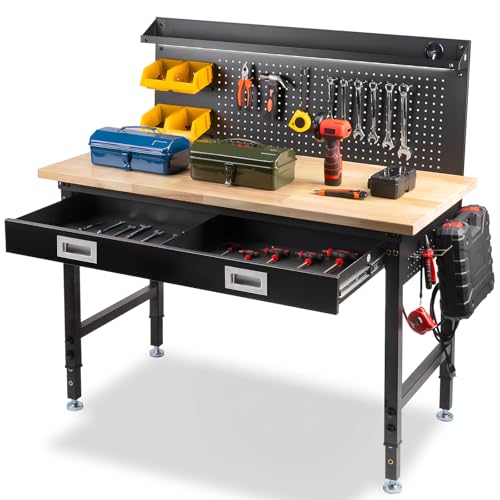
MUWOOD 48" Workbench with Drawers, Work Benches for Garage with Strip Light, Adjustable Work Table with Large Pegboard, 2000 LBS Heavy Duty Table with Power Outlet Rubber Wood for Garage, Office
PLEASE RECOGNIZE THE MUWOOD BRAND WHEN PURCHASING! Solid Wood and Reinforcement Rods: 48“ x 24”x 1.2”solid rubber wood...
As an affiliate, we earn on qualifying purchases.
Considering Wall Material and Surface Conditions
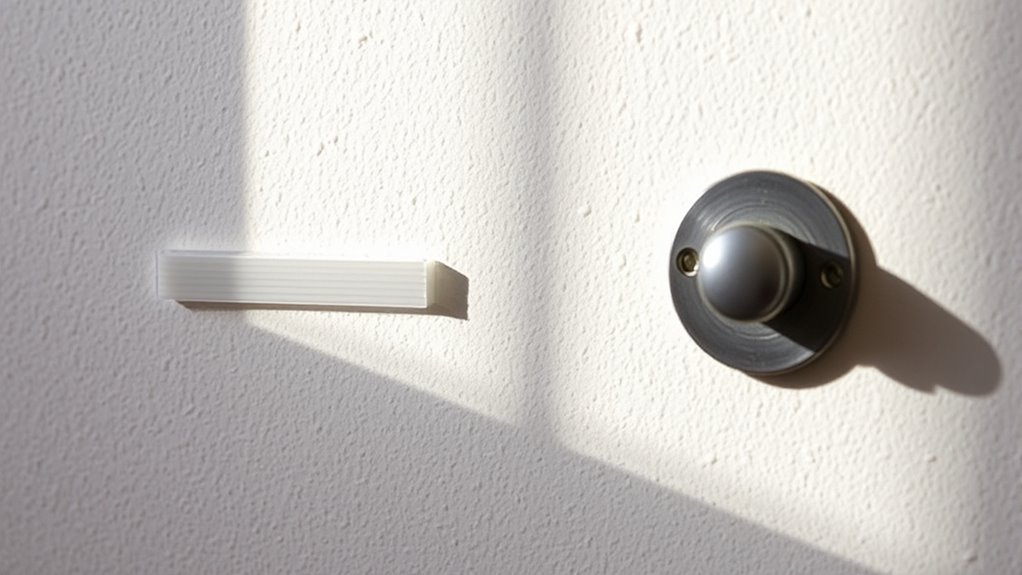
The type of wall material and surface conditions play a essential role in choosing between Command Strips and traditional hardware. If your wall has a smooth, clean surface, Command Strips can adhere well, making them ideal for lightweight items and temporary displays. However, if your wall features a rough or textured wall surface, the adhesive may struggle to grip properly, reducing holding strength. Surface cleanliness is also critical; dust, dirt, or grease can weaken the bond, so ensure your wall is thoroughly cleaned before applying strips. For surfaces like wallpaper or painted drywall with delicate finishes, you might prefer hardware to avoid damage or inadequate adhesion. Always assess your wall’s texture and cleanliness to determine the most suitable hanging method. Additionally, understanding the adhesion properties of different wall surfaces can help predict how well the strips will perform over time.

Work Benches for Garage, Heavy Duty Workbench with Drawers, Lights, Pegboard & 12 Hooks, 600LBS Capacity, Suitable for Tool Organizers and Storage, for Garage, Workshop, Basement, Garden & Shop
Heavy Duty Tool Cabinet: Crafted from A3 steel, our tool work bench features a solid structure with multiple...
As an affiliate, we earn on qualifying purchases.
Evaluating the Need for Reversibility and Damage-Free Removal

When deciding between Command Strips and traditional hardware, consider whether you need the option to remove items easily without leaving damage. This is especially important for temporary solutions or when aesthetic considerations matter. To evaluate this, ask yourself: 1. Will I need to change or update the display often? 2. Do I want to avoid wall damage for aesthetic reasons? 3. Is preserving the wall surface a priority? 4. Do I prefer a quick, damage-free removal process? Command Strips excel for temporary solutions and maintaining a clean look without holes or marks. They’re ideal if you plan to update or move items frequently. Traditional hardware might be better for permanent fixtures, but if reversibility and damage-free removal are key, Command Strips are your best choice. Incorporating wall protection techniques can also help minimize damage and maintain your walls’ integrity over time.

ENJOYWOOD Workbenches for Garage Work Bench with Wheels 60 Inch Adjustable Rubber Wood Top Garage Workbench with Drawers, Pegboard, Power Outlets for Woodworking, Home, Office, Workshop
Superior Stability: 𝟏.𝟐 𝐢𝐧𝐜𝐡 𝐩𝐫𝐞𝐦𝐢𝐮𝐦 𝐫𝐮𝐛𝐛𝐞𝐫𝐰𝐨𝐨𝐝 table top, strong stability to ensure comfort and safety when sanding and...
As an affiliate, we earn on qualifying purchases.
Determining the Frequency of Placement Changes
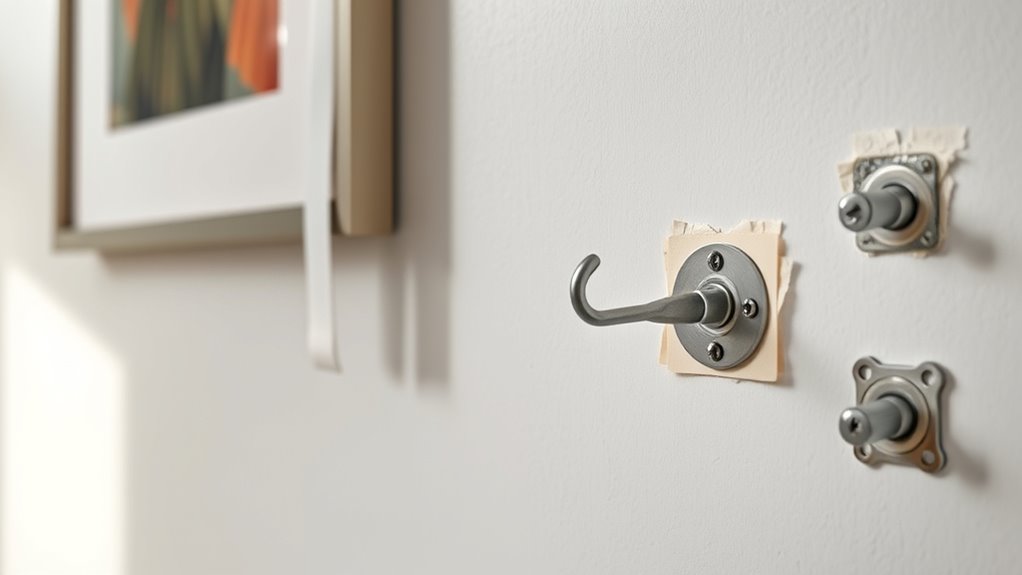
Deciding how often you’ll need to change or update your displayed items is essential in choosing between Command Strips and traditional hardware. If you frequently rearrange your decor or artwork, alternative mounting options like Command Strips offer quick, damage-free adjustments. They’re ideal for temporary displays or seasonal updates, saving you time and effort. On the other hand, if your display remains static for long periods, traditional hardware provides a more permanent solution. Consider your aesthetic considerations as well: Command Strips can maintain a clean, seamless look without visible nails or hooks, enhancing visual appeal. However, if your design calls for a more structured or robust setup, hardware might be the better choice. Matching your update frequency with your aesthetic goals helps ensure your display remains functional and attractive. Additionally, understanding best anime movies can inspire creative decorating ideas for your space.
Analyzing Safety and Stability Requirements

Choosing between Command Strips and traditional hardware depends heavily on safety and stability considerations. You need to evaluate how adhesive strength and mounting flexibility impact your setup. For example, the weight of the item influences whether Command Strips can hold securely or if hardware is necessary for added support. Surface type also plays a crucial role; rough or porous surfaces may reduce Command Strips’ effectiveness, demanding hardware for stability. The duration of display is another factor—long-term mounting might favor hardware, as Command Strips can weaken over time. Safety concerns are paramount; items in high-traffic areas or with safety risks need reliable mounting to prevent falls or damage. Additionally, understanding the security zone info can help determine the appropriate mounting method based on the item’s use and environment.
Frequently Asked Questions
Can Command Strips Hold Heavy or Large Items Securely?
Command Strips can hold some heavy or large items, but their weight capacity is limited. You should check the specific strips’ weight limits and verify your wall surface is compatible for secure adhesion. For very heavy or large items, hardware anchors or screws are usually more reliable. Use Command Strips for lighter, decorative pieces, but opt for hardware when you need maximum support and safety for heavier loads.
Are Command Strips Suitable for Outdoor or Humid Environments?
Command strips are generally not suitable for outdoor or humid environments because they lack outdoor durability and humidity resistance. Exposure to weather elements can weaken their adhesive, causing items to fall. If you want to hang things outside, opt for hardware designed for outdoor use, like waterproof hooks or anchors. This guarantees your items stay secure and safe, regardless of weather conditions.
How Long Can Command Strips Typically Maintain Their Hold?
They say “a stitch in time saves nine,” so knowing how long Command Strips last helps. Typically, they maintain their adhesive longevity for about 1 to 2 years, depending on wall surface compatibility and environmental conditions. For smooth, clean surfaces, expect a strong hold longer. However, humidity or dust can reduce their effectiveness. Always follow weight limits and surface prep instructions for the best results.
Do Hardware Options Provide Better Long-Term Stability Than Command Strips?
Hardware options generally offer better long-term stability than Command Strips because they securely anchor items into the wall. If you’re seeking a more durable, reliable solution, consider alternative mounting methods like screws and anchors, especially for heavier objects. Keep in mind that hardware can cause wall damage, so weigh the importance of stability against potential wall repairs or damage when choosing between hardware and Command Strips.
Are There Specific Wall Types Where Command Strips Shouldn’t Be Used?
You should avoid using Command Strips on textured walls or those with uneven paint, as they won’t stick well—like trying to glue a fish to a tree. Smooth, glossy, or lightly painted surfaces provide the best grip. If your wall has a rough texture or peeling paint, hardware options are more reliable, ensuring your decor stays put without risking damage or falling.
Conclusion
So, before you hang that prized vintage mirror or your latest tech gadget, weigh your options carefully. Remember, choosing the right method isn’t just about today—it’s about avoiding a fall that could make you wish you’d consulted the oracle in the library. Whether you go with command strips or hardware, use your best judgment, and you’ll keep your walls happy and your treasures safe—no need to summon a wizard, just a little common sense!