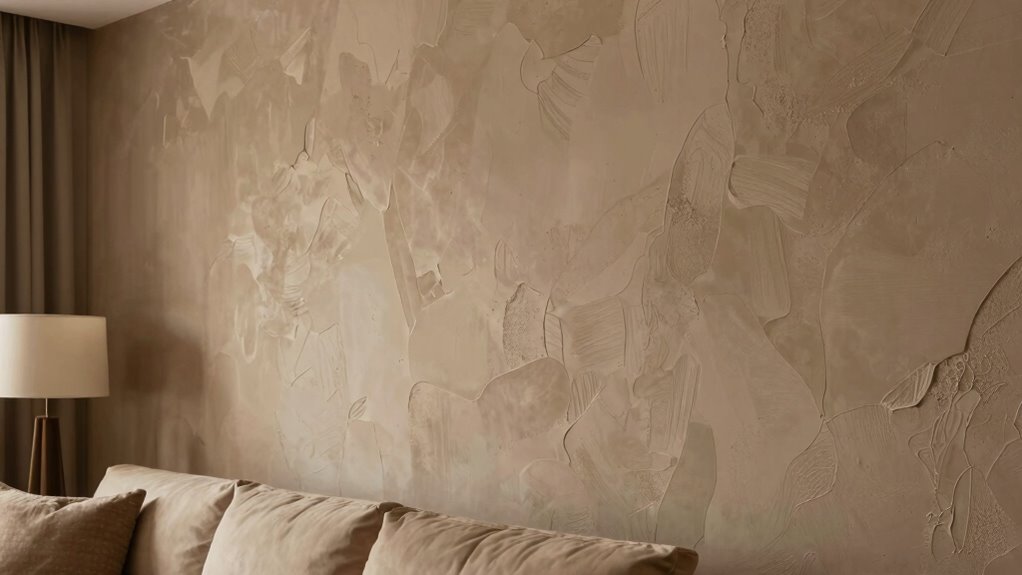

Improving wall texture and dimension instantly elevates your room’s atmosphere by adding visual interest, warmth, and depth. It helps create a layered, inviting space that feels cozy yet styled. Textured walls act as a backdrop for bold colors and thoughtful furniture arrangements, guiding your eye and defining zones. The play of light and shadow brings movement and style to your space. Keep exploring to discover how these elements can transform your home effortlessly.

Get furniture and decor delivered free with Prime
- Fast, free delivery on millions of items
- Prime Video, Amazon Music and more included
- Member-only deals all year
Key Takeaways
- Textured walls enhance room ambiance by adding depth, warmth, and visual interest beyond color alone.
- They serve as versatile backdrops that support bold color choices and layered design schemes.
- Wall texture guides furniture placement, creating focal points and defining zones in open-plan spaces.
- Interaction with light and shadow on textured surfaces adds movement and makes spaces feel more dynamic.
- Diverse texturing techniques create unique environments, making rooms feel more inviting and personalized.
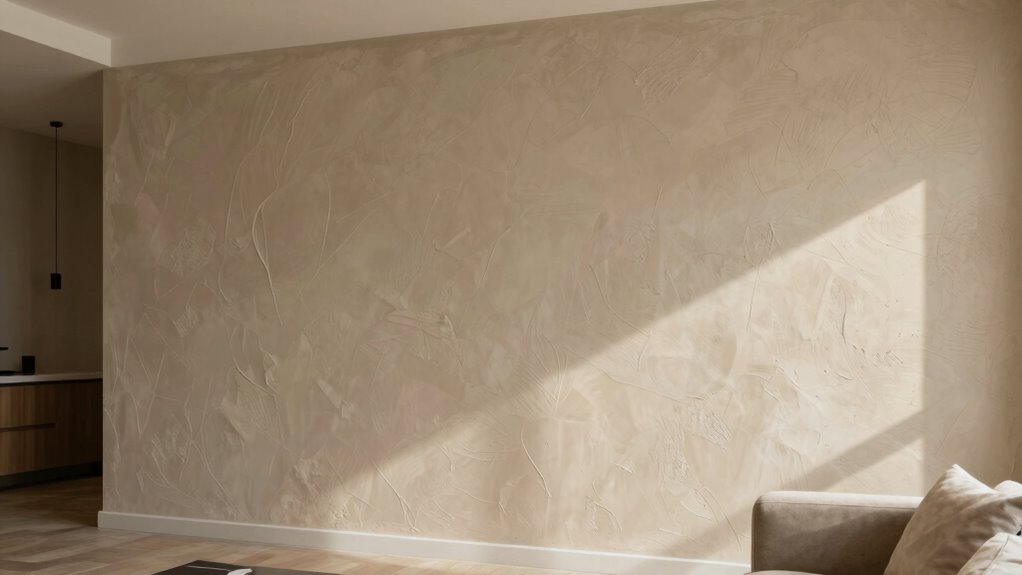
Have you ever noticed how a room’s atmosphere can instantly change with just a subtle shift in wall texture? It’s like adding a new dimension that transforms the entire space. When you choose textured walls—whether through wallpaper, faux finishes, or unique plaster techniques—you create a visual interest that goes beyond color alone. This textured backdrop sets the tone for your entire color palette, allowing you to experiment with richer, more layered hues. With textured walls, you can opt for bolder shades without overwhelming the room, as the tactile surface adds a softness that balances intensity. It’s a perfect way to introduce depth and warmth, making your space feel inviting rather than stark.
Textured walls add depth and warmth, transforming your space with visual interest and balanced bold hues.
Beyond color choices, textured walls influence how you arrange your furniture. When walls have more dimension, they serve as a visual anchor, guiding your furniture placement and defining zones within open-plan areas. For example, a textured accent wall behind your sofa acts as a focal point, encouraging you to position seating to face it directly. This not only enhances the room’s flow but also creates a cozy, intimate atmosphere. Conversely, smooth walls might require more deliberate furniture placement to avoid a sterile or plain look, but textured surfaces naturally draw the eye and support a more relaxed, organic arrangement. You’ll find that with textured walls, you don’t need to clutter the space or add excessive décor—your furniture and accessories can be more thoughtfully positioned to highlight the wall’s character.
Texture also plays a major role in balancing light and shadow, which affects how your furniture appears throughout the day. A textured wall can cast subtle shadows that change with the lighting, adding movement and life to your room. This dynamic quality makes your furniture feel more integrated into the overall design, rather than separate elements. When you’re choosing your furniture placement, consider how light interacts with the textured surfaces; positioning pieces where they catch the light enhances the overall harmony. The combination of a well-chosen color palette and strategic furniture placement with textured walls creates a cohesive, layered look that elevates your space from ordinary to extraordinary. Additionally, incorporating varied wall textures can significantly influence the perceived size and proportion of a room, making it feel more spacious or cozy depending on the technique used. Exploring different wall texture techniques can also add a unique character and depth to your space, making it truly one-of-a-kind. Using textured surfaces also encourages a more sustainable approach by reducing the need for frequent repainting or extensive décor updates. Understanding how different textures can affect a room’s perceived size and proportion helps in making thoughtful design choices that enhance overall comfort and aesthetics. Recognizing the impact of wall texture on the room’s ambiance can help you craft a more balanced and inviting environment.
As an affiliate, we earn on qualifying purchases.
Frequently Asked Questions
How Do Wall Textures Affect Room Acoustics?
Wall textures profoundly influence room acoustics by enhancing sound absorption, reducing echoes, and improving overall sound quality. When you choose textured walls, they help break up sound waves, making the space more comfortable for conversation and listening. Additionally, textured surfaces add visual appeal, giving your room more depth and character. By combining function with style, textured walls create an inviting environment that’s both acoustically friendly and visually striking.
Are Textured Walls More Prone to Damage or Wear?
Textured walls can be more prone to damage and wear, with studies showing they can trap dust and dirt more easily. Durability concerns arise because rough surfaces are harder to clean and repair, making maintenance challenges greater. Scratches, chips, or dents are more visible on textured surfaces, so you need to be cautious during cleaning or furniture placement. Overall, textured walls require more upkeep to stay looking their best.
What Are Eco-Friendly Options for Wall Textures?
You can choose eco-friendly options for wall textures by using eco-friendly paints that contain low or no volatile organic compounds (VOCs), reducing environmental impact. Sustainable plaster options, like clay or lime plaster, are great alternatives that are biodegradable and provide natural texture. These eco-friendly choices not only enhance your wall’s appearance but also promote healthier indoor air quality, making your space more sustainable and environmentally responsible.
Can Textured Walls Be Easily Painted Over Later?
Yes, textured walls can be painted over later, but it’s important to take into account paint removal and texture repair. When you decide to change the color, you might need to sand or prime the surface to guarantee smooth paint application. If you want a different texture, repairing or removing the existing texture first will help you achieve a clean, even finish. Proper prep ensures your new paint job looks fresh and professional.
How Do Wall Textures Impact Property Value?
Think of wall textures as your home’s silent ambassador—impacting property value subtly yet markedly. Different wall texture styles, from ornate decorative finishes to subtle patterns, can boost curb appeal and perceived quality. Well-chosen textures add personality and depth, attracting buyers who appreciate craftsmanship. Conversely, overly busy or outdated textures might turn off potential buyers. When executed thoughtfully, wall textures enhance your property’s value and appeal in the real estate market.
Conclusion
By upgrading your wall textures and adding dimension, you can dramatically boost your space’s appeal—studies show textured walls can increase a room’s perceived value by up to 15%. Not only do they create visual interest, but they also reflect your personal style and elevate your decor. So, don’t underestimate the power of wall texture; it’s a simple change with a big payoff. Start experimenting today and watch your space transform effortlessly.
Fall Picks
fall essentials
As an affiliate, we earn on qualifying purchases.