
To develop a year-round accent color strategy, choose a versatile, well-thought-out color that complements your overall design and evokes the right mood. Use it as a focal point in key areas like cushions, artwork, or trim. Swap accents seasonally to keep things fresh, but stick to a consistent color palette to maintain cohesion. If you want to discover how to make this approach work effortlessly, there’s more to explore on creating a balanced, adaptable space.

Get furniture and decor delivered free with Prime
- Fast, free delivery on millions of items
- Prime Video, Amazon Music and more included
- Member-only deals all year
Key Takeaways
- Choose a versatile accent color that complements multiple seasonal palettes for seamless year-round updates.
- Use strategic placement of accent elements to draw focus without overwhelming the overall design.
- Incorporate seasonal accessories or decor swaps to refresh the space while maintaining a consistent color theme.
- Understand color psychology to select hues that evoke desired emotions across different seasons.
- Maintain overall design cohesion with intentional accents that enhance and unify the space regardless of seasonal changes.
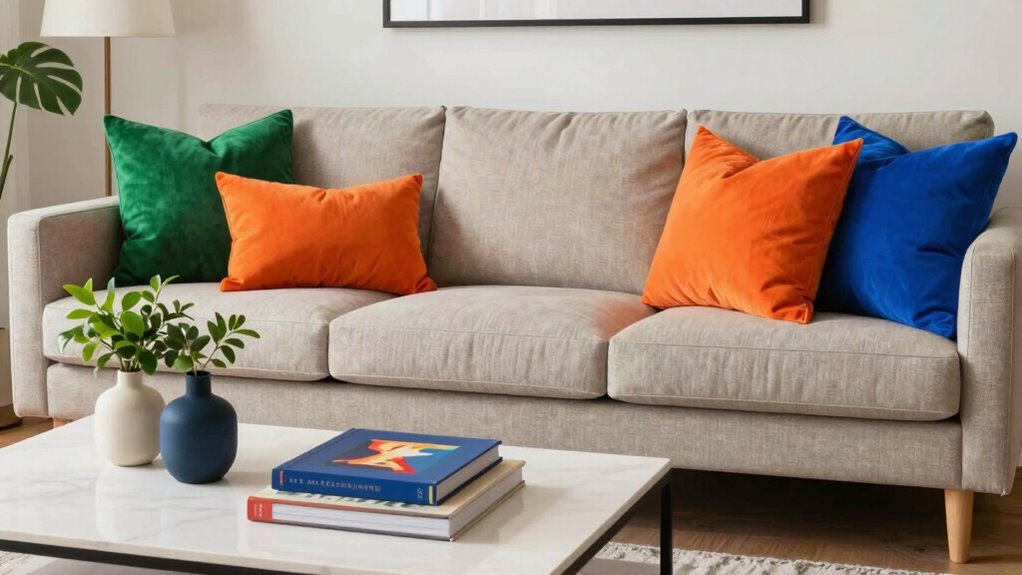
Have you ever wondered how a single splash of color can transform a design? It’s remarkable how just one well-chosen accent can completely change the mood and energy of a space. This is where an effective accent color strategy comes into play, especially when you consider color psychology and seasonal palette choices. When you understand how colors influence emotions, you can select accent hues that resonate throughout the year, creating harmony and visual interest no matter the season.
Color psychology reveals that different colors evoke distinct feelings—blue can bring calm, red sparks excitement, and yellow injects cheerfulness. By applying this knowledge, you can choose accent colors that align with the atmosphere you want to foster at any given time. For instance, during winter, you might opt for warm, cozy shades like deep reds or earthy tones to add comfort, while in summer, bright and lively colors like turquoise or coral can energize the space. Seasonal palette choices help you stay adaptable without sacrificing style, ensuring your accents complement the overall mood of the environment.
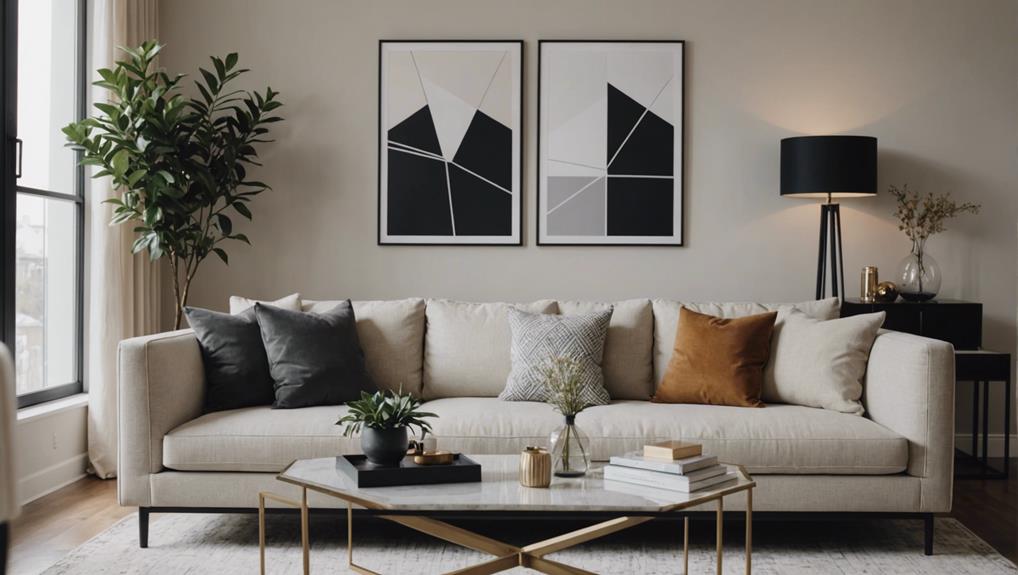
Incorporating a strategic accent color involves more than just picking a trendy hue. You want to create a balanced contrast that draws attention without overwhelming the primary design. Think about placing your accent colors in key areas—throw pillows, artwork, or trim—to guide the eye and establish focal points. When you do this thoughtfully, the accent becomes a deliberate statement that enhances the entire room, rather than a random splash of color. Additionally, understanding how biodiversity influences our environment can also inspire more sustainable and harmonious choices in all aspects of design and living.
Moreover, a consistent accent color scheme allows you to evolve your space effortlessly through the seasons. As your mood or the time of year shifts, you can swap out accessories or small decor items that carry your chosen accent hue. This flexibility keeps your design fresh and engaging without the need for an entire overhaul. It’s a simple, cost-effective way to maintain visual interest and reflect seasonal changes naturally.
Ultimately, your success with an accent color strategy hinges on understanding the power of color psychology and making seasonal palette choices work together. When you select your accents with intention, you create a dynamic environment that resonates emotionally and visually all year round. A well-planned accent color isn’t just an aesthetic detail; it’s a tool that elevates your entire design and keeps your space feeling vibrant and cohesive, no matter the season.
As an affiliate, we earn on qualifying purchases.
Frequently Asked Questions
How Do I Choose an Accent Color for Small Spaces?
You should choose an accent color based on color psychology—think calming blues or energizing yellows. To make small spaces feel larger, pick a bold hue for furniture accents or wall art that draws the eye without overwhelming. Keep the main walls neutral, and use your accent color strategically to add personality and depth. This approach creates a balanced, vibrant look that feels inviting and thoughtfully designed.
Can Accent Colors Be Changed Seasonally?
Did you know that 78% of homeowners change their decor seasonally? Yes, accent colors can be easily switched to match seasonal color coordination, keeping your space fresh year-round. By updating your accents, you stay on trend with year-round accent trends while creating a cozy, inviting atmosphere. Changing accent colors seasonally adds vibrancy and personality, making your space feel new without a major overhaul.
What Are Common Mistakes to Avoid With Accent Colors?
Avoid common mistakes like choosing accent colors solely based on trends or ignoring color psychology. Trends can quickly become outdated, so pick timeless shades that reflect your personality. Don’t overdo it—use accent colors sparingly to create balance. Remember, the right accent color enhances your space without overwhelming it. By staying mindful of color psychology and current accent color trends, you’ll create a harmonious, stylish environment that remains appealing year-round.
How Do I Incorporate Accent Colors in a Minimalist Design?
To incorporate accent colors in a minimalist design, choose one or two shades that align with accent color psychology, promoting calmness or energy. Use bold accents sparingly to create focal points, or opt for subtle accents to add depth without overwhelming. Focus on clean lines and negative space, ensuring your accents enhance the simplicity instead of cluttering it. This balance keeps your space modern, inviting, and visually interesting.
Which Accent Colors Work Best With Neutral Palettes?
Think of neutral palettes as a blank canvas, ready to be energized. Bold accent colors like deep blues, vibrant reds, or sunny yellows work best, as they add visual interest and evoke specific moods. Using color psychology, these hues can enhance mood and create harmony. Choose shades that reflect the atmosphere you want—calm, excitement, or warmth—and let them breathe life into your minimalist space.
Conclusion
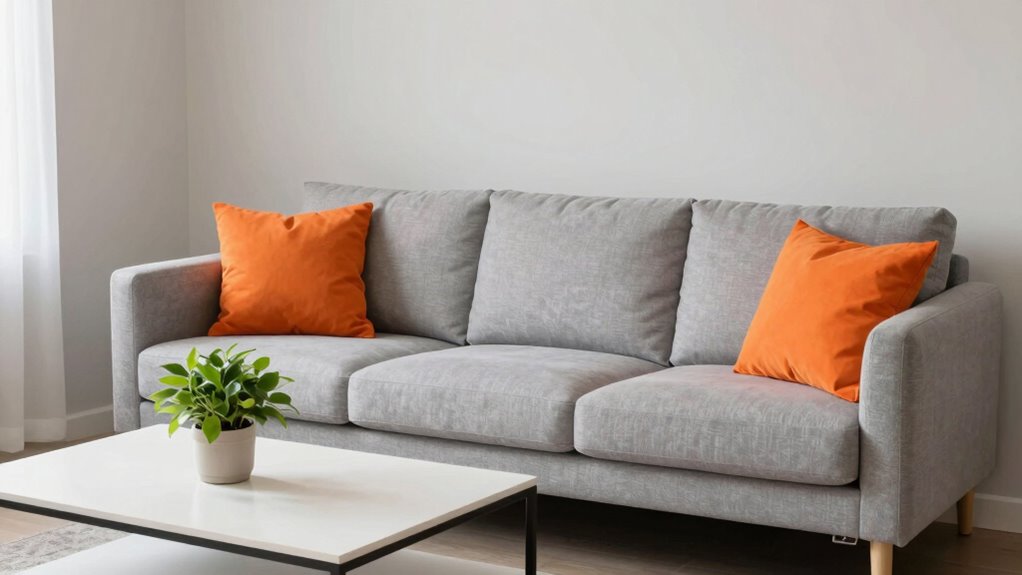
By consistently using your accent color throughout the year, you create a cohesive and inviting space that reflects your personality. Imagine adding a bold throw pillow in your accent hue to a neutral sofa—every season, swap out accessories to keep the look fresh. Just like a boutique hotel that refreshes its decor without overhauling the entire room, your intentional accent color use keeps your space vibrant and engaging, no matter the time of year.
Halloween Picks
halloween
As an affiliate, we earn on qualifying purchases.