
Automatic pool cleaners can help manage algae and cloudy pools when paired with proper chemical treatments and filtration. They’re effective at removing debris, algae spores, and fine particles that cause cloudiness, especially with models that have advanced navigation and filtration systems. However, they shouldn’t replace chemical balancing or shock treatments. For best results, combine these methods, and you’ll get clearer, healthier water. Keep going to discover how to maximize your pool’s cleanliness with these tools.

Get furniture and decor delivered free with Prime
- Fast, free delivery on millions of items
- Prime Video, Amazon Music and more included
- Member-only deals all year
Key Takeaways
- Robotic pool cleaners effectively remove algae spores and debris, improving water clarity when combined with chemical treatments.
- They excel at capturing fine particles that cause cloudiness, but may require chemical shock for heavily contaminated pools.
- Advanced models with strong suction and multi-stage filters enhance algae and debris removal for clearer water.
- Mechanical cleaning alone isn’t enough; regular chemical balancing and filtration maintenance are essential.
- Combining robotic cleaning with chemical treatments ensures optimal algae eradication and pool clarity.
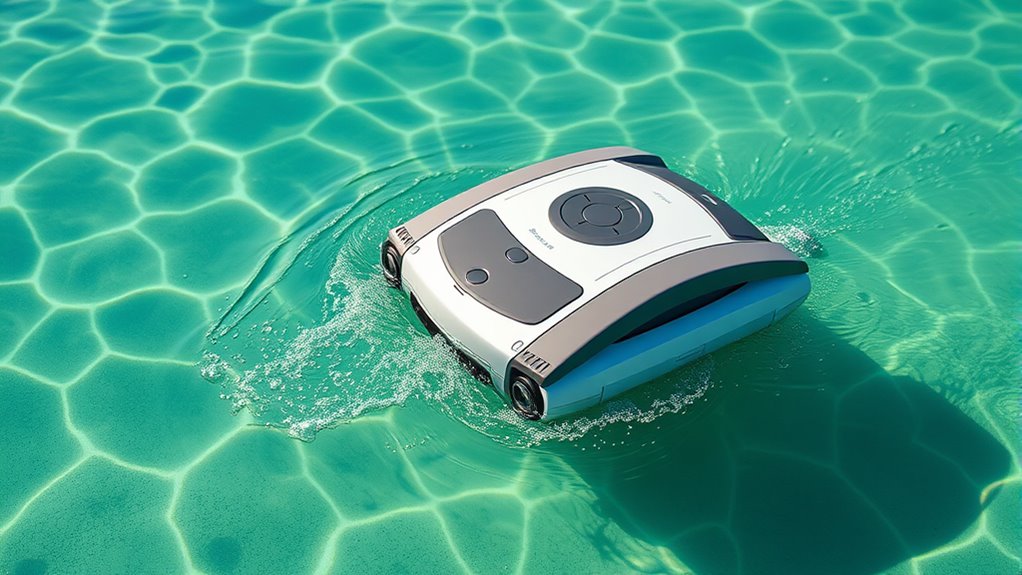
Are you tired of manually scrubbing your pool’s bottom and walls? If so, automatic pool cleaners might be just what you need. These devices have come a long way, especially with advancements in robotic navigation and debris collection techniques. But can they handle algae and cloudy pools effectively? The short answer is yes, but with some caveats.
Robotic pool cleaners equipped with smart navigation systems can efficiently cover the entire pool surface. They use sensors and algorithms to map out the pool’s layout, ensuring no area is missed. This robotic navigation enables the cleaner to maneuver around obstacles, follow ideal cleaning paths, and adjust on the fly if it encounters complex shapes or tight corners. As a result, these cleaners can reach spots that traditional suction or pressure-side models might overlook. When it comes to algae, especially if it’s just starting to form or is light, a good robotic cleaner can help remove the algae’s physical presence. However, algae often cling to surfaces and require chemical treatment for complete eradication. The cleaner’s debris collection techniques, like fine filters or specialized brushes, can capture algae spores and organic debris, preventing them from recirculating in the water. Additionally, selecting a model with effective filtration systems can help maximize debris removal, including algae spores. Utilizing advanced debris collection techniques allows the cleaner to better handle fine particles and improve overall cleaning efficiency.
For cloudy pools, the challenge is often suspended particles and algae that scatter light, reducing water clarity. Automatic cleaners with strong suction and multi-stage filtration systems can remove these particles, improving water transparency. They can pick up dirt, pollen, leaves, and smaller debris that contribute to cloudiness. Yet, in heavily contaminated pools, a robotic cleaner alone might not suffice. You’ll still need to shock the pool with chlorine or other algaecides to break down the algae and clear the cloudiness at the chemical level. Once the chemical balance is restored, the cleaner’s debris collection techniques can finish the job by removing residual particles, giving your pool a cleaner look and feel. Regular maintenance of the filtration systems will also ensure consistent performance. Proper filter maintenance is crucial to sustain optimal cleaning and water clarity over time.
Additionally, selecting a model with vetted filtration systems ensures optimal removal of fine debris and algae spores, enhancing overall pool clarity. While automatic pool cleaners excel at tidying up debris and maintaining cleanliness, they’re not a substitute for proper chemical maintenance and regular shock treatments for algae and cloudy water. They work best as part of a all-encompassing pool care routine. If you choose a model with advanced robotic navigation and efficient debris collection methods, you’ll find it easier to keep algae at bay and improve water clarity. Remember, consistent use combined with chemical balancing will give you the best results. For optimal results, consider integrating chemical treatment into your pool maintenance routine. With the right cleaner and routine, you can enjoy a clearer, healthier pool without the hassle of manual scrubbing.
automatic pool cleaner for algae removal
As an affiliate, we earn on qualifying purchases.
As an affiliate, we earn on qualifying purchases.
Frequently Asked Questions
Can Automatic Cleaners Remove Algae From Pool Walls?
Automatic pool cleaners can remove algae from your pool walls, but they might not do the full job alone. For pool safety and energy efficiency, it’s best to brush the walls manually first and maintain proper chemical levels. Automated cleaners help keep the pool clean between treatments, but algae removal often requires a combination of brushing, chemical balancing, and regular filtration. This approach guarantees a safe, clear, and energy-efficient swimming environment.
How Effective Are Automatic Pool Cleaners on Cloudy Water?
When it comes to cloudy water, automatic pool cleaners are often considered a first line of defense, but they’re not silver bullets. Their effectiveness depends on proper pool filter maintenance and adhering to chemical treatment protocols. You might find they clear debris, but for stubborn cloudiness, you’ll need to balance chemicals and regularly clean filters. Don’t leave it all to chance—combine tools and treatments for a sparkling, clear pool.
Do Automatic Cleaners Require Chemical Balancing Beforehand?
Automatic pool cleaners don’t typically require strict chemical balancing before use, but proper pool maintenance is essential. Ensuring your water has balanced chemical requirements helps the cleaner work more effectively and prevents issues like algae buildup and cloudiness. While the cleaner can do a good job removing debris, maintaining proper chemical levels supports overall pool health, making cleaning easier and more efficient. Always check chemical levels regularly for the best results.
Can Robotic Cleaners Prevent Algae Buildup?
You might think robotic cleaners are superheroes, but they can’t prevent algae buildup on their own. For effective algae prevention, you need to maintain proper chemical compatibility and regularly balance your pool’s chemicals. These cleaners excel at scrubbing surfaces and removing debris, but algae prevention requires your active effort in chemical treatment. Combine consistent chemical balance with robotic cleaning, and you’ll keep your pool crystal clear instead of a green swamp.
Are Automatic Pool Cleaners Suitable for Saltwater Pools?
You’ll find that automatic pool cleaners are generally suitable for saltwater pools, especially if they’re saltwater compatible. Before using, make certain you do chemical pre-treatment to balance your water’s pH and chlorine levels, which helps the cleaner work effectively and prevents damage. Always check the manufacturer’s guidelines for saltwater compatibility, and maintain proper chemical levels for ideal cleaning and longevity of your automatic pool cleaner.
Conclusion
While automatic pool cleaners are great for keeping your pool tidy, they might not be the magic bullet for algae and cloudiness. You’ll need to tackle those issues with proper chemical treatments and regular maintenance. Think of it like fixing a leaky faucet—you can’t just tighten the handle and call it a day. So, don’t put all your eggs in one basket. Use the right tools and treatments together, and you’ll have a sparkling pool in no time.
Halloween Picks
halloween
As an affiliate, we earn on qualifying purchases.