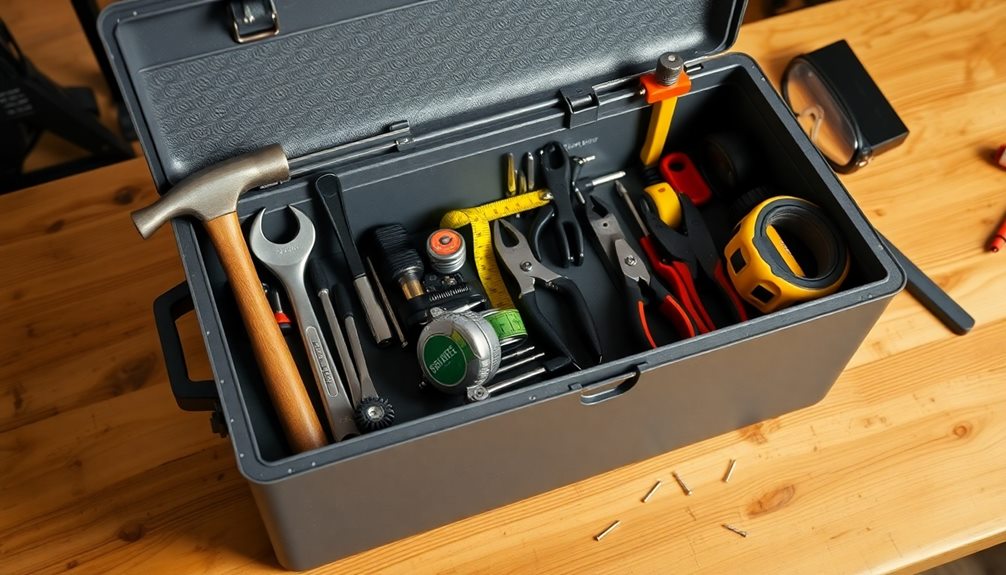
To set up your first aid drawer, keep essential supplies like bandages, antiseptic wipes, gauze, antibiotics, gloves, scissors, and pain relievers within easy reach, clearly labeled, and organized into categories. Store them in waterproof, sturdy containers in a central spot such as the kitchen or bathroom, out of reach of children. Regularly update and review the contents to guarantee safety and readiness. If you continue exploring, you’ll discover tips for customizing and maintaining your kit effectively.
Key Takeaways
- Organize supplies into categories like bandages, ointments, and tools in clear, labeled containers for quick access.
- Store the first aid drawer in a central, dry, and easily reachable location such as the kitchen or bathroom.
- Keep frequently used items at the front or top and regularly review to ensure supplies are complete and unexpired.
- Use child-proof lids and separate medications to enhance safety, avoiding storage near chemicals or heat sources.
- Maintain portable kits for outdoor or travel use and conduct regular training to ensure effective emergency response.
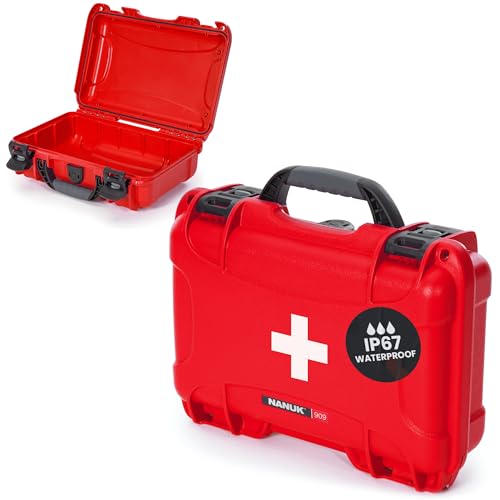
NANUK 909 Waterproof First Aid Box Empty – Durable, Medical First Aid Organizer Case, IP67-Rated, Dustproof, Impact-Resistant, and Floats (11.4" x 7.0" x 3.7") – Red
ULTIMATE PROTECTION FOR MEDICAL SUPPLIES: The NANUK 909 first aid box provides reliable protection for your essential medical…
As an affiliate, we earn on qualifying purchases.
As an affiliate, we earn on qualifying purchases.
Essential Supplies Every First Aid Kit Should Have

Having the right supplies in your first aid kit is essential for effectively treating minor injuries and preventing them from worsening. Start with basic items like adhesive bandages, sterile gauze, antiseptic wipes, and medical tape. Include scissors and tweezers for precise care, and gloves to protect yourself. Medication safety is critical, so store all medications, ointments, and liquids in child-proof storage to prevent accidental ingestion. Keep pain relievers, antihistamines, and antiseptic creams organized and out of reach of children. Having these essentials ready ensures you can respond quickly and safely. Regularly check expiration dates and replace used items. A well-stocked kit with secure storage helps you feel confident in managing common injuries efficiently. Additionally, understanding first aid kit organization can improve your ability to find supplies swiftly during emergencies.
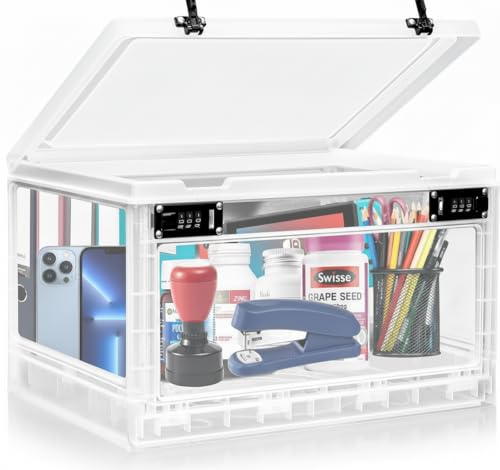
GLOQESEN Large Medicine Lock Box, Personal Items Lockable Container for Phone/Tablet, Refrigerator Locking Storage Bin for Snack/Food, Childproof First AID Locked Cabinet
【Large 24L Capacity with Clear Visibility】 This locking medicine box offers a spacious 24L (6.3 Gal) interior within…
As an affiliate, we earn on qualifying purchases.
As an affiliate, we earn on qualifying purchases.
Organizing Your Supplies for Easy Access
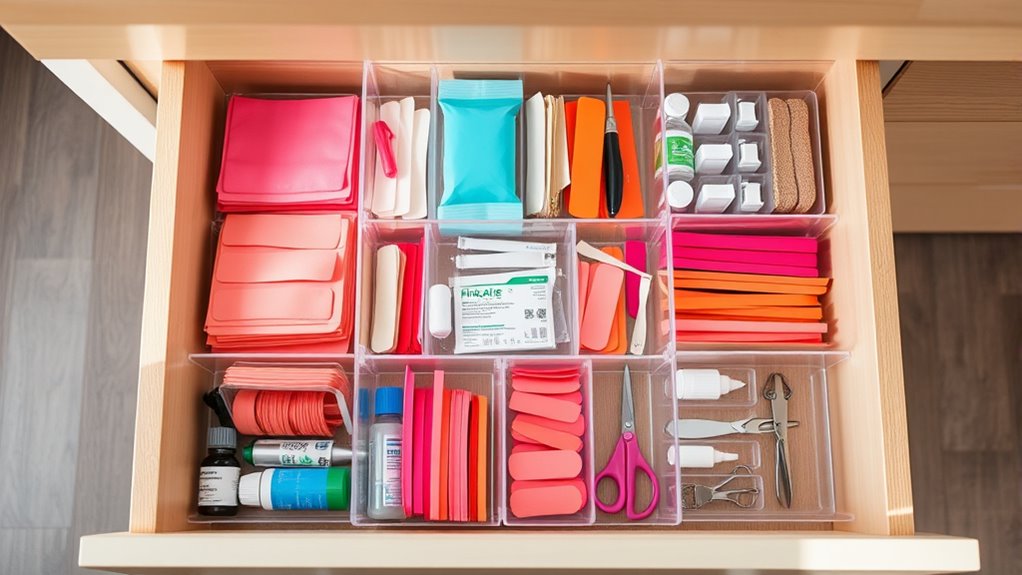
To guarantee quick and efficient access during emergencies, organizing your first aid supplies is essential. Use a clear labeling system to identify each storage container easily, saving precious time when every second counts. Divide supplies into categories such as bandages, ointments, and tools, then store them in designated containers. Opt for sturdy, stackable storage containers with lids to keep everything secure and visible. Label each container prominently with large, readable tags or stickers. Arrange items in a way that frequently used supplies are at the front or top for instant access. Regularly check and update your organization system to ensure everything remains in place and in good condition. Proper organization minimizes chaos and helps you respond swiftly when emergencies happen. Incorporating storage organization techniques can further optimize accessibility and efficiency.

8pk First Aid Kit Cabinet Notice Rectangle Window Label Sticker Decal Peel & Stick Red White Made in USA 3×1
Copyright 2023 (8) Red First Aid Kit Sticker decal will arrive ready to apply with no premask. Clean…
As an affiliate, we earn on qualifying purchases.
As an affiliate, we earn on qualifying purchases.
Choosing the Optimal Location for Your First Aid Drawer

Choose a spot that’s easy for everyone to reach quickly in an emergency. Make certain it’s away from moisture, like sinks or damp basements, to keep your supplies dry. A central, dry location ensures your first aid kit is both accessible and protected. To maintain the quality of your supplies, avoid storing your first aid drawer near spoiled lemon juice, which can cause contamination.
Easy Access Spot
Where you store your first aid drawer can make a crucial difference in an emergency. Opt for a location that’s easily accessible to everyone in your household, like the kitchen or bathroom. Consider storage safety by avoiding areas near heat, moisture, or chemicals. Keep the drawer at a height that’s reachable without needing a step stool, especially for children or seniors. Use clear labels and organize supplies for quick retrieval. Implement accessibility tips by ensuring the drawer isn’t blocked by other items. Regularly check that contents are intact and within expiration dates. Choose a spot that everyone knows about, so help is always nearby when needed. An easily accessible location helps you respond swiftly, saving precious time during emergencies. Rising talents showcase exceptional skills at a young age, emphasizing the importance of quick access to first aid supplies in case of accidental injuries.
Away From Moisture
Moisture can seriously damage first aid supplies, reducing their effectiveness when you need them most. To prevent this, choose a location away from areas prone to humidity or leaks. Use waterproof storage containers to protect bandages, antiseptics, and medications from moisture. Consider places like a high shelf or a cabinet that’s not near sinks, showers, or windows. Incorporate humidity control measures, such as silica gel packets or dehumidifiers, to keep the environment dry. Regularly check for signs of moisture or mold, and ensure the storage area stays dry. Keeping your first aid supplies in a moisture-free zone ensures they remain sterile, effective, and ready whenever an emergency arises. Proper placement is key to maintaining the integrity of your first aid kit. Additionally, understanding cybersecurity trends can help protect your digital information from potential threats.

BAND-AID Brand Travel Ready Portable Emergency First Aid Kit for Minor Wound Care, Perfect for Home, Car, Travel, Camping Essentials & Outdoor Emergency Kit, 80 Pieces
80-piece BAND-AID Brand Travel Ready First Aid Kit for on-the-go first aid and minor wound care, ideal for…
As an affiliate, we earn on qualifying purchases.
As an affiliate, we earn on qualifying purchases.
Safety Considerations When Storing First Aid Items
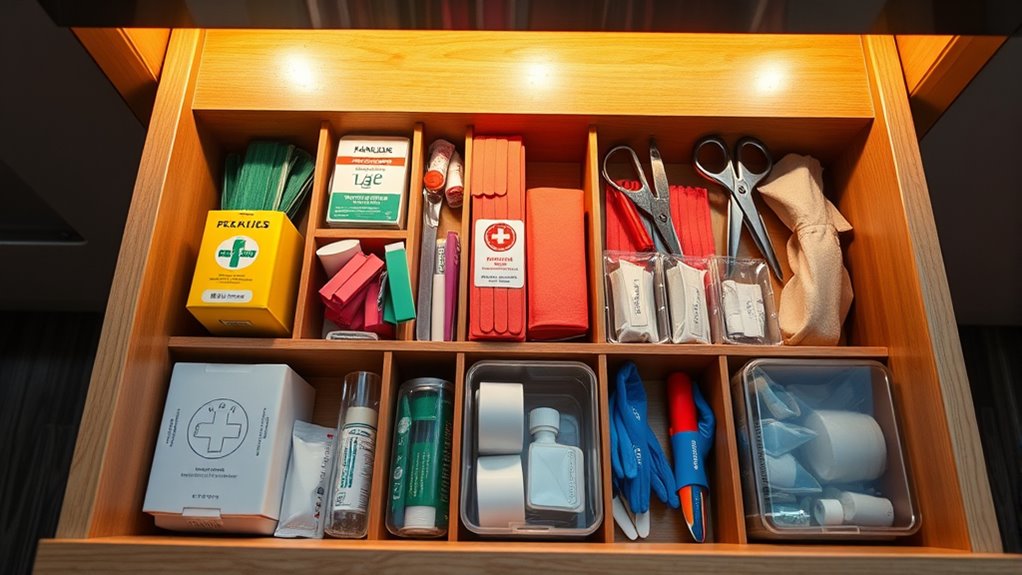
To guarantee first aid items are effective when needed, you must store them safely and thoughtfully. Proper storage prevents accidents and ensures quick access. Childproofing safety is vital, especially if children are around. Keep supplies out of reach and in containers with secure lids. Avoid hazardous storage near chemicals or sharp objects that could cause injury. Label your first aid kit clearly to prevent misuse. Store medications separately to prevent accidental ingestion. Regularly check expiration dates and replace outdated items. Consider a dedicated, sturdy drawer to reduce clutter and confusion. Keep the first aid drawer away from heat, moisture, and direct sunlight. Prioritizing safety also involves understanding how to keep first aid supplies organized and accessible in emergencies.
Maintaining and Updating Your First Aid Kit
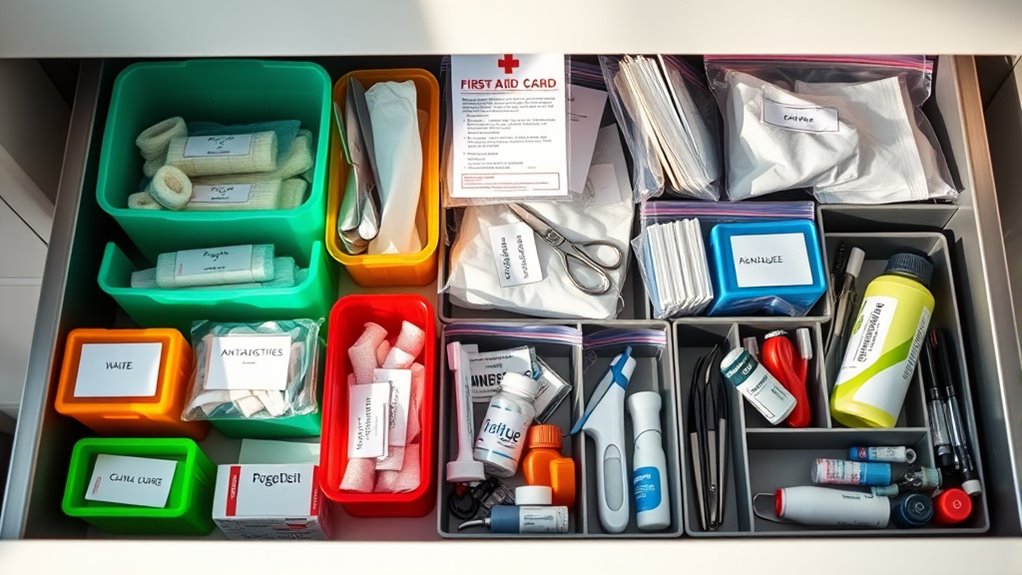
To keep your first aid kit effective, you need to regularly check its contents for expired or missing items. Replenishing supplies guarantees you’re always prepared for emergencies. Make it a habit to review and update your kit at least once every few months to ensure safety and readiness.
Regular Inventory Checks
Regular inventory checks are essential to guarantee your first aid kit remains effective and ready for emergencies. By routinely reviewing its contents, you ensure supplies are complete, clean, and properly stored. Check for expired items and replace them promptly. Confirm that safety signage is visible and legible, guiding everyone to the kit quickly. Organize supplies in sturdy storage containers to prevent spills and damage. Keep a list of what’s inside to streamline future checks. Label compartments clearly for easy access. Inspect the condition of bandages, antiseptics, and gloves, replacing any damaged or compromised items. Regularly updating your kit ensures safety and preparedness, reducing stress during emergencies. Staying proactive keeps your first aid drawer reliable and efficient when you need it most. Proper storage can prevent damage and ensure supplies stay effective over time.
Replenish Expired Items
When you review your first aid kit, it’s crucial to check for expired items and replace them promptly. Expired supplies can be ineffective or unsafe, so discard expired items and refill supplies as needed to guarantee readiness. Keep a regular schedule for this task to prevent missing any outdated products. Use the table below to track which items need refilling or discarding:
| Item | Action |
|---|---|
| Bandages | Refill |
| Antibiotic ointment | Discard/Replace |
| Alcohol wipes | Refill |
| Pain relievers | Discard/Replace |
Regularly automate data analysis to monitor inventory levels and expiration dates more effectively, reducing the risk of oversight.
Special Items for Specific Needs or Environments
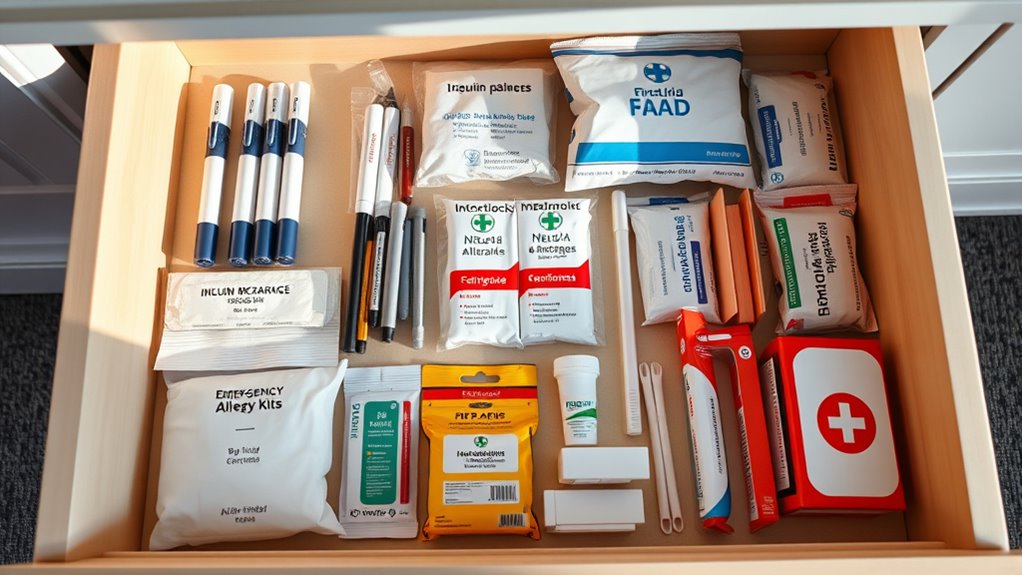
Tailoring your first aid kit to specific needs or environments guarantees you’re prepared for unique situations. For example, in outdoor or marine settings, you might need environment-specific supplies like waterproof bandages or insect sting relief. Including special wound dressings ensures proper care for complex or deep injuries. If you’re in a cold climate, add hand warmers or thermal blankets. For allergy-prone areas, carry antihistamines and allergy-specific medications. In workplaces with chemical exposure risks, include neutralizing agents and protective gear. Remember, customizing your kit with these special items helps you respond effectively in diverse scenarios, ensuring safety and quick recovery. Proper kit customization is a key component of effective first aid preparedness.
Portable First Aid Solutions for On-the-Go Preparedness

Being prepared for emergencies on the go means having a compact, lightweight first aid kit that you can carry effortlessly wherever you travel. To guarantee you’re ready for unexpected injuries, focus on first aid kit customization by selecting portable kit essentials tailored to your activities. Include items like adhesive bandages, antiseptic wipes, pain relievers, and small scissors—everything you might need for minor injuries. Opt for a sturdy, weather-resistant container to keep contents safe and organized. Keep your kit in your car, bag, or backpack so it’s always within reach. Regularly review and update your supplies to replace expired items and add new essentials as needed. With a well-curated portable first aid kit, you’ll be prepared to handle emergencies quickly and confidently wherever you go.
Tips for Training Family or Staff on First Aid Usage
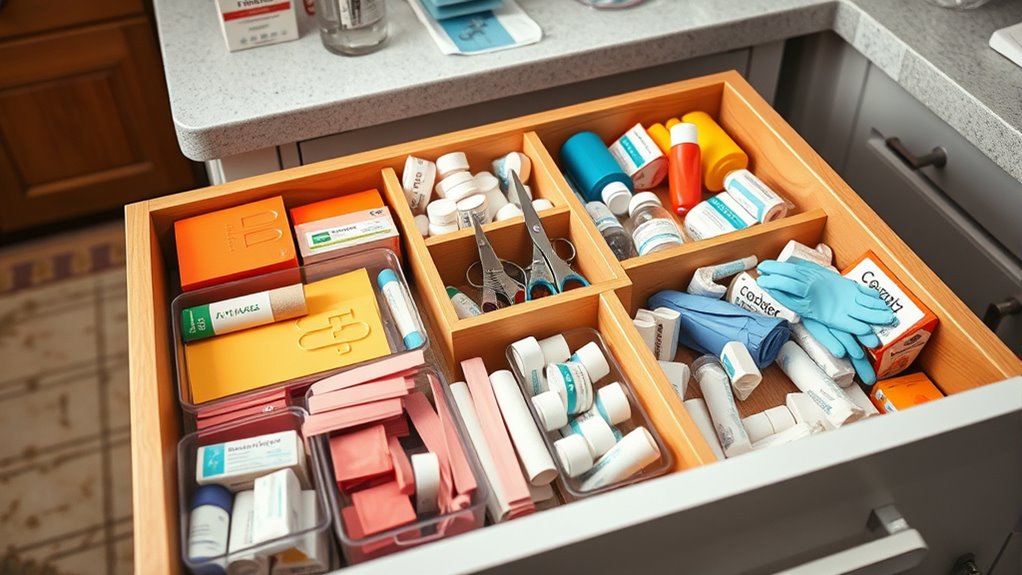
Training your family or staff on first aid usage is crucial to guarantee quick, effective responses during emergencies. Proper training builds confidence and ensures everyone knows their role. Incorporate regular training drills to reinforce skills and keep everyone prepared. Review emergency protocols so each person understands what to do in different situations. Use hands-on practice to simulate real scenarios, making lessons memorable. Encourage questions and discussions to clarify doubts. Keep training sessions short but frequent to maintain engagement. Emphasize the importance of staying calm and acting swiftly. Regularly update your training to include new techniques or protocols. This proactive approach helps create a safer environment where everyone knows how to respond confidently when it counts.
Frequently Asked Questions
How Often Should I Replace Expired First Aid Supplies?
You should replace expired first aid supplies as soon as you notice they’ve passed their medication shelf life. Regularly check your first aid inventory, ideally every six months, to guarantee everything is current and safe. Expired items can lose effectiveness, so staying proactive helps you respond effectively during emergencies. Make it a habit to review and update your supplies regularly, keeping your first aid drawer ready for any unforeseen situation.
Can I Customize My First Aid Kit for Specific Medical Conditions?
Imagine creating a safety net tailored just for you—yes, you can personalize your first aid kit for specific medical conditions. Specialized medical kits are available, or you can assemble a custom first aid kit, adding items that address your unique health concerns. This personalized approach assures you’re prepared for life’s unexpected moments, giving you peace of mind and confidence in handling emergencies with the right tools at hand.
What Certifications or Training Are Recommended for Using First Aid Supplies?
You should get CPR certification and complete first aid training to confidently use your supplies. These certifications teach you crucial skills like emergency response, wound care, and how to assist someone during a medical crisis. By staying trained, you’ll know how to act quickly and effectively, guaranteeing you’re prepared for various emergencies. Regularly updating your training keeps your skills sharp and ensures you’re always ready to help when someone needs it most.
Are There Any Legal Requirements for Storing First Aid Items at Home or Work?
Imagine your home or workplace as a sanctuary where safety reigns. Legally, you must follow storage regulations for first aid items, guaranteeing they’re accessible yet out of reach of children. These legal requirements promote legal compliance and safety. Keep your first aid supplies in a designated, clearly labeled spot. Regularly check expiration dates, and ensure everyone knows where to find them, turning safety into a shared responsibility.
How Do I Handle Allergies or Sensitivities in First Aid Supplies?
You should handle allergies or sensitivities in your first aid supplies by choosing allergy-friendly supplies and hypoallergenic options. Always check labels carefully and select products free from common allergens like latex, fragrances, or certain preservatives. Keep these allergy-friendly supplies separate and clearly labeled. Regularly review your supplies to guarantee they remain safe for sensitive individuals, and consult healthcare professionals for personalized recommendations. This proactive approach keeps everyone safe and comfortable.
Conclusion
So, next time you’re rummaging through your perfectly organized first aid drawer, remember—it’s all about being prepared, right? Ironically, the real surprise is often how quickly a minor mishap can turn into a major panic. But with your well-stocked, thoughtfully arranged kit, you’ll be the hero in any emergency—just don’t forget to update it before your next accidental adventure. After all, a little prep can save a lot of stress.