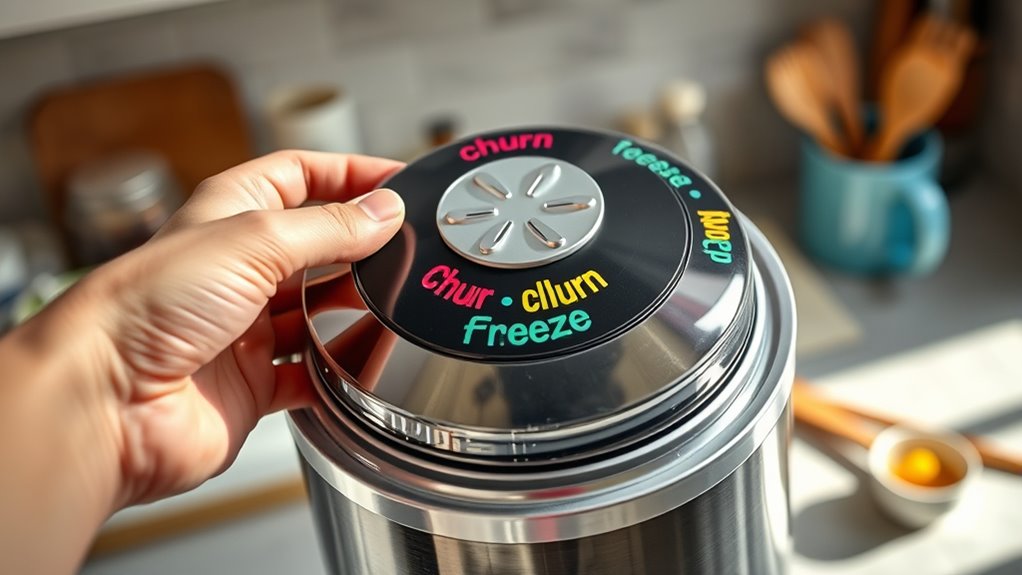

If you’re confused by ice cream maker terms, don’t worry—understanding these can improve your homemade treats. Bowl models need pre-freezing, while compressor machines chill automatically. Key ingredients like custard bases and no-churn options change the texture and process. Terms like “overrun” and “paddle attachments” affect how fluffy or smooth your ice cream turns out. Grasping these concepts helps you troubleshoot and customize recipes easily. Keep going to discover more tips to make your ice cream experience even better!
Key Takeaways
- Understand the difference between bowl models (pre-frozen bowls) and compressor models (built-in refrigeration) to match your needs.
- Know key ingredients like custard (eggs) for richness or no-churn bases with condensed milk or whipped cream.
- Recognize processes such as churning (mixing to incorporate air) versus freezing alone, which affects texture.
- Learn terms like “overrun” (air content) and “custard base” (egg-rich recipes) for better recipe comprehension.
- Use your knowledge of features and techniques to customize flavors, improve texture, and troubleshoot ice cream making.
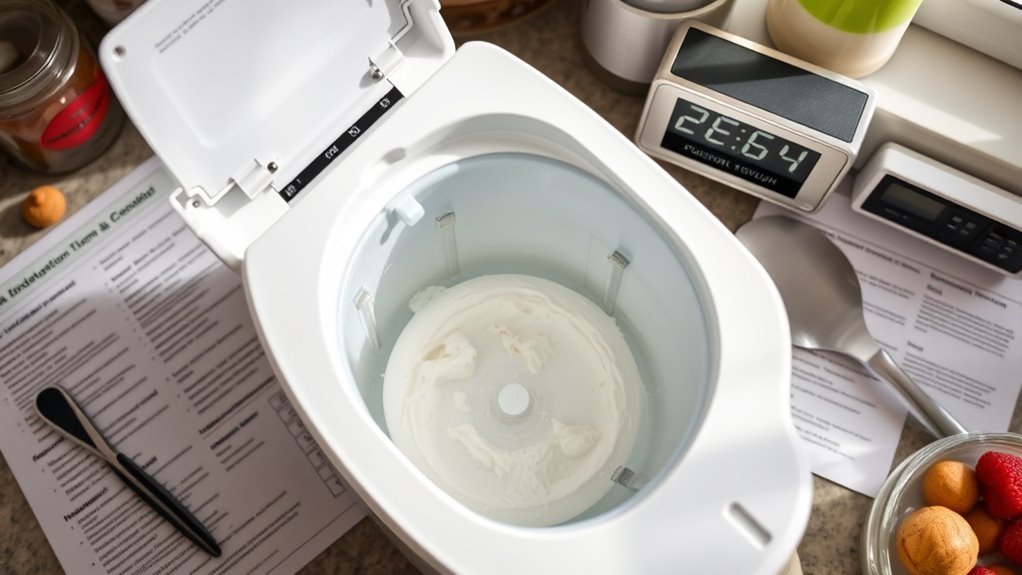
When you’re exploring the world of ice cream makers, understanding the key terms can make the process much easier. Knowing what certain words mean helps you choose the right machine and gives you confidence when trying out new recipes. One of the main advantages of homemade ice cream is the benefits of homemade ice cream—freshness, control over ingredients, and endless customization. When you make ice cream at home, you skip preservatives and artificial flavors found in store-bought options. Plus, it’s fun to experiment with flavors and ingredients, whether you’re creating classic vanilla, rich chocolate, or inventive combinations like lavender honey or spicy mango. Familiarity with common ice cream recipes helps you get started and expand your skill set. Many recipes are simple, requiring just a few ingredients like heavy cream, sugar, and flavorings, but understanding the terminology behind them helps you troubleshoot and adapt as needed.
As you explore the terminology, you’ll encounter words like “bowl models” or “compressor models.” Bowl models require you to freeze a bowl beforehand, which is convenient but takes planning. Compressor models, on the other hand, have built-in refrigeration, allowing you to churn ice cream anytime without pre-freezing. Knowing this helps you decide which type fits your lifestyle. Terms like “custard base” often come up, referring to recipes that include eggs, resulting in a richer, creamier texture. “No-churn” recipes are popular too—they use condensed milk or whipped cream to create ice cream without a machine, making them accessible for quick treats. When reading common ice cream recipes, you’ll see instructions for churning, freezing, or both. Churning involves mixing ingredients to incorporate air and prevent ice crystals, which is key to smooth ice cream. Freezing alone can lead to icy textures, so understanding this difference helps you achieve the best results.
Additionally, understanding the concept of overrun can help you control the texture and volume of your ice cream, ensuring it’s just the way you like it. Other handy terms include “overrun,” which describes how much air is whipped into the mixture—more overrun means fluffier, lighter ice cream. Temperature control is also crucial, especially when working with custard bases, as precise chilling ensures proper texture and flavor development. The use of paddle attachments in some machines can also impact the creaminess by affecting how ingredients are mixed during churning. Recognizing these terms allows you to follow recipes accurately and make adjustments based on your preferences. Overall, familiarizing yourself with these key terms enhances your confidence and helps you get the most out of your ice cream maker. Whether you’re making a simple vanilla or trying a complex, layered flavor, understanding the language behind ice cream making makes the process smoother and more enjoyable. So, as you explore, keep these terms in mind—they’ll be your handy guide to delicious, homemade ice cream.
Frequently Asked Questions
What’S the Difference Between a Compressor and a Manual Ice Cream Maker?
A compressor ice cream maker has a built-in power source and doesn’t need pre-freezing, so it’s ready to go with just a bowl capacity of around 1-2 quarts. Manual models, on the other hand, require you to pre-freeze the bowl, and you’ll have to manually churn the mixture. The compressor’s convenience comes at a higher price, while manual makers are more affordable but demand extra effort and planning.
How Does the Churn Speed Affect Ice Cream Texture?
Think of churn speed as the artist’s brush—faster speed whips up smoother, creamier textures, while slower speeds create chunkier, more varied ice cream. The churn speed impact directly influences texture variation, giving you options from silky to chunky. Higher speeds incorporate air more rapidly, resulting in a light, fluffy consistency, whereas lower speeds preserve larger ice crystals, making your ice cream denser and more textured.
Are All Ice Cream Makers Suitable for Sorbet and Gelato?
Not all ice cream makers are appropriate for all types like sorbet vs gelato. Some machines work better for creamy gelato, while others handle sorbet’s fruitiness well. Check if your machine has a powerful motor and a good churning process, as these features guarantee it’s compatible with all types. If you want versatility, choose one designed for different textures, so you can make sorbet, gelato, and ice cream with ease.
What Does “Pre-Freeze Bowl” Mean?
Did you know that over 60% of ice cream makers require a pre-freeze bowl? When you see “pre-freeze bowl,” it means you need to prepare the bowl by freezing it beforehand. This step is essential for the freezing process, ensuring your ice cream, sorbet, or gelato churns smoothly. Simply place the bowl in your freezer for several hours, so it’s cold enough to do its job when you start making your treat.
How Long Does It Typically Take for an Ice Cream Maker to Produce Ice Cream?
When you ask how long it takes for an ice cream maker to produce ice cream, you’re looking at the freezing time and batch duration. Typically, it takes about 20 to 40 minutes for your machine to churn a batch of ice cream, depending on the model and ingredients. During this process, the mixture freezes and thickens, so patience is key to getting that perfect creamy texture.
Conclusion
Now that you’ve decoded these ice cream maker terms, you’re all set to become a master at creating your favorite frozen treats. Think of these terms as the secret ingredients to your delicious success recipe. With this newfound knowledge, you’ll navigate your ice cream adventures with confidence—like a captain steering through smooth, sweet waters. So go ahead, grab your machine, and start crafting those irresistible, homemade ice creams that will wow everyone!

Sterling – Your Customer Champion Sterling is your customer champion, dedicated to providing exceptional support and assistance whenever needed. With his friendly demeanor and commitment to your satisfaction, he ensures that your experience with Perfect Fit Living is excellent.