
TL;DR

Get furniture and decor delivered free with Prime
- Fast, free delivery on millions of items
- Prime Video, Amazon Music and more included
- Member-only deals all year
A Hunker report describes a DIY method for wrapping a plastic pot in straight wooden clothespins secured with twine, creating a vintage-style container for countertop storage. The project is decorative; its capacity, durability and suitability for food storage have not been established.
A Hunker report describes a DIY project that uses straight wooden clothespins and twine to cover a plastic plant pot, turning it into vintage-style countertop storage. The method, attributed to Sandy of Whimsy Barn, offers a decorative way to reuse a pot, but the report does not provide testing or evidence about how much weight the finished container can hold.
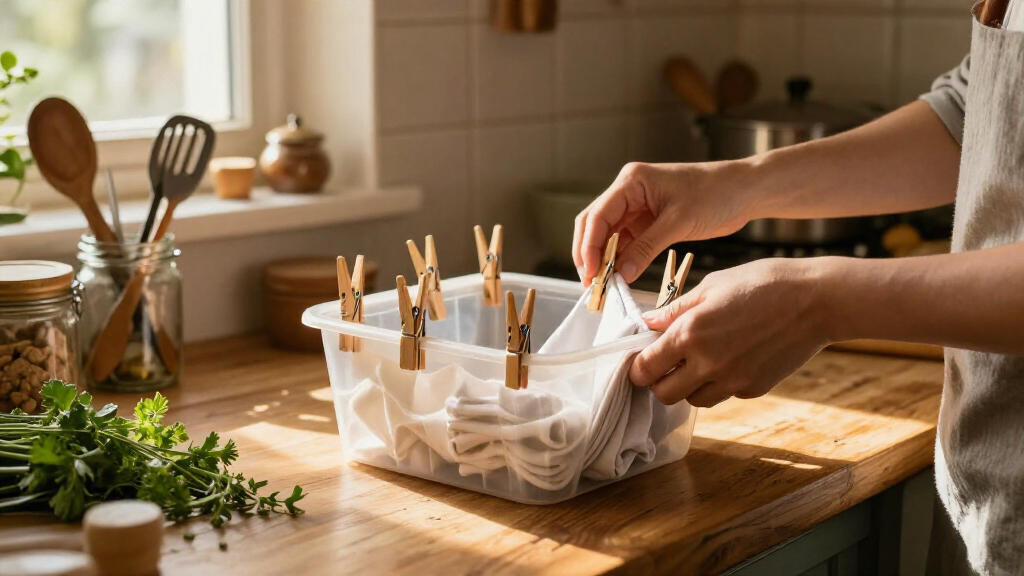
The design places a row of spring-free, straight clothespins around a container in a picket-fence-like pattern. Twine threaded through the pins holds the row together and lets the maker tie the decoration around the pot. Hunker says the pot should be approximately the same height as the clothespins so they cover its sides.
To make the chain, thread one end of a long piece of twine through the slit in the first clothespin and knot it at the back. For each following pin, pass the twine through the slit and wrap it around the outside before placing the pin beside the previous one. A second length of twine, wrapped lower down, adds stability; another run near the tops is optional.
The report says painter’s tape can temporarily hold the row together while it is lifted and wrapped around the pot. Once the ends are tied tightly, small amounts of glue may help prevent pins from shifting. The creator’s approach uses twine rather than glue as the main fastening method. Hunker cautions that hot glue can melt thin plastic, so anyone choosing that option should use care.
A Decorative Second Life for Pots
The project is a low-cost craft idea for people who want to reuse an ordinary plastic pot instead of leaving it in storage or discarding it. The clothespins conceal the container’s exterior, while the pot itself provides the basic shape for holding household items. That makes the result a possible decorative countertop organizer, rather than simply a plant pot.
Its practical value depends on the container and what someone puts in it. Hunker presents the project as extra kitchen storage, but does not specify tested uses, a weight limit, or whether the interior is suitable for food. Readers should treat it as an open container for appropriate household items and make their own judgment about stability, cleanliness and placement.
Products Worth Considering

Philips Hue Starter Kit with Bridge Pro and 4 Retrofit LED Recessed Downlights

Bose SoundLink Flex Bluetooth Speaker (2nd Gen), Black

iRobot Roomba Plus 575 Robot Vacuum and Mop Combo
As an affiliate, we earn on qualifying purchases.
Choosing Pins and Preparing the Pot
The project calls for straight, spring-free wooden clothespins, also described as peg-style or doll-style clips. These differ from the spring-loaded clothespins common in many homes. Hunker says people without the older style can look for them at thrift shops or buy a new pack; the article names Jianwei Round Wooden Clothespins as one example.
Thin twine is the other main supply, although the report says yarn or another string-like material can work. The pins can be stained or painted, or wrapped with yarn, fabric scraps or twine. Any covering should leave the clothespin slits open, since the slits are needed to thread and secure the chain. The pot can also be painted or covered in fabric before the pins are attached.
Hunker attributes the idea to Sandy from Whimsy Barn, who used twine to connect the clothespins and tie them around a container. The report also suggests optional finishing touches, including bows, faux flowers and twine spirals. These are decorative choices, not necessary parts of the fastening method.
“The project calls for the straight, spring-free clothespin style.”
— Hunker, describing the project
Durability and Use Are Unspecified
The report does not say how long the twine fastening lasts, whether the clothespins stay in place during regular use, or how the finished container handles moisture and cleaning. It also gives no measurements, supply quantities, cost estimate or instructions for lining the pot. Those details may vary with the pot, pin size and string selected.
There is no reported load test or confirmation that the container is appropriate for direct food contact. The project is described as countertop storage, but the source does not define which items are intended. The article’s hot-glue warning is specific to thin plastic; it does not give product-specific advice for different plastics or adhesives.
Makers Can Adapt the Finish
No follow-up testing or additional development is reported. The next steps are left to individual makers: choose a pot and pins of compatible height, assemble the twine chain, tie it around the container and decide whether extra decoration or a small amount of glue is appropriate. Anyone using heat-sensitive plastic should avoid applying hot glue directly unless they can do so safely.
The finished piece can then be used for suitable countertop items, with its stability and capacity checked before use. Hunker’s report offers a craft method rather than performance guidance, so claims about how well it works over time remain unverified.
Key Questions
What kind of clothespins does the project use?
It uses straight, spring-free wooden clothespins, sometimes called peg-style or doll-style clips, rather than the familiar spring-loaded type.
How are the clothespins attached to the pot?
Thread twine through the pins’ slits, wrapping it around each pin as the row is built. Use a second length lower down for added stability, then tie the assembled row around the pot.
Can hot glue be used?
Hunker says glue may help stop the pins from shifting, but warns that hot glue can melt thin plastic. The report does not provide product-specific adhesive guidance.
Can the clothespins be painted or covered?
Yes. The report suggests staining, painting or wrapping the pins with yarn, fabric scraps or twine. Keep the slits clear so the twine can pass through them.
What can the finished container safely hold?
The report does not specify a weight limit or confirm that the pot is suitable for food storage. Check the finished container’s stability and use it for appropriate items rather than assuming it has been tested.
Source: hunker.com