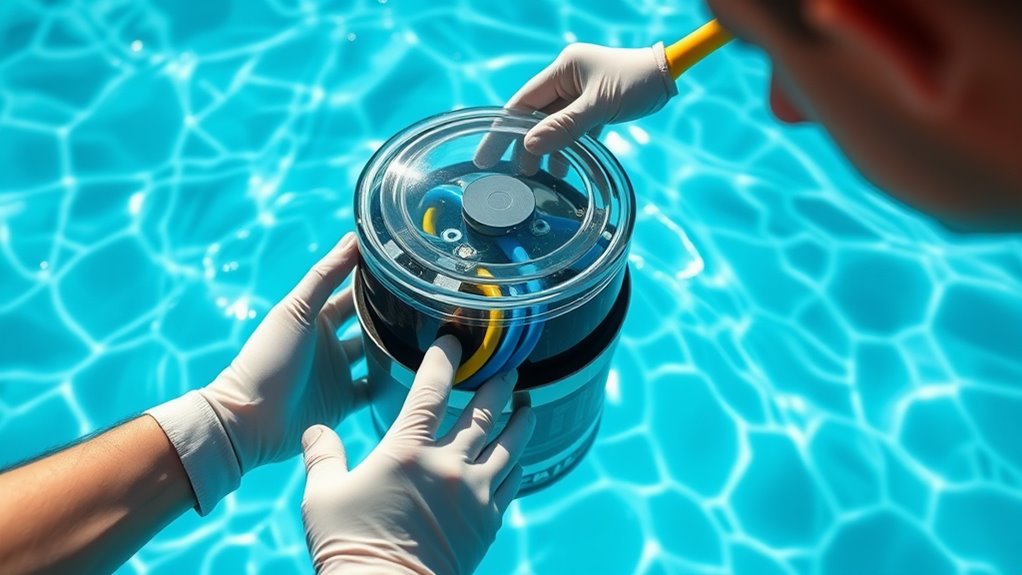

If your automatic pool cleaner isn’t working well, start by checking for blockages in the brushes, wheels, or hoses. Make sure all connections are secure and the power supply is functioning properly. For robotic models, verify the cord and control settings. Inspect filters, seals, and worn parts, and confirm your pump pressure is correct for suction or pressure-side cleaners. Continuing with these steps will help you identify and fix common issues effectively.
Key Takeaways
- Regularly inspect and clean brushes, hoses, and filters to prevent clogs and ensure optimal operation.
- Verify hose connections, skimmer basket fullness, and water pressure for suction-side cleaners.
- Check for debris, worn parts, or jams in wheels, tracks, and brushes, and replace damaged components as needed.
- Confirm proper installation, secure connections, and correct control settings, especially in robotic models.
- Consult manufacturer manuals or contact professionals if troubleshooting steps do not resolve issues.

Keeping your pool clean is essential for inviting swimming and maintaining water quality, but even the best pool cleaners can encounter issues. When your automatic cleaner isn’t performing as expected, troubleshooting becomes necessary to restore ideal function. One of the first steps is understanding pool cleaner maintenance. Regularly inspecting and cleaning your device helps prevent common problems, such as debris buildup that can clog the system or impair movement. Check the brushes, hoses, and filters frequently, and remove any dirt or obstructions. Proper maintenance not only extends the lifespan of your cleaner but also ensures it operates efficiently, saving you time and frustration.
Regularly inspect and clean your pool cleaner to prevent clogs and ensure efficient operation.
Another factor to contemplate is the type of automatic cleaner you own, as different models have distinct troubleshooting needs. There are robotic cleaners, suction-side cleaners, and pressure-side cleaners, each with unique mechanisms. Robotic cleaners, for example, rely on onboard motors and brushes, so if they stop moving or don’t clean effectively, inspect the power supply, brushes, and wheels. Suction-side cleaners attach to your skimmer or dedicated suction line; if they’re not picking up debris, check the hose connections, ensure the skimmer basket isn’t full, and verify that the pump is functioning properly. Pressure-side cleaners, powered by your pool’s pump, may have issues related to water pressure or clogged intake vents, so inspecting those components can resolve many problems.
Sometimes, the issue might be as simple as misalignment or debris blocking the cleaner’s path. Ensure that your cleaner’s tracks or wheels aren’t jammed or worn out, and clean any debris from the tracks, brushes, or wheels. Additionally, check for proper installation; a loose hose connection or improperly seated cleaner can cause it to lose traction or move erratically. If you notice leaks or unusual noises, these could be signs of worn-out seals or damaged parts that need replacing. For robotic cleaners, verify that the power cord isn’t damaged and that the control settings are correct. For suction and pressure-side models, confirming that valves are open and that the pump pressure falls within recommended ranges can solve many movement and cleaning issues. Knowing how to troubleshoot your cleaner effectively can save you from costly repairs and frequent replacements.
Additionally, staying informed about latest pool cleaner technology can help you select models with enhanced diagnostics and easier troubleshooting features, making maintenance more straightforward. Being aware of smart features or app compatibility can also facilitate remote monitoring and adjustments, reducing the need for manual checks. Understanding common mechanical problems and their solutions can further streamline your maintenance routine. Finally, always refer to your specific cleaner’s manual for troubleshooting tips tailored to your model. Manufacturer guides often include valuable advice on diagnosing and fixing problems, from motor failures to sensor issues. Performing routine pool cleaner maintenance, understanding the different automatic cleaner types, and systematically checking the key components will help you keep your pool cleaner functioning smoothly. When problems persist despite these efforts, consulting a professional or contacting customer support can save you time and ensure your pool remains clean and inviting.
Frequently Asked Questions
Can I Use My Automatic Cleaner During Heavy Rain?
You might wonder if you can use your automatic pool cleaner during heavy rain. It’s best to avoid doing so because rain damage can occur, especially if water gets into the electrical parts. Using it during rain also risks electrical safety issues. To protect your cleaner and stay safe, wait until the rain stops and the pool is clear of excess water before running your cleaner again.
How Often Should I Replace the Cleaner’S Brushes?
When it comes to brush replacement for your automatic pool cleaner, you should check the brushes regularly, typically every 3 to 6 months. Proper cleaner maintenance involves inspecting the brushes for wear and tear, replacing them when they become worn down or damaged. This routine ensures peak cleaning performance, prolongs the life of your cleaner, and maintains your pool’s cleanliness. Consistent brush replacement is essential for effective and efficient cleaner operation.
Is It Safe to Operate the Cleaner With the Pool Pump Off?
You shouldn’t operate your automatic pool cleaner with the pool pump off because it can affect pool safety and equipment operation. Running the cleaner without the pump risks damaging the device or causing debris to clog your filtration system. Always guarantee the pool pump is on before starting the cleaner to keep the system working properly and maintain a safe, clean swimming environment. Proper operation helps protect your equipment and ensures effective cleaning.
What Should I Do if the Cleaner Gets Stuck on a Step?
Think of your pool cleaner as a diligent explorer that sometimes hits a snag. If it gets stuck on a step, you should manually remove it to free the obstacle. Regular obstacle prevention, like repositioning or smoothing out sharp edges, can keep your cleaner moving smoothly. Don’t just wait for it to free itself—take action, clear the way, and guarantee it can continue its thorough cleaning adventure without interruptions.
Can I Upgrade My Current Automatic Pool Cleaner?
You can definitely explore upgrade options for your automatic pool cleaner, but you need to contemplate compatibility concerns first. Check if new models fit your pool size and type, and whether your current system supports upgraded features. Sometimes, upgrading parts or switching to a more advanced model can improve cleaning efficiency. Just make sure to verify compatibility to avoid any issues, so your investment pays off and your pool stays spotless.
Conclusion
Think of your pool cleaner as a trusted explorer steering through uncharted waters. When it hits a snag, don’t lose your compass—troubleshoot with patience and care. Like a seasoned sailor adjusting the sails, you can steer your cleaner back on course. With a bit of effort, you’ll keep your pool sparkling and inviting, ready for your next adventure. Remember, every problem is just a wave to ride over on your journey to a perfectly clean pool.

Sawyer – Your Storyteller Sawyer is your storyteller, sharing engaging narratives and insights to connect you with our brand and inspire your home projects. With his understanding of trends and passion for sharing stories, he keeps you informed and inspired every step of the way.