Use this guide to place, plug in, operate, and shut down a portable electric space heater safely. It is written for people using a household heater for the first time or who want a practical safety check before using one. The setup takes about 10-15 minutes. Keep the heater under your direct supervision while it is on, and switch it off before you leave the room or go to sleep.

Get furniture and decor delivered free with Prime
- Fast, free delivery on millions of items
- Prime Video, Amazon Music and more included
- Member-only deals all year

DREO Portable Ceramic Space Heater with Remote
- ✔ Heating element: PTC ceramic
- ✔ Heat output: 1500 watts
- ✔ Listed coverage: Up to 200 sq. ft.
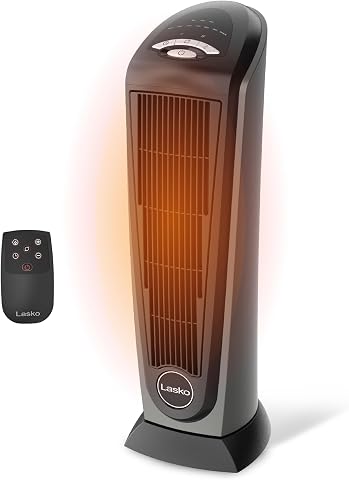
Lasko 23-Inch Ceramic Tower Space Heater with Remote Control, Silver (751320)
- ✔ Type: Ceramic tower space heater
- ✔ Power: 1500 watts
- ✔ Listed coverage: 150 sq. ft.

DREO Portable PTC Ceramic Space Heater with Thermostat
- ✔ Heating method: Forced air with PTC ceramic element
- ✔ Power: 1500 watts
- ✔ Listed coverage: Up to 200 sq. ft.
Difficulty: Beginner | Time: 10-15 minutes to set up; use only while you are in the room
What You’ll Need
Tools & Materials:
- Portable electric space heater with its user manual and intact power cord
- A clear, level, hard floor surface near a wall outlet
- A working smoke alarm in the home
Knowledge:
- Ability to identify the heater’s controls and read its safety labels
- Ability to switch off and unplug the heater safely
Use the heater only indoors and only for the purpose described in its manual. Check that its voltage and plug match your local electrical supply. If the manual is missing, look for the model number and obtain the manufacturer’s instructions before use. Do not use a heater that is recalled, damaged, modified, or missing safety features. Follow the manual if it sets a larger clearance or gives different placement instructions.
DREO Portable Ceramic Space Heater with Remote
The DREO DR-HSH006 earns the top spot by pairing useful controls with a compact footprint. Its thermostat spans 41–95°F in 1°F increments, giving us more room to fine-tune the setting than the Lasko’s listed 60–85°F range. Four speeds and Power Heat, ECO, and Fan Only modes also make it more adaptable across seasons and routines than the Lasko, which has two heat settings.For a bedroom or home office, the stated 34 dB noise level and 12-hour timer are practical advantages: buyers can aim for quieter operation and set a longer shutoff window. Tip-over and overheat protection, a child lock, and a safety plug add useful safeguards, though they do not remove the need to follow the manual’s placement and outlet guidance. DREO lists coverage up to 200 square feet, but room shape, insulation, and cold conditions can change the result.This is the most versatile pick in our group, but it is not a whole-home solution. It needs a corded outlet, and its coverage rating is still intended for a defined indoor space. Compared with the Gold DREO, it has nearly the same core features in a slightly larger listed body; buyers who care most about a smaller unit may prefer that model. Choose the DR-HSH006 when fine control, modes, and quiet operation matter more than minimizing dimensions.
Pros:
- Thermostat range of 41–95°F with 1°F increments
- Four speeds and Power Heat, ECO, and Fan Only modes
- 12-hour timer and quiet-operation rating of 34 dB
- Tip-over protection, overheat protection, child lock, and safety plug
Cons:
- Coverage is listed for spaces up to 200 square feet
- Corded power limits placement to locations near an outlet
Best for: People heating a bedroom, study, or other indoor room who want fine thermostat adjustments, multiple modes, a longer timer, and quiet-operation specifications.
Not ideal for: Buyers who need heat across a large open area, want cordless placement, or prefer a heater with oscillation to distribute warmth around the room.
Bottom line: We recommend the DREO DR-HSH006 for its mix of fine temperature control, quiet operation, timer flexibility, and safety features in a single-room heater.
“We recommend the DREO DR-HSH006 for its mix of fine temperature control, quiet operation, timer flexibility, and safety features in a single-room heater.”
Lasko 23-Inch Ceramic Tower Space Heater with Remote Control, Silver (751320)
The Lasko 751320 takes a different approach from the compact DREO heaters: its tower design uses widespread oscillation to move warm air across more of the room. That makes it a sensible choice for someone working or relaxing in different spots within a medium-sized space. By comparison, the DREO models list coverage of up to 200 square feet, while Lasko lists 150 square feet; the Lasko’s reason to choose it is its moving airflow and taller form, not a larger stated coverage area.Its controls are straightforward: two heat settings, an adjustable thermostat listed from 60–85°F, a seven-hour timer, and a remote. A carry handle helps with room-to-room moves, and cool-touch housing and overheat protection are included. The simpler setup may suit buyers who want familiar heat controls without cycling through several modes or a wide temperature range.The tradeoff is less adjustment than either DREO provides. The two heat settings and narrower thermostat range make it harder to fine-tune, while the larger tower body is less compact than the Gold DREO. It is also specified for a smaller area than the other two. We would choose it for oscillation and accessible controls in a medium room, but buyers prioritizing quiet-operation data, more modes, or a broad thermostat range should look to DREO.
Pros:
- Widespread oscillation moves warmth around the room
- Remote control and adjustable thermostat
- Seven-hour timer and built-in carry handle
- Overheat protection and cool-touch housing
Cons:
- Only two heat settings and a 60–85°F thermostat range
- Listed coverage of 150 square feet is lower than the DREO models’ 200-square-foot figure
Best for: Buyers seeking a tower-style heater with oscillation and remote control for a medium-sized bedroom, home office, or living room.
Not ideal for: People who want a broad thermostat range, several operating modes, the smallest possible heater, or coverage beyond its listed 150 square feet.
Bottom line: We’d choose the Lasko 751320 when oscillating airflow and simple remote operation matter more than extensive temperature and mode choices.
“We’d choose the Lasko 751320 when oscillating airflow and simple remote operation matter more than extensive temperature and mode choices.”
DREO Portable PTC Ceramic Space Heater with Thermostat
The DREO HSH006 Gold is the smallest heater in this comparison by its listed dimensions, at 6.02 × 6.02 × 10 inches, and weighs three pounds. That makes it the most convenient choice when we want to move a heater between nearby rooms or keep the footprint small on a desk-side floor area. Its carry handle, remote, and memory function support that grab-and-go use. The larger DR-HSH006 is slightly bigger and heavier, while the Lasko tower occupies a different, taller form factor.Its core heating specification remains competitive: 1500 watts, PTC ceramic heating, forced airflow, and stated coverage up to 200 square feet. It also lists a 41–95°F range, four speeds, multiple modes, a 12-hour timer, child lock, and quiet operation at 34 dB. In practical terms, this is not a stripped-down compact heater; it retains many of the controls found on the Best Overall DREO.The reason it ranks below its DREO sibling is that the supplied specifications show considerable overlap, while the larger DR-HSH006 has a clearer all-around case through its specified 1°F temperature increments and three named modes. The Gold model does list a mute function and memory, and is physically smaller, so it may be the better fit when dimensions and simple storage drive the decision. Like the other options, however, it is corded and its stated 200-square-foot coverage does not make it suitable for every large or poorly insulated room.
Pros:
- Smallest listed dimensions among these three heaters
- Lightweight 3-pound body with carry handle
- Remote, 12-hour timer, memory function, and child lock
- 34 dB noise specification and 41–95°F thermostat range
Cons:
- Corded power limits where it can be placed
- Coverage is listed for spaces up to 200 square feet
- Its core specifications overlap with the larger DREO DR-HSH006
Best for: People who want a lightweight heater that is easy to carry and store, with remote control and a small listed footprint.
Not ideal for: Buyers who value the clearest documented temperature increments and mode details, need cordless placement, or expect to heat a large area.
Bottom line: We recommend the HSH006 Gold when compact size and easy carrying are the deciding factors, while the DR-HSH006 is the stronger pick for the clearest documented control range.
“We recommend the HSH006 Gold when compact size and easy carrying are the deciding factors, while the DR-HSH006 is the stronger pick for the clearest documented control range.”
As an Amazon Associate we earn from qualifying purchases.
Before You Start
Keep at least 3 feet (about 1 metre) of open space on every side of the heater. Move bedding, curtains, furniture, paper, clothing, and other things that can burn out of this area. Never cover the heater or use it to dry clothes. Plug it directly into a wall outlet; do not use an extension cord, power strip, timer, or multi-plug adapter. Stop before setup if the outlet is loose, damaged, discolored, or already warm, or if the heater’s plug or cord is damaged. Keep children and pets away from the hot surface and power cord.
Step-by-Step Instructions
Step 1: Check the heater and its safety features
Read the manual and check the heater, plug, and full length of the cord for cracks, cuts, loose parts, scorch marks, or other damage. Confirm that the model is approved for indoor household use in your country. Choose a heater with overheat protection and automatic shutoff if it tips over; check the manual to learn how these features work. Do not remove guards, repair the cord yourself, or use a heater with a loose or damaged plug.
Tip: A safety certification mark should be appropriate to your country. A tip-over switch is an added safeguard; it does not make it safe to leave the heater unattended.
Check: The heater and cord are intact, its instructions are available, and you can identify how to switch it off.
Step 2: Choose a safe location
Set the heater upright on a stable, level, hard surface where it cannot be bumped or tipped. Leave at least 3 feet of clearance on every side, including above the heater. Keep it away from doors, walkways, curtains, furniture, bedding, and water. Point the warm air toward the area you want to heat without aiming it at a person, pet, or object. Do not place the heater on a bed, sofa, carpet that blocks its air openings, or any surface named as unsuitable in the manual.
Tip: Do not place the heater where its cord crosses a walkway, sits beneath a rug, or can be pulled by a child or pet.
Check: The heater stands flat, has open space around it, and cannot be knocked over by routine movement through the room.
Step 3: Check the outlet and connect the heater
Choose a wall outlet that can serve the heater directly. Check the manual and heater label for its power requirements, and do not plug another heat-producing appliance into the same outlet. Insert the heater plug fully into the outlet. Keep the cord loose enough that it is not stretched, pinched, covered, or touching the hot heater body. Never route it under a rug or through a doorway that could crush it.
Tip: If the plug does not fit firmly, the outlet feels warm, or the circuit breaker trips, disconnect the heater and use a different safe location only after resolving the electrical issue.
Check: The plug sits firmly in the wall outlet, the cord is undamaged and unobstructed, and no adapter or extension lead is in use.
Step 4: Start the heater and select a setting
Make sure the heater is upright and the air intake and outlet are clear. Switch it on using the controls described in the manual. Start with a low or moderate heat setting, then adjust the thermostat gradually if the room remains too cool. Keep the heater attended while it runs. Do not leave the room, go to sleep, or use its timer or remote control to run it when nobody is present.
Tip: Use the thermostat to maintain a comfortable room temperature rather than repeatedly switching the heater to its highest setting.
Check: The heater runs steadily, its airflow openings remain clear, and the room begins to feel warmer without smoke, sparks, or unusual odors.
Step 5: Monitor the heater while it runs
Stay in the room and check that the heater remains upright, clear, and stable. Keep children and pets at a safe distance, and do not touch the grille or place objects against the heater. Watch for a hot plug or outlet, a cord that is warming, a burning smell, smoke, sparks, unusual noises, or repeated shutdowns. If you notice any of these signs, switch the heater off if it is safe to do so, unplug it once it has cooled, and stop using it.
Tip: Do not keep resetting a heater that shuts itself off. It may be overheating or have a fault.
Check: The heater stays stable and unobstructed, and the plug, outlet, and cord show no signs of overheating or damage.
Step 6: Switch off and unplug the heater
Switch the heater off before leaving the room or going to bed. Let it cool according to the manual, then unplug it by holding the plug rather than pulling the cord. Keep the heater in a safe place while it cools, with its hot surfaces away from people, pets, and anything that can burn. Store it only after it is cool and dry, with the cord loosely arranged rather than tightly wrapped around the unit.
Tip: Do not move a heater while it is on or hot unless its manual gives a safe method for doing so.
Check: The heater is switched off, unplugged after cooling, and no longer producing heat.
Common Mistakes to Avoid
- Plugging the heater into an extension cord or power strip. — Connect it directly to a suitable wall outlet. If the outlet is not close enough, relocate the heater to a safe position near an appropriate outlet rather than stretching the cord.
- Putting the heater close to curtains, bedding, furniture, or clothing. — Measure or estimate at least 3 feet of clear space around every side, and check above the heater too. Keep the clearance open during the entire run.
- Leaving the heater on while sleeping or when leaving the room. — Switch it off before you leave, then unplug it after it cools. Do not rely on a thermostat, timer, or tip-over switch to replace supervision.
- Ignoring a hot plug, damaged cord, smell, or repeated shutdown. — Stop using the heater, switch it off if safe, and unplug it after it cools. Replace a faulty heater or have the outlet checked by a qualified electrician.
Troubleshooting
Problem: The heater does not turn on.
Solution: Switch it off and check that the plug is fully inserted in a working wall outlet. Check the household breaker if safe to do so, then follow the manual’s reset instructions. If the outlet is damaged, warm, or loose, do not use it; contact a qualified electrician.
Problem: The heater switches off during use.
Solution: Switch it off and allow it to cool. Check that it is upright and that its air openings are unobstructed. Review the manual for reset instructions. If it shuts off again, stop using it and contact the manufacturer or replace it.
Problem: The room stays cold even though the heater runs.
Solution: Close doors and windows if practical, clear the intake and outlet, and check that the heater is suitable for the room size described in its manual. Do not place it closer to furnishings or raise it onto an unsafe surface. Use the home’s main heating system if the room cannot reach a comfortable temperature.
Problem: The plug or outlet becomes hot, or there is a burning smell, smoke, or sparking.
Solution: If safe, switch off the heater. Do not touch a damaged or sparking plug. Move people away and call emergency services if there is fire or smoke. Once safe and cool, disconnect the heater and do not use it again until the heater and outlet have been checked by qualified professionals.
What Success Looks Like
The heater warms the intended area while standing upright on a stable surface, with at least 3 feet of clear space around it and a direct connection to a suitable wall outlet. It remains attended, with no hot plug, damaged cord, smoke, sparks, or unusual odor. When you leave the room or go to sleep, it is switched off and unplugged after cooling.
Next Steps
After each use, let the heater cool before storing it in a dry place. Before using it again, check the cord, plug, air openings, and surrounding clearance. Clean dust only as the manual directs, with the heater switched off and unplugged. If the heater or outlet shows damage, stop using it and arrange repair or replacement. Keep the manual available so you can check model-specific cleaning, placement, and maintenance instructions.
Frequently Asked Questions
Can I leave an electric space heater on while I sleep?
No. Switch it off before you go to bed, and unplug it after it cools. Do not depend on a thermostat or automatic shutoff for overnight operation.
Can I plug a space heater into a power strip or extension cord?
No. Plug the heater directly into a suitable wall outlet. Extension cords and power strips can overheat under the heater’s electrical load.
How far should furniture and curtains be from the heater?
Keep at least 3 feet (about 1 metre) of clear space on every side, including above it. Follow the manual if it calls for more distance.
Can I use a space heater to dry clothes or warm a bed?
No. Do not cover the heater or place clothing, bedding, towels, or other objects on or near it. Keep these items outside the clearance area.
What should I do if the heater smells hot the first time I use it?
Switch it off if the smell is strong, persistent, or accompanied by smoke, sparks, or a hot plug. Follow the manual for normal first-use instructions. If you cannot confirm that the odor is expected, stop using the heater and contact the manufacturer.