
Mixing window treatment styles lets you create a unique, stylish space that balances functionality with personal flair. You can blend modern blinds or roller shades with vintage accents like wrought iron hardware or ornate curtain rods to add character. Layer textures and fabrics, such as silk with burlap, to create depth. Using coordinated patterns and colors helps unify different styles, while combining curtains and blinds offers both privacy and light control. Explore how different elements work together to elevate your decor.
Key Takeaways
- Combine modern blinds with vintage curtains for a balanced, stylish look.
- Layer sheer curtains behind textured drapes to add depth and flexibility.
- Pair different window treatments with coordinated colors and finishes for cohesion.
- Mix patterns and fabrics carefully to create visual interest without overwhelming the space.
- Use complementary hardware and materials to unify diverse window treatment styles seamlessly.
Combining Modern and Vintage Elements

Blending modern and vintage window treatments creates a stylish and personalized look that reflects your unique taste. To achieve this, incorporate medieval accents like wrought iron hardware or ornate curtain rods, adding a touch of historic charm. Pair these with sleek, minimalist blinds or contemporary roller shades to balance the vintage elements. This fusion brings out rustic charm, making your space feel warm and inviting while still feeling fresh. Don’t shy away from mixing textures, such as pairing rough-hewn wood or linen fabrics with smooth metal or glass. The key is to find a harmony between old-world details and modern simplicity, creating a cohesive look that’s both timeless and current. Your windows become a focal point that showcases your distinctive style.
Layering Textures and Fabrics for Depth

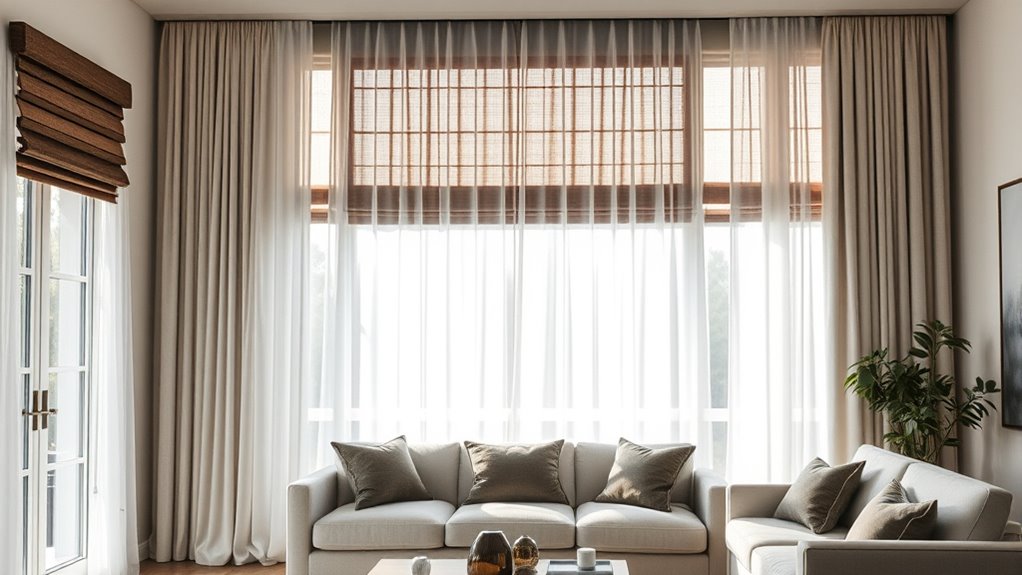
Adding layers of textures and fabrics can transform your windows from simple openings into striking design features. By using fabric contrast, you create visual interest that draws the eye. Mix smooth, sleek materials like silk with rougher textures such as burlap or linen to add depth. Texture pairing allows you to combine different fabrics thoughtfully, balancing softness with structure. For example, layer sheer curtains behind heavier, textured drapes to generate dimension and richness. Don’t be afraid to experiment with patterns and solid fabrics, as contrasting textures can highlight each other. This layering technique enhances your window’s style without overwhelming the space. The key is to select fabrics that complement and contrast, giving your windows a dynamic, layered look that feels both cohesive and inviting. Incorporating textured planters can further emphasize the tactile interest in your overall decor scheme. Considering sound absorption properties of certain fabrics can also improve your space’s acoustics while enhancing visual appeal.
Blending Curtains With Blinds for Functionality and Style

Have you ever considered combining curtains with blinds to maximize both style and functionality? Pairing sleek blinds with curtains made from sheer fabrics allows you to control light while maintaining privacy. Sheer fabrics add softness and elegance, creating a layered look that feels inviting. To enhance visual interest, choose curtains with decorative trimmings such as tassels or embroidery, which complement the clean lines of the blinds. This combination offers flexibility—you can draw the blinds for privacy or open the curtains for a bright, airy space. For a cohesive aesthetic, match the fabric and trimmings to your room’s color scheme. Blending curtains with blinds creates a versatile window treatment that balances practicality with sophisticated style.
Mixing Patterns and Colors in Window Treatments

Pairing different patterns and colors in your window treatments can dramatically enhance the room’s visual appeal. To do this effectively, focus on color coordination—choose hues that complement or contrast intentionally. When mixing patterns, aim for a balance: combine bold prints with subtle designs to avoid overwhelming the space. Use a common color theme to tie different patterns together, creating harmony rather than chaos. For example, if your curtains feature a floral pattern in shades of blue and green, consider blinds or shades in a solid matching tone. Keep the overall look cohesive by limiting the number of patterns and sticking to a tight color palette. This approach allows you to showcase your style while maintaining a polished, coordinated appearance. Additionally, understanding the power of decluttering can help you create a more organized and visually appealing space that highlights your window treatments effectively. Incorporating visual hierarchy through thoughtful arrangement can further emphasize your chosen patterns and colors, making your window area a stunning focal point. Being mindful of color balance ensures that your mix of patterns and colors remains pleasing to the eye, preventing any one element from dominating the room. Moreover, incorporating rural-inspired decor can complement the farmhouse style and add a cozy charm to your windows. Remember that grocery savings strategies can also be applied to home decor shopping, helping you invest in quality pieces without overspending.
Creating Cohesion With Complementary Styles

Creating cohesion with complementary styles involves selecting window treatments that naturally enhance each other, even if they differ in design or material. Focus on color coordination to guarantee the treatments complement your overall decor. For instance, pairing neutral curtains with patterned blinds can create harmony. Hardware selection also plays a key role; choose finishes that match or complement other fixtures in the room, like brushed nickel or matte black. When styles contrast, cohesive hardware helps tie the look together. Keep in mind that balance is essential—blend textures, colors, and finishes thoughtfully so they work as a unified whole. Additionally, understanding support hours for various services can help you plan your decorating projects more effectively. Incorporating design principles such as rhythm and emphasis can further enhance the visual flow of your window treatments. Paying attention to material compatibility and overall style harmony ensures the different styles and textures work seamlessly together. By paying attention to these details, you create a seamless, polished appearance that elevates your room’s style and makes your window treatments feel intentional.
Frequently Asked Questions
How Do I Choose the Right Window Treatment Style for My Room?
When choosing the right window treatment style, consider your room’s function and the fabric textures you prefer. Think about how much light control and privacy you need—drapes, blinds, or shades all serve different purposes. Match the fabric textures to your decor, whether you want soft, plush materials or sleek, minimal finishes. Ultimately, select treatments that enhance your space while aligning with your style and practical needs.
Can Mixing Styles Affect the Overall Room Decor?
Mixing styles can definitely affect your room decor. When you use style contrast intentionally, it adds visual interest and personality. However, if not done carefully, it can disrupt the visual harmony and make the space feel chaotic. You should aim to blend different styles thoughtfully, balancing bold contrasts with complementary elements. This approach helps your decor look dynamic yet cohesive, enhancing the overall aesthetic without overwhelming the room.
What Are Common Mistakes to Avoid When Blending Window Treatments?
When blending window treatments, you should avoid common mistakes that disrupt style coordination. Be careful not to overlayer, which can make the space look cluttered. Use layering techniques thoughtfully, ensuring each treatment complements the other. Stick to a cohesive color palette and avoid mixing too many patterns or textures. Focus on maintaining balance and harmony to create a polished look. Proper style coordination helps your window treatments enhance the room’s overall decor.
How Do I Maintain Different Window Treatments in One Room?
You might think keeping different window treatments in one room is chaotic, but with thoughtful layering techniques, it becomes a harmony of contrasts. Use material contrasts to add depth—pair sheer curtains with heavier drapes or combine blinds with valances. To maintain this balance, guarantee each layer complements the others without overwhelming the space. Adjusting colors and textures allows each treatment to shine while creating a cohesive, stylish look.
Are There Specific Color Palettes That Work Best When Mixing Styles?
When choosing color palettes, focus on color coordination to create harmony. Stick to a dominant color and use complementary or analogous shades for balance. For pattern mixing, pick patterns with similar tones but different scales to add interest without clashing. You can also incorporate neutral tones to unify diverse styles. This approach helps you achieve a cohesive look, even when blending different window treatment styles.
Conclusion
Just like a master chef blends flavors to create a perfect dish, mixing window treatment styles lets you craft a space that’s uniquely yours. By combining modern with vintage, layering textures, and playing with patterns, you bring your design vision to life—think of it as painting your own masterpiece. Embrace the art of balance, and soon your windows will tell a story as enthralling as a well-worn classic or a sleek, new chapter.