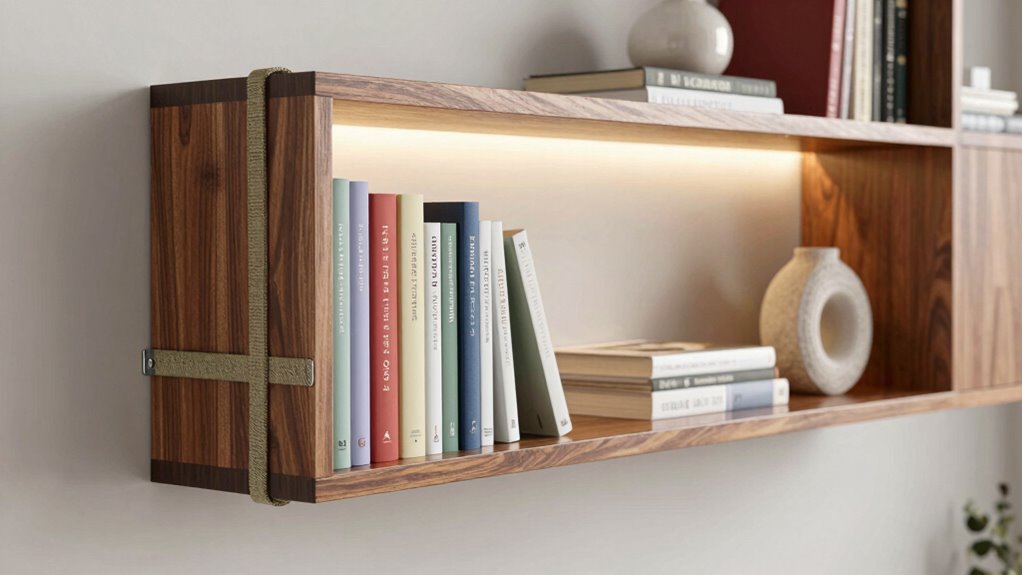

To stop your bookcase from tipping without ruining its look, secure it with discreet wall mounts or low-profile brackets that blend seamlessly with your decor. Place heavier items on the bottom shelves and avoid overloading them to keep it balanced. Regularly check stability and tighten hardware as needed. Using hidden anchoring solutions and organizing your books smartly guarantees safety without sacrificing style. Keep exploring to discover more tips for a secure and stylish setup.
Key Takeaways
- Use low-profile, concealed wall mounts to secure the bookcase discreetly behind the unit.
- Install sturdy brackets or straps inside the top or back for a hidden, stable attachment.
- Ensure proper weight distribution by placing heavier items on lower shelves to prevent tipping.
- Regularly inspect and tighten mounts, brackets, and hardware to maintain ongoing safety.
- Choose hardware and mounting solutions that blend seamlessly with your decor to preserve aesthetics.

43.3in-59in Extendable Round Dining Table for 4-8,Modern Kitchen Oval Dining Table with Removable Leaves Space Saving,Wood Base with Storage Shelf for Kitchen Living Room (Walnut)
Retractable dining table for 4-8 people: Considering the use in different scenarios, the dining table adopts a retractable...
As an affiliate, we earn on qualifying purchases.
Why Bookcase Safety Matters: Preventing Tip-Overs and Injuries
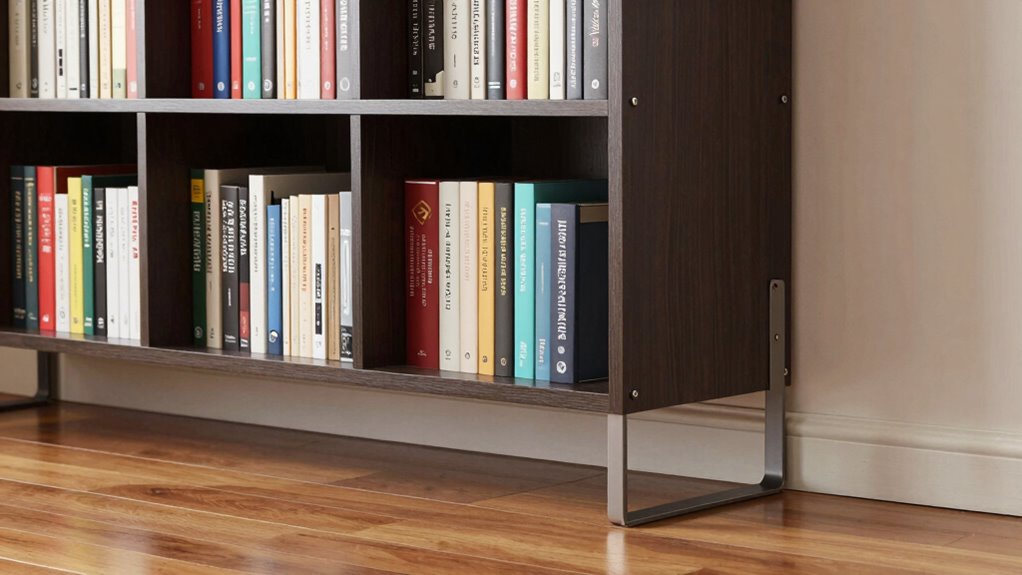
Bookcases that aren’t properly secured can easily tip over, posing serious safety risks, especially to children. Ensuring furniture stability is vital to prevent accidents and injuries. Children are naturally curious and may try to climb or lean on an unsecured bookcase, increasing the risk of it toppling. A fall can cause severe injuries, including cuts, bruises, or even head trauma. Prioritizing child safety means taking simple steps like anchoring your bookcase to the wall and choosing sturdy, well-built furniture. Using load‑planning tools can help you determine the appropriate size and weight capacity for your furniture, reducing the risk of tip-overs. Additionally, selecting furniture with a low center of gravity enhances stability and minimizes the chances of tipping. Properly distributing the weight load across the shelves also plays a crucial role in maintaining stability. Ensuring that the furniture’s design includes safety features can provide added protection against accidental tipping. Incorporating proper weight distribution techniques helps maintain equilibrium and prevents imbalance. By doing so, you create a safer environment in your home and reduce the likelihood of preventable accidents. Remember, a stable bookcase doesn’t just protect belongings—it safeguards your loved ones.
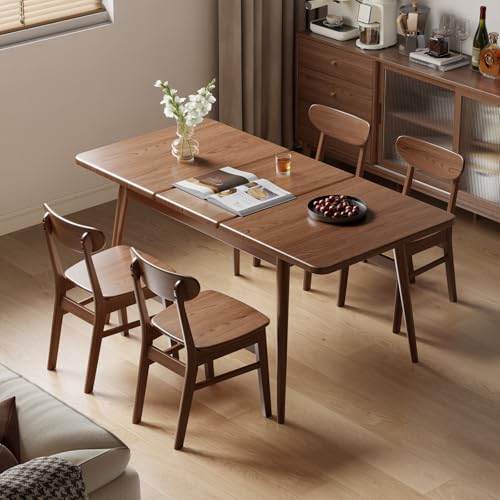
Muwuele Solid Wood Extendable Dining Table for 4-8 People with Seamless Extension from 47.2 to 63 Inches, Easy Assembly, Expandable Tables for Small Spaces, Dining Room, Kitchen, Living Room, Walnut
【TABLE ONLY & NO CHAIRS】This purchase includes the extendable dining room table only. Chairs shown are for display...
As an affiliate, we earn on qualifying purchases.
How to Recognize Signs Your Bookcase Is Unstable
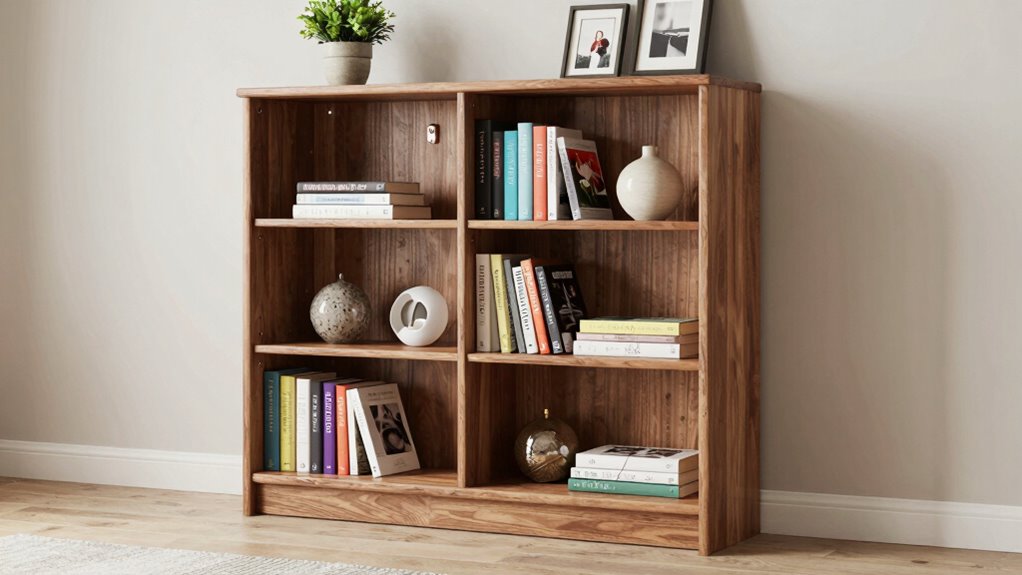
Recognizing the signs that your bookcase might be unstable can help prevent accidents before they happen. One key indicator is shelf overload—if shelves are sagging or items seem to be pushing them out of alignment, it’s a warning sign. Additionally, check for uneven flooring beneath the bookcase; if one leg appears shorter or the unit wobbles when pushed, it’s unstable. Look for leaning or tilting, especially after adding new items or rearranging. Cracks in the wall mounting or gaps between the wall and the back of the shelf also signal potential issues. Regularly inspecting your bookcase ensures stability and keeps your space safe without compromising its aesthetic. Incorporating proper anchoring techniques can further enhance safety and prevent tip-overs. Being aware of structural integrity and how it relates to your furniture’s safety can help you address issues early. Monitoring load distribution is essential to maintain overall stability and prevent accidents. Additionally, understanding furniture safety standards can guide you in selecting and maintaining secure shelving units. Checking for material wear or damage regularly can also reveal hidden vulnerabilities that might compromise stability.

41 in-78 in Extendable Dining Room Table for 4-8, Round Expandable Kitchen Table with Fluted Base, Modern Farmhouse Oval Dinner Tables for Dining Room Kitchen Living Room (Natural)
【Versatile Expandable Design】This expandable round oval dining table transforms from a cozy 41-inch round table for 4 into...
As an affiliate, we earn on qualifying purchases.
Choosing the Right Wall Mounts and Brackets for Your Bookcase
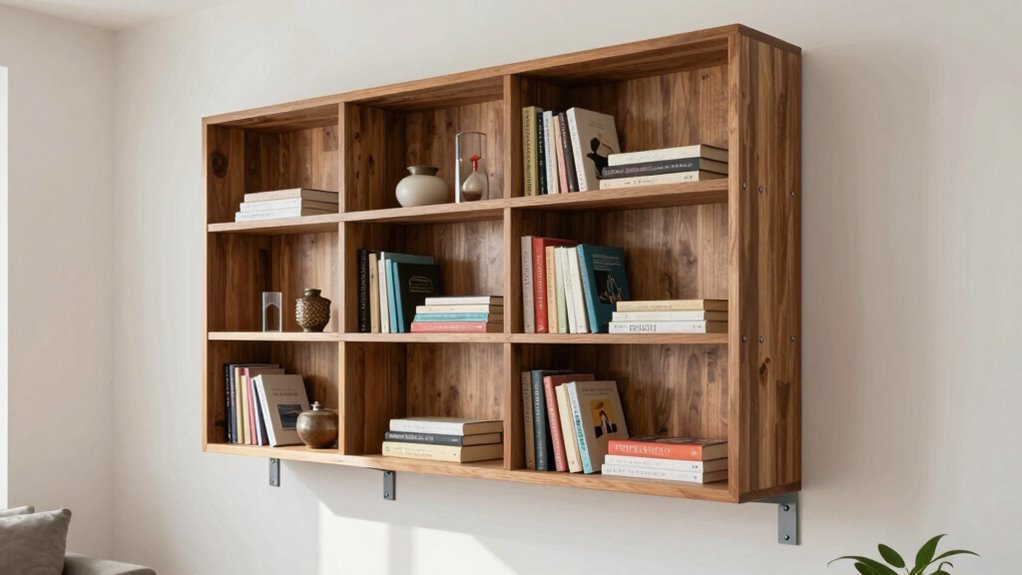
When selecting wall mounts and brackets, you need to take into account their compatibility with your bookcase and weight limits to ensure safety. Decide whether you prefer hidden mounts for a clean look or visible brackets for easier installation and adjustments. Also, think about how well the mounts blend with your decor to maintain your space’s aesthetic. Incorporating smart mounting solutions can enhance both safety and convenience.
Compatibility and Weight Limits
Choosing the right wall mounts and brackets is essential to guarantee your bookcase stays secure and stable. First, verify the mounts are compatible with your bookcase’s material, whether wood, metal, or composite, to prevent damage or failure. Check the weight limits of the mounts and brackets to match or exceed the weight of your loaded bookcase, considering books and decorative items. Proper weight distribution across the brackets prevents uneven stress that could cause tipping. Always follow manufacturer guidelines for installation to ensure the mounts can handle the load safely. Using mounts designed for your specific bookcase material and weight capacity offers peace of mind and keeps your furniture secure without compromising the look of your space. Understanding thermal behavior can help you select mounts that accommodate any material expansion or contraction over time. Additionally, considering load distribution ensures that the weight is evenly spread, reducing the risk of failure.
Hidden Versus Visible Mounts
Selecting between hidden and visible mounts affects both the safety and appearance of your bookcase. Hidden mounts are discreet, concealed behind the furniture, providing a clean, seamless look. They’re ideal if you want the focus on your shelves rather than the hardware. They also tend to be less intrusive, maintaining the aesthetic integrity of your space. Visible brackets or mounts, on the other hand, are intentionally displayed, adding a decorative element while ensuring stability. They’re easier to install and inspect, making them a practical choice for quick adjustments or frequent access. Consider your style preferences and safety needs when choosing. If you prefer a sleek, unobtrusive appearance, hidden mounts are the way to go. If you want a more decorative or accessible solution, visible brackets can complement your decor while securely anchoring your bookcase. For added peace of mind, choosing a reliable mounting system ensures your furniture remains safe and stable over time. Additionally, understanding your wall type can help determine the most effective mounting method for durability and safety. Using appropriate hardware specific to your wall material can prevent accidents and improve stability. Incorporating smart home safety features, such as motion sensors or alert systems, can further enhance your bookcase security, especially in households with children or pets. Proper installation techniques and regular inspections can also help maintain safety and prevent tip-overs.
Aesthetic Integration
The right wall mounts and brackets can seamlessly blend your bookcase into your room’s decor or make a bold statement. When selecting mounts, consider your bookcase aesthetics—whether you prefer a discreet look or something eye-catching. Invisible or low-profile brackets help maintain a clean, minimalist vibe, ideal for modern interior design integration. Conversely, decorative mounts can add a subtle accent that complements your decor style. Make sure the materials and finishes match or coordinate with your furniture and wall color. Proper mounting not only enhances the visual appeal but also assures safety without compromising style. Additionally, understanding interior design principles can help you choose mounts that enhance your space’s overall aesthetic. With thoughtful choice, your bookcase becomes both a functional piece and a cohesive part of your interior design.
Extendable Dining Room Table for 4-6, 47-65 Inch Rectangle Kitchen Dining Table with Large Storage, Fluted Sliding Door, Expandable Mid Century Modern Dinner Furniture, Living Room, Walnut, Brown
Extendable dining table: Its ingenious slide-and-lock mechanism features smooth, silent glides, effortlessly transforming your rectangular dining table from...
As an affiliate, we earn on qualifying purchases.
How to Secure Your Bookcase Discreetly and Effectively

Securing your bookcase discreetly and effectively guarantees safety without compromising your home’s appearance. To achieve this, focus on discreet fastening methods that blend seamlessly with your furniture. Use wall anchors designed for aesthetic concealment, so they remain hidden behind the unit. Choose low-profile brackets or straps that don’t detract from the look of your bookshelf. Consider installing anchor points inside the top or back of the unit for added discreetness. Ensure all attachments are tight but unobtrusive, preserving the visual appeal. Properly concealed fastenings provide peace of mind, especially in households with children or pets. Additionally, selecting the right installation planning resources can help you determine the best placement and method for your specific furniture. With these strategies, safety and style go hand-in-hand, maintaining your home’s aesthetic while preventing tip-overs effectively.
How to Arrange Books for Better Stability and Safety

Arranging books thoughtfully can considerably improve the stability of your bookcase and reduce the risk of tipping. To enhance safety, focus on proper book arrangement and weight distribution. Place heavier books on the lower shelves, which lowers the center of gravity and provides a stable base. Light or smaller books should go on the upper shelves to prevent top-heavy imbalance. Keep the weight evenly distributed across each shelf to avoid uneven pressure that could cause tipping. Avoid overcrowding shelves, as this can shift weight unexpectedly. Consider alternating the orientation of books—some vertically, some horizontally—to create a more balanced load. Additionally, understanding load calculations can help you determine the appropriate weight limits for your shelves. Using stabilizing brackets can further secure your bookcase to the wall, enhancing safety. Paying attention to center of gravity principles can further improve the stability of your furniture. Implementing these strategies can also help prevent furniture tip-overs, especially in homes with children or pets. By paying attention to how you arrange your books, you guarantee better stability while maintaining an organized, attractive look.
Using Furniture Straps and Anti-Tip Devices Correctly

To guarantee your bookcase stays upright and safe, using furniture straps and anti-tip devices correctly is essential. Proper installation ensures stability without compromising your vintage design or decorative accents. First, anchor straps to the back of the bookcase and secure them to wall studs for maximum support. Adjust straps to keep the furniture snug but not overstressed. Regularly check for wear or looseness to maintain safety. When selecting devices, choose options that blend seamlessly with your decor, preserving the aesthetic appeal. Consider discreet mounting hardware that doesn’t interfere with vintage charm. Proper use not only prevents tip-overs but also maintains the elegance of your space. Additionally, choosing the right anti-tip device can enhance stability without detracting from your decor. Using furniture straps correctly also helps distribute weight more evenly and reduces stress on the unit, extending its lifespan.
DIY Fixes and Materials to Keep Your Bookcase Safe and Hidden
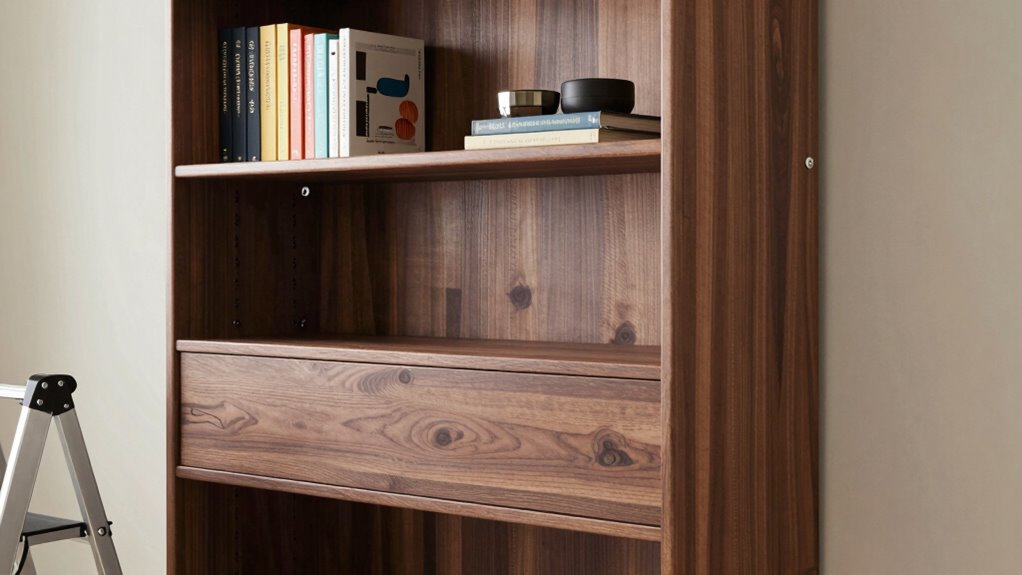
You can enhance your bookcase’s safety with concealed wall mounts that stay hidden behind the unit, maintaining a clean look. Decorative safety covers also offer a discreet way to protect sharp edges without sacrificing style. These DIY solutions help keep your space safe and visually appealing.
Concealed Wall Mounts
Have you ever wondered how to secure your bookcase without sacrificing its appearance? Concealed wall mounts are an excellent solution, keeping safety features hidden behind decorative accents that blend seamlessly with your room’s color schemes. These mounts attach discreetly to the wall and the back of your bookcase, preventing tip-overs without cluttering the aesthetic. To ensure a clean look, consider the following:
- Using low-profile hardware that stays hidden behind shelves
- Selecting mounts that match or complement your wall paint or wallpaper
- Installing mounts at strategic points to distribute weight evenly
- Choosing mounting kits with adjustable components for a perfect fit
With these tips, you can maintain your bookcase’s style while keeping your space safe and secure.
Decorative Safety Covers
Decorative safety covers provide a simple and effective way to hide safety hardware while enhancing your bookcase’s appearance. They offer aesthetic concealment, making safety features less noticeable and maintaining your decor’s style. You can choose from various materials, colors, and designs to match your furniture. Installing decorative safety covers is straightforward: they slip over or attach to hardware, hiding screws, brackets, or straps. This DIY fix keeps your home safe without sacrificing style. Here’s a quick comparison:
| Material | Benefits |
|---|---|
| Fabric covers | Soft, customizable, conceals hardware |
| Plastic or acrylic | Durable, sleek, easy to clean |
| Wood veneer covers | Seamless look, matches furniture |
| Decorative caps | Stylish, conceals exposed hardware |
| Paint or decals | Personalizes and conceals hardware |
Choose the best option to ensure safety and aesthetic appeal.
Common Mistakes That Compromise Your Bookcase Safety
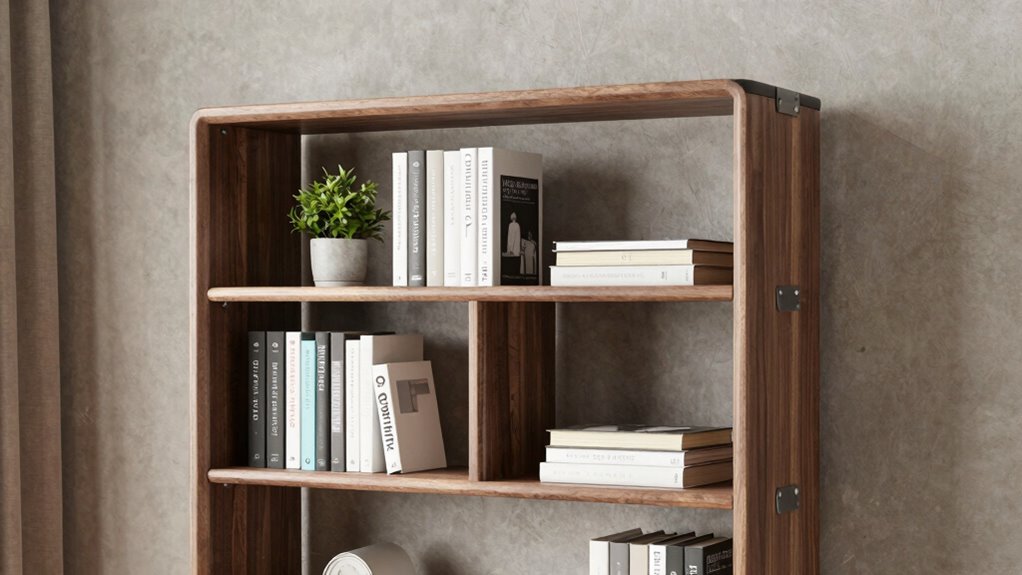
One common mistake that can severely compromise your bookcase’s safety is overloading shelves beyond their weight capacity. Excess weight causes shelves to bend or break, increasing the risk of tip-overs. Additionally, cluttered knickknack arrangements can make the unit unstable if items are unevenly distributed. Using display lighting improperly, such as placing heavy fixtures on unstable shelves, adds unnecessary weight and imbalance. You should also avoid placing heavy items on the top shelves, which raises the center of gravity. In the end, neglecting to secure the bookcase to the wall or ignoring manufacturer weight recommendations weakens safety measures. To prevent accidents, evenly distribute weight, avoid overloading, and ensure proper anchoring. Maintaining balanced shelves and safe lighting practices keeps your bookcase both attractive and secure.
How to Maintain and Check Your Bookcase Safety Measures Over Time

To keep your bookcase safe, you should regularly check its stability to catch any signs of weakness or imbalance. Make sure to update safety devices, like wall anchors or straps, whenever needed to guarantee they’re functioning properly. Routine inspections help you maintain a safe environment and prevent accidents over time.
Regular Stability Inspections
Regular stability inspections are essential for keeping your bookcase safe over time. Check your unit periodically to guarantee safety labels remain visible and intact, as they offer vital safety reminders. Verify that height adjustments are secure, especially if your shelves are adjustable, to prevent shifts that could cause tipping. Look for wobbling or unevenness, which may indicate the need for further tightening or repositioning. Tighten any loose screws or brackets and confirm that safety labels are still clear and legible. Consistent inspections help you catch potential hazards early, maintaining stability without sacrificing style. Regularly reviewing these points ensures your bookcase stays secure and functional, reducing the risk of accidents and preserving its aesthetic appeal.
Updating Safety Devices
Maintaining and checking your bookcase’s safety devices regularly guarantees they continue to protect you effectively. Over time, safety straps, brackets, or wall anchors can loosen or become damaged, so it’s essential to update them as needed. When performing bookcase repairs, inspect all safety devices for signs of wear or deterioration. Replace worn-out straps or brackets promptly to ensure stability. While updating safety measures, consider how decorative accents on your bookcase might be affected; choose safety solutions that blend seamlessly with your decor. Regularly tightening wall anchors and testing stability keeps your furniture secure. Staying proactive with safety updates prevents potential tip-overs and preserves the aesthetic appeal of your space, giving you peace of mind without sacrificing style.
Tips for Balancing Style and Safety in Your Bookcase Setup
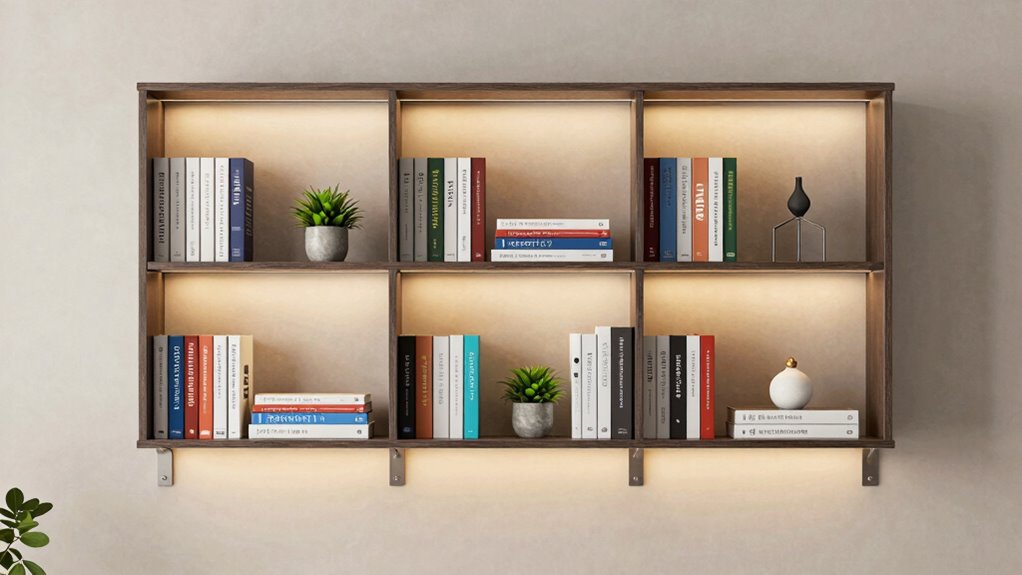
Balancing style and safety when arranging your bookcase guarantees it looks great without risking accidents. To achieve this, focus on creating artistic displays that showcase your personality while maintaining stability. Use color coordination to create visual harmony, making your setup both attractive and organized. Keep heavier items on lower shelves to prevent tipping, and avoid overloading any one shelf. Incorporate decorative elements that complement your space without sacrificing safety. Consider using clear storage bins or baskets to keep small objects contained and reduce clutter. Regularly inspect your setup for stability, ensuring nothing is loose or uneven. By blending these safety tips with creative design, you can enjoy a stylish, secure bookcase that enhances your room’s aesthetic.
Frequently Asked Questions
Can I Use Adhesive Strips Instead of Brackets for Safety?
Yes, you can use adhesive strips instead of brackets for safety, but be aware of safety concerns. Choose strong, heavy-duty adhesive strips designed for furniture to guarantee they hold well over time. Make sure to follow the manufacturer’s instructions for proper application. Keep in mind, adhesive strips may not be as secure as brackets, so regularly check them to prevent accidents and maintain safety.
Are There Specific Weight Limits I Should Follow When Organizing Books?
You should always follow your bookcase’s weight capacity to prevent accidents. Overloading one shelf can compromise stability, so distribute your books evenly across all levels. Check the manufacturer’s guidelines for maximum load per shelf, usually around 20-50 pounds. By respecting the weight limits and balancing your load, you reduce the risk of tip-overs without sacrificing your bookcase’s look. Proper load distribution keeps your space safe and stylish.
How Often Should I Inspect My Bookcase for Stability?
You should perform safety inspections and stability checks on your bookcase at least once every three to six months. Regularly look for loose shelves, wobbly legs, or any signs of wear and tear. If you notice any instability, tighten screws, add wall anchors, or reposition heavy items. Staying proactive guarantees your bookcase remains safe and secure, preventing tip-overs and maintaining your home’s aesthetic appeal.
Do Safety Measures Vary for Different Types of Bookcases?
Like Pandora’s box, different types of bookcases require specific safety measures. You should consider various hardware options, such as wall straps or anti-tip brackets, tailored to each design. Safety standards may differ based on materials and construction, so it’s smart to follow manufacturer guidelines and confirm sturdy anchoring. Adjust your safety approach accordingly, knowing that a well-secured bookcase keeps your space both stylish and safe.
Are There Aesthetic Ways to Hide Safety Hardware Without Compromising Design?
Yes, you can achieve aesthetic concealment with hidden hardware that doesn’t compromise your design. Use discreet brackets or straps painted to match your bookcase, or opt for furniture anchors that blend seamlessly into the back panel. You might also choose decorative hardware covers or install safety straps behind the unit, keeping your space safe while maintaining a clean, stylish look. This way, safety measures stay hidden yet effective.
Conclusion
By securing your bookcase, you’re anchoring your space like a sturdy ship in a storm—ready to stay afloat no matter what. Regular checks and smart arrangements keep safety at the forefront, ensuring your treasured items stay put. Remember, a safe bookcase isn’t just about protection; it’s about creating a harmonious balance between style and security. Stay vigilant and proactive, so your home remains both beautiful and safe—a sanctuary that won’t tip over under life’s turbulence.