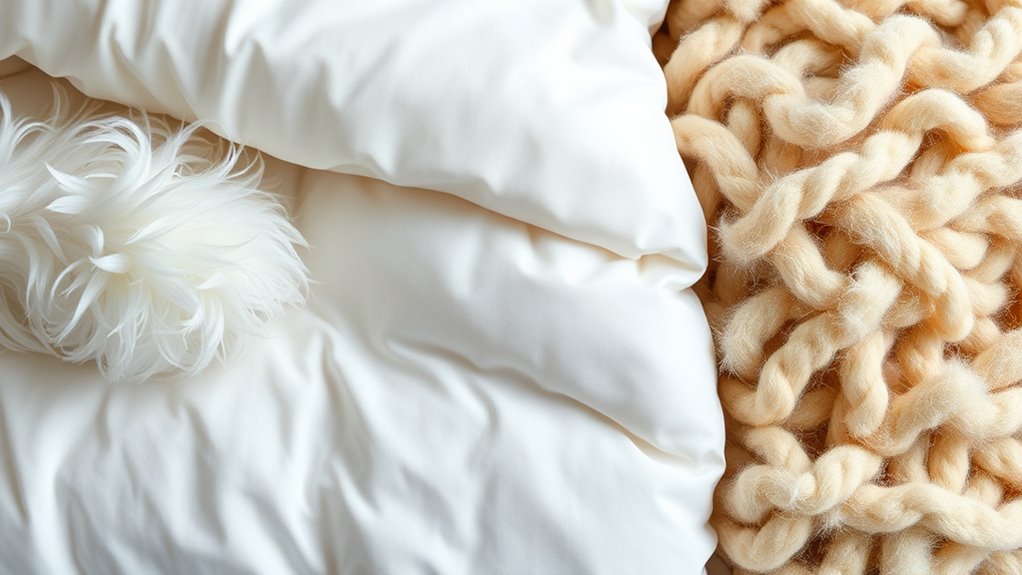

Comforters are made from materials like down, down-alternative, and wool, each offering different benefits. Down provides excellent warmth, is lightweight, and highly breathable, making it great for cold nights. Down-alternative offers allergy-friendly, easy-care options at a lower cost. Wool naturally insulates, regulates temperature, and resists moisture, suitable for sensitive sleepers. Understanding these materials helps you choose the best comforter for your needs—continue exploring to find out which suits your sleep perfectly.
Key Takeaways
- Down comforters are lightweight, highly insulating, and plush, sourced from feathers, with high fill power for superior warmth.
- Down-alternative comforters mimic down’s softness using synthetic fibers, are hypoallergenic, and easier to clean.
- Wool comforters naturally regulate temperature, wick moisture, and resist compression, making them suitable for all seasons.
- Material choice affects allergy risk, maintenance, environmental impact, and durability, guiding personalized comfort preferences.
- Higher-quality materials like down and wool offer long-term investment value due to their durability and insulating efficiency.

Serta Goose Feather Down Fiber Cotton Comforter Queen Size – 100% Cotton Duvet Insert – Hotel Luxury Hypoallergenic Bedding Comforter All Season Medium Warmth 90 x 90 Inch White
【Luxury Feather Fiber & Down Fiber Comforter】This duvet features a filling composed of white goose feather fiber and…
As an affiliate, we earn on qualifying purchases.
As an affiliate, we earn on qualifying purchases.
The Characteristics of Down Fill
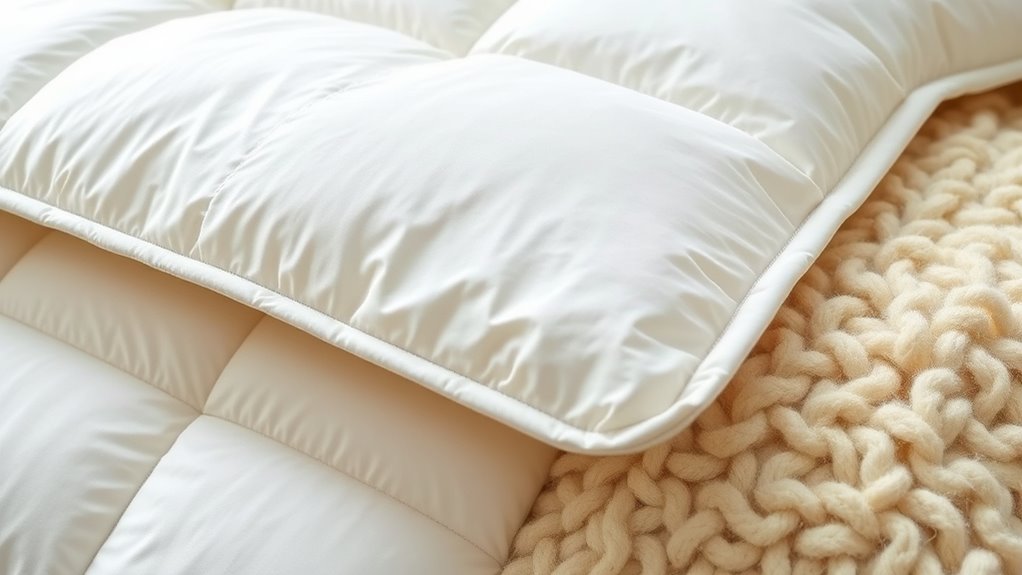
What makes down fill a popular choice for comforters? Its insulating properties and soft feel set it apart. Down mainly comes from feather filling, offering excellent warmth without weight. It traps air efficiently, providing cozy comfort even on cold nights. Some comforters use silk batting, which enhances the plushness and adds a smooth texture. Down’s natural loftiness creates a fluffy, lightweight layer that adapts to your body, offering comfort without feeling bulky. Additionally, down is breathable, helping regulate temperature and prevent overheating. Its durability makes it a long-lasting option when properly cared for. The natural insulating properties of down make it especially effective in cold weather. Overall, the combination of feather filling and silk batting results in a comforter that’s both warm and luxurious, making it a top choice for restful sleep.
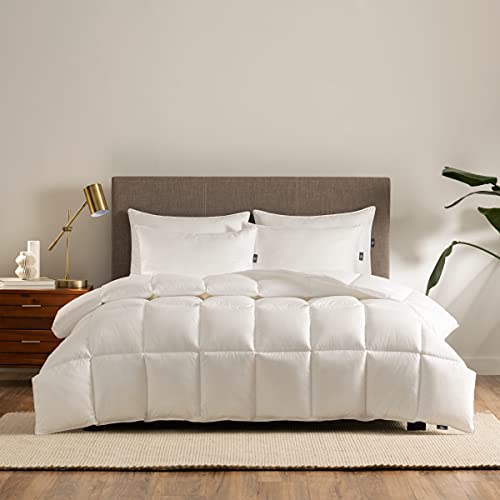
SERTA Down Illusion All Season Hypoallergenic Down Alternative Comforter with Corner Loops, Full/Queen, White
INDULGE IN A WORLD OF DEEP SLEEP – Our comforter offers consistent temperature regardless of the season. It's…
As an affiliate, we earn on qualifying purchases.
As an affiliate, we earn on qualifying purchases.
Benefits of Down-Alternative Comforters

Down-alternative comforters are a great choice if you’re looking for hypoallergenic options that reduce allergy triggers. They also offer a more budget-friendly way to enjoy cozy bedding without sacrificing comfort. Plus, they’re easy to clean and maintain, making them a practical addition to your bedroom. Regular washing can help maintain their freshness and hypoallergenic properties with proper care.
Hypoallergenic Qualities
Because they are less likely to trigger allergies, down-alternative comforters are an excellent choice for anyone with sensitivities. They promote hypoallergenic bedding by resisting common allergens like dust mites and pet dander. This makes them ideal for allergy sufferers seeking a comfortable sleep environment. To maximize allergen reduction techniques, choose comforters labeled as hypoallergenic and regularly wash them. Here are three benefits:
- Reduced allergen buildup, minimizing allergy symptoms
- Less maintenance needed compared to natural fillings
- Safer for allergy-prone individuals with sensitive respiratory systems
According to vetted reviews, down-alternative comforters are also praised for their durability and ease of care.
Cost-Effective Comfort
For those seeking an affordable bedding option without sacrificing comfort, down-alternative comforters offer an excellent solution. They provide the plush feel of luxury bedding at a fraction of the cost, making them a practical choice for budget-conscious shoppers. These comforters mimic the cozy warmth and softness of down, ensuring a restful sleep experience. Plus, their versatility enhances aesthetic design, allowing you to match any bedroom décor effortlessly. Down-alternative comforters are often crafted from synthetic fibers, which means they’re generally easier to maintain and more durable over time. They are also a good hypoallergenic choice for allergy sufferers who want the comfort of down without the associated allergies. You get all the benefits of comfort and style without the hefty price tag. If you want a stylish, comfortable bed that’s easy on your wallet, down-alternative comforters are an ideal option.
Easy Maintenance
One of the standout advantages of down-alternative comforters is how easy they are to care for. They simplify maintaining your bedroom decor and seasonal layering, saving you time and effort.
Here are three benefits:
- They’re machine washable, making regular cleaning simple and convenient.
- They dry quickly, so you can refresh your bedding without long wait times.
- They resist allergens and dust mites, reducing the need for special cleaning products.
Additionally, their color accuracy ensures the bedding remains vibrant and true to color over time. This ease of maintenance means you can enjoy a fresh, cozy bed with less effort, keeping your bedroom inviting year-round. Whether switching between seasonal layers or updating your decor, down-alternative comforters make upkeep straightforward and hassle-free.

CUDDLE DREAMS Wool Comforter Duvet Insert, 100% Australian Wool Filling with Soft Noiseless Cotton Shell, Natural Warmth (Midweight for All Season, Queen)
Filled with premium Australian wool, selected for its softness, durability, and superior thermal properties, this wool comforter provides…
As an affiliate, we earn on qualifying purchases.
As an affiliate, we earn on qualifying purchases.
Wool as a Natural Insulator
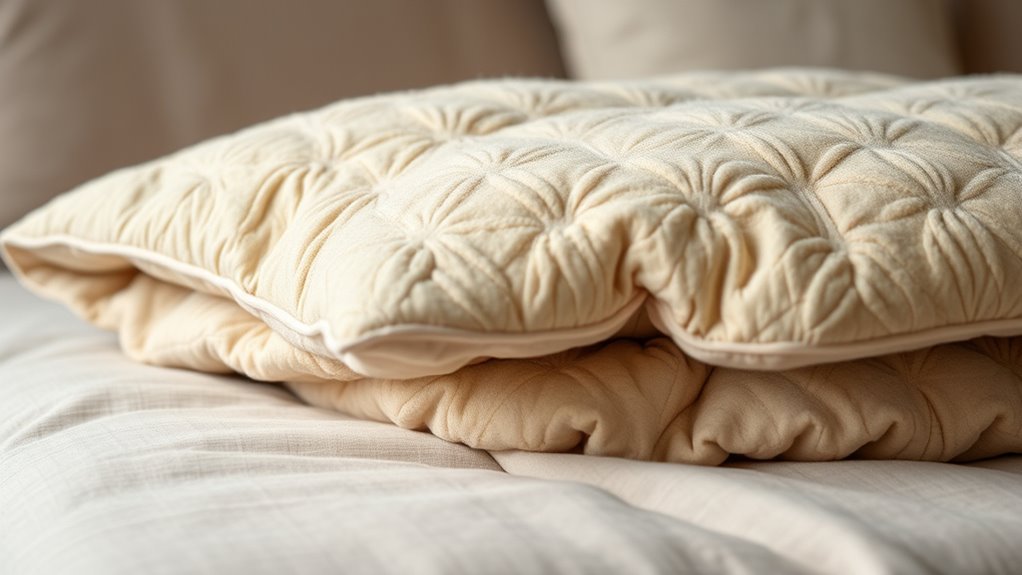
Wool stands out as a natural insulator due to its unique fiber structure, which effectively traps air and helps retain body heat. Its natural fiber properties enable it to regulate temperature, keeping you warm in winter and cool in summer. Wool fibers are crimped and elastic, creating tiny pockets that trap air, enhancing insulation effectiveness. This trapped air acts as a barrier against cold, making wool an excellent choice for maintaining warmth without added bulk. Additionally, wool’s moisture-wicking capabilities help keep you dry and comfortable. Its natural resilience also means it resists compression over time, preserving insulation properties longer. The interaction with diverse environments of wool further contributes to its durability and adaptability. Overall, wool’s inherent qualities make it a highly efficient and sustainable insulation material, providing comfort and warmth naturally.

YOUR MOON Luxurious All Season Wool Comforter Queen Size, 100% Natural Australian Wool Filling, Hypoallergenic Comforter Duvet Insert, Noiseless Cotton Shell (White)
【100% Natural Australian Wool Filling】Filled with premium Australian fine wool (≤25µm), which is softer and slimmer than ordinary…
As an affiliate, we earn on qualifying purchases.
As an affiliate, we earn on qualifying purchases.
Comparing Warmth and Insulation Levels

When choosing a comforter, you’ll notice some materials insulate better than others, affecting how warm you stay. Different fabrics and fillings offer varying insulation efficiencies, which can influence your comfort during colder nights. Understanding how these materials regulate temperature helps you pick the right one for your needs.
Insulation Efficiency Differences
Have you ever wondered why some comforters keep you warmer than others even if they seem similar? The key lies in insulation efficiency, which depends on factors like fill power and the insulation layer. Higher fill power indicates better loft and insulation, trapping more air to retain heat. When comparing comforters:
- Comforters with higher fill power (like 600 or above) have a thicker insulation layer that provides superior warmth.
- The density and quality of the insulation layer determine how well heat is retained.
- Materials like down offer higher fill power, making them more efficient at insulating without extra bulk.
- The regulation and certification of insulation materials can also influence the safety and quality of the comforter.
Understanding these differences helps you choose a comforter that provides optimal warmth based on your needs, ensuring a cozy night’s sleep.
Temperature Regulation Capabilities
While fill power affects how well a comforter traps heat, temperature regulation capabilities determine how effectively it maintains your comfort across different conditions. Materials like wool excel here due to their fabric breathability and moisture-wicking properties, helping you stay warm without overheating. Down comforters offer excellent insulation but may trap heat if they’re not breathable. Down-alternative options tend to be less insulating but often feature moisture-wicking fabrics that prevent dampness and keep you dry. Here’s a quick comparison:
| Material | Temperature Regulation Capabilities |
|---|---|
| Down | High warmth, may retain heat, less breathable |
| Down-Alternative | Moderate warmth, improved breathability, moisture-wicking properties |
| Wool | Excellent breathability, regulates temperature, moisture-wicking |
Understanding creative practice can help you choose the best comforter for your personal comfort needs.
Allergies and Sensitivities to Comforter Materials

Are you aware that certain comforter materials can trigger allergies or sensitivities? If you have sensitive skin or allergies, choosing the right material is essential for allergy prevention. Here are key points to contemplate:
- Feathers and down can cause allergic reactions in some people, leading to sneezing, congestion, or skin irritation.
- Wool may trigger sensitivities due to its natural proteins, especially if you have existing skin conditions.
- Synthetic fibers like polyester are often hypoallergenic but can still cause irritation for sensitive individuals.
- Understanding asset division laws can help you navigate the division of your belongings effectively during divorce proceedings.
Knowing your material sensitivities helps you select a comforter that reduces allergy symptoms and improves sleep quality. Always check labels and choose materials designed for allergy prevention to ensure comfort and safety.
Durability and Maintenance of Different Materials

Considering the durability and ease of maintenance of comforter materials is essential when choosing the right bedding. Down comforters are durable but require regular fluffing and occasional professional cleaning to maintain their loft and fabric breathability. Down-alternative options are generally easier to care for, often machine washable, and retain their shape well over time. Wool comforters are naturally resilient and resist pilling, but they need gentle cleaning to prevent fabric damage. If allergy management is a concern, machine-washable down-alternatives may be preferable, while wool’s natural properties can help reduce dust mites. Regular maintenance, like using protective covers and following care instructions, prolongs the lifespan of each material and ensures ideal fabric breathability, contributing to a healthier sleep environment. Additionally, understanding filter replacement needs for air purifiers can help maintain optimal indoor air quality, supporting overall sleep health and comfort.
Environmental Impact and Sustainability

Choosing eco-friendly comforter materials can substantially reduce your environmental footprint. When evaluating sustainability, consider recyclability concerns and the impact of organic versus synthetic materials.
- Organic materials like wool or cotton are biodegradable and often produced with fewer chemicals, making them more sustainable.
- Synthetic options, such as polyester, tend to be less recyclable and may shed microplastics, contributing to pollution.
- Down, if sourced responsibly, can be eco-friendly, but non-certified down raises ethical and environmental concerns.
Cost Considerations for Various Comforter Types

When choosing a comforter, cost is an important factor to contemplate, and prices can vary widely between types. You’ll want to compare the initial price ranges, as well as how each option offers long-term value for your investment. There are also budget-friendly choices that can keep you comfortable without breaking the bank.
Price Range Comparison
Are you curious about how much different comforter types typically cost? Comforter prices vary based on materials and brand reputation. Generally, you can expect:
- Down comforters from luxury brands to range from $150 to $500, with seasonal pricing influencing costs during peak sales.
- Down-alternative options are more affordable, usually between $50 and $200, making them a budget-friendly choice for many.
- Wool comforters typically fall between $100 and $300, with high-end wool products costing more. Keep in mind that luxury brands often charge premium prices, especially for high-quality materials. Seasonal discounts can also impact prices, so shopping during sales might help you find better deals. Overall, your budget and preferences will guide which comforter fits best.
Long-term Investment Value
While the initial purchase price is important, evaluating the long-term investment value of a comforter helps guarantee you get the best return over time. High-quality materials like down and wool often carry a higher upfront cost but excel in durability and longevity, making them a smart choice for long-term use. These comforters embody luxury branding, offering superior comfort and resilience that withstand seasonal fashion trends. Investing in durable materials means fewer replacements and consistent warmth across seasons, saving you money in the long run. While down-alternative options may seem more budget-friendly initially, they tend to wear out faster. By choosing a comforter with lasting quality, you ensure ongoing comfort and value, making it a wise investment that adapts to changing seasonal needs without sacrificing comfort or style.
Budget-Friendly Options
Looking for a comforter that fits your budget? There are plenty of affordable options that meet your needs without sacrificing comfort. Here are some budget-conscious choices to contemplate:
- Synthetic Down-Alternative: This option mimics the feel of real down but costs less and is easy to care for.
- Wool Comforters: Wool offers natural insulation at a lower price point and is durable.
- Basic Cotton Comforters: Simple, breathable, and cost-effective, cotton comforters are ideal for those prioritizing affordability.
These options provide comfortable, cozy sleep while keeping costs in check. By choosing these budget-friendly options, you can enjoy quality bedding without overspending, making them excellent choices for anyone seeking affordable comforter materials.
Care and Cleaning Tips for Longevity
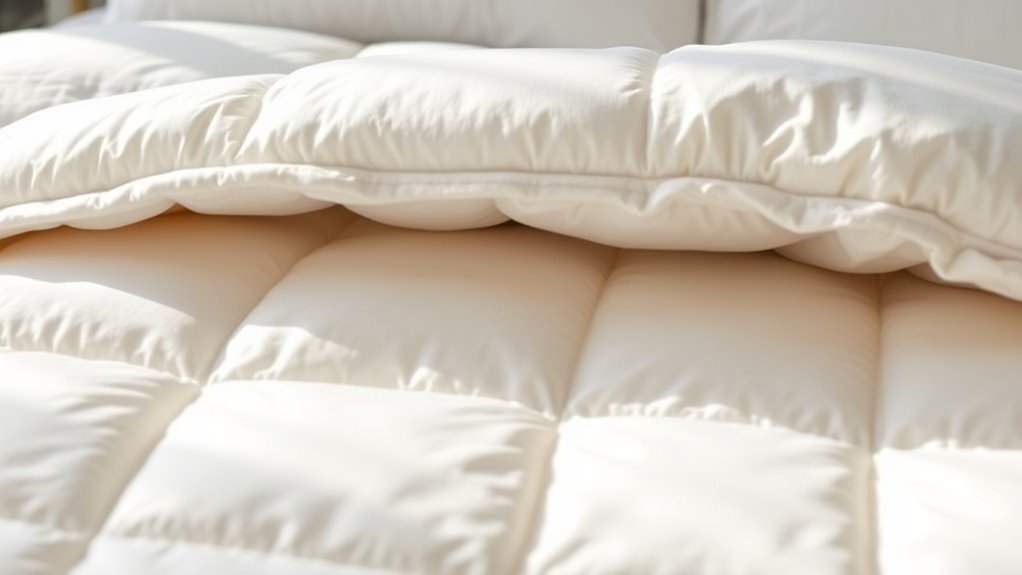
To guarantee your comforter stays cozy and lasts for years, proper care and regular cleaning are essential. Follow care instructions carefully, as they vary based on material. For down and wool comforters, spot clean stains promptly and avoid harsh chemicals. When it’s time to wash, use gentle cleaning methods—preferably in a large capacity washing machine on a delicate cycle. Use mild detergent designed for delicate fabrics or specifically for down or wool. Dry thoroughly using low heat, and add clean tennis balls or dryer balls to help fluff the filling. Regular airing and occasional gentle shaking help maintain loft and freshness. Avoid over-washing, which can damage the filling. With proper care, your comforter will stay inviting and durable for years to come.
Choosing the Right Comforter for Your Sleep Needs

Choosing the right comforter is essential for a restful night’s sleep, as it helps regulate your body temperature and provides the right level of coziness. To select the best one, consider your sleep hygiene and how your comforter fits into your bedroom decor.
Choosing the right comforter ensures better sleep and complements your bedroom style.
- Climate and Temperature: If you tend to sleep hot, opt for lightweight or breathable materials like wool. For colder nights, a thicker down comforter offers extra warmth.
- Allergies and Sensitivities: Down-alternative options are ideal if you have allergies, ensuring comfort without compromising sleep hygiene.
- Aesthetic Compatibility: Choose a comforter that complements your bedroom decor, creating a cozy environment that promotes relaxation.
Making an informed choice enhances your sleep quality and the overall look of your bedroom.
Frequently Asked Questions
Which Comforter Material Is Best for Hot Sleepers?
For hot sleepers, a down-alternative comforter is your best choice because it offers superior breathability and better temperature regulation strategies. Unlike wool or traditional down, which can trap heat, down-alternative materials allow air to circulate, keeping you cooler throughout the night. This helps prevent overheating and guarantees a comfortable sleep. Choose a lightweight, breathable down-alternative comforter for ideal temperature control and a cooler, more restful night.
Are There Hypoallergenic Options for All Comforter Types?
Sure, hypoallergenic options exist for every comforter material, because who wants allergies crashing their sleep party? Whether you prefer down-alternative, wool, or traditional down, manufacturers now offer hypoallergenic versions. So, you can select your comforter material with peace of mind, knowing you’re dodging dust mites and allergens. Just read labels carefully and choose wisely—your allergy-free sleep sanctuary awaits, regardless of your material obsession.
How Do Comforter Materials Affect Overall Sleep Quality?
Comforter materials greatly influence your sleep quality by affecting breathability and moisture wicking, helping you stay dry and comfortable. Wool comforters excel at temperature regulation and insulation, keeping you warm without overheating. Down offers excellent warmth and breathability, while down-alternative provides similar benefits with hypoallergenic options. Choosing the right material guarantees you maintain ideal comfort, reduces night sweats, and promotes restful sleep all night long.
Can I Combine Different Comforter Materials?
Mixing comforter materials can transform your sleep experience into pure bliss. You can definitely combine different materials like down and wool for material blending, allowing you to customize your comforter to suit your preferences. This comforter customization lets you enjoy the benefits of each material—warmth, breathability, and softness—creating a tailored sleep environment. Experimenting with different combinations can help you find your perfect sleep sanctuary.
What Are the Best Materials for Eco-Friendly Comforters?
For eco-friendly comforters, look for sustainable sourcing options and biodegradable materials. Organic cotton, hemp, and Tencel are excellent choices because they’re renewable, biodegradable, and produced with minimal environmental impact. Wool from ethically raised sheep is also sustainable and biodegradable. Avoid synthetic fabrics like polyester, which are petroleum-based and less eco-friendly. Choosing comforters with certifications like GOTS or OEKO-TEX guarantees you’re selecting environmentally responsible options.
Conclusion
Choosing the perfect comforter depends on your preferences and needs. Whether you favor the luxurious warmth of down, the allergy-friendly nature of down-alternative, or the natural insulation of wool, understanding each material helps you make an informed decision. Remember, as the wise Shakespeare once said, “All that glitters is not gold.” So, weigh your options carefully, consider sustainability, and select a comforter that will cradle you through many restful nights to come.