
To wash and dry a throw without shrinking, choose a gentle, chemical-free detergent and always use cold water. Opt for delicate or gentle cycles on your machine, or hand wash for extra care. When drying, avoid high heat—air dry flat or use the lowest heat setting if you use a dryer. Store it properly, and avoid harmful chemicals or harsh treatments. Keep these tips in mind, and you’ll maintain your throw’s size and softness—learn more below.
Key Takeaways
- Wash the throw in cold or lukewarm water on a gentle or delicate cycle with a mild, chemical-free detergent.
- Avoid using bleach or harsh chemicals that can weaken fibers and cause shrinking.
- Dry the throw on low heat or air dry flat on a clean surface, reshaping as needed.
- Prevent shrinkage by removing the throw while slightly damp and laying it flat to dry.
- Store the throw in a cool, dry place, folded neatly in breathable containers, avoiding direct sunlight.
Washable Large 9x12 Area Rug - Living Room Oriental Non Slip Soft Rugs Indoor Low Pile Stain Resistant Carpet for Bedroom Dining Room Farmhouse Distressed Thin Home Decor Floor Mat (9x12 Beige)
Great Value & Chic Style: This 9x12 area rug adds a vibrant touch to your living room with...
As an affiliate, we earn on qualifying purchases.
Choosing the Right Detergent and Settings
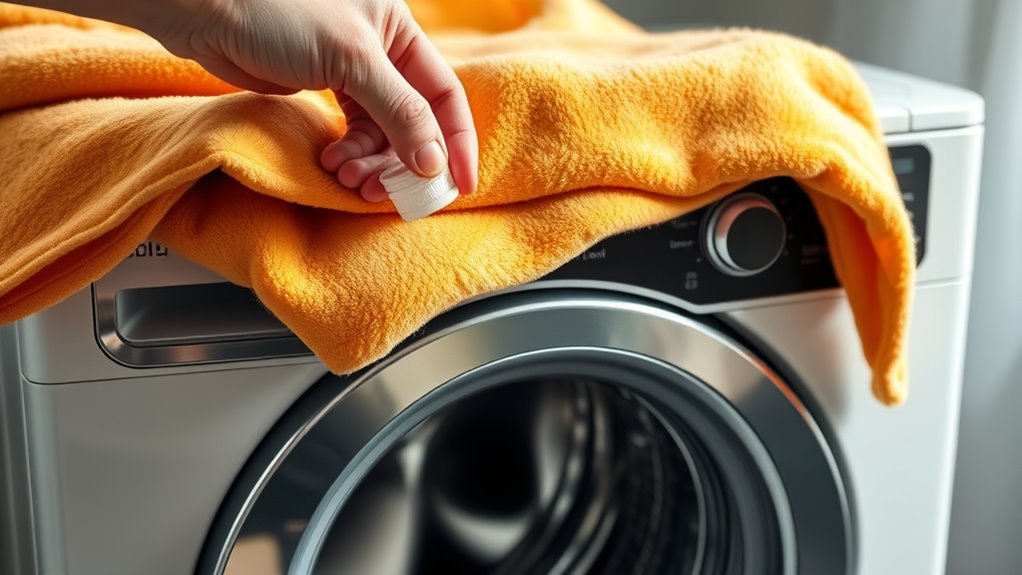
When it comes to washing a throw without causing shrinkage, selecting the right detergent and settings is essential. Use a gentle, mild detergent free of harsh chemicals to protect the fabric’s fibers. Consider adding a fabric softener to keep your throw soft and reduce static, but avoid overuse, which can weaken fibers over time. For stains, opt for a stain remover suitable for delicate fabrics, applying it before washing to prevent set-in marks. Always choose a delicate or gentle cycle on your machine, using cold water to prevent shrinking. High heat can cause fibers to contract, so sticking to cool or lukewarm water is key. By carefully selecting your detergent, softener, and cycle, you’ll help keep your throw looking new and fitting perfectly.

Kuden 9x12 Large Area Rug, Machine Washable Area Rug with Non-Slip Backing, Vintage Style, Soft, Easy Clean, Low Pile Rug for Living Room, Bedroom, Dining Room
Vintage-Inspired Style with a Modern Touch: This washable area rug showcases a vintage-inspired pattern paired with a modern,...
As an affiliate, we earn on qualifying purchases.
Hand Washing and Gentle Machine Cycles
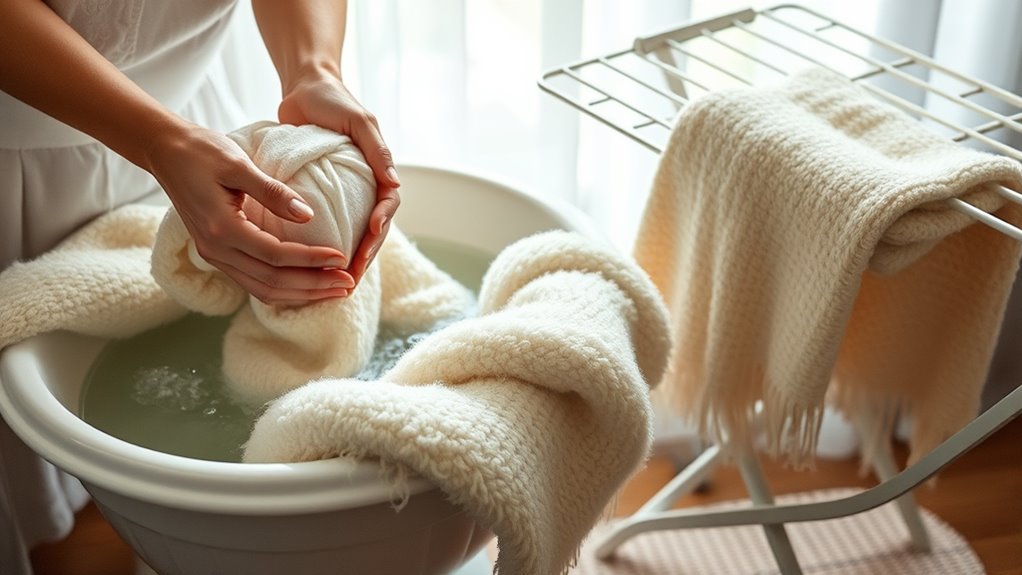
To prevent shrinkage, hand washing is often the safest method for delicate throws, but if you prefer using a washing machine, select a gentle cycle designed for delicate fabrics. Use a mild detergent suitable for delicate materials and avoid harsh chemicals. Opt for cold or lukewarm water to protect fibers. When choosing a cycle, look for options labeled “delicate” or “hand wash.” After washing, set the drying temperature to low or air dry to prevent shrinkage. The right combination of detergent selection and gentle machine cycles can keep your throw soft and shapely. Additionally, monitoring your air purifier during cleaning can help maintain a healthy environment for your fabrics.

LIANLAM Washable Rug 9x12 Area Rugs for Living Room - & Ultra-Thin Vintage Large Area Rug
【Non-slip and Secure Every Step】LIANLAM rugs are made of upgraded eco-friendly breathable cotton bottom and TPR backing, which...
As an affiliate, we earn on qualifying purchases.
Proper Drying Techniques to Prevent Shrinkage
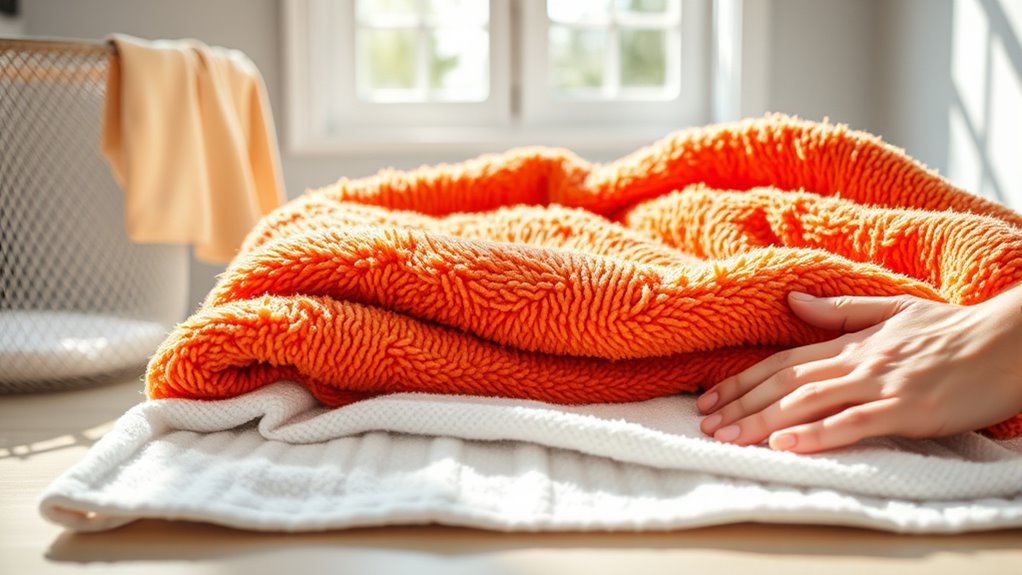
After washing your throw with care, drying it properly is key to preventing shrinkage. Avoid using high heat, which can cause fibers to contract. Instead, lay your throw flat on a drying rack or drape it over a clean, dry towel. Using fabric softeners during the wash can help keep fibers soft and pliable, reducing the risk of shrinkage during drying. If you prefer to use a dryer, select a low or no-heat setting, and remove the throw while slightly damp to air dry completely. Make sure it’s spread evenly to prevent stretching. Proper drying techniques preserve your throw’s size and shape, keeping it looking and feeling like new. Incorporating gentle handling practices can further protect fabric integrity and ensure longevity.

Soalmost 9x12 Area Rugs for Living Room, Non Slip Machine Washable Vintage Rugs, Low Pile Lightweight Large Rug for Bedroom, Dining Room, Home Office Beige
PET FRIENDLY & NON-SLIP BACKING-9x12 area rugs featuring simple of colors while promising a luxurious feel underfoot. The...
As an affiliate, we earn on qualifying purchases.
Tips for Air-Drying and Storing Your Throw
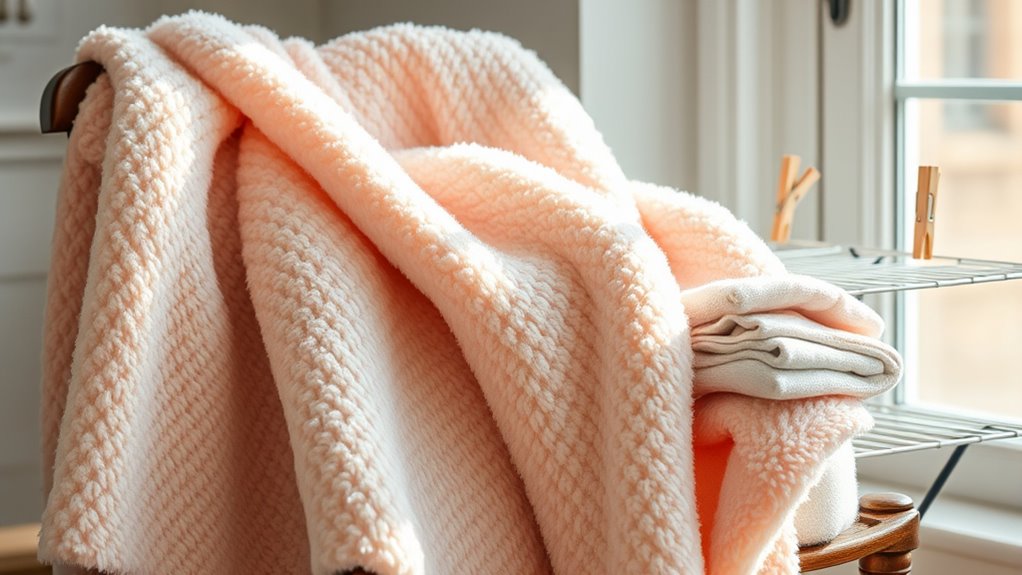
Air-drying your throw properly extends its lifespan and maintains its shape. To do this, lay it flat on a clean, dry surface, avoiding direct sunlight which can fade the fabric. Gently reshape it as it dries to prevent stretching. Instead of fabric softeners, consider using natural alternatives like white vinegar to keep the fibers soft and fresh. When storing your throw, fold it neatly and place it in breathable storage containers or cotton bags to prevent dust buildup and moisture damage. Avoid plastic bins that trap humidity, which can cause mildew or fabric deterioration. Make sure your storage area is cool, dry, and well-ventilated. Incorporating proper storage techniques helps in maintaining the quality of your throw over time. Proper air-drying and thoughtful storage techniques help your throw stay cozy and in great condition for longer.
Common Mistakes to Avoid When Cleaning Your Throw
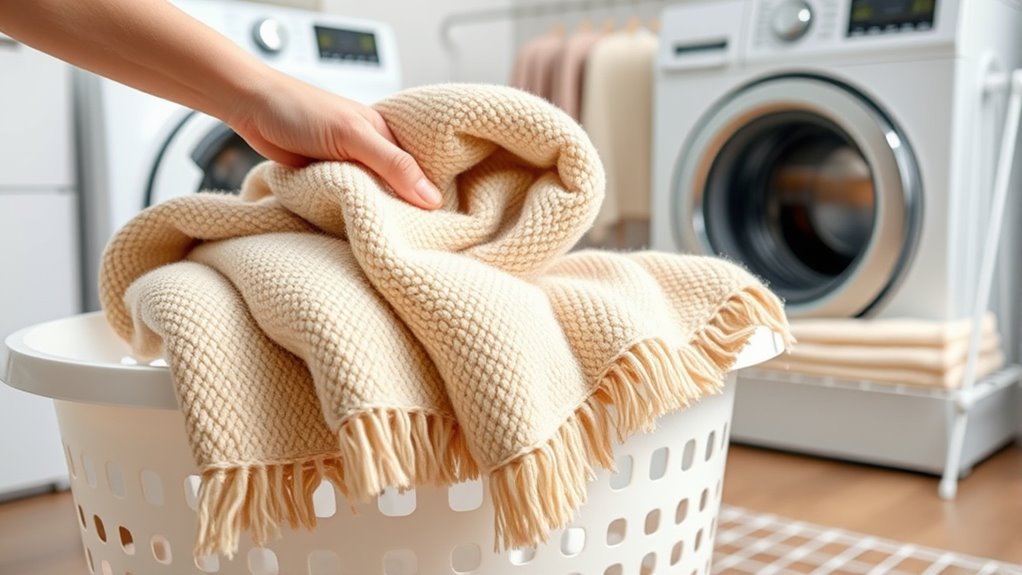
While air-drying and proper storage can keep your throw in great shape, mistakes during cleaning can undo those efforts. One common error is using fabric softeners, which can coat fibers and reduce the throw’s softness over time. Instead, opt for natural alternatives like vinegar. Another mistake is relying on bleach or harsh bleach alternatives, which can weaken fibers and cause shrinkage. Always read labels carefully to ascertain you’re using gentle, suitable cleaning agents. Additionally, washing your throw in hot water or drying it at high heat can lead to shrinkage and damage. Stick to cold or lukewarm water and low heat settings. Avoid overloading the washing machine, as it can stretch or distort the fabric. Being mindful of these mistakes helps maintain your throw’s quality and size. Moreover, choosing the appropriate washing cycle can prevent unnecessary wear and tear on delicate fibers such as those found in high-quality textiles, ensuring your throw stays in optimal condition.
Frequently Asked Questions
Can I Wash a Throw With Other Laundry Items?
Yes, you can wash a throw with other laundry items, but prioritize laundry safety and fabric compatibility. Check the care labels to confirm all items can be washed together, especially if the throw is delicate or prone to shrinking. Use a gentle cycle and cold water to protect fabrics. Avoid mixing heavy or abrasive items that could damage delicate throws, ensuring a safe and effective wash for all your laundry.
How Often Should I Wash My Throw to Keep It Fresh?
Like a garden that needs watering, your throw needs regular care to stay fresh. You should wash it every 1-2 weeks to maintain ideal freshness and prevent odors. This laundry frequency helps with freshness maintenance, especially if you use it often or share it with others. Spot clean as needed, but avoid over-washing, which can cause unnecessary wear. Proper care keeps your throw soft, cozy, and inviting.
Are There Specific Fabric Types That Are More Prone to Shrinkage?
Certain fabrics are more prone to fiber shrinkage, especially natural fibers like wool, cotton, and linen, due to their higher fabric sensitivity. You should handle these materials carefully, avoiding hot water and high heat when drying. Synthetic fibers like polyester and nylon tend to resist shrinkage better. Always check the care label and opt for gentle wash cycles to prevent unwanted fiber shrinkage and maintain your throw’s size and shape.
What Signs Indicate My Throw Has Shrunk After Washing?
You’ll notice your throw has shrunk if it looks noticeably smaller or feels tighter when you hold it. Fiber damage might cause the fabric to feel rough or stiff, while color fading can indicate it’s been exposed to too much heat or harsh detergents. Check for uneven edges or puckering, which also suggests shrinkage. These signs mean it’s time to be more cautious with future washes to prevent further damage.
Can I Use Fabric Softeners Without Risking Damage?
Yes, you can use fabric softeners, but check for compatibility first. Some throws, especially delicate or synthetic ones, may be sensitive to fabric softener, increasing the risk of damage or residue buildup. Always read the care label and test a small amount on a hidden area. Using fabric softener correctly can keep your throw soft and cozy without risking harm or shrinking, as long as you follow manufacturer instructions.
Conclusion
By following these tips, you can keep your throw fresh and cozy without worrying about shrinkage. Choose gentle detergents, use delicate cycles, and opt for air-drying when possible. Remember, “A stitch in time saves nine,” so taking care now guarantees your throw stays beautiful for years to come. With a little attention, you’ll enjoy your favorite throw just as much as the day you got it. Happy laundering!