Understanding down fill power helps you choose gear that balances warmth, weight, and durability. It’s measured by how much space one ounce of down occupies, with higher numbers like 700+ offering better loft, insulation, and packability. This means lighter, more efficient gear suited for cold conditions. Knowing this can help you pick the right fill power for your climate and activity, and if you keep exploring, you’ll discover how to assess its quality further.
Key Takeaways
- Fill power measures how much space one ounce of down occupies, indicating its loft and insulating ability.
- Higher fill power (e.g., 700+) means better insulation with less material, making gear lighter and more packable.
- It is determined through standardized testing using graduated cylinders or specialized devices.
- Fill power reflects the quality of down clusters; larger clusters provide better loft and durability.
- Choosing the right fill power depends on climate, activity level, and desired warmth-to-weight ratio.

OMVMO 0 Degrees F 800 Fill Power Down Sleeping Bag for Adults,Lightweight 4 Season Envelope Rectangle Down Sleeping Bag for Backpacking Camping,Black Right-Zipper Long
✅【Distinctive】: This sleeping bag uses 3D stereoscopic cutting technology, consisting of over 80 independent rectangular 3D insulations loft…
As an affiliate, we earn on qualifying purchases.
As an affiliate, we earn on qualifying purchases.
What Is Down Fill Power and How Is It Measured?

Down fill power measures the loft and insulating ability of down feathers. To determine this, experts conduct fill power testing, which involves measuring how much space a specific amount of down occupies. At a down farm, they carefully evaluate the feathers’ quality by testing their loft when compressed. The higher the fill power, the more air the down can trap, providing better insulation with less material. During fill power testing, a sample of down is placed in a graduated cylinder or a specialized device, then compressed and allowed to expand. The volume it reaches indicates its fill power rating, typically expressed in cubic inches per ounce. This measurement helps you assess the warmth-to-weight ratio of down, making it a vital factor when choosing insulating gear. Understanding the testing process is essential for selecting high-quality down products. Additionally, fill power ratings can vary depending on the feather quality and processing methods used, with feather quality playing a significant role in overall performance. The testing standards ensure consistency and reliability across different brands and products. Recognizing the influence of down processing techniques can further assist consumers in making informed choices about insulation quality.

Pioneer Camp Men's Down Jacket 700 Fill Winter Insulated Puffer Jacket Waterproof Puffy Coat with Hood
700 Fill Power: This men's winter down jacket is filled with premium insulation, featuring 700 fill power with…
As an affiliate, we earn on qualifying purchases.
As an affiliate, we earn on qualifying purchases.
The Significance of Fill Power in Insulation Performance

Your choice of fill power directly impacts insulation efficiency, meaning higher fill power offers better warmth with less weight. It also influences the durability and longevity of your gear, so you get more use out of it over time. Understanding these aspects helps you select the right down for your needs and conditions. Additionally, considering fabric decorating markers can be useful if you want to personalize your gear or add custom labels to your insulated items, especially since decorative techniques can help you customize your gear further. Knowing how to assess fill power ratings can assist in making informed purchasing decisions that match your climate and activity level. For example, higher fill power ratings often correlate with increased insulation efficiency, which is vital for cold-weather activities. Recognizing fill power standards can also help you compare products more effectively, ensuring you choose the best insulation for your specific needs.
Insulation Efficiency Levels
Have you ever wondered why some insulated gear keeps you warmer than others? The key lies in insulation efficiency levels, which are directly influenced by fill power. Higher fill power indicates better loft, meaning the down traps more air, providing superior warmth with less material. This not only enhances insulation performance but also supports sustainable sourcing, as high-quality down often involves ethical harvesting methods that reduce environmental impact. Additionally, vetted products tend to meet higher safety and quality standards, ensuring both effectiveness and peace of mind. Understanding fill power is crucial for selecting gear that balances warmth, weight, and durability, especially in demanding outdoor conditions. Recognizing the importance of ethical sourcing ensures you choose products that align with environmentally responsible practices. Comprehending insulation performance helps you determine the right balance between weight and warmth for your needs, optimizing your outdoor gear. Prioritizing high fill power also leads to longer-lasting gear, reducing the frequency of replacement and waste. Understanding these efficiency levels helps you choose gear that’s lightweight yet effective, reducing your environmental footprint. By prioritizing high fill power, you ensure better insulation, longer-lasting gear, and a smaller environmental impact, making your outdoor experience more sustainable.
Warmth-to-Weight Ratio
Understanding fill power’s impact on insulation performance reveals how it influences the warmth-to-weight ratio of your gear. Higher fill power means you get more insulating capacity with less weight, making your gear lighter and more packable. This ratio is especially important for outdoor enthusiasts who need warmth without bulk. While down with high fill power offers excellent warmth-to-weight benefits, synthetic alternatives are also gaining traction, offering comparable insulation in wet conditions. These options often emphasize ethical sourcing, ensuring materials are obtained responsibly. By choosing insulation with a high fill power, you maximize warmth while minimizing weight—ideal for travel and layered clothing. Additionally, carrier oils are used in aromatherapy to safely dilute essential oils and enhance skin compatibility, making the products more effective and gentle. Understanding fill power and its influence helps you select gear that balances performance and ethics. The sustainable sourcing of materials further supports environmentally conscious choices in outdoor equipment. Recognizing the air quality benefits of natural insulation materials can also contribute to more eco-friendly outdoor gear choices.
Durability and Longevity
Fill power plays a essential role in determining how well insulation holds up over time. Higher fill power means the down clusters are larger and more resilient, ensuring your insulation maintains its loft and effectiveness longer. When considering down feather sourcing, choose products with ethically sourced down to support sustainable practices and reduce environmental impact. Durable down with high fill power resists clumping and compression, which can diminish insulation performance over time. Proper care, combined with high-quality down, extends the lifespan of your insulation, keeping it effective season after season. Investing in down with superior fill power not only enhances durability but also minimizes the need for frequent replacements, making it a more environmentally responsible choice. Quality control is vital to ensure the down’s consistency and performance. Additionally, understanding the fill power rating can help you select insulation that offers optimal longevity and insulation performance, making your investment more worthwhile. Your insulation’s longevity depends largely on these factors, especially considering the regulations that govern ethical sourcing and environmental standards in the down industry. Recognizing the importance of spiritual energy can also inspire mindful choices that align with sustainable and ethical practices in sourcing.

Get Out Gear Down Camping Blanket – Outdoor Lightweight Packable 650 Fill Power Down Blanket Compact Waterproof and Warm Backpacking Quilt for Camping Hiking Travel Hammock
LIGHTWEIGHT AND COMPACT – Only 1.1 lbs! Includes stuff sack with heavy duty clasp for easy carrying and…
As an affiliate, we earn on qualifying purchases.
As an affiliate, we earn on qualifying purchases.
Comparing Different Fill Power Ratings: What Do They Mean?

Understanding what different fill power ratings mean helps you choose the right insulation. Higher ratings generally indicate lighter, more compressible, and warmer down, while lower ratings suggest denser, heavier fill. Comparing these ratings allows you to find the best balance between weight, warmth, and packability for your needs. Being aware of personal debt forgiveness bills can also influence your overall financial planning when considering outdoor gear investments.
Fill Power Scale Significance
The fill power scale helps you gauge the quality and warmth of down insulation by assigning a numerical value to each fill rating. Essentially, it indicates how much space one ounce of down occupies, which directly relates to insulation quality. Higher fill power numbers, like 700 or above, mean the down is more efficient at trapping heat and provides better warmth for less weight. Conversely, lower ratings suggest less loft and insulation, resulting in bulkier, less effective insulation. Understanding the fill power scale allows you to compare different products accurately, ensuring you select gear that offers the right balance of warmth, weight, and packability. This scale is a key tool in evaluating the true value and performance of down-filled gear.
High vs. Low Ratings
Higher fill power ratings, such as 700 or above, indicate down that delivers more warmth with less weight and bulk, making it ideal for lightweight, packable gear. These ratings reflect how well the down feather composition traps air, which insulates your body. Fill power testing methods measure the volume a set weight of down occupies, giving you an idea of its quality. Low ratings, like below 600, mean the down is less efficient, providing less warmth for more bulk. By understanding the differences in high versus low ratings, you can select gear suited for your needs. Keep in mind that fill power alone doesn’t tell the whole story; down feather composition and how it’s processed also influence overall performance and durability.
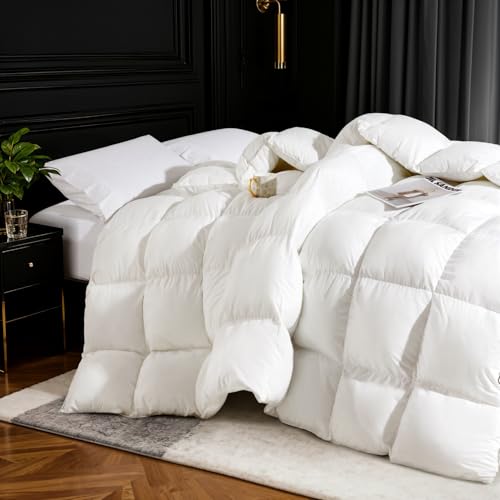
THX9ZRNM 75% Canadian Goose Down Comforter Queen Size, Ultra Soft 100% Cotton Fabric, 850 Fill Power All Season Duvet Insert, Hotel Luxury Bedding Comforters (White,90"x90")
Ultra-Soft 850 Fill Power: Indulge in the exceptional loft and softness of our premium duvet insert, generously filled…
As an affiliate, we earn on qualifying purchases.
As an affiliate, we earn on qualifying purchases.
How Fill Power Affects the Weight and Packability of Gear

Fill power directly influences how lightweight and compact your gear can be. Higher fill power means more insulation per ounce, so your jacket or sleeping bag remains warm without adding bulk. This reduces overall weight and makes packing easier, especially for backpacking or travel. Conversely, lower fill power options tend to be heavier and bulkier, requiring more material to achieve similar warmth. While down with high fill power offers excellent packability, some prefer synthetic alternatives for their moisture resistance and easier care, despite often being heavier and less compressible. Additionally, high fill power down generally has a lower environmental impact, as it’s more efficient and reduces the need for excess material. Your choice affects not just weight but the ease of packing and long-term environmental considerations.
Choosing the Right Fill Power for Various Climates and Activities

Choosing the right fill power depends on the climate and activity level you’re preparing for. For cold, high-altitude environments, opt for higher fill power (700-900) to maximize insulation and warmth. If you’re engaging in vigorous activities like hiking or climbing, lower fill powers (450-700) offer sufficient warmth without excess weight. In milder climates, lower fill power gear keeps you comfortable while remaining lightweight. If you prefer eco-friendly materials, look for down alternatives made from recycled or sustainable sources, which can mimic the insulating qualities of natural down. Synthetic alternatives also provide excellent moisture resistance and durability, making them ideal for wet conditions. By matching fill power to your climate and activity, you ensure superior warmth, comfort, and performance for your outdoor adventures.
The Relationship Between Fill Power and Durability of Down Products

While fill power influences the warmth and compressibility of down products, it also plays a significant role in their durability. Higher fill power means the down clusters are larger and better separated, which enhances down clustering. Well-clustered down maintains loft over time, resisting compression and flattening. This means your down product stays fluffy longer, even with frequent use. Lower fill power down tends to have smaller, less stable down clusters, which can break down faster. As down clusters degrade, the product loses its loft and insulating ability, reducing its lifespan. Proper down clustering, supported by high fill power, ensures the down remains resilient and durable. By choosing higher fill power down, you invest in a product that not only insulates well but also endures wear and tear over time.
Tips for Assessing the Quality of Down Based on Fill Power

Evaluating the quality of down based on fill power involves more than just looking at the number on the label. First, consider how the down was sourced; ethical sourcing ensures the down came from humane and sustainable practices, which can impact quality. When inspecting a product, check if it has undergone proper down cleaning to remove dirt and oils that can affect loft and longevity. Higher fill power generally indicates better insulation, but confirm that the down is responsibly sourced—this often correlates with higher quality. Additionally, look for certifications or labels indicating ethical sourcing standards. Remember, a well-cleaned, ethically sourced down with a high fill power will perform better, last longer, and align with your values.
Common Misconceptions About Down Fill Power

Many people believe that a higher fill power always means warmer, better-quality down, but this isn’t the full story. Fill power mainly measures fluffiness and loft, not overall insulation or durability. Some assume down with high fill power is inherently superior, but synthetic alternatives can sometimes match or surpass it, especially in wet conditions. Additionally, many think higher fill power means less environmental impact, but the production of high-quality down involves animal harvesting, raising ethical concerns. Lower fill power down or synthetic fills often have a smaller ecological footprint and can be more sustainable choices. Remember, the best insulation depends on your needs, not just fill power. Don’t get misled by misconceptions—consider all factors, including environmental impact and performance, when choosing your insulation.
Frequently Asked Questions
How Does Down Fill Power Impact the Lifespan of Insulation?
Down fill power directly affects how long your insulation lasts. Higher fill power means better fill power durability, so the down retains its loft longer. This results in improved insulation longevity, as the down continues to trap heat effectively over time. When you choose insulation with a high fill power, you’re investing in a product that remains warm and functional, ensuring your gear stays reliable season after season.
Can Fill Power Vary Within a Single Batch of Down?
Fill power can vary within a single batch of down due to differences in down quality and fill consistency. You might notice some clusters are loftier than others, affecting insulation performance. These variations happen because not all down pieces are uniform in size or quality, leading to inconsistent loft and warmth. When choosing gear, look for labels indicating uniform fill quality to guarantee your insulation performs reliably across the entire batch.
Is Higher Fill Power Always Better for Extreme Weather?
Higher fill power generally provides better down warmth for extreme weather, but it’s not always the best choice. While higher fill power offers lighter weight considerations and increased insulation, it can also be more expensive. You should consider your specific needs—if you’re facing very cold conditions, higher fill power can keep you warmer without extra weight. However, balance warmth, weight, and budget to find the best down fill for your situation.
How Does Fill Power Influence the Cost of Down Products?
Imagine paying a small fortune for a down jacket that promises ultimate warmth—yet, it’s all about fill power. Higher fill power considerably impacts fill power pricing, making down products much more expensive. You’re investing in down product value, where premium fill power offers superior insulation and longevity. So, yes, the higher the fill power, the pricier the product, but it often guarantees unmatched warmth and durability that justify the cost.
Are There Environmental Considerations Related to Different Fill Powers?
You’ll find that higher fill powers often mean better insulation, but they can also raise environmental concerns. Eco-friendly sourcing becomes essential, as some high-quality down may come from less sustainable farms. Additionally, biodegradability concerns arise because synthetic fills degrade faster and are less environmentally friendly. By choosing products with responsibly sourced down and considering biodegradability, you help reduce environmental impact while still enjoying high-performance gear.
Conclusion
Think of down fill power as the heartbeat of your insulation, guiding you through chilly adventures like a trusted compass. Higher fill power is your cozy cloud, lightweight yet warm, while lower ratings can feel like a thick fog—bulky and less effective. By understanding this essential measure, you’re armed with a map to choose gear that keeps you warm as a gentle fire or a roaring blaze, no matter the weather.