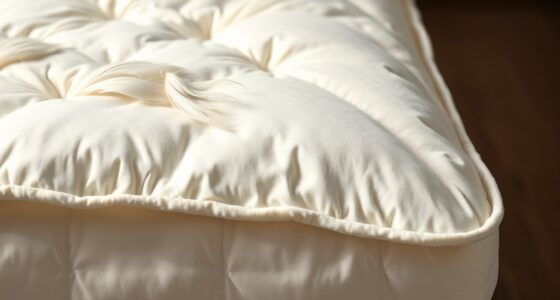
To care for your featherbed, regularly fluff and shake it gently to maintain loft and prevent clumping. Spot clean stains promptly and air out the bed weekly to keep it fresh. Use allergen-proof covers and guarantee thorough drying after washing to prevent mold. Inspect for signs of wear like lumps or feathers poking through, and replace it when comfort declines. Keep your featherbed in top shape—discover more tips to extend its lifespan.
Key Takeaways
- Regularly shake and fluff the featherbed to maintain loft and prevent clumping.
- Spot clean stains immediately using gentle, suitable cleaning solutions and allow thorough air drying.
- Use allergen-proof covers and wash bedding regularly to ensure hygiene and prolong lifespan.
- Air out the featherbed weekly to prevent moisture buildup and maintain freshness.
- Monitor for signs of wear, flattening, or lumps, and replace when comfort and support decline.
Understanding Your Featherbed Materials

Understanding the materials that make up your featherbed is essential for proper care and maintenance. Different feather types, such as down or feather fill, influence how your featherbed responds to cleaning and fluffing. Down feathers are lighter, more insulating, and require gentle handling to maintain their loft. Feathers, on the other hand, tend to be sturdier but may be less soft. Fabric durability also plays a crucial role; some covers are made from delicate materials like silk or satin, which need extra care, while others use durable fabrics like cotton or microfiber that withstand regular washing. Knowing your feather types helps you choose appropriate cleaning methods, and understanding fabric durability ensures you avoid damage, prolonging the life of your featherbed. Additionally, feather quality can impact how well your featherbed maintains its shape over time. Being aware of the care instructions specific to your featherbed’s materials will help you keep it in optimal condition for years to come.
Regular Fluffing and Shaking Techniques

You should regularly fluff your featherbed using gentle motions to keep the filling evenly distributed. When shaking it out, use proper techniques to avoid damaging the material or causing clumping. These simple steps help maintain your featherbed’s loft and comfort over time. Incorporating proper maintenance routines can also extend the lifespan of your bedding. Additionally, being aware of symptoms of damage can help you identify when your featherbed needs more thorough cleaning or repair to prevent deterioration. Practicing mindful decluttering strategies by periodically reassessing your bedding collection ensures that only comfortable, well-maintained items are kept, promoting a healthier sleeping environment. Regularly inspecting your featherbed for signs of wear can help catch issues early and maintain its supportive qualities, especially when considering toilet maintenance and repairs that can prevent unexpected damage.
Gentle Fluffing Methods
Regular fluffing and shaking are essential for maintaining your featherbed’s loft and comfort. To guarantee gentle feather care, use soft, controlled movements that avoid damaging the delicate feathers. This preserves the bed’s fluffiness and prolongs its lifespan. Here’s a quick guide to effective fluffing techniques:
| Technique | Method | Benefits |
|---|---|---|
| Light Shaking | Gently shake the bed side to side | Redistributes feathers evenly |
| Manual Fluffing | Use hands to lift and fluff feathers | Restores loft without damage |
| Air Fluffing | Air out by gently puffing over bed | Removes dust and freshens |
Additionally, regularly maintaining your featherbed ensures the feathers remain healthy and resilient. Proper storage techniques during off-seasons can further extend its lifespan and prevent feather clumping. Using a self watering plant pot can help keep the featherbed in optimal condition by maintaining proper humidity levels around it. Stick to these gentle methods to keep your featherbed cozy and in top feather care condition. Regular fluffing also helps maintain the loft and overall quality of your featherbed over time.
Proper Shaking Techniques
To effectively maintain your featherbed’s loft, mastering proper shaking techniques is essential. Regularly shaking your featherbed helps preserve its feather quality and prevents it from clumping, ensuring consistent comfort. Use gentle but firm shakes, working from the center outward to redistribute the filling evenly. This process also plays a vital role in allergen control by dislodging dust, pollen, and other particles that can accumulate over time. Regular maintenance routines can further enhance the longevity and cleanliness of your bedding. Proper shaking also aids in maintaining the loft and fluffiness of the feathers, keeping your sleep environment inviting. Additionally, incorporating proper storage methods can prevent damage and maintain the featherbed’s integrity during off-seasons. The use of protective covers can also prevent the ingress of dirt and moisture, further extending its lifespan. Avoid aggressive shaking, which can damage delicate feathers and reduce their insulating properties. Instead, give it a thorough shake at least once a week, especially after washing or heavy use. Proper shaking not only prolongs the life of your featherbed but also maintains a healthier sleeping environment.
How to Properly Spot Clean Your Featherbed

To spot clean your featherbed effectively, start by gathering the right cleaning supplies, like a gentle detergent and clean cloth. Next, treat stains carefully with a suitable stain remover to prevent spreading. Additionally, consider proper airflow during drying to ensure your featherbed stays fresh and fluffy without damage. Finally, use proper drying techniques to make sure your featherbed stays fresh and fluffy without damage.
Gather Cleaning Supplies
Gather the right cleaning supplies before you start spot cleaning your featherbed. Begin with a gentle, non-abrasive cleaner suitable for delicate fabrics. You’ll also need a soft cloth or sponge to avoid damaging the fabric. Conduct a thorough feather inspection to identify areas needing attention and guarantee you’re targeting the right spots. Having a cleaning schedule helps you stay consistent, preventing dirt buildup and extending your featherbed’s lifespan. Keep a small spray bottle of mild detergent and water nearby for easy application. Avoid harsh chemicals that could harm the feathers or fabric. Understanding tableware can help you choose appropriate cleaning tools and techniques for your bedding accessories. By preparing these supplies in advance, you streamline the cleaning process, making it more effective and less stressful. Proper preparation ensures your featherbed remains fresh, clean, and comfortable for years to come.
Spot Stain Treatment
Wondering how to effectively treat stains on your featherbed? Start by gently blotting the stain with a clean, damp cloth—avoid rubbing, which can push the stain deeper. Use stain removal techniques tailored for delicate fabrics, such as a mild detergent solution or a mixture of water and white vinegar. Carefully dab the affected area, being gentle to prevent disturbing the featherbed’s fluffing. Once the stain lifts, blot with a clean, dry cloth to absorb excess moisture. Always test any cleaning solution on a hidden spot first. Quick action helps prevent stains from setting, making stain removal more successful. Recognizing the history of featherbed materials can help you understand how to care for delicate fillings properly. Understanding material composition can also guide you in selecting the appropriate cleaning methods to avoid damage. Proper spot cleaning guarantees your featherbed stays fresh, fluffy, and inviting without compromising its delicate fill. Additionally, incorporating personal development techniques like mindfulness can help you approach cleaning tasks with patience and care. Developing mindfulness practices can enhance your focus and calm during chores, ensuring gentle handling of your bedding. Furthermore, regular yoga-inspired breathing exercises can promote a calm and focused mindset during chores, reducing stress and enhancing your overall well-being.
Proper Drying Techniques
After you’ve successfully removed a stain, proper drying is essential to prevent mold, mildew, and lingering odors. When drying your featherbed with duck down or feather fill, gentle methods work best. Air drying in a well-ventilated space helps maintain loft and prevents clumping. Avoid direct sunlight, which can damage delicate feathers. To optimize drying:
- Fluff the featherbed periodically to restore its loft
- Use a fan or dehumidifier to speed up airflow
- Avoid heat sources like radiators or blow dryers
- Ensure complete dryness before use or storage
This careful approach preserves the softness and insulation properties of your feather fill, keeping your featherbed fresh, comfortable, and free from moisture-related issues. Proper drying techniques are key to extending its lifespan.
Washing Your Featherbed: Step-by-Step Guide

To keep your featherbed clean and comfortable, it’s important to wash it properly. Start by checking the care label for specific instructions, especially to protect the feather quality and bedding durability. Use a gentle, mild detergent designed for delicate fabrics or feathers. Set your washing machine to a gentle cycle with cold water to prevent damage. Consider washing your featherbed solo to avoid compressing the feathers and to ensure thorough cleaning. After washing, gently squeeze out excess water without twisting, which could damage the feathers. Avoid harsh chemicals or bleach, as they can weaken the fabric and harm the feather filling. Proper washing preserves the feather quality and extends the bedding’s lifespan, keeping it soft and supportive for years to come.
Drying and Maintaining Proper Bed Hygiene

Proper drying and maintaining good bed hygiene are essential to keep your featherbed fresh and free of mold or bacteria. Proper drying helps preserve feather quality and prevents bedding allergens from accumulating. After washing, ensure your featherbed is thoroughly dried in a well-ventilated area or using a low-heat dryer. To maintain hygiene:
- Regularly shake and fluff your featherbed to redistribute feathers and prevent clumping
- Use allergen-proof covers to reduce bedding allergens
- Air out your featherbed weekly to prevent moisture buildup
- Spot clean stains immediately to avoid mold growth
These practices help extend the life of your featherbed, maintain its loft, and promote a healthier sleeping environment. Consistent hygiene routines are key to enjoying a clean, comfortable, and allergen-free bed.
Protecting Your Featherbed With a Mattress Cover

Choosing the right mattress cover is essential to protect your featherbed from spills, dust, and allergens. Once you select a suitable cover, maintaining it properly will extend its effectiveness and lifespan. Regular cleaning and care are key to keeping your featherbed fresh and well-protected.
Choosing the Right Cover
How do you guarantee your featherbed stays clean and protected? Choosing the right cover is essential. Look for a cover that promotes good sleep hygiene and allergen control, making your nights healthier and more comfortable. Opt for materials that are breathable, waterproof, and hypoallergenic to prevent dust mites and allergens from settling in. A well-chosen cover also enhances durability and ease of cleaning. Consider these features:
- Tight-fitting, secure zippers
- Breathable, hypoallergenic fabrics
- Waterproof or water-resistant layers
- Easy-to-clean materials
Proper Cover Maintenance
To keep your featherbed protected and in top condition, regular cover maintenance is essential. A clean, well-maintained cover helps preserve the feather color and enhances allergen control. You should wash your cover regularly, following manufacturer instructions, to remove dust, oils, and allergens. Using a durable, breathable fabric prevents moisture buildup and keeps your featherbed fresh. Check for tears or wear and replace covers as needed to maintain protection. Proper maintenance not only extends the life of your featherbed but also keeps it hygienic and allergen-free. Here’s a quick guide:
| Task | Frequency |
|---|---|
| Wash cover | Monthly |
| Inspect for tears | Every 3 months |
| Replace when worn | Annually |
Consistent cover care keeps your featherbed vibrant and safe.
How to Prevent Clumping and Maintain Loft

Clumping in your featherbed can happen when the filling shifts or compacts over time, reducing its loft and comfort. To prevent this, focus on maintaining feather quality and loft preservation. Regularly fluff your featherbed to redistribute the filling evenly, preventing clumps from forming. Use a gentle, low-heat tumble in your dryer with clean tennis balls to refresh the fill. Additionally, consider the following tips:
- Use a protective cover to minimize dirt and moisture buildup
- Store your featherbed properly in a breathable bag when not in use
- Avoid compressing the featherbed tightly for extended periods
- Choose high-quality feathers for better resilience and loft retention
These practices help keep your featherbed fluffy, supportive, and long-lasting.
Dealing With Odors and Stains Effectively

Odors and stains can diminish the comfort and cleanliness of your featherbed, but addressing them promptly and effectively guarantees your bedding stays fresh. To maintain feather quality, spot clean stains as soon as they occur using a mild detergent and cold water. For lingering odors, try airing out your featherbed outdoors on a dry, sunny day—sunlight helps with scent elimination. You can also sprinkle baking soda over the surface, let it sit for a few hours, then vacuum it up to absorb odors. Avoid harsh chemicals that could damage the feathers or impact scent elimination. Regularly fluff and ventilate your featherbed to prevent odor buildup, ensuring it remains inviting and hygienic for restful nights. With consistent care, your featherbed stays fresh longer.
Storage Tips for When Not in Use

When it’s time to store your featherbed, proper preparation helps maintain its softness and integrity. First, verify it’s completely clean and dry. Fold it loosely to prevent compression, avoiding tight creases that can damage the filling. For seasonal storage considerations, choose a breathable storage bag or cotton cover to prevent moisture buildup. To keep your bedding fresh, add a lavender sachet or cedar block inside the storage container. Consider decorative pillow arrangements around the featherbed to prevent shifting and distribute weight evenly. Store in a cool, dry place away from direct sunlight and humidity. Regularly check on your stored featherbed, especially during seasonal changes, to ensure it remains in good condition and free from pests. Proper storage preserves its plushness for future use.
When to Replace Your Featherbed

Knowing when to replace your featherbed is essential for maintaining a comfortable and supportive sleep surface. Over time, feather quality can decline, leading to clumping and loss of loft preservation. If your featherbed no longer offers the plush, supportive feel it once did, it’s probably time to think about a replacement. Signs include flattened areas, persistent lumps, or a noticeable decrease in comfort. Also, if feathers start poking through or the bedding develops an unpleasant odor despite cleaning, it indicates significant wear. Replacing your featherbed ensures you continue to enjoy ideal support and comfort. Regularly assess its loft and feather condition to determine if it’s time for a new one, helping you maintain restful, supportive sleep night after night.
Frequently Asked Questions
Can I Use a Regular Pillow Protector for My Featherbed?
You might wonder if a regular pillow protector works for your featherbed. While pillow protectors can offer basic protection, they often lack the size and durability needed for a featherbed. For proper featherbed maintenance tips, choose a protector specifically designed for larger bedding items to ensure compatibility and comfort. Using the right protector helps keep your featherbed clean, fluffy, and protected from moisture and allergens effectively.
How Often Should I Replace the Feather Filling?
You might wonder how often you should replace your feather filling to maintain comfort and hygiene. Generally, the featherbed’s lifespan influences its replacement frequency; most last about 5 to 10 years. Over time, feathers can become flattened or lose their loft, so consider replacing the filling when you notice persistent odors, allergies, or reduced support. Regularly inspecting your featherbed helps ensure it stays cozy and fresh.
Are There Eco-Friendly Cleaning Options for Featherbeds?
Thinking about eco-friendly cleaning options for your featherbed is like tending to a delicate garden. You can use eco-friendly detergents and natural cleaning methods that are gentle on the environment and your bedding. Regularly spot clean with vinegar and baking soda, and consider air drying outdoors when possible. These eco-conscious choices keep your featherbed fresh without harming the planet, ensuring you sleep soundly under a greener sky.
What Are the Signs of Mold or Mildew on a Featherbed?
Mold detection on your featherbed involves checking for musty odors and visible spots that look fuzzy or discolored. Mildew signs include a damp, powdery film or dark patches, especially after exposure to moisture. If you notice these signs, it’s vital to address the issue promptly to prevent health risks. Regularly inspect your featherbed and make certain it stays dry and well-ventilated to avoid mold and mildew growth.
Can I Sleep Directly on a Featherbed Without a Mattress Topper?
You might wonder if you can sleep directly on your featherbed, but for maximum featherbed durability and bedding material compatibility, using a mattress topper is recommended. Sleeping directly on it can cause wear and reduce its lifespan. A topper adds a protective layer, enhances comfort, and maintains the featherbed’s quality. Ultimately, investing in proper bedding ensures your featherbed stays plush and supportive for years to come.
Conclusion
Taking care of your featherbed keeps it fluffy enough to float on clouds and soft enough to make you forget the world. With just a little effort, you’ll turn your bed into a throne of comfort that could conquer storms and calm the busiest minds. Keep it pristine, and your featherbed will be your personal oasis, so inviting that even a storm couldn’t shake its cozy charm. Sleep peacefully, knowing your featherbed’s happiness depends on your care!