
To fix a lumpy featherbed, start by inspecting it for uneven areas and clumps. Shake and fluff it vigorously, redistributing the feathers evenly. Use your hands or a fork to break up compacted spots and smooth out the surface. For stubborn lumps, a gentle tumble in the dryer with dryer balls can help restore loft. Regular cleaning, adding fresh feathers, and proper storage will keep it comfortable. If you continue, you’ll discover more tips to maintain your featherbed’s plushness.
Key Takeaways
- Vigorously shake, fluff, and distribute the feathers to loosen clumps and restore even loft.
- Use a fine sieve or fork to break up dense areas and prevent future lumps.
- Regularly fluff and redistribute feathers to maintain airflow and prevent clumping.
- Clean and dry the featherbed thoroughly, adding fresh filling if needed for added loft.
- Store in breathable covers, air out regularly, and avoid long compression to prevent lumps.
Assessing the Damage: Identifying Lumps and Clumps

Before attempting any repairs, it’s essential to carefully assess the featherbed for lumps and clumps. Start by examining the overall feather quality; high-quality feathers tend to be more resilient and evenly distributed. Check if the featherbed feels uneven or lumpy when you press down, indicating possible clumping. Also, consider mattress compatibility—an incompatible mattress can cause feathers to shift or clump over time. Look for areas where feathers have shifted or formed dense pockets, which signal where fluffing or repairs might be needed. Pay close attention to the edges and corners, as they’re prone to clumping due to movement and compression. Your goal is to identify all lumps and clumps clearly so you can address them effectively and restore your featherbed’s comfort and support. Additionally, using specialized bedding tools can help break up clumps and evenly redistribute the feathers for a smoother, more comfortable surface.
Fluffing and Shaking Your Featherbed

To restore the loft and even distribution of feathers, start by vigorously shaking and fluffing your featherbed. This simple step helps loosen clumped featherbed materials and redistributes the filling, reducing lumps and uneven areas. Grab the corners and give it a firm shake, then fluff it with your hands to lift the feathers. If your bedding is particularly lumpy, repeat this process several times. Using your hands to knead and massage the featherbed can further break up compacted areas. Regular fluffing keeps the feathers evenly spread, preventing lumps from forming over time. Proper carrier oils can also help maintain the softness and longevity of your featherbed, ensuring consistent comfort. This technique is especially effective for lumpy bedding caused by compressed or clumped feathers, helping to restore softness and loft without the need for more intensive fixes.
Distributing the Filling Evenly
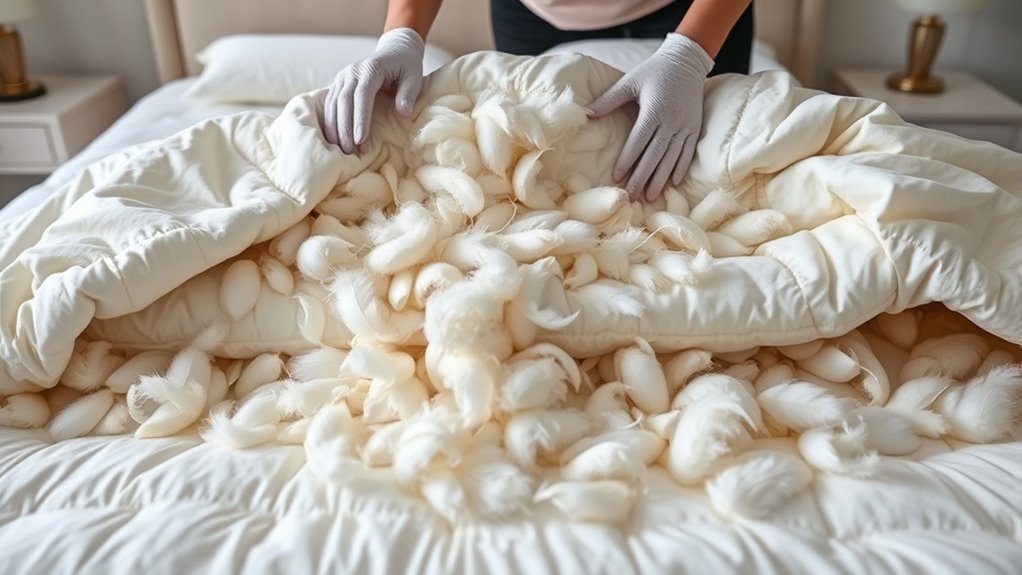
Ensuring the filling is evenly distributed is essential for a comfortable, lump-free featherbed. Proper feather distribution prevents thin spots and uneven firmness, making your bed more comfortable. To achieve this, gently smooth out the featherbed’s surface with your hands, spreading the filling across the entire area. Focus on areas where feathers tend to bunch or clump, redistributing them to maintain a consistent filling. Checking the filling consistency helps; if some sections feel denser or puffier, work to even out those spots. You can also gently shake or pat the featherbed to encourage the feathers to settle uniformly. Taking these steps guarantees your feather distribution is balanced, resulting in a smoother, more comfortable surface that stays evenly plush over time. Additionally, using a feather bed cover can help preserve the even distribution and protect the filling from shifting.
Breaking Up Compacted Clumps

To break up compacted clumps, start by gently loosening them with your fingers or a fork. If the clumps are stubborn, use a fine sieve to sift out the lumps and restore a smooth texture. Fluff the featherbed with a fork to evenly distribute the filling and prevent future clumping. Incorporating tuning techniques can also help improve the overall quality and longevity of the featherbed.
Gently Break Up Clumps
When featherbeds become lumpy and compacted, gently breaking up the clumps is essential to restore their softness. Use your hands or a fork to carefully loosen the dense areas without pressing too hard, which can damage the feathers. This process helps prevent lumps from forming again, supporting better feather maintenance. Regularly fluffing and redistributing the fill keeps the bedding even and prevents compacted sections. Be gentle to avoid tearing the delicate feathers or causing new clumps. Breaking up these clumps improves airflow and maintains the featherbed’s loft, making your bed more comfortable. Understanding feather fiber structure can help you handle the filling more effectively. Consistent gentle handling not only restores softness but also contributes to long-term lump prevention, ensuring your featherbed stays plush and inviting.
Use a Fine Sieve
Using a fine sieve is an effective way to break up compacted feather clumps without damaging the delicate feathers. To do this, gently pour the featherbed material into the sieve and use light, even motions to shake it. Sieve techniques focus on feather separation, allowing air to flow between clumps and restore loft. As you work, carefully lift and sift the feathers, avoiding excessive force that could harm the delicate plumage. This process helps loosen compacted areas, making it easier to fluff and revive your featherbed. Remember, patience is key—work slowly to ensure you don’t break or distort the feathers. Proper feather care is essential for maintaining the loft and longevity of your featherbed. Once you’ve sieved the entire bed, you’ll notice improved feather separation and a much more even, fluffy finish.
Fluff With a Fork
If featherbed clumps remain stubborn after sieving, fluffing with a fork can help break them apart. Gently insert the fork into the matted areas and lift, loosening the dense feather clusters. This method works best when the feather density has become uneven due to infrequent cleaning schedules or heavy use. Regular fluffing prevents compaction, keeping the feathers evenly distributed and maintaining proper loft. Be careful not to press too hard, as excessive force can damage delicate feathers. After loosening the clumps, gently shake or fluff the featherbed to restore its evenness. Incorporating this step into your cleaning routine ensures your featherbed stays soft, fluffy, and comfortable, avoiding the need for more intensive repairs later on. Monitoring feather health and proper maintenance can prolong the life and comfort of your featherbed.
Using a Gentle Tumble in the Dryer
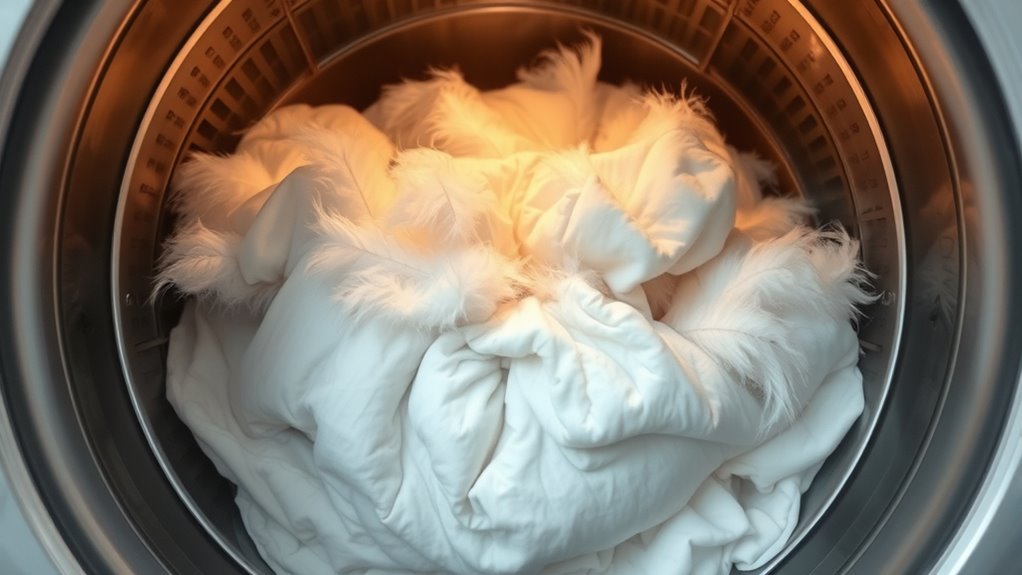
A gentle tumble in the dryer can effectively help smooth out lumps in featherbeds without damaging the delicate filling. Set your dryer to a low or no-heat cycle to prevent clumping or crushing the feathers. Toss in a few clean tennis balls or dryer balls to help redistribute the filling evenly. This method is also great for revitalizing featherbeds stored away, making them feel plush again. If allergies are a concern, ensure the featherbed is completely dry before storing or using it, as dampness can promote mold and dust mites. Regularly tumbling the featherbed helps maintain its loft and reduces the need for more intensive fluffing or cleaning. Just be cautious with the heat and avoid over-drying to preserve your featherbed’s integrity. Incorporating AI-driven diagnostics can help identify potential issues like mold or dust mites early, ensuring a healthier sleep environment.
Spot Cleaning and Replenishing Filling
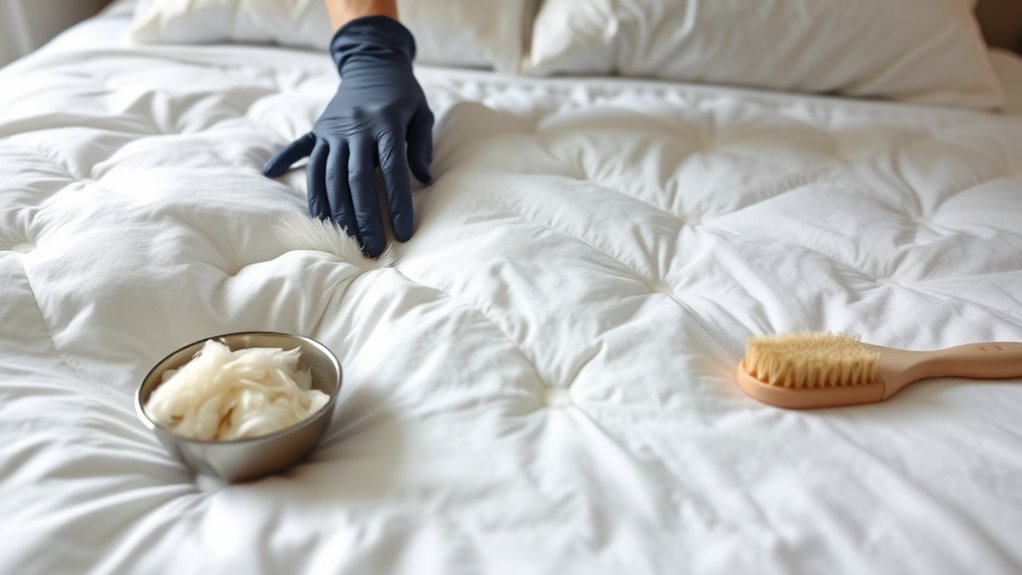
When you notice a specific stain or uneven area, spot cleaning is your best option to restore your featherbed’s comfort. After cleaning, you might need to replenish the filling in certain spots to maintain even loft and support. Doing this carefully guarantees your featherbed stays plush and free of lumps for a restful sleep.
Targeted Spot Cleaning
Targeted spot cleaning is an effective way to address specific areas of your featherbed that have become lumpy or stained. If you notice a stain or uneven spot, gently spot clean using a mild detergent and a soft cloth. Be careful not to soak the fabric, as excess moisture can worsen lumps. Proper featherbed storage helps prevent buildup of dirt and allergens, which can trigger featherbed allergies. When cleaning, focus on affected areas to avoid disturbing the entire filling. After cleaning, allow the spot to air dry completely before using or covering it again. Regularly inspecting and spot cleaning problem spots keeps your featherbed fresh and helps prevent lumps caused by dirt or moisture buildup. Using proper cleaning techniques ensures the longevity of your featherbed. This targeted approach extends the life of your featherbed and maintains its comfort.
Replenish Feather Filling
If your featherbed has become lumpy despite spot cleaning, replenishing the filling can restore its plushness and even out the surface. Over time, feathers can shift, leading to uneven feather stability and inconsistent filling. To fix this, carefully remove the bedding and locate the areas that need reinforcement. Gently add fresh feather filling, ensuring it’s evenly distributed to maintain a consistent filling consistency. Fluff the added feathers to prevent new lumps and help the bed regain its original loft. Once you’ve evenly spread the new filling, reassemble the featherbed and give it a few shakes to settle the feathers. This process improves feather stability and creates a more comfortable, uniformly plush surface. Regular replenishment keeps your featherbed looking and feeling like new. Proper maintenance can extend the lifespan of your featherbed and keep it feeling luxurious.
Properly Washing and Drying Your Featherbed

Properly washing and drying your featherbed is essential to maintaining its loft and preventing lumps. Use a gentle cycle and mild detergent to clean it thoroughly, removing dust, oils, and allergens that can worsen featherbed allergies. After washing, make certain complete drying to avoid mold or mustiness, which can cause clumping. Avoid overstuffing your washer, and consider using tennis balls or dryer balls to help fluff the feathers during drying. When storing your featherbed, make sure it’s completely dry and store it in a breathable bag to prevent moisture buildup. Proper care extends its lifespan and keeps it comfortable.
| Storage Tip | Washing Tip | Drying Method |
|---|---|---|
| Use breathable bags | Use mild detergent | Tumble dry with dryer balls |
| Keep in a cool, dry place | Wash regularly to prevent allergens | Ensure fully dry before storing |
| Avoid compression during storage | Spot clean when needed | Avoid high heat to prevent damage |
Adding Fresh Feathers or Down

Adding fresh feathers or down can instantly revive your featherbed’s loft and softness. The key is choosing high-quality feather quality and reputable down sourcing to guarantee durability and comfort. When selecting new filling, opt for well-sourced down that’s ethically harvested and free from fillers. Carefully fluff the added feathers or down to distribute them evenly, preventing future clumping. Mixing in fresh, lightweight down or feathers helps restore the bed’s original loft and plush feel, especially if it’s become lumpy over time. Keep in mind that the quality of materials directly impacts the longevity of your featherbed. By investing in quality down sourcing, you’ll enjoy a softer, more resilient bed that stays comfortable night after night.
Maintaining Your Featherbed for Longevity

Regular maintenance is key to ensuring your featherbed stays comfortable and supportive over time. To prevent featherbed allergies, regularly air out your featherbed in sunlight to reduce dust and mites. Use a protective cover that’s washable to keep allergens at bay. When not in use, store your featherbed properly by placing it in a breathable bag or case, avoiding plastic, which can trap moisture and cause mold or clumping. Fluff your featherbed weekly to maintain even loft and prevent lumps from forming. Proper storage and routine care extend its lifespan and keep it fresh. If you notice persistent lumps or unevenness, consider redistributing the feathers or adding a new layer of down. Consistent maintenance preserves comfort and minimizes the need for repairs.
Tips for Preventing Future Lump Formation

To prevent lumps from forming in your featherbed, it’s essential to distribute the feathers evenly after each use. Regular featherbed maintenance helps prevent clumps by ensuring the filling stays balanced and soft. Shake and fluff your featherbed daily to keep the feathers from settling into uneven pockets. Use gentle strokes to break up any compacted areas, which discourages lump formation over time. Additionally, consider occasional spot adjustments or redistributing feathers when you change sheets. Avoid compressing the featherbed for long periods, as this can cause clumping. Proper care, combined with vigilant maintenance, prevents clumps from developing, extending the life of your featherbed and maintaining its plush, even feel. Consistent featherbed maintenance is key to preventing future lump formation.
Frequently Asked Questions
How Often Should I Fluff My Featherbed to Prevent Lumps?
You should fluff your featherbed at least once a week to maintain proper bed maintenance and prevent lumps. Regular fluffing redistributes the feathers evenly, keeping the fill soft and smooth. If you notice lumps forming, increase your fluffing frequency or give it a gentle shake daily. Consistent care guarantees your featherbed stays comfortable, supportive, and free of lumps, making your sleep more restful and cozy.
Can I Use Homemade Solutions to Fix Lumpy Featherbeds?
Your featherbed’s lumps might seem like a mountain range, but yes, you can try DIY remedies! Use simple filling alternatives like tennis balls or foam inserts to redistribute the feathers. Gently fluff and shake your featherbed regularly, then apply homemade solutions such as a light sprinkle of baking soda or freshening sprays. These tricks help break up lumps naturally, making your bed as plush and inviting as a cloud.
What Are Signs My Featherbed Needs Professional Repair?
If your featherbed feels uneven despite home fixes, it might need professional repair. Signs include persistent lumps that affect feather quality and discomfort, or if your featherbed no longer matches your mattress’s compatibility, causing uneven support. You may also notice feathers poking through the fabric or a significant shift in the fill distribution. When these issues arise, seeking expert help guarantees your featherbed regains proper shape and comfort, prolonging its lifespan.
Is It Safe to Machine Dry a Featherbed With Lumps?
Yes, you can machine dry a featherbed with lumps, but you must be cautious. Use a low heat setting and add clean tennis balls or dryer balls to help break up the lumps while drying. Remember, DIY repair tips include flipping and fluffing your featherbed periodically during the cycle. Always check for any damage or moisture before storing it away to guarantee safety and prevent mold.
How Do Different Filling Materials Affect Lump Formation?
Imagine a plush cloud gently cradling you; that’s how your featherbed should feel. Different fillings, like down or synthetic fibers, influence feather density and filling uniformity, affecting lump formation. Down offers softness and even distribution, reducing lumps, while synthetic fills may create uneven pockets if not evenly distributed. Choosing high-quality, well-encased fillings guarantees consistent feather density, preventing lumps and maintaining that luxurious, cloud-like comfort every night.
Conclusion
Remember, a stitch in time saves nine—taking care of your featherbed now prevents bigger lumps later. Regular fluffing, gentle washing, and adding fresh feathers can keep it feeling plush and even. Don’t wait until lumps become a nuisance; your comfort depends on consistent upkeep. By following these tips, you’ll enjoy cozy, lump-free nights for years to come. After all, a well-maintained featherbed is the key to restful sleep and sweet dreams.