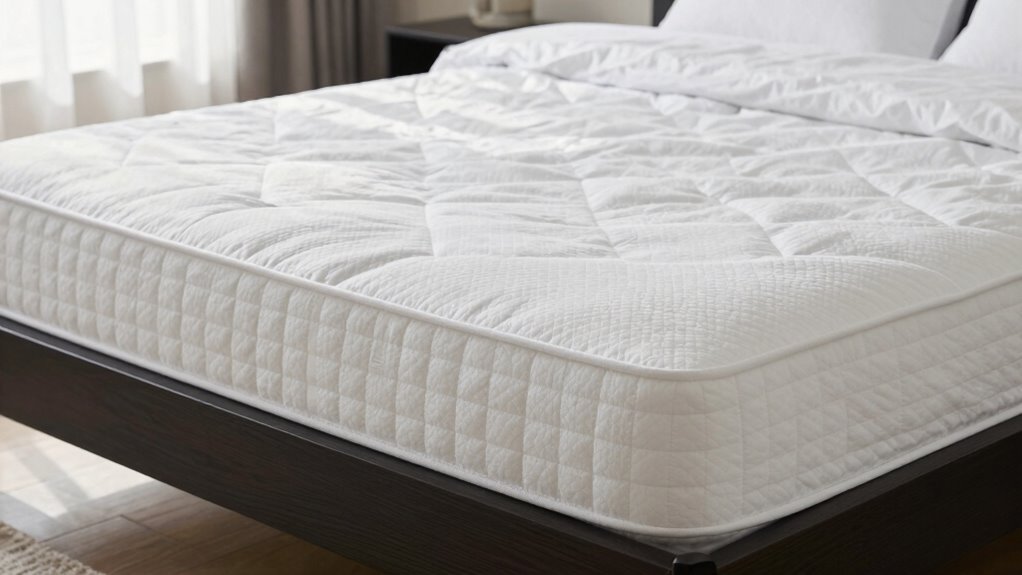
When shopping for a mattress, don’t assume “firm” always means hard or uncomfortable. Instead, it refers to the level of support and how your body interacts with the surface. Factors like mattress materials, layers, and your sleep position greatly influence comfort. A mattress labeled “firm” might feel different depending on these elements. If you want to get the support and comfort that’s right for you, keep exploring how firmness really works.
Key Takeaways
- “Firm” refers to support level, not necessarily hardness or discomfort.
- Personal perception of firmness varies based on sleep position, weight, and preferences.
- Different materials and layer arrangements influence how “firm” a mattress feels.
- A mattress labeled “firm” may still feel comfortable without sacrificing support.
- Testing various options helps clarify that firmness doesn’t always mean an uncomfortable or hard surface.
What Does “Firm” Really Mean When Shopping for a Mattress?
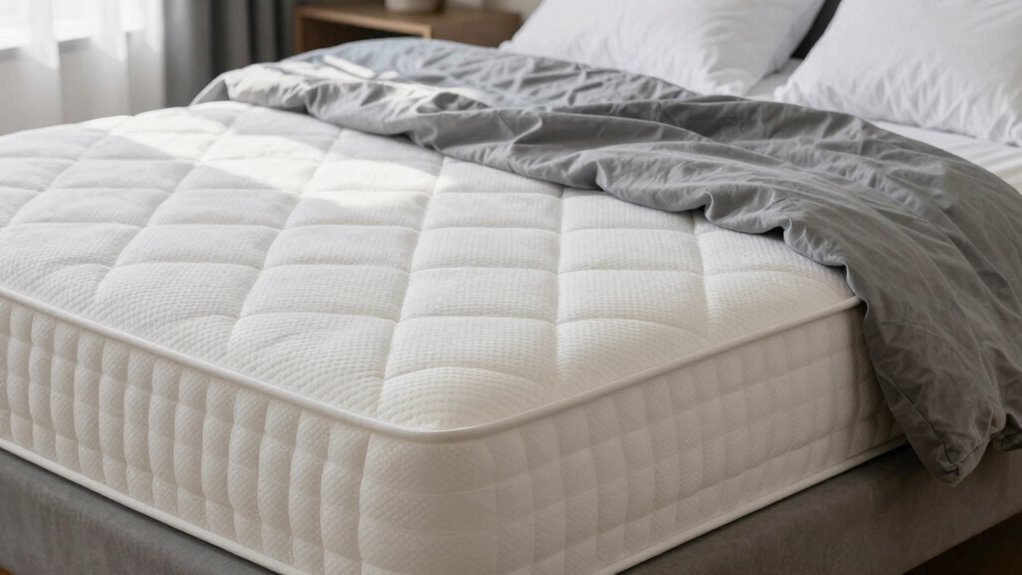
Have you ever wondered what “firm” really means when shopping for a mattress? It’s more than just a label; it describes the feel of the sleep surface’s resistance. A firm mattress offers little give, providing a solid surface that supports your body evenly. But comfort level is subjective—some people associate firmness with better support, while others find it too hard. When choosing a mattress, remember that “firm” doesn’t necessarily mean uncomfortable; it’s about how the sleep surface interacts with your body. Your ideal firmness depends on your sleeping position, weight, and personal preference. So, don’t assume all “firm” mattresses feel the same—test different options to find one that offers both support and comfort for a good night’s sleep. Additionally, understanding the role of firmness in support and comfort can help you make a more informed decision. Keep in mind that firmness levels can vary between brands and models, so always try before you buy. Recognizing the different firmness descriptions used by manufacturers can also help clarify what to expect from each mattress. Being aware of how firmness interacts with weight and sleep position can further refine your choices and lead to better sleep quality. Furthermore, considering natural materials and construction may influence how firmness feels and performs over time.
How Mattress Layers and Materials Impact Firmness and Support

The layers and materials inside a mattress play a significant role in determining its firmness and support. Memory foam layers contour closely to your body, providing pressure relief but can feel softer or firmer depending on density and thickness. Thicker memory foam tends to offer more support, while thinner layers may feel less firm. Latex layers, on the other hand, are naturally resilient and offer a bouncier, more responsive feel. They provide support by springing back quickly, which can make a mattress feel firmer or more supportive without sacrificing comfort. The combination of these materials and their placement within the mattress influences how firm or supportive it feels to you, highlighting that firmness isn’t solely about the top layer but how the entire structure interacts. Additionally, the material composition of a mattress can affect how its firmness is perceived over time as materials settle or degrade. For example, material durability impacts how well a mattress maintains its firmness and support with use. The layer arrangement also affects how the firmness is distributed across the surface, impacting overall comfort and support. Furthermore, understanding the material interactions within a mattress can help predict how its firmness might change with prolonged use or different sleeping positions.
Is a Firm Mattress the Right Choice for Your Sleep Style?

Choosing a firm mattress depends heavily on your sleep style and personal preferences. If you sleep on your back or stomach, a firmer surface can provide better spinal alignment and support, especially if you have a heavier body weight. Heavier sleepers often benefit from the extra support that a firm mattress offers, preventing sinkage and maintaining proper posture throughout the night. Conversely, if you sleep on your side or have a lighter body weight, a very firm mattress might create pressure points and cause discomfort. Ultimately, your sleep posture and body weight influence whether a firm mattress will promote restful sleep or lead to aches. Assess your habits carefully to determine if a firm mattress aligns with your needs. Additionally, understanding pressure points can help you choose the right firmness for optimal comfort. Recognizing body weight factors is also essential, as they directly impact how a mattress feels under you and its ability to support your sleeping position effectively. Moreover, considering sleeping position can significantly influence your comfort and support requirements. Incorporating knowledge about mattress firmness and pressure distribution can further assist in making an informed decision for better sleep quality. Furthermore, exploring indigenous wellness principles may offer holistic insights into achieving overall well-being that supports restful sleep.
How to Find the Perfect Mattress Firmness for Better Sleep
Finding the right mattress firmness begins with understanding your sleep habits and preferences. Consider how your bed frame compatibility affects firmness choices—some frames support softer mattresses better, while others need firmer ones. To determine your ideal firmness, try different levels by testing mattresses in stores or using trial periods. Don’t forget mattress flipping techniques; flipping or rotating your mattress regularly can maintain its firmness and support. Pay attention to how your body feels—less pressure, proper spinal alignment, and comfort are key indicators of the right firmness. Remember, firmness is subjective, so prioritize what feels best for your sleep quality. Incorporating proper flipping and rotating techniques can also help prolong your mattress’s lifespan and maintain consistent support. Additionally, understanding passive voice detection can improve your overall writing clarity and effectiveness. Being aware of your sleep position can further refine your choice, as certain firmness levels suit different sleeping styles better. Recognizing personal comfort preferences is essential in selecting the optimal firmness for restful sleep, and considering body weight can influence how firm a mattress feels to you.
Top Myths About Firm Mattresses Debunked
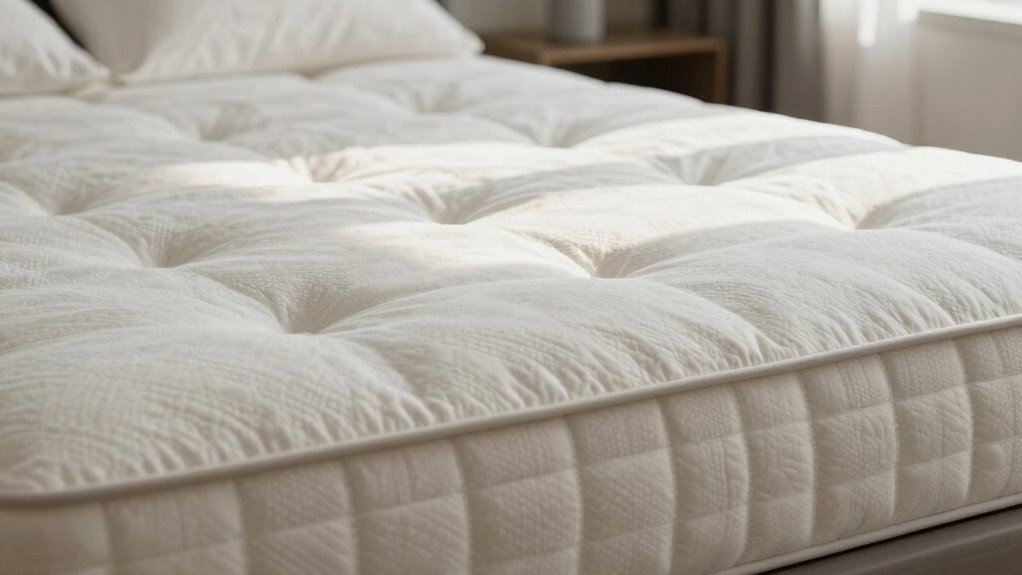
Many people assume that a firm mattress is always better for support and spinal alignment, but this isn’t necessarily true. Mattress firmness labels can be misleading because they don’t account for bed frame compatibility or individual preferences. A mattress labeled “firm” may feel softer if paired with a flimsy bed frame, or it might be too hard if your bed setup isn’t compatible. Conversely, a softer mattress with the right support can provide better comfort without sacrificing support. It’s important to consider bed frame support because it can influence how firmness is perceived and how well the mattress performs. Additionally, understanding mattress support can help you select a mattress that offers the right balance of comfort and firmness. Don’t rely solely on firmness labels; test different options and consider your bed frame. Remember, what feels firm to one person might not be for another. Understanding mattress support is crucial in debunking this myth and helps you find a mattress that truly suits your needs, not just a label. Recognizing the impact of bed frame quality can also ensure you choose a setup that enhances your sleep experience. To ensure optimal sleep quality, it’s essential to evaluate these factors together.
Frequently Asked Questions
How Does Body Weight Influence the Perception of Mattress Firmness?
Your body weight impacts firmness perception because heavier individuals often feel plushness differently and may perceive a mattress as softer, even if it’s firm. Conversely, lighter sleepers might find the same mattress too firm or uncomfortable. This means, when choosing a mattress, consider your body weight impact on firmness perception to find the right level of support and comfort for a truly restful sleep.
Can a Mattress’s Firmness Change Over Time?
Think of your mattress as a garden that changes with the seasons. Over time, the mattress material can soften or sag, causing the firmness to change. While some mattresses maintain firmness longevity, others may become less firm with regular use. Factors like material quality and care influence this. So, yes, your mattress’s firmness can shift, especially if it’s worn or made from less durable materials.
Are All “Firm” Mattresses Suitable for Side Sleepers?
Not all “firm” mattresses are suitable for side sleepers, especially without proper pillow support. You need a mattress made from flexible materials like memory foam or latex that contour to your body’s curves, providing pressure relief on shoulders and hips. A truly firm mattress can cause discomfort, so look for designs that balance firmness with sufficient cushioning, ensuring your spine stays aligned and you sleep comfortably.
What Role Does Mattress Firmness Play in Alleviating Back Pain?
Mattress firmness greatly affects back pain, especially considering your sleep posture and mattress materials. A medium-firm mattress usually offers the right balance, providing support for your spine while contouring to your body. If you sleep on your side, softer materials can cushion shoulders and hips, reducing pressure. Conversely, back sleepers benefit from firmer materials that keep the spine aligned. Choose a mattress that supports your specific sleep posture and uses quality materials for relief.
How Do Different Brands Define and Label Firmness Levels?
Different brands define and label firmness levels based on their own firmness standards and brand labeling criteria. You’ll find that some brands use terms like soft, medium, and firm, but these can vary widely between companies. To choose the right mattress, you should check each brand’s specific firmness standards and descriptions, rather than relying solely on the label, since what’s firm for one brand might feel medium for another.
Conclusion
So, next time you see “firm” on a mattress label, don’t just assume it’s a sleep fortress. It’s like calling a cat a lion—sometimes it’s just a really fluffy kitten in disguise! Remember, the perfect firmness can turn your snoozing from a yawn-inducing chore into a sleep so good, you’ll wake up feeling like you’ve conquered the world. Don’t settle—find your dream mattress and sleep like royalty!