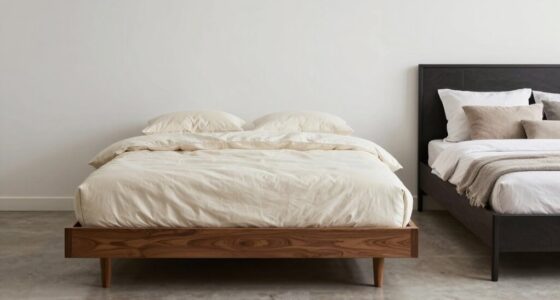
Mixing furniture finishes adds visual interest and personality to your space. You can combine matte and glossy surfaces, pair warm woods with cool metals, or mix painted with natural finishes to create contrast and depth. Balance is key—use complementary tones and textures to keep the look cohesive. Incorporate varied finishes to highlight features and create a layered, inviting environment. Explore different combinations to discover the perfect style; more tips await if you continue.
Key Takeaways
- Combine different finishes like stain, paint, matte, and gloss to add depth and visual interest.
- Balance warm and cool tones by pairing warm woods with cool metallic accents for harmony.
- Mix textures such as smooth wood with rough industrial metals or textured fabrics for a layered look.
- Use contrasting finishes strategically to highlight features and create focal points in a space.
- Maintain cohesion by choosing finishes that complement each other within an overall color palette.
Understanding Different Furniture Finishes

Knowing the different furniture finishes is essential if you want to create a cohesive and attractive look. One key aspect is understanding wood grain, which reveals the natural patterns and texture of the wood. Finishes like stain highlight this grain, adding warmth and depth to your furniture. On the other hand, paint application offers a smooth, opaque surface that can completely transform a piece’s appearance. When choosing a finish, consider how it interacts with the wood grain—some finishes enhance the natural patterns, while others hide them. For example, a clear varnish showcases the wood’s character, whereas paint provides a bold, uniform color. Being familiar with these options helps you make informed decisions that match your style and the overall aesthetic of your space. Additionally, understanding furniture finish types can help you select the most durable and suitable option for your farmhouse bedroom decor.
The Benefits of Mixing Finishes in Your Space

Mixing different furniture finishes can bring a dynamic and personalized touch to your space. It creates visual interest by blending vintage charm with modern elegance, making your room feel both timeless and current. Combining matte and glossy surfaces, or pairing warm woods with sleek metals, adds depth and texture. This approach allows you to highlight unique pieces and emphasize your style. Mixing finishes also prevents your space from looking monotonous, making it more inviting and lively. It encourages creativity, helping you craft a cohesive yet eclectic look. By thoughtfully combining finishes, you can balance different design elements effortlessly, making your space feel curated and intentional. Additionally, incorporating mixed finishes can enhance space organization by clearly defining zones and functions within a room. Understanding furniture finish options can further help you select complementary materials and styles. Exploring various material choices can also add to the overall harmony and visual interest of your decor. Recognizing the importance of design principles can guide you in creating a balanced and appealing environment. Incorporating knowledge of interior design basics can also help you make more informed decisions about your decor choices. Ultimately, mixing finishes enhances your room’s personality, making it truly yours.
How to Balance Matte and Glossy Surfaces

To create a balanced look, start by contrasting different sheen levels—pair matte with glossy surfaces to add visual interest. Use complementary color schemes to tie the finishes together, ensuring they work harmoniously. Pay attention to placement, balancing matte and glossy pieces throughout the space to achieve a cohesive and appealing design.
Contrast in Sheen Levels
Ever wondered how to create visual interest in your furniture pieces? The key is mastering contrast in sheen levels. Sheen contrast involves pairing finishes with different levels of glossiness, like matte and high-gloss, to add depth and dimension. Finish variation is your tool for achieving this balance, highlighting certain areas while softening others. For example, a glossy tabletop paired with matte cabinetry draws attention and creates a dynamic look. To keep things cohesive, choose finishes that contrast but still complement each other in color and style. Avoid mixing too many sheen levels, which can look chaotic. Instead, focus on a few well-placed contrasts. This approach enhances visual interest without overwhelming your space, making your furniture both stylish and harmonious.
Complementary Color Schemes
Balancing matte and glossy surfaces with complementary color schemes can elevate your furniture’s visual appeal. To create harmony, choose colors that contrast yet complement each other, enhancing both finishes. Imagine:
- Using a deep matte navy paired with glossy gold decorative hardware, making the hardware pop.
- Combining soft matte pastels with sleek, glossy accents to highlight upholstery textures.
- Pairing warm gloss finishes with cool matte tones, balancing the overall look without overwhelming the eye.
- Selecting colors that support the color temperature adjustments for optimal viewing conditions and aesthetic balance.
- Incorporating brand reputation insights to select finishes and colors that ensure durability and authentic quality.
- Considering finish durability to ensure the chosen combinations stand up well to everyday use and maintain their appeal over time.
- Exploring the impact of dog breeds on furniture style choices can also help in selecting finishes that reflect your lifestyle and pet-friendly needs.
- Evaluating interior design trends can guide you in choosing finishes and colors that stay current and stylish over time.
Balance Through Placement
Strategically placing matte and glossy surfaces within a space can create a harmonious and visually appealing balance. By leveraging textural contrast, you draw attention to different areas without overwhelming the eye. For example, pairing a matte finish on large furniture pieces with glossy accents can help emphasize certain elements. This contrast adds depth and dimension, enhancing the overall aesthetic. To achieve color harmony, consider how finishes complement your color palette—glossy surfaces reflect light, making colors pop, while matte surfaces provide a subtle backdrop. Distributing these finishes thoughtfully across your space ensures no single finish dominates, creating a balanced environment. The key is to balance the placement of matte and glossy surfaces to enhance the design, fostering a sense of cohesion and visual interest. Additionally, understanding surface finishes can help you select the right material combinations for optimal balance and durability. Considering the remote collaboration tools used during hackathons can also inspire innovative solutions for remote furniture design or smart home integration, blending technology with aesthetics.
Combining Wood Tones for a Cohesive Look

When combining different wood tones in your space, it’s important to create a sense of harmony rather than chaos. Start by choosing a dominant wood tone to anchor your design. Then, consider complementary shades that have similar wood grain patterns, which helps maintain visual consistency. For example: 1. Light oak with a subtle, straight grain pairs well with darker walnut for contrast. 2. Mixing finishes, like matte and semi-gloss, adds depth without clashing. 3. Keep finish durability in mind—opt for finishes that protect the wood grain and maintain their look over time. Paying attention to wood grain patterns and finish durability ensures your furniture feels cohesive and polished. Engaging with inspirational quotes can also motivate you to select the right finishes and design elements, fostering a harmonious space. Additionally, embracing failure as a stepping stone in your choices can lead to unexpected and unique design outcomes. By paying attention to wood grain and finish durability, you create a harmonious space that’s both stylish and built to last.
Pairing Painted and Natural Finishes

Pairing painted and natural finishes can create a striking contrast that adds visual interest to your space. Use painted accents to highlight certain furniture pieces, while letting natural textures shine through in other items. This mix brings depth and personality, balancing bold color with organic warmth. For example, a painted dining table paired with natural wood chairs creates a dynamic look that feels both modern and inviting. Incorporate natural textures like raw wood, linen, or woven materials to complement painted surfaces. The key is to keep the color palette cohesive, so the contrast feels intentional, not jarring. When done thoughtfully, this pairing enhances your room’s aesthetic by blending vibrant painted elements with the subtle beauty of natural finishes. Understanding furniture finishes can help guide your choices to achieve a harmonious and stylish result.
Tips for Mixing Metal Finishes With Wood

When mixing metal finishes with wood, start by balancing warm and cool tones to create harmony in your space. Use contrasting metal colors to add visual interest, but keep textures and styles in mind to make sure everything stays cohesive. Paying attention to these points helps you craft a polished, stylish look that feels intentional. Additionally, considering the metal finish can enhance the overall aesthetic, whether it’s matte, shiny, or brushed for added texture. Incorporating natural indicators such as weather patterns and animal behavior can also inspire your design choices, creating a space that feels both functional and connected to the environment. Recognizing the importance of attention to detail in your choices ensures a refined and harmonious result. Moreover, understanding currency fluctuations can influence how you budget for decor investments, especially when sourcing pieces internationally. Integrating AI in Business insights, such as automation and data analysis, can even help you plan and visualize your design choices more effectively.
Balance Warm and Cool Tones
Balancing warm and cool tones in furniture finishes can create a harmonious and visually appealing space. To achieve this, consider these tips:
- Mix warm-toned woods like oak or cherry with cool metallics such as brushed nickel or chrome, blending vintage charm with modern minimalism effortlessly.
- Use warm finishes for larger pieces to add comfort, then incorporate cool accents like steel or silver accessories for contrast.
- Keep a neutral background to allow both warm and cool tones to stand out without clashing.
- Incorporate furniture finishes that complement each other by considering their undertones and how they interact within the space.
- Staying aware of current automations in furniture manufacturing can help you select pieces that are both stylish and functional, enhancing your overall design.
Use Contrasting Metal Colors
Contrasting metal colors with wood finishes can markedly enhance your furniture’s visual interest. By choosing metal accents in different hues, such as gold, black, or brushed nickel, you create a striking finish contrast. This technique adds depth and dimension to your pieces, making them stand out. For example, pairing warm wood tones with matte black or antique brass metal accents creates a bold, modern look. Conversely, combining cool-toned woods with polished chrome or silver finishes offers a sleek, contemporary vibe. The key is to select metal colors that deliberately contrast with the wood’s hue, drawing attention and creating visual balance. Don’t be afraid to experiment with different finish contrasts to achieve a dynamic, cohesive aesthetic in your space.
Consider Texture and Style
Incorporating different textures and styles can substantially elevate your furniture design, making metal finishes and wood surfaces work harmoniously. To achieve this, consider mixing diverse textures and ornate details. For example, you might combine:
- Textured fabrics on cushions or curtains with sleek metal accents to add depth.
- Ornate carvings on wooden furniture paired with brushed or matte metal finishes for a sophisticated look.
- Contrasting smooth wood surfaces with rough, industrial-style metal elements to create visual interest.
This approach adds richness and dimension, ensuring each piece complements the others. When blending metal finishes with wood, paying attention to textures and style helps create a cohesive, inviting space that reflects your unique taste.
Creating Visual Interest With Contrasting Finishes

Adding contrasting finishes to your furniture pieces instantly creates visual interest and depth in any room. Luxe textures, like glossy lacquer or plush velvet, paired with matte or distressed finishes, bring a sophisticated layered look. Vintage contrasts—such as pairing a weathered wood piece with sleek modern accents—add character and charm. These combinations draw the eye and prevent your space from feeling flat or monotonous. To maximize impact, mix finishes thoughtfully: balance shiny with matte, dark with light, or smooth with textured surfaces. This approach not only highlights individual pieces but also creates a dynamic, curated feel. By intentionally contrasting finishes, you turn simple furniture into focal points that energize your entire room.
Using Finishes to Highlight Design Features

You can use contrasting finishes to make key design features stand out and add depth to your furniture. Highlight architectural details with specialized finishes or color accents that draw the eye. These techniques help create focal points and emphasize your furniture’s unique character.
Contrasting Finish Techniques
Contrasting finish techniques can dramatically enhance the visual appeal of your furniture by highlighting key design features. By pairing finishes thoughtfully, you create striking focal points that draw attention to specific elements. For a vintage charm vibe, consider combining a distressed, matte finish with glossy accents on ornate carvings. For modern minimalism, contrast sleek, light-colored surfaces with darker, matte areas to emphasize clean lines. You might also experiment with:
- Applying a dark stain to recessed areas while leaving the surface light and matte.
- Using a high-gloss finish on decorative details against a matte background for depth.
- Combining different textures, like smooth and rough, to make features pop.
These techniques make your furniture memorable, whether you’re emphasizing vintage details or sleek modern designs.
Highlighting Architectural Details
Highlighting architectural details with finishes can transform furniture by emphasizing its unique design features. You can use wall textures to create contrast and draw attention to specific elements, such as moldings or built-ins. Applying different finishes to these textures helps them stand out, adding depth and visual interest. Lighting effects also play a vital role; strategic placement of light can accentuate the textures and details you want to highlight. For example, wall sconces or directional lighting can cast shadows that enhance the dimensionality of architectural features. Combining textured finishes with well-placed lighting makes design elements pop, drawing the eye and adding sophistication. This approach guarantees your furniture and space reflect careful attention to detail and highlight the craftsmanship behind each feature.
Using Color Accents
Color accents are a powerful way to emphasize specific design features and add visual interest to furniture pieces. Using color blocking or bold accent walls can highlight architectural details or create focal points in a room. For example, you might:
- Paint a single drawer front in a contrasting hue to make it stand out.
- Use a vibrant finish on the back panel of a bookcase to draw attention.
- Incorporate a striking accent wall behind your furniture to frame the space.
These techniques draw the eye and add depth without overwhelming the overall aesthetic. By strategically applying color accents, you enhance your furniture’s character and make your space uniquely yours. Remember, subtle contrasts can be just as impactful as bold statements.
Maintenance and Care for Mixed Finishes

Maintaining furniture with mixed finishes requires a thoughtful approach to guarantee each surface stays its best. You should clean regularly with a soft, damp cloth to preserve the vintage charm and modern minimalism. Avoid harsh chemicals that can damage delicate finishes or cause uneven wear. Use coasters and placemats to prevent scratches and stains. For deeper cleaning, test a small area first and opt for gentle cleaners suited to different finishes. Keep furniture out of direct sunlight to prevent fading. Here’s a quick guide:
| Surface Type | Cleaning Tip | Special Care |
|---|---|---|
| Vintage charm | Use mild soap and water | Avoid abrasive materials |
| Modern minimalism | Wipe with a damp cloth | Keep dry to prevent warping |
| Mixed finishes | Use appropriate cleaners for each | Regularly inspect for wear |
| General upkeep | Dust frequently | Use soft cloths only |
Inspiring Examples of Successfully Mixed Furniture Finishes

Combining different furniture finishes can create striking and personalized spaces when done thoughtfully. Imagine a living room where a vintage charm meets modern elegance: a distressed oak coffee table paired with sleek, matte black chairs. Or picture a bedroom where a rustic wooden headboard complements glossy white nightstands, blending old-world charm with contemporary style. You might also consider mixing a weathered, reclaimed wood dresser with shiny, chrome accents for a balanced look. These successful examples show how contrasting finishes can highlight unique character and style. When you mix finishes intentionally, you create visual interest that reflects your personality. Whether it’s vintage charm or modern elegance, thoughtful combinations make your space truly one of a kind.
Frequently Asked Questions
How Do I Choose Compatible Finishes for Different Furniture Pieces?
When choosing finishes for your furniture, you should focus on color coordination and finish durability. Pick finishes that complement each other’s shades and textures to create a cohesive look. Consider the durability to make certain each piece withstands daily use without chipping or fading. You’ll want a balance so that contrasting finishes still feel harmonious, enhancing your space without clashing. This thoughtful approach will give your furniture a stylish, unified appearance.
Can Mixing Finishes Affect a Room’s Overall Style or Theme?
Think of your room as a symphony, where each piece plays a crucial role. Mixing finishes can add depth and personality, but if not done carefully, it can throw off decor harmony and disrupt style cohesion. You need to balance textures and tones to create a unified look. When done thoughtfully, mixing finishes enhances your space’s character, making it feel lively yet harmonious—like a well-composed melody.
What Tools Are Best for Applying Multiple Finishes Seamlessly?
To apply multiple finishes seamlessly, you’ll want to focus on appropriate tools and techniques. Use high-quality brushes suited for each finish type, practicing brush techniques like feathering and blending to prevent harsh lines. Always check finish compatibility beforehand to make certain they bond well. Patience and careful planning help you achieve a smooth progression, creating a cohesive look that enhances your furniture’s style without visible seams or mismatched textures.
How Do Lighting Conditions Impact the Appearance of Mixed Finishes?
Imagine your furniture basking in changing light—morning sun, evening shadows—each shift revealing new details. Lighting effects can dramatically alter how your finishes appear, making contrasts more vivid or blending them seamlessly. Poor lighting can hide inconsistencies, while perfect lighting highlights finish consistency. So, you must consider how different lighting conditions influence perception, ensuring your mixed finishes look intentional and cohesive no matter the time of day.
Are There Specific Design Styles That Favor Mixed Furniture Finishes?
You’ll find that certain design styles, like rustic charm and modern eclectic, naturally embrace mixed furniture finishes. Rustic charm highlights weathered woods and distressed textures, while modern eclectic combines different styles and materials for an eclectic look. You should feel confident mixing finishes in these styles, as they celebrate variety and contrast. By doing so, you create inviting, personalized spaces that reflect your unique taste and add visual interest to your home.
Conclusion
By mixing furniture finishes, you create a vibrant tapestry of textures and tones that breathe life into your space. Imagine sunlight dancing on glossy surfaces while matte accents add depth and warmth—each piece telling its own story. When you balance and contrast finishes thoughtfully, your room transforms into a dynamic canvas, inviting you to explore and enjoy every detail. Embrace this creative mix, and watch your space come alive with personality.