To relieve back pain, choose a mattress topper that offers the right support for your needs. Memory foam or latex can help with spinal alignment and pressure relief, while firmer options support proper posture. Make certain it fits your bed size, has breathable materials, and features adjustable support if possible. Testing firmness, durability, and comfort ensures you find the best fit. Keep exploring to discover tips that help you select the perfect topper for long-term relief.
Key Takeaways
- Select a supportive, firm topper like memory foam or latex to promote proper spinal alignment and reduce back pain.
- Match the topper size precisely to your mattress to ensure even support and prevent discomfort.
- Consider cooling and breathable features to maintain a comfortable sleep environment and prevent heat-related discomfort.
- Test the topper’s responsiveness and firmness by lying or sitting to ensure it meets your support needs.
- Prioritize durable materials that maintain shape over time for sustained back pain relief and long-term comfort.
Understanding Different Types of Mattress Toppers
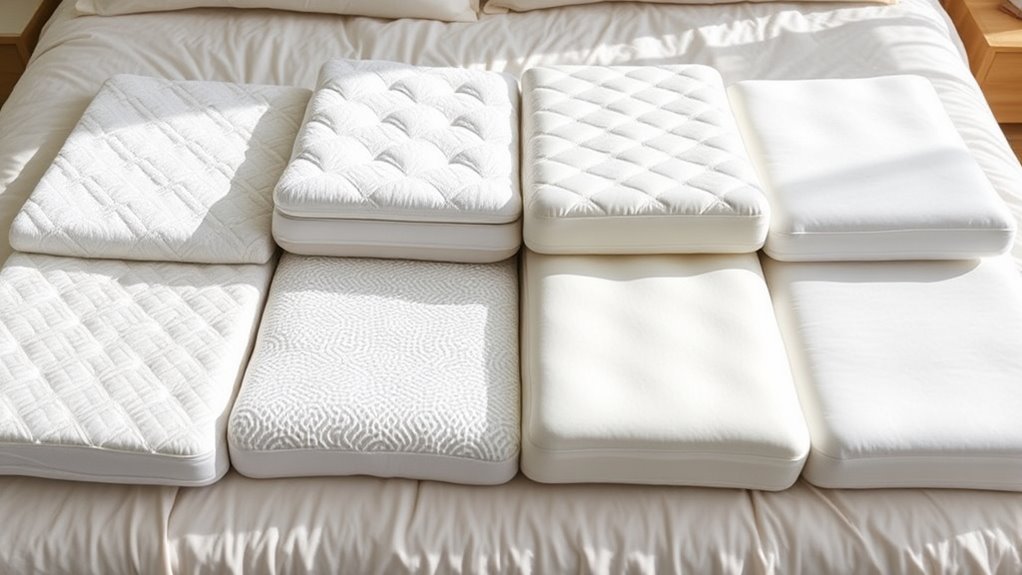
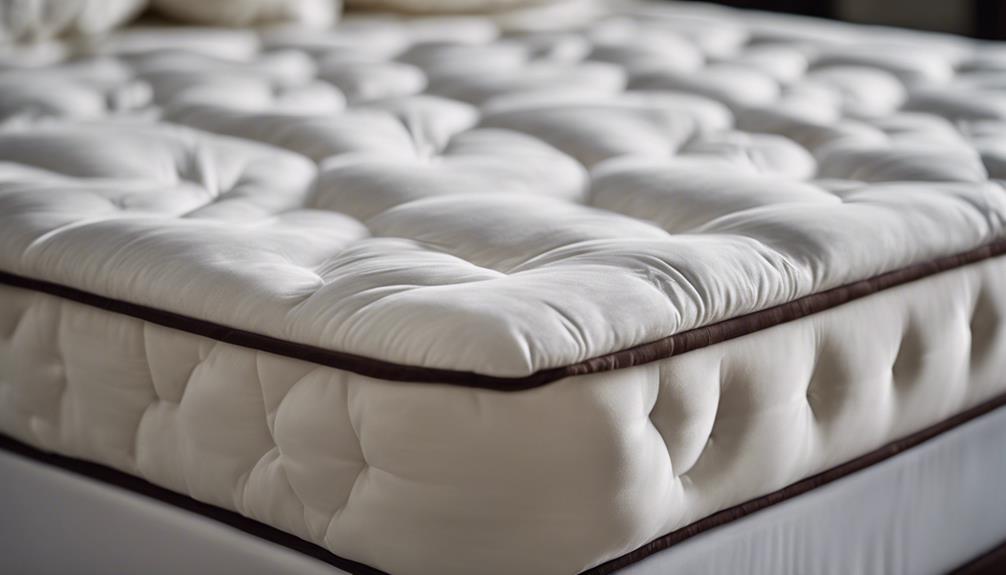
Choosing the right mattress topper can make a significant difference in relieving back pain, but with so many types available, it’s important to understand their differences. Different materials offer varying support levels and comfort, which can impact your sleep hygiene and overall health. Memory foam molds to your body, providing pressure relief and spinal alignment, while latex offers resilience and durability. Down and feather toppers add softness but may lack support, affecting sleep quality. Proper bedding maintenance, like regular cleaning and rotation, keeps your topper in excellent condition, promoting better sleep hygiene. Knowing which topper suits your back pain and maintaining it correctly ensures consistent comfort, helping you wake up refreshed and free from discomfort.
Recognizing Your Specific Back Pain Needs
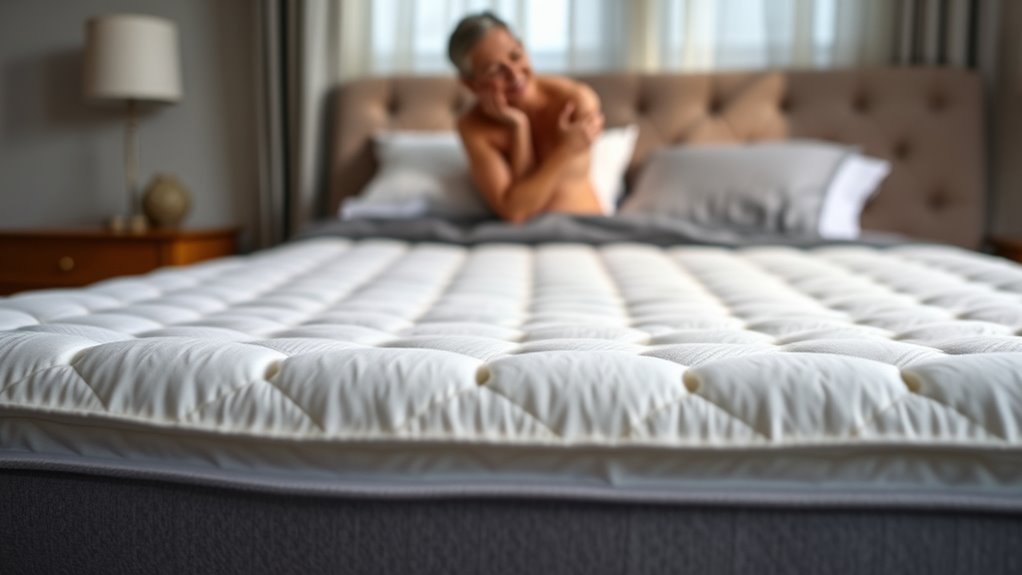
Understanding the different types of mattress toppers helps you select the best option for your back, but recognizing your specific back pain needs takes your comfort a step further. You should identify whether your pain stems from poor ergonomic alignment, muscle strain, or pressure points. For example, if you experience lower back pain, a topper that provides extra lumbar support can help realign your spine. Conversely, if your pain is due to pressure points, a softer, pressure-relieving topper may be more effective. Use this table to assess your needs:
| Pain Type | Recommended Focus | Example Solutions |
|---|---|---|
| Poor ergonomic alignment | Realign spine, improve posture | Supportive, firm topper |
| Muscle strain | Reduce pressure and stress | Medium-firm, contouring topper |
| Pressure points | Alleviate localized discomfort | Soft, cushioning topper |
Additionally, selecting a topper made from appropriate materials can enhance your comfort and support based on your specific needs.
Material Matters: Foam, Latex, and Hybrid Options
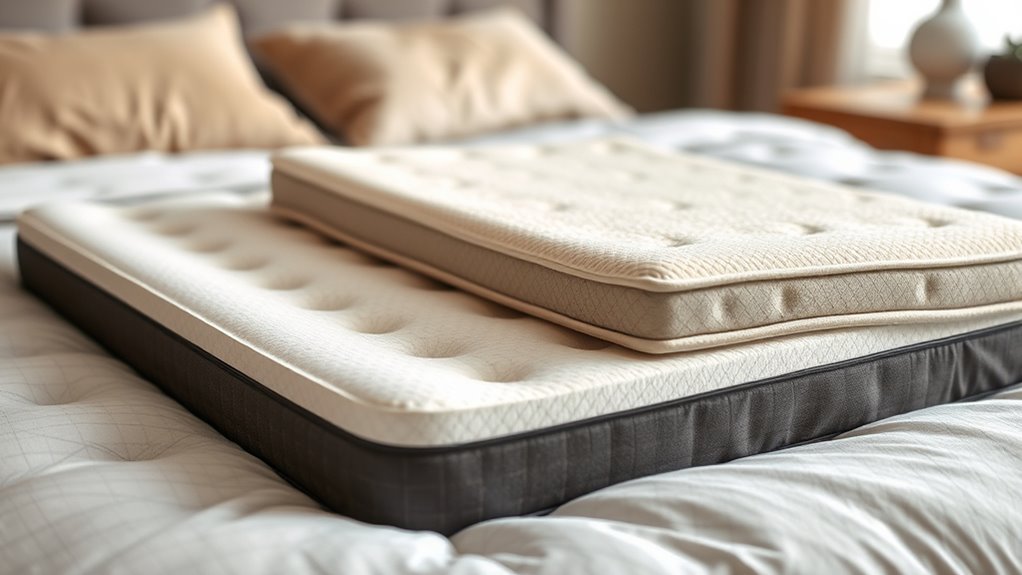
When choosing a mattress, you’ll want to contemplate the materials that best support your back. Foam offers comfort and support, while latex and hybrid options provide durability and breathability. Understanding these differences helps you find the right fit for relief and restful sleep. Additionally, considering the long-term effects of materials, such as potential cognitive impairment associated with certain substances, can be an important factor in making your decision.
Foam: Comfort and Support
Foam mattresses are popular for their ability to provide both comfort and support, making them an excellent choice for relieving back pain. They contour to your body, helping to align your spine properly. When choosing foam, consider these features:
- Gel infusions help dissipate heat, keeping you cool throughout the night.
- Memory foam layers offer pressure relief and conform closely to your curves.
- Firmness levels vary, so pick one that supports your back without sacrificing comfort.
- Zoned foam provides targeted support to areas like your lower back, reducing strain.
- Selecting the right material technology can further enhance support and durability.
These elements work together to create a supportive sleeping surface, easing back pain by maintaining proper spinal alignment and reducing pressure points. Foam toppers with these features can notably enhance your sleep quality.
Latex & Hybrids: Durability and Breathability
Latex and hybrid mattresses stand out for their durability and breathability, making them excellent choices for those seeking long-lasting support and a cooler sleep environment. Latex resilience ensures your topper maintains its shape and resilience over time, providing consistent comfort. Hybrids, combining foam and innerspring or latex layers, promote hybrid breathability, helping heat escape and keeping you cool all night. Here’s a quick comparison:
| Feature | Latex | Hybrid |
|---|---|---|
| Durability | High, resists sagging | Very durable, lasts years |
| Breathability | Naturally breathable | Enhanced airflow |
| Support | Firm and responsive | Supportive with bounce |
| Maintenance | Low, resistant to wear | Moderate, depends on layers |
| Ideal for | Long-term support | Cooler sleep environments |
Choose latex for longevity or hybrid for breathability—both help relieve back pain.
The Importance of Firmness and Support Levels
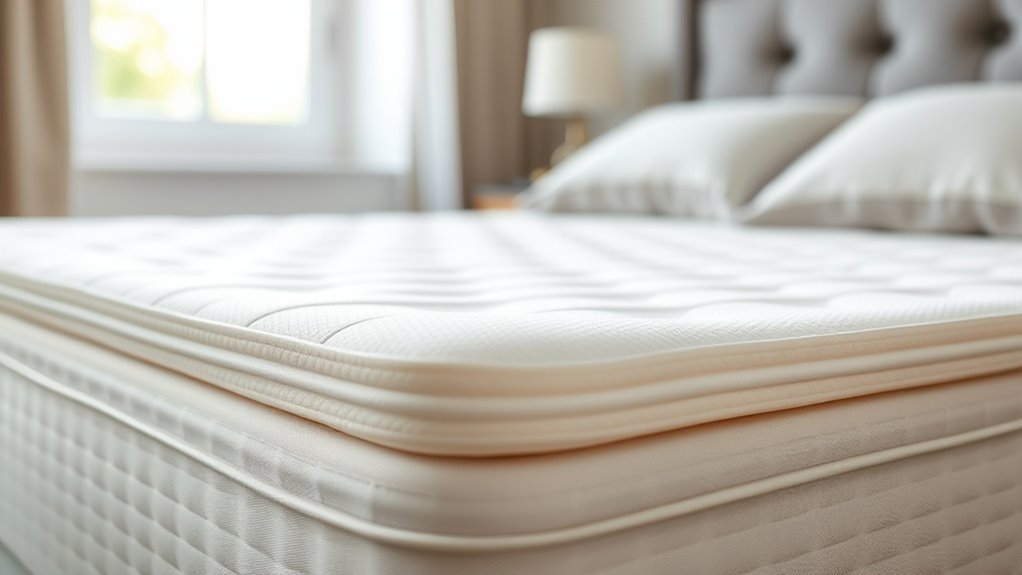
Choosing the right firmness and support levels is essential for alleviating back pain, as they directly influence how your body rests and aligns during sleep. Your firmness options and support levels determine whether your spine stays in a neutral position or bends unnaturally. A self-watering plant pot design can serve as an analogy for understanding how proper support maintains optimal alignment. Consider these points: 1. Soft firmness offers more cushioning but may lack support for heavier bodies. 2. Medium firmness balances comfort and support, suitable for many back pain sufferers. 3. Firm support provides stability, ideal if you need extra spinal alignment. 4. Adjustable support levels let you customize firmness to match your evolving needs.
Size and Fit: Choosing the Right Dimensions
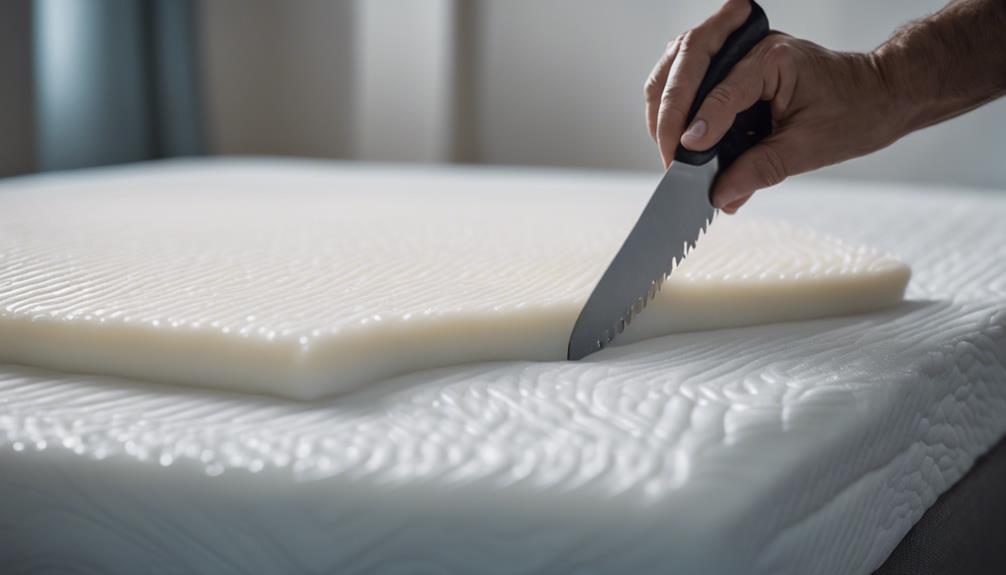
Selecting the right mattress size and dimensions is essential for ensuring proper back support and overall comfort. You need to contemplate dimensions compatibility to make sure your topper fits snugly on your mattress without gaps or overhangs. Fitting considerations include measuring your mattress accurately and choosing a topper that matches these measurements. A topper that’s too small can shift and cause discomfort, while one that’s too large may not fit properly or could damage your mattress. Pay attention to the thickness and overall dimensions, especially if you have a specialty or non-standard bed size. Proper sizing ensures your topper provides even support across your back, reducing pressure points and promoting better alignment throughout the night.
Additional Features to Enhance Comfort and Support
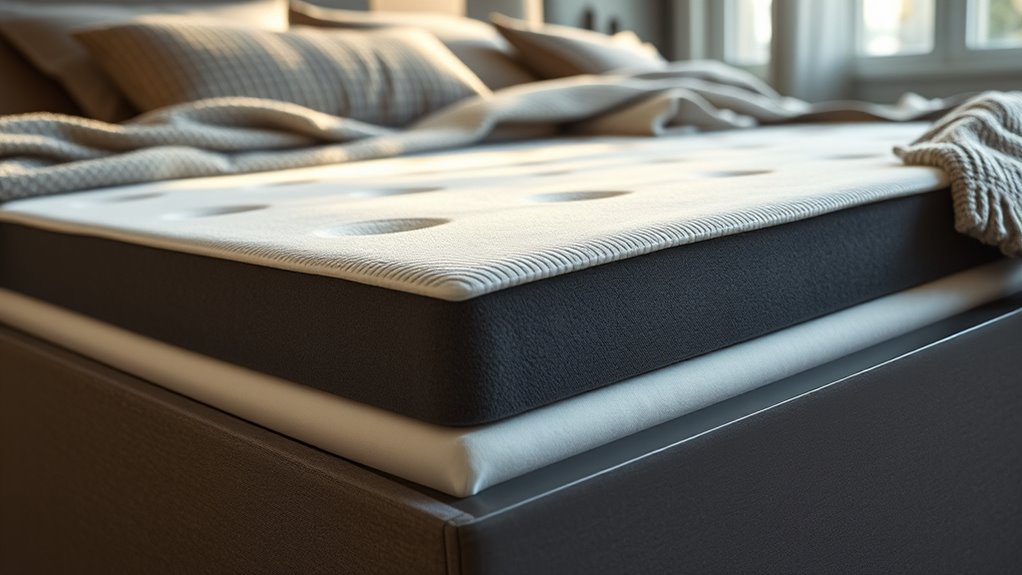
Adding features like memory foam layers can make your mattress more comfortable by conforming to your body. Adjustable firmness settings let you customize support to match your needs, helping reduce back pain. Plus, cooling and breathability features keep you comfortable throughout the night, preventing overheating. Incorporating smart technology can further enhance your sleep experience by allowing remote adjustments and monitoring for optimal comfort.
Memory Foam Layers
Memory foam layers are designed to conform closely to your body’s shape, providing personalized support that can help alleviate pressure points. The key is understanding how different memory foam density levels influence comfort and durability. Higher density foam offers better support and lasts longer, while lower density foam provides a softer feel. Here’s what to expect:
- Contours to your curves, easing joint strain
- Varies in density levels, affecting firmness and longevity
- Distributes weight evenly, reducing pressure points
- Enhances overall comfort by adapting to your sleeping position
- Selecting the right foam density can also impact product durability and long-term satisfaction.
Choosing the right memory foam layer depends on your preference for firmness and the level of support needed to relieve back pain effectively.
Adjustable Firmness Settings
Adjustable firmness settings let you customize your mattress or topper to match your preferred level of support, which can considerably improve back pain relief. With adjustable firmness, you can find the perfect balance between softness and firmness, creating personalized comfort tailored to your unique needs. This feature allows you to modify the level of support as your comfort preferences change over time, providing ongoing relief. Whether you prefer a firmer surface to support your lower back or a softer feel for pressure relief, adjustable firmness gives you control. By fine-tuning the support, you reduce strain on your spine and improve alignment, helping ease back pain. This flexibility ensures that your sleep surface adapts to your comfort preferences, promoting healthier sleep and better back health. Incorporating adjustable features into your sleep setup can also support various sleeping positions, further enhancing comfort and spinal alignment.
Cooling and Breathability
To prevent overheating and maintain a comfortable sleep environment, cooling and breathability features are essential. These features help regulate your body temperature and keep you comfortable all night.
- Gel cooling technology absorbs and dissipates heat, providing a invigorating sensation.
- Moisture-wicking fabrics draw sweat away from your skin, keeping you dry.
- Ventilated covers promote airflow, reducing heat buildup.
- Breathable materials like bamboo or cotton allow air circulation, preventing trapping heat.
- Choosing materials with pressure relief properties can further enhance comfort and support during sleep.
With these features, your topper stays cool and dry, reducing discomfort and helping you sleep more soundly. Cooling and breathability are crucial for those who tend to overheat or live in warmer climates, ensuring your back pain relief is complemented by a comfortable sleep environment.
Tips for Testing and Purchasing Your Topper
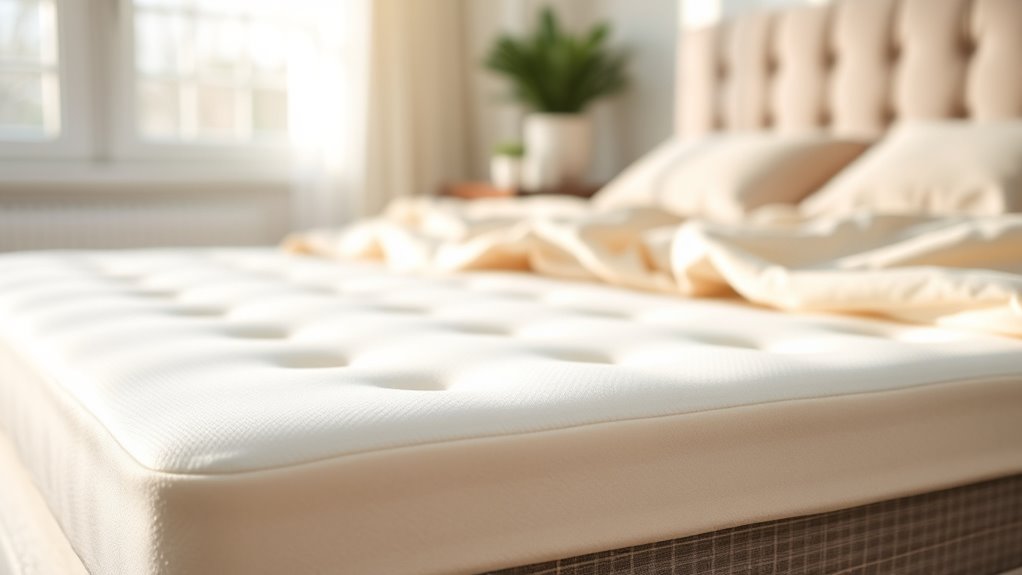
When testing and purchasing your topper, it’s important to take a hands-on approach to guarantee it meets your comfort and support needs. Sit or lie on the topper to assess its responsiveness and how well it conforms to your body. Check the mattress durability by pressing into different areas to see if it maintains its shape over time. Also, consider bedding aesthetics—look for a topper that complements your existing bedding and bedroom decor. Ensure the materials feel comfortable against your skin and that the topper’s thickness provides adequate support without feeling too firm or too soft. Conducting a patch test can help determine if the materials are suitable for sensitive skin. Don’t rush the process; testing multiple options helps you identify the best fit for your back pain relief and long-term satisfaction.
Frequently Asked Questions
How Often Should I Replace My Mattress Topper for Optimal Back Support?
You should replace your mattress topper every 1 to 2 years for ideal back support. Regular topper maintenance, like washing and spot cleaning, helps maintain mattress hygiene and prolongs its lifespan. Over time, toppers lose their supportive qualities and can harbor allergens or dust mites, which may worsen back pain. Keeping an eye on its condition ensures you continue to enjoy proper support and comfort, promoting better sleep and spinal health.
Can a Mattress Topper Completely Cure Chronic Back Pain?
A mattress topper alone can’t completely cure chronic back pain, but it can provide significant relief. Memory foam toppers with adjustable firmness levels help support your back’s natural curves and reduce pressure points. You should choose a topper that offers medium to firm support, tailored to your needs. Remember, combining a topper with proper mattress support and consultation with a healthcare professional yields the best results for managing chronic back pain.
Are There Specific Toppers Recommended for Side Sleepers With Back Issues?
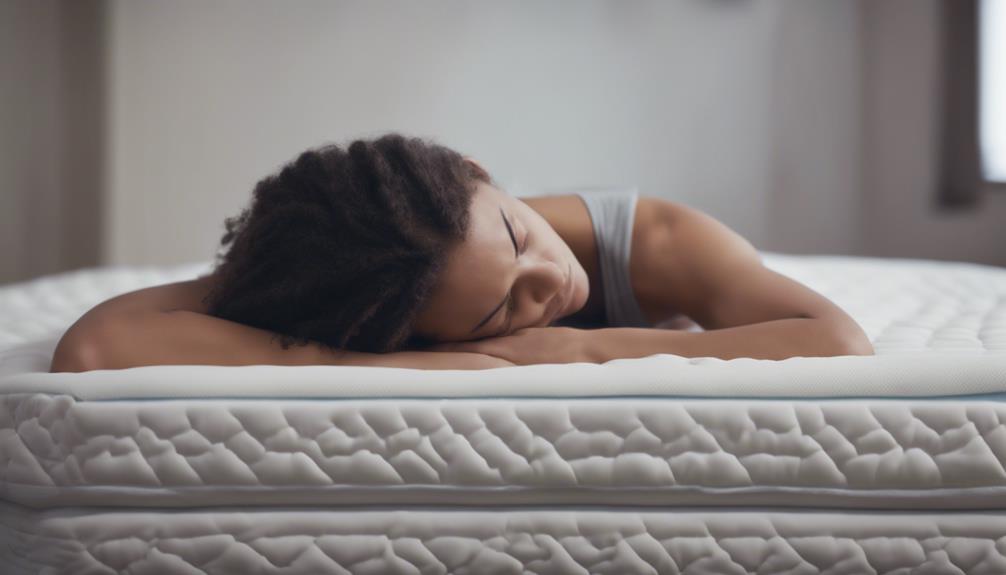
Yes, as a side sleeper with back issues, look for toppers that provide pressure point relief and support spinal alignment. Memory foam or latex toppers conform to your body’s curves, easing pressure on shoulders and hips while keeping your spine aligned. Choose a medium-firm topper to balance softness and support. This helps reduce pain, improves comfort, and promotes healthier sleep posture.
How Do Temperature Regulation Features Affect Back Pain Relief?
Temperature regulation features substantially enhance back pain relief by promoting better pressure distribution and material breathability. When your topper stays cool and well-ventilated, it prevents overheating, which can cause discomfort and stiffness. Breathable materials allow air to circulate, reducing sweat buildup and maintaining a consistent sleep temperature. This comfort helps your muscles relax, easing back pain and improving overall sleep quality. You’ll wake up feeling more refreshed and less achy.
Is a Waterproof Topper Beneficial for Back Pain or Just for Spills?
A waterproof topper benefits you beyond spill protection by offering durability and maintaining a clean, dry surface, which can help prevent back pain caused by mold or allergens. The spill-proof barrier keeps moisture away from your mattress, reducing discomfort and promoting better sleep. If you’re prone to accidents or moisture issues, a waterproof topper provides added durability and spill protection, making your sleeping environment healthier and more comfortable for your back.
Conclusion
Choosing the right mattress topper can transform your back pain and improve your sleep. By understanding your needs, exploring different materials, and considering firmness and size, you set yourself up for comfort and support. Remember to test options before buying to guarantee a perfect fit. Isn’t investing in quality sleep worth the effort? With the right topper, you’ll wake up refreshed and ready to face the day—so why settle for anything less?