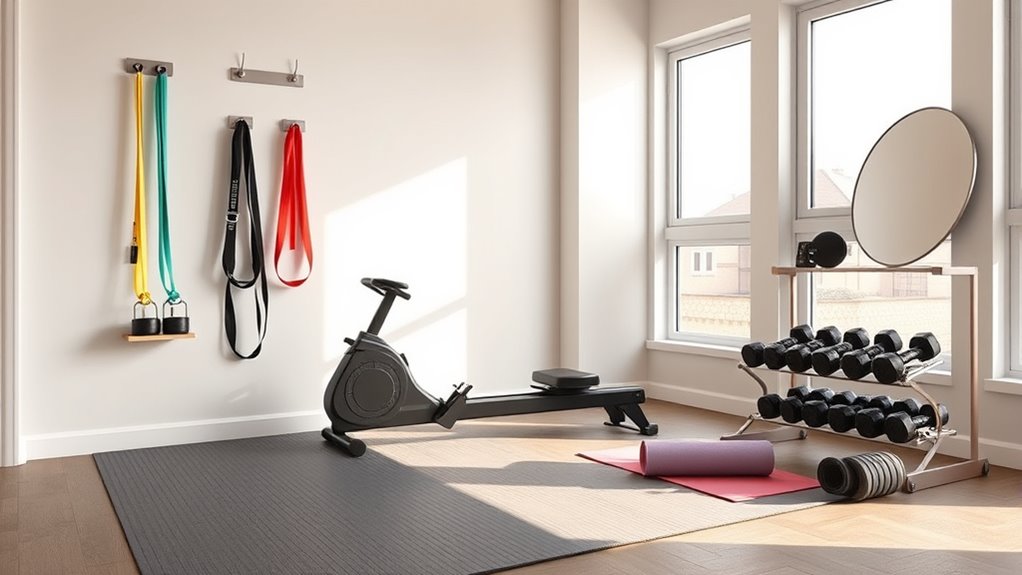

To create an effective mini home gym, start by evaluating your space carefully and setting realistic goals based on your fitness interests. Focus on versatile, space-saving equipment like resistance bands, adjustable dumbbells, and foldable cardio machines. Maximize vertical storage and divide your space into zones for different workout types. Use mirrors and good lighting to enhance the environment, and add personal touches to stay motivated. Keep safety a priority, and explore simple ways to upgrade over time as you learn more.
Key Takeaways
- Plan zones for cardio, strength, flexibility, and recovery to maximize space and workout efficiency.
- Opt for multi-use, space-saving equipment like foldable benches and adjustable dumbbells.
- Use vertical storage solutions and clear pathways to maintain safety and organization.
- Incorporate mirrors and proper lighting to enhance space perception and motivation.
- Customize layout based on your fitness goals and available space for a personalized, functional gym.

DONOW Smith Machine with Weight Stacks, Multi Function Home Gym System Training Power Cage Squat Rack Dual Cable Crossover Machine All in One
All-In-One Home Gym Station: Combines a Solid Smith Machine, a Power rack with safety arms, a Dual Cable...
As an affiliate, we earn on qualifying purchases.
Assessing Your Space and Setting Realistic Goals

Before you begin designing your mini home gym, it’s essential to assess the space you have available. Start with a thorough space analysis, measuring the area carefully and considering any restrictions like windows or doorways. Knowing your space helps you determine what equipment and layout options are feasible. Equally important is goal setting; clarify what you want to achieve—whether it’s strength training, cardio, or flexibility. Setting realistic goals ensures your gym aligns with your needs and limits. Be honest about how much time you can dedicate and how much equipment you’ll realistically use. Incorporating knowledge about space limitations and how they impact your equipment choices can help you optimize your layout. Combining a clear space analysis with well-defined goals creates a solid foundation, guiding your decisions and making your small gym both functional and enjoyable.

Pooboo Multi-Functional Machine Power Cage, 2000LB Squat Rack, LAT-Pull Down System, Dual Pulley Cable Crossover System, Home Gym Workout Machine with Strength Training Attachments (P43 01)
Transform your home workouts with the P43 Multifunctional Power Cage: Made from heavy-duty steel, this upgraded squat rack...
As an affiliate, we earn on qualifying purchases.
Prioritizing Equipment for Small Spaces

When choosing equipment for your small home gym, focus on multi-use gear that maximizes functionality. Look for space-saving options that fit comfortably without cluttering your area. Prioritize versatile tools that can support a variety of workouts and keep your space efficient. Incorporating compact and multi-purpose equipment can further optimize your limited space while providing comprehensive workout options.
Essential Multi-Use Gear
Maximizing space in a small home gym means choosing versatile equipment that can serve multiple purposes. Multi-use gear helps you get the most out of limited space without sacrificing functionality. Portable equipment like resistance bands or compact dumbbells can replace bulky machines, while digital accessories such as fitness trackers or app-based programs keep you motivated and organized. These tools allow you to perform a variety of exercises without cluttering your area. Here’s a quick look at essential multi-use gear: Resistance Bands are particularly popular because of their versatility and portability, allowing for a wide range of exercises targeting multiple muscle groups.
Space-Saving Equipment Options
To make the most of limited space in your home gym, prioritize compact and multifunctional equipment that fits easily into tight areas. Compact cardio machines like foldable treadmills or mini ellipticals save space while providing effective cardio workouts. Portable weights, such as adjustable dumbbells or resistance bands, are versatile and easily stowed away after use. These options allow you to perform a variety of exercises without cluttering your small area. Look for equipment that can serve multiple purposes, like a step platform that doubles as a bench or resistance bands that can replace bulky machines. Additionally, considering space-efficient air purifiers can help improve air quality without sacrificing valuable square footage. By choosing space-efficient tools, you maximize your workout options without sacrificing your limited square footage. This approach keeps your gym functional, organized, and accessible.
Prioritize Versatile Tools
Focusing on versatile tools allows you to get the most out of limited space by combining multiple functions into a single piece of equipment. Multi use equipment and space efficient tools help maximize your workout area without sacrificing variety. For example, a foldable bench can serve as a step platform, a weight holder, or a flat surface for various exercises. Compact resistance bands can replace bulky weights, offering strength training options. Consider a gym ball that doubles as a seat and stability tool. Here’s a quick visual:
| Equipment Type | Functionality |
|---|---|
| Adjustable Dumbbells | Strength, cardio, and toning |
| Resistance Bands | Full-body workouts |
| Foldable Bench | Seating, step, support |
| Jump Rope | Cardio, coordination |
| Gym Ball | Balance, core, seating |
Prioritize these multi use tools to create a versatile, efficient home gym.

pooboo Recumbent Exercise Bike, Stationary Bikes for Home with Arm Exerciser, Magnetic Recumbent Bike with Ergonomic Backrest & Comfortable Seat, Smart APP, Pulse Sensor, 400LBS Weight Capacity
🏆🏆【Light Commercial Gym Quality】The sturdy heavy-duty one-piece frame of our recumbent bike contributes outstanding stability and loading capacity...
As an affiliate, we earn on qualifying purchases.
Maximizing Vertical Storage Solutions
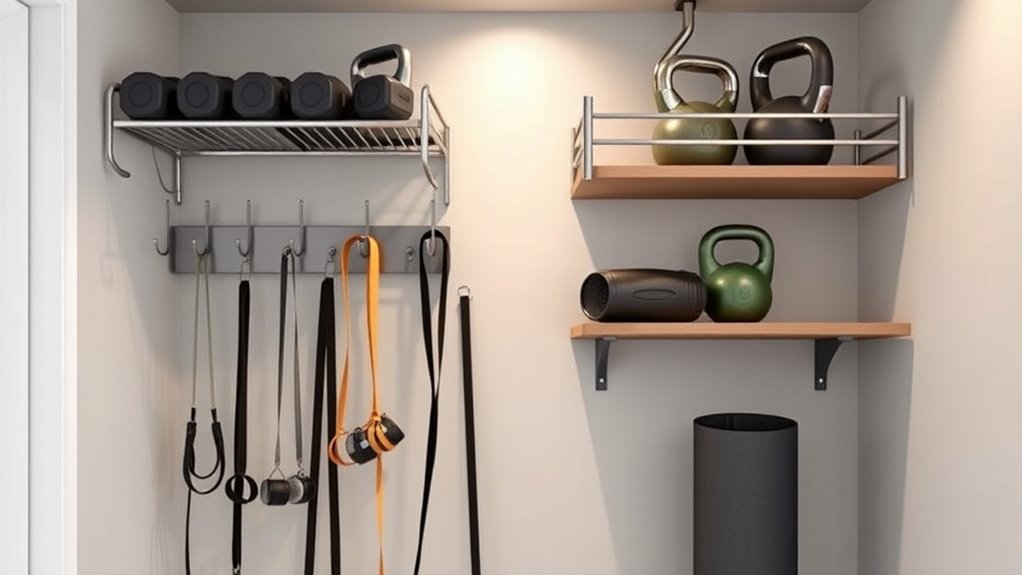
To make the most of your space, consider installing wall-mounted shelves to keep your gear accessible without clutter. Vertical rack options also help organize weights and accessories efficiently, freeing up floor area. These solutions maximize storage while keeping your home gym tidy and functional. Additionally, incorporating themed workout areas, such as a dedicated yoga zone or cardio corner, can enhance motivation and diversify your exercise routine, making your space more engaging and community-oriented.
Wall-Mounted Shelves
Have you ever considered how wall-mounted shelves can transform your home gym? They’re excellent storage solutions that free up floor space while adding wall decor. Shelves keep your equipment organized and accessible, reducing clutter. Plus, they make your gym look tidy and stylish. To maximize their effectiveness, place shelves at varying heights for different items—small weights, mats, or bottles. Here’s a quick overview:
| Item Type | Shelf Placement | Purpose |
|---|---|---|
| Small Weights | Eye level | Easy access, quick grab |
| Yoga Mats | Below eye level | Space-efficient storage |
| Bottles & Gear | Higher shelves | Keeps clutter out of the way |
| Decor Items | Top shelves | Adds personality to your gym |
Using wall-mounted shelves, you optimize vertical space and create a clean, functional environment. Proper organization can enhance both safety and motivation during your workouts.
Vertical Rack Options
Vertical rack options are a smart way to maximize storage space in your home gym. By leveraging vertical storage, you can keep your workout area organized and clutter-free. Wall racks are an excellent choice, allowing you to hang weights, resistance bands, or even small equipment vertically along your walls. These racks free up floor space, making your gym feel larger and more accessible. Choose wall-mounted racks designed specifically for your equipment to guarantee safety and durability. Adjustable options give you flexibility as your collection grows. Installing vertical storage solutions is straightforward and cost-effective, providing a clean, efficient way to keep everything within reach. With the right wall racks, you optimize your space without sacrificing utility or safety. Incorporating backyard greenhouses into your home can also inspire a healthier, more sustainable lifestyle that complements your fitness goals.
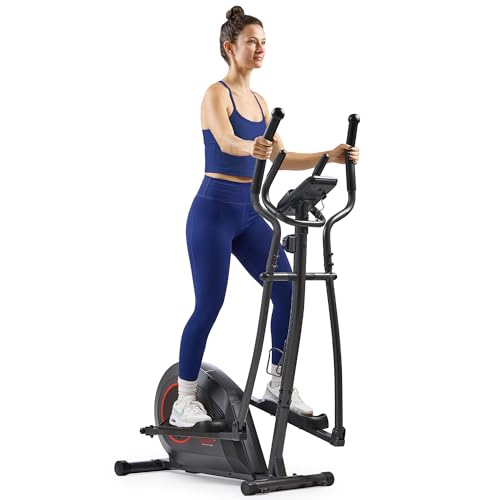
Sunny Health & Fitness Smart Elliptical Machine w/300LB Capacity & Pulse Sensor Built-in, 12" Stride Equipment for Home Cardio Exercise & Magnetic Cross-Training, Free SunnyFit App Bluetooth Connect
Low-Impact Elliptical, 300 Lbs Capacity Endurance: The elliptical exerciser is built for durability and performance, supporting users up...
As an affiliate, we earn on qualifying purchases.
Creating a Functional Zone for Different Workouts

Ever wondered how to make the most of limited space in your home gym? Creating a functional zone for different workouts helps you stay organized and motivated. Divide your area into specific sections: cardio, strength training, flexibility, and recovery. This setup ensures you can switch between exercise routines easily without clutter. Use visual cues like mats or color-coded zones to designate each area. For example, keep dumbbells and resistance bands in one corner, a yoga mat in another, and a space for cardio equipment. This layout supports your workout schedules, making it simple to focus on different fitness goals. Incorporating a rustic touch can also add a cozy and inviting feel to your workout space, especially if you enjoy farmhouse decor aesthetics. Here’s a quick look:
| Zone | Equipment/Setup |
|---|---|
| Cardio | Jump rope, compact treadmill |
| Strength | Dumbbells, resistance bands |
| Flexibility | Yoga mat, foam roller |
| Recovery | Massage ball, stretching tools |
| Warm-up/Stretch | Small mat, light weights |
Tips for Optimal Equipment Placement and Safety

To guarantee your home gym is safe and efficient, focus on ideal equipment placement that minimizes hazards and maximizes space. Start by arranging heavier equipment, like dumbbells or a bench, against walls to prevent tripping. Maintain clear walkways of at least 2 feet to avoid accidents and ensure easy movement. Use placement strategies that keep cords and weights out of high-traffic areas to prevent injuries. Regularly check equipment for signs of wear to promote equipment safety. Keep safety accessories like mats and padding in place to absorb shocks and reduce noise. Avoid overcrowding by only including essential gear, which helps maintain a clutter-free environment. Thoughtful placement not only enhances safety but also boosts workout efficiency, making your mini gym a practical and secure space. Additionally, organizing your space effectively can maximize energy efficiency and make it easier to incorporate environmentally friendly practices into your workout routine.
Incorporating Multipurpose and Compact Fitness Gear

In a small home gym, incorporating multipurpose and compact fitness gear is essential to maximize your workout options without sacrificing space. These versatile pieces allow you to perform multiple exercises and make ergonomic adjustments for comfort. To optimize your setup, consider:
- Adjustable dumbbells – save space and customize weight, supporting ergonomic adjustments to prevent strain.
- Foldable resistance bands – easy to store and perfect for strength training, stretching, or rehab routines.
- Compact stability balls and mats – combine for core work and flexibility, while supporting proper nutrition planning by enabling quick recovery routines.
- Incorporate digital tools and apps — to support digital literacy and enhance your workout experience through guided routines and progress tracking.
Using multifunctional gear keeps your workouts dynamic and efficient, ensuring your space stays uncluttered and your fitness routine is well-rounded.
Using Mirrors and Lighting to Enhance the Space

Mirrors can make your gym feel larger by reflecting light and space, so consider placing them strategically. Proper lighting not only brightens the room but also lifts your mood during workouts. Position your mirrors thoughtfully to maximize their impact without causing glare or distraction. Additionally, selecting suitable lighting can further enhance visibility and ambiance in your home gym.
Reflective Surfaces Boost Space
Reflective surfaces like mirrors and well-placed lighting can instantly make your home gym feel larger and more open. They influence your space perception, creating the illusion of more room without adding square footage. To maximize this effect, consider these tips:
- Position mirrors strategically across from windows or doors to reflect natural light and open up the space.
- Use large, full-length mirrors to give a sense of depth and dimension.
- Incorporate lighting that highlights reflective surfaces, enhancing the perception of spaciousness.
- Selecting the right projector technology can also improve your viewing experience if you incorporate screens or projectors into your workout area.
Proper Lighting Elevates Mood
Proper lighting can substantially boost your mood and motivation during workouts, making your home gym a more inviting space. Incorporate smart lighting options to easily adjust brightness and color temperature, creating an energizing atmosphere when needed or a calming vibe for post-workout stretching. Well-placed lighting enhances the space’s overall ambiance and encourages consistency in your routines. Using mirrors alongside smart lighting amplifies the effect, reflecting light to brighten the room further and boost mood enhancement. Choose lighting that mimics natural sunlight to elevate your energy levels and promote a positive mindset. Considering the types of tiny house roofs, you can select fixtures that complement your space’s design and maximize natural light. With the right lighting setup, your mini home gym becomes not just functional but also a space that uplifts you, keeping you motivated and engaged during every session.
Mirror Placement Tips
Strategically placing mirrors in your home gym can substantially enhance the space’s brightness and overall feel. Proper mirror orientation and reflection placement are key. First, position mirrors opposite windows or light sources to maximize natural light reflection, making the room feel larger and more inviting. Second, avoid placing mirrors directly in front of cardio equipment to prevent distracting reflections during workouts. Third, angle mirrors to optimize viewing angles for form checks without creating blind spots. Additionally, considering aging-in-place principles can help ensure the space remains safe and accessible as needs change. By considering reflection placement carefully, you’ll boost your motivation and ensure safe, effective workouts. Remember, the right mirror placement isn’t just about aesthetics—it’s about creating a functional, energizing environment that supports your fitness goals.
Designing a Motivating and Personalized Environment

Creating a motivating and personalized environment in your mini home gym starts with understanding what inspires you. Incorporate motivational decor, like bold posters or inspiring quotes, to boost your energy. Choose colors that energize you, whether vibrant or calming, to create a space that feels inviting. Your personalized playlists are essential—curate music that pumps you up and keeps you moving. Consider placing speakers strategically for ideal sound and easy access. Keep your space free of clutter to maintain focus and motivation. Adding personal touches, like photos or awards, can remind you of your progress. Paying attention to breed characteristics can also help you select the right equipment and layout suited to your specific needs. The goal is to craft an environment that feels uniquely yours, encouraging consistency and enjoyment during every workout. A well-designed space makes your fitness journey more motivating and sustainable.
Maintenance and Flexibility for Future Expansion

To guarantee your mini home gym remains functional and adaptable over time, regular maintenance is essential. Proper upkeep assures equipment durability and keeps your space ready for future expansion. Here are three key steps to stay ahead:
Regular maintenance ensures your mini home gym stays durable, adaptable, and ready for future growth.
- Inspect and clean equipment regularly to prevent wear and tear, extending its lifespan.
- Check for loose bolts or parts and tighten them immediately to avoid accidents and maintain stability.
- Plan for future expansion by leaving space and wiring options open, making it easier to add new equipment later.
- Incorporate emotional support into your routine by creating an inspiring environment that motivates you to stay committed to your fitness goals.
Staying on top of these tasks helps protect your investment and ensures your gym can grow with your fitness goals, providing a flexible, durable setup for years to come.
Cost-Effective Ways to Upgrade Your Mini Gym

Upgrading your mini gym doesn’t have to break the bank; there are plenty of cost-effective ways to enhance your workout space. Budget-friendly options like adding simple accessories—resistance bands, jump ropes, or stability balls—can make a big difference. You can also get creative with DIY equipment, such as making your own sandbags or plyometric boxes from sturdy household items. Reorganizing your space to maximize efficiency and storage costs nothing but can improve your workout flow. Repurposing existing furniture or using inexpensive materials to build custom racks and storage solutions keeps costs low. Additionally, understanding the potential pitfalls of new fitness technologies can help you avoid unnecessary expenses and security issues, ensuring your upgrades are both smart and safe. These smart, affordable upgrades help you get more from your mini gym without overspending, ensuring you stay motivated and consistent with your fitness goals.
Frequently Asked Questions
How Can I Improve Sound Insulation in My Mini Gym?
You can improve sound insulation in your mini gym by adding soundproofing materials like acoustic panels, foam tiles, or mass-loaded vinyl to your walls. Use wall insulation techniques such as sealing gaps with weatherstripping and installing soundproof curtains or door seals. Placing mats or rugs on the floor also helps absorb noise. These steps create a quieter environment, preventing sound from escaping or entering your workout space.
What Are Eco-Friendly Options for Gym Flooring?
You can choose eco-friendly gym flooring made from sustainable materials or recycled options, which actually support environmental conservation. Look for cork, bamboo, or reclaimed rubber, as these are durable and eco-conscious. These materials often outperform traditional options regarding sustainability and safety, proving that eco-friendly choices aren’t just good for the planet—they can also enhance your workout space with style and resilience.
How Do I Prevent Odors in a Small Workout Space?
To prevent odors in your small workout space, you should use air purifiers with activated carbon filters to absorb smells. Additionally, improve ventilation by installing a good ventilation system or opening windows regularly. Keep the area clean by wiping down equipment after use and washing mats frequently. These steps help freshen the air, reduce bacteria buildup, and keep your workout space smelling fresh and inviting.
Can I Incorporate Smart Technology Into a Mini Gym?
Absolutely, you can incorporate smart tech into your mini gym. Use fitness apps to track your progress and set goals, while smart devices like speakers, mirrors, or connected equipment enhance your workout experience. These tools help you stay motivated and organized in a small space. Just guarantee your devices are compact and don’t clutter your area. Integrating smart tech makes workouts more engaging and personalized, even in limited space.
What Are Space-Saving Storage Ideas for Small Accessories?
You can maximize space by using compact storage solutions like wall-mounted racks or hooks for small accessories. Incorporate organizational hacks such as tiered shelves or stackable bins to keep items tidy and accessible. Consider multi-purpose furniture, like ottomans with hidden compartments, to save space. These strategies help you keep your mini gym organized, making it easier to find what you need while maintaining a clutter-free environment.
Conclusion
Now that you’ve mapped out your mini gym, remember: it’s not just about space, but your motivation and dedication. Think of your gym as a canvas—each piece of equipment and design choice adding to your masterpiece of fitness. Keep it flexible, safe, and inspiring. With a little planning and passion, your small space can become a powerhouse of progress. After all, greatness isn’t measured by size, but by the fire you bring to it.