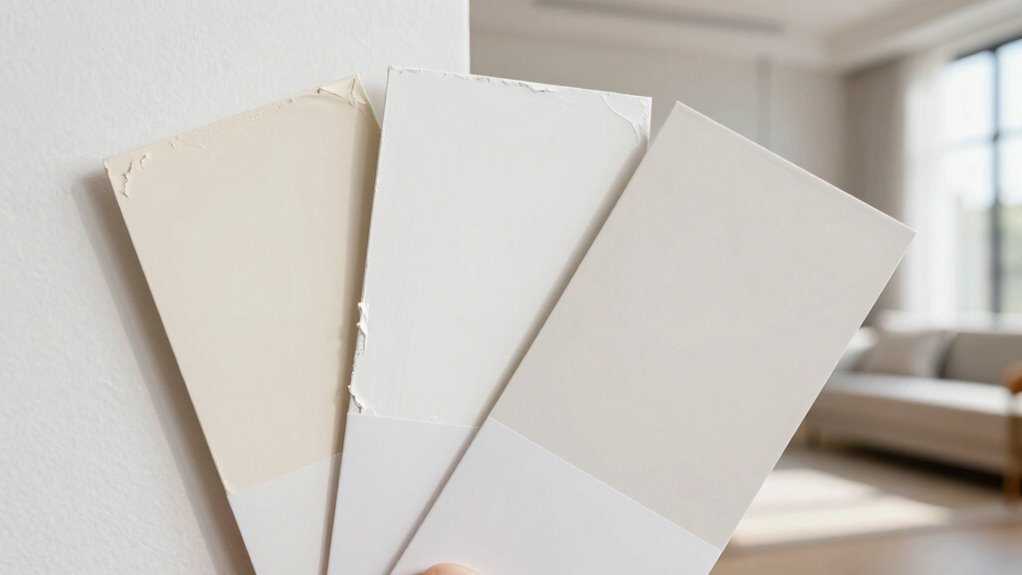

To choose the right white paint for your light, consider the undertones—warm whites with yellow or peach create cozy spaces, while cool whites with blue or green give a modern feel. Test color samples in your space under different lighting, including natural and artificial, to see how they look throughout the day. Also, pick a finish that matches your room’s use, whether matte for ceilings or gloss for trim. Keep exploring to find the perfect shade for your space.

Get furniture and decor delivered free with Prime
- Fast, free delivery on millions of items
- Prime Video, Amazon Music and more included
- Member-only deals all year
Key Takeaways
- Assess your room’s natural and artificial lighting to see how different whites appear throughout the day.
- Match the undertones of the white paint with existing furniture, flooring, and decor for harmony.
- Test paint samples on your walls in various lighting conditions before committing.
- Choose a finish suited to the room’s use and lighting to enhance durability and ambiance.
- Prioritize a neutral white for versatility or warm/cool whites for specific mood and style preferences.
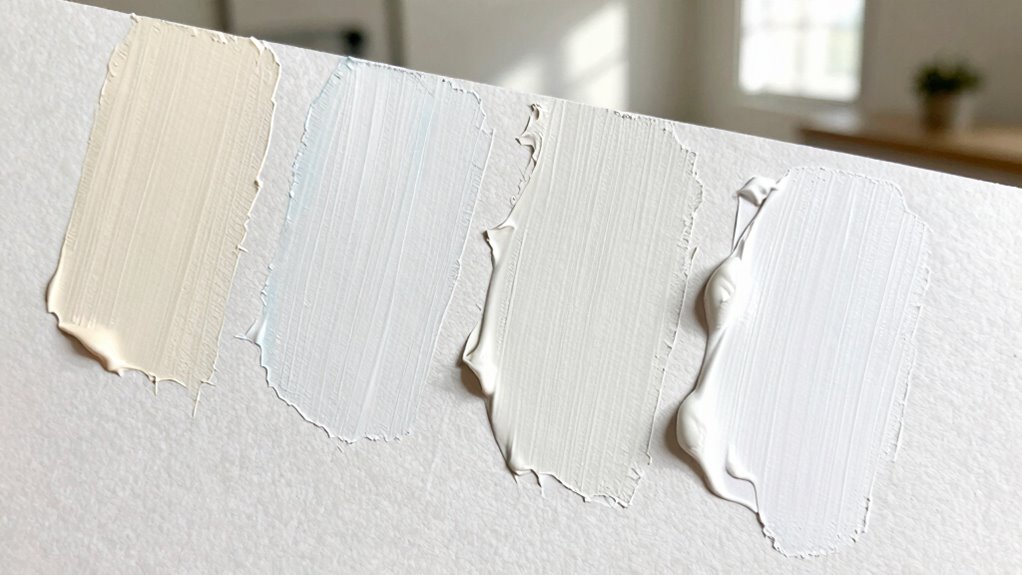
Are you overwhelmed by the variety of white paints available? It’s common to feel unsure when choosing the right shade for your space, especially with so many options in front of you. One of the first things you need to consider is the color temperature of the white paint. Color temperature refers to whether the white has warm, cool, or neutral undertones. Warm whites often contain hints of yellow, peach, or gold, giving a cozy and inviting feel. Cool whites, on the other hand, usually have hints of blue, gray, or green, creating a crisp, modern look. Neutral whites sit somewhere in between, offering versatility and balance that can complement various styles and lighting conditions. To decide which is best for your space, look at your existing furniture, flooring, and decor. If your room has warm-toned wood or brass accents, a warm white can enhance that warmth. Conversely, if you prefer a sleek, contemporary vibe, a cool white might be more suitable. Additionally, understanding how different lighting conditions impact the appearance of white paint can help you make a more informed choice. Recognizing the effect of lighting on color perception is crucial for ensuring your selected white paint looks great in all times of day. It’s also helpful to consider the lighting environment in your space, as this can further influence how the paint color appears on your walls. Being aware of lighting influence can guide you in selecting a shade that maintains its appeal regardless of changing light. Furthermore, considering paint durability and how the finish interacts with the room’s use can help you choose a long-lasting and practical option. Next, think about the finish options, which greatly influence how the paint appears and performs. A flat or matte finish reduces light reflection, helping hide imperfections on walls, making it ideal for ceilings or low-traffic areas. Satin or eggshell finishes add a subtle sheen, offering a slight glow that’s easier to clean, perfect for bedrooms or living rooms. Semi-gloss and gloss finishes reflect more light and are highly durable, making them excellent choices for kitchens, bathrooms, or trim where moisture and frequent cleaning are concerns. Your choice of finish impacts the overall ambiance and practicality of the space, so weigh how much light the room receives and how much wear and tear the walls will endure.
When choosing your white paint, it’s vital to test samples directly on your walls. Paint a few patches in different areas of the room to see how they look at various times of day, under natural and artificial lighting. This step helps you observe the subtle differences in color temperature and finish options in real-life conditions, preventing costly mistakes. Remember, what looks perfect in the store might change once it’s on your wall and exposed to your specific lighting. By carefully considering the color temperature and finish options, you’ll be able to select a white paint that enhances your space, reflects your style, and stands up to everyday use.
white interior wall paint samples
As an affiliate, we earn on qualifying purchases.
As an affiliate, we earn on qualifying purchases.
Frequently Asked Questions
How Does Lighting Affect White Paint Appearance?
Lighting considerably impacts how white paint looks, especially through color temperature and light reflection. Warm lighting makes white appear cozy and creamy, while cool lighting gives it a crisp, bluish tone. Your light source influences how the paint reflects light, altering its appearance throughout the day. To choose the right white, consider your room’s natural and artificial lighting, as both will affect the paint’s true color and ambiance.
What Is the Most Durable White Paint Finish?
The most durable white paint finish is typically satin or semi-gloss, acting like a suit of armor for your walls. To maintain color consistency and maximize durability, use proper application techniques like thorough surface preparation and even coats. These finishes resist scrapes and stains better than flat paints, making them ideal for high-traffic or frequently cleaned areas, giving your space both beauty and resilience.
How to Prevent Yellowing Over Time?
To prevent yellowing over time, choose a white paint with a stable paint formulation designed for color longevity. Look for paints labeled as fade-resistant or with low VOCs, as these help maintain their original hue longer. Regular cleaning and avoiding direct sunlight also protect your paint’s color. By selecting high-quality, durable paint, you guarantee your white walls stay bright and fresh for years.
Can White Paint Change in Different Climates?
White paint can change in different climates, like a chameleon adapting to its surroundings. Climate affects the paint’s color temperature and texture, causing variations over time. Humidity and temperature fluctuations may make the white appear warmer or cooler, and paint textures can become more pronounced or faded. To keep your chosen white consistent, select high-quality paint suited for your climate and consider finishes that resist environmental changes.
Is There a Eco-Friendly White Paint Option?
Yes, there are eco-friendly white paint options available. You can look for paints with eco-friendly formulations that minimize environmental impact. These often contain natural pigment options, avoiding synthetic chemicals and volatile organic compounds (VOCs). By choosing these paints, you’re making a healthier choice for your home and the planet. Always check labels for certifications like Green Seal or EcoLogo to guarantee you’re selecting genuinely eco-friendly products.
Conclusion
Choosing the right white paint is like selecting a mirror for your soul; it reflects your space’s true essence. When you pick the perfect shade, you’re not just painting walls—you’re illuminating your world with clarity and warmth. Trust your instincts, let your vision guide you, and remember, the right white isn’t just a color—it’s the light that transforms your home into a sanctuary. Embrace it, and watch your space glow with newfound life.
Halloween Picks
halloween
As an affiliate, we earn on qualifying purchases.