
Focusing solely on voltage when choosing cordless tool batteries can be misleading, as higher voltage doesn’t always mean longer runtime or better performance. Instead, check factors like capacity (Ah), cell quality, battery chemistry, and the presence of a Battery Management System (BMS). These elements determine how long your tool runs and how durable the battery is. To get the real story for your needs, there’s more to uncover below.
Key Takeaways
- Higher voltage does not necessarily mean longer runtime or better performance; battery chemistry and capacity are more important.
- Focus on the battery’s capacity (Ah) and chemistry, which directly impact runtime and reliability, rather than voltage alone.
- Ensure compatibility between the battery and tool, including voltage, connector, and chemistry, to prevent damage and performance issues.
- Use high-quality batteries with proper Battery Management Systems (BMS) for safety, longevity, and consistent power delivery.
- Regular maintenance and monitoring of battery health help avoid misjudging power based solely on voltage ratings.

SHINTYOOL 21v Lithium Battery – 4.0 Ah Battery with Charger Adapter Led Indicator Compatible with Leaf Blower
★ 【Compatible with More 】Our batteries are compatible with some major brands, for power tools bl1860b bl1850 bl1840…
As an affiliate, we earn on qualifying purchases.
As an affiliate, we earn on qualifying purchases.
Why Voltage Isn’t the Whole Story in Cordless Tool Batteries

While voltage is an important factor in cordless tool batteries, it doesn’t tell the whole story about their performance. The voltage rating indicates the potential power a battery can deliver, but it doesn’t guarantee how long your tool will run or how well it will perform. A higher voltage might seem better, but the quality of the battery matters just as much. Reputable brands with strong reputations tend to produce batteries that maintain consistent performance and durability, regardless of voltage rating. Cheaper or less-known brands might advertise higher voltages but often compromise on quality, leading to shorter lifespan or inconsistent power. Battery technology continues to evolve, influencing how voltage correlates with actual runtime and reliability. Additionally, factors like battery chemistry and design greatly impact overall performance and longevity. So, don’t rely solely on voltage ratings—consider brand reputation** and overall battery quality for dependable performance, especially as battery standards become more rigorous. A well-designed battery with advanced cell technology** can outperform higher-voltage models with inferior construction.
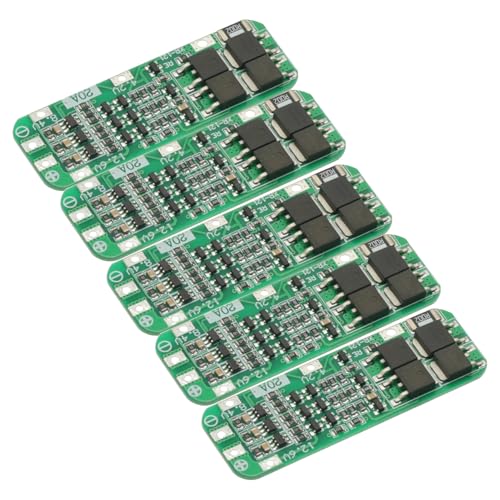
5PCS 3S BMS 20A Li-ion Lithium Battery 18650 BMS Charger PCB BMS Protection Board for Drill Motor 12.6V Lipo Cell Module
5PCS 3S BMS 20A Li-ion Lithium Battery 18650 BMS Charger PCB BMS Protection Board For Drill Motor 12.6V…
As an affiliate, we earn on qualifying purchases.
As an affiliate, we earn on qualifying purchases.
What Really Determines Battery Power and Runtime
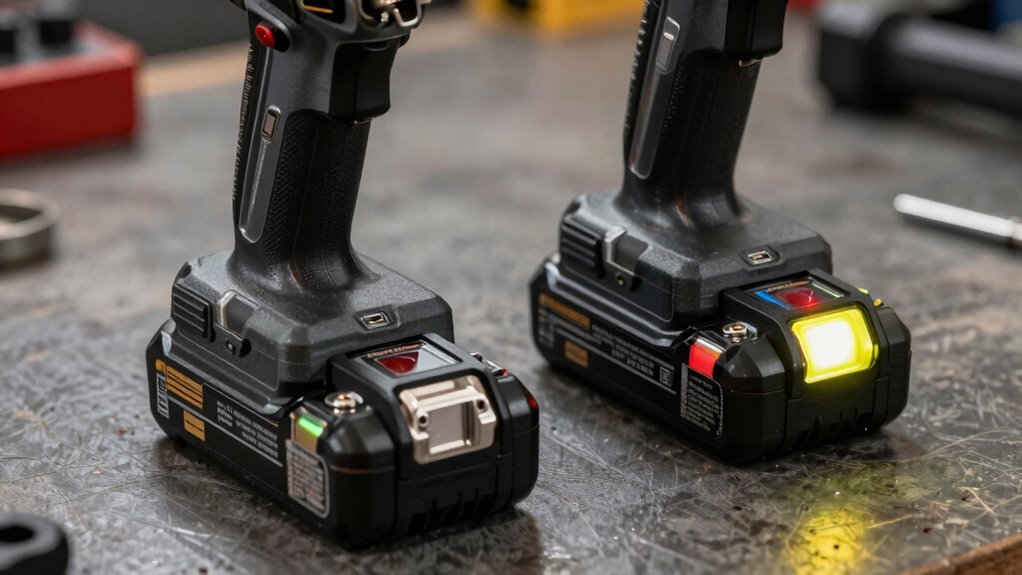
Battery power and runtime depend primarily on a combination of capacity, measured in ampere-hours (Ah), and how efficiently your tool uses that capacity. A higher Ah rating means more stored energy, translating to longer work sessions. Additionally, the horsepower of electric bikes can indirectly influence how efficiently energy is used during operation, impacting runtime. Proper battery maintenance techniques can also extend battery life and improve performance over time. Regularly inspecting and cleaning the battery contacts is essential for maintaining optimal battery performance. However, the battery’s aesthetics—how well it’s designed and constructed—also impacts overall performance and durability. A well-built battery looks better and is less likely to fail prematurely. Brand reputation matters, too; trusted brands often produce batteries with optimized efficiency and longevity, ensuring you get the most out of each charge. Moreover, battery chemistry plays a crucial role in determining overall performance and safety. While voltage gets attention, it’s these factors—capacity, aesthetics, and reputation—that truly determine how much power you’ll have and how long it lasts during your tasks.

DEWALT 20V MAX Cordless Drill and Impact Driver, Power Tool Combo Kit , Includes 2 Batteries, Charger and Bag (DCK240C2)
Ergonomically Designed: Work in tight areas with a compact design that gets into tough spots
As an affiliate, we earn on qualifying purchases.
As an affiliate, we earn on qualifying purchases.
How Battery Chemistry and Cell Quality Affect Performance

The chemistry inside your tool’s batteries plays a crucial role in determining performance, efficiency, and lifespan. Different battery chemistries, like lithium-ion, nickel-cadmium, or lithium-polymer, have unique characteristics that influence how well your tool operates. Lithium-ion batteries, for example, generally offer higher energy density and longer cycle life, leading to better runtime and durability. Cell quality also matters—high-quality cells ensure consistent power delivery, maintain voltage stability, and reduce risks of failure or capacity loss. Poor-quality cells can cause uneven discharge, faster deterioration, and safety issues. When selecting batteries, focus on the chemistry and the manufacturing quality of the cells. This ensures you get a reliable, long-lasting power source that performs as expected, rather than relying solely on voltage ratings. Additionally, cell chemistry can sometimes be an indicator of underlying issues with the battery, such as overheating or malfunction, emphasizing the importance of monitoring performance. Understanding the battery technology involved can help you make more informed choices and avoid premature battery failures. A focus on Cell quality and consistent manufacturing standards can significantly improve overall battery reliability and safety, especially as advances in reconditioning techniques continue to evolve.
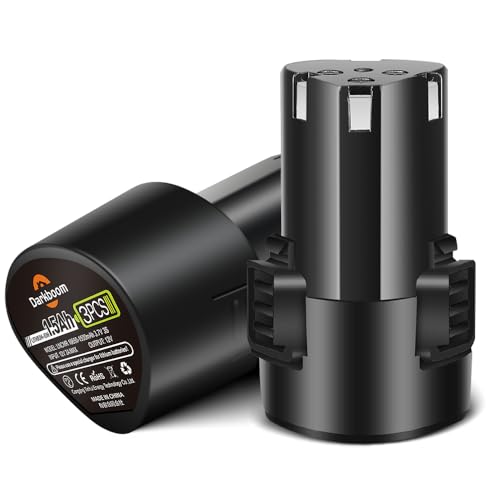
2 Packs Lithium 12V Batteries with a Battery Charger,1.5Ah Battery for 12V Cordless Power Tools,12V Battery Packs for Weed Eater,Sander,Cordless Drill,Buffer Polisher
Product combination: 2 batteries | Voltage: 12V | Battery capacity: 1.5ah,1 battery charger,1 English manual. This battery pack…
As an affiliate, we earn on qualifying purchases.
As an affiliate, we earn on qualifying purchases.
How Age and Usage Impact Battery Lifespan

As your cordless tool batteries age and undergo frequent use, their capacity and performance naturally decline over time. The more often you use your batteries, the faster their battery longevity diminishes. High usage frequency accelerates wear, causing reduced runtime and power. To visualize this, consider the following:
| Usage Frequency | Battery Longevity Impact |
|---|---|
| Infrequent | Lasts longer, retains capacity over years |
| Moderate | Slight decline over time |
| Heavy | Rapid capacity loss, shorter lifespan |
Understanding how usage affects your batteries helps you manage expectations and plan replacements. Regularly monitoring usage and avoiding overuse can extend battery life, ensuring your tools remain reliable longer. Proper battery maintenance and following recommended operating procedures further help preserve battery health over time. Additionally, understanding the voltage of your batteries can give you a better idea of their true capacity and performance potential. Recognizing the importance of battery age can also assist in predicting when replacement might be necessary, as even well-maintained batteries decline with time. Being aware of battery degradation signs can prevent unexpected tool failures and optimize usage strategies. Knowledge of battery chemistry can also influence how you care for and extend the life of your batteries.
Charging Speed, Compatibility, and How They Affect Your Tools
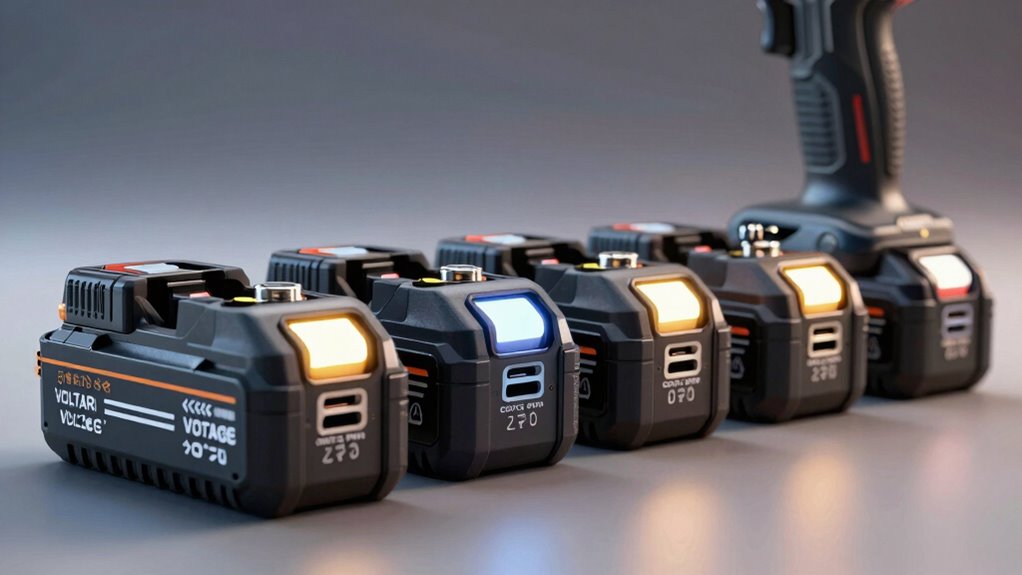
Charging speed varies between batteries, so your work might slow down if you choose a slower charger. Compatibility factors are essential; using the wrong battery can damage your tools or reduce performance. These elements directly impact how well your tools perform and how efficiently you get your projects done. Additionally, selecting batteries that align with innovative European cloud solutions can enhance overall tool sustainability and security. Understanding battery chemistry can also help you choose more reliable and longer-lasting power sources for your projects. Being aware of affiliate disclosure policies ensures transparency when purchasing replacements through recommended channels. Furthermore, considering power source safety is crucial to prevent hazards during operation and storage, especially when evaluating seasonal maintenance and storage practices.
Charging Speed Variations
While faster charging speeds can save you time, they also come with compatibility considerations that directly impact your tools’ performance. Variations in charging speed affect how quickly your batteries recharge, but they also influence voltage ratings and overall compatibility. Using a charger with a higher charging speed than your battery’s design can cause overheating or damage. It’s essential to match the charging speed with your battery’s specifications to ensure safety and longevity.
| Charging Speed | Effect on Battery |
|---|---|
| Fast | Quick recharge, potential heat buildup |
| Standard | Safe, reliable, consistent performance |
| Slow | Longer recharge time, less stress on battery |
Compatibility Factors Matter
Choosing the right charger for your cordless tool batteries is essential because compatibility directly impacts performance and safety. Mismatched chargers can damage battery chemistry and reduce cell quality. To guarantee compatibility, consider these factors:
- Check the voltage and current ratings match your battery specifications.
- Confirm the charger supports your battery’s chemistry, like lithium-ion or NiMH.
- Use chargers designed for your battery’s cell quality to avoid uneven charging or overheating.
- Always verify connector compatibility to prevent improper connections or damage.
- Be aware of digital safety standards that ensure chargers operate correctly and protect users.
Ignoring these factors can lead to reduced battery lifespan and compromised safety. Understanding that battery chemistry influences how well a charger works helps you select the right equipment. Prioritize compatibility to maintain optimal performance and extend your tools’ longevity.
Impact on Tool Performance
Using the right charger not only guarantees safety and longevity but also directly impacts your tool’s performance. A compatible charger ensures ideal charging speed, preserving battery health and reducing downtime. Battery size and power density influence how quickly your tool powers up and how long it lasts under load. Larger batteries with higher power density deliver more consistent performance but may charge slower if incompatible. Mismatched batteries can lead to sluggish operation or damage, undermining your work.
| Battery Size | Impact on Performance |
|---|---|
| Large | Longer run time, slower charge |
| Small | Faster charge, less runtime |
| High Power Density | Better performance, quicker charging |
Why Battery Management Systems (BMS) Matter
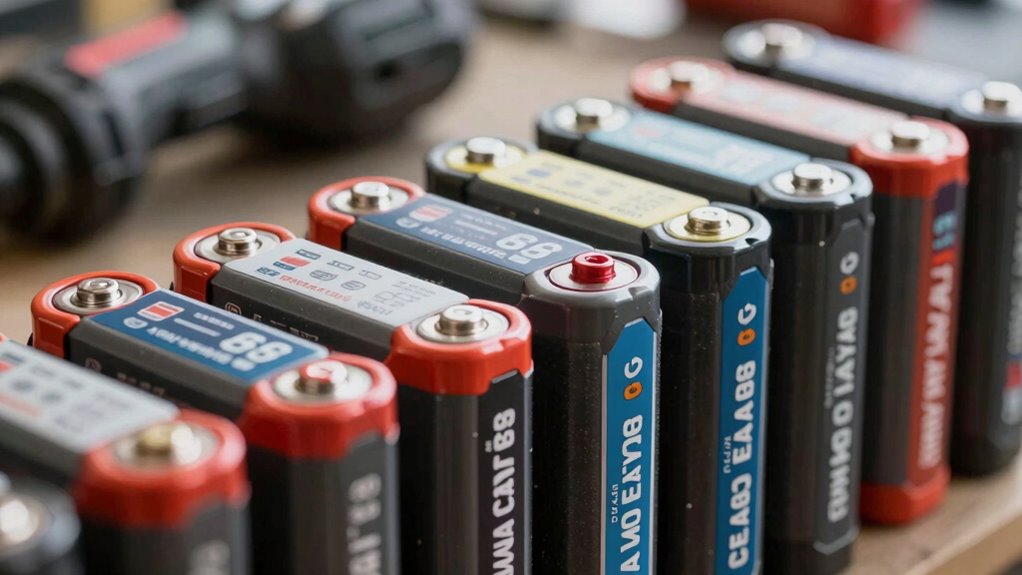
Battery Management Systems (BMS) are essential for ensuring your cordless tool batteries operate safely and efficiently. They monitor and regulate the battery’s health, directly impacting your battery life and charging cycles. A good BMS prevents overcharging, deep discharging, and overheating, which can shorten your battery’s lifespan.
Here’s why BMS matters:
- Protects against voltage fluctuations that damage cells
- Balances individual cells for consistent performance
- Prevents overcurrent that causes overheating
- Extends overall battery life by optimizing charging cycles
Tips for Choosing the Best Battery for Your Cordless Tools

When choosing a battery, make certain it matches your tool’s voltage requirements to guarantee proper performance. You should also consider the battery’s capacity to determine how long it can power your projects without needing a recharge. Picking the right combination helps you get the most efficiency and longevity from your cordless tools.
Match Voltage Requirements
Are you unsure how to choose the right battery for your cordless tools? Making sure the voltage rating matches your tool’s requirements is vital. A battery with unmatched specs can lead to poor performance or damage. To get it right:
- Check your tool’s voltage rating, usually found on the label.
- Select a battery with the same voltage rating—never go higher or lower.
- Avoid batteries with mismatched specs, as they can cause compatibility issues.
- Confirm the battery’s compatibility with your specific tool model.
Matching the voltage ensures your tool runs efficiently and safely. Remember, using a battery with the correct voltage rating isn’t just about power; it’s about preventing harm and ensuring longevity. Always verify the specs before making a purchase.
Consider Battery Capacity
Choosing the right capacity for your cordless tool’s battery guarantees you get enough run time without unnecessary weight or bulk. When evaluating options, consider battery chemistry, as different chemistries like lithium-ion or NiMH impact performance and longevity. Cell capacity, measured in amp-hours (Ah), directly influences how long your tool runs between charges. Higher cell capacity means longer runtime, but it can also add weight, so balance your needs accordingly. Keep in mind that larger cells may require compatible chargers and tool connections, so check specifications carefully. By understanding these factors, you ensure your battery provides sufficient power without sacrificing portability or ease of use, making your work both efficient and comfortable.
Debunking Battery Myths: What Truly Matters

Many common battery myths can lead you astray when selecting or maintaining cordless tool batteries. For example, focusing solely on battery color or brand reputation won’t guarantee quality. Instead, consider these factors:
- Chemistry Type: Understand whether it’s Li-ion or NiMH—each has different lifespan and performance.
- Voltage and Capacity: Higher voltage doesn’t always mean better; check the capacity (Ah) for runtime.
- Cycle Life: A battery’s lifespan depends on recharge cycles, not just initial power.
- Brand Reliability: Reputable brands often ensure consistent quality, but verify specs beyond the label.
Ignore myths about color coding or brand hype. What truly matters is understanding the battery’s specifications and how they align with your needs.
Frequently Asked Questions
How Do I Identify High-Quality Batteries Beyond Voltage Ratings?
You can identify high-quality batteries by examining their chemistry and adherence to proper charging protocols. Look for batteries with advanced chemistries like Li-ion or Li-polymer, which offer better performance and longevity. Check if they follow recommended charging protocols to prevent damage and guarantee safety. Also, consider reviews, brand reputation, and warranties—these indicators help you choose batteries that deliver reliable power and durability beyond just voltage ratings.
Can a Higher Voltage Battery Damage My Tool?
They say, “Better safe than sorry,” and that applies here. A higher voltage battery can damage your tool if it isn’t compatible, risking overheating or motor failure. Voltage misconceptions often lead users to assume more power is better, but check your tool’s specifications for battery compatibility. Always match the voltage rating to your tool’s requirements, and avoid using a higher voltage battery unless the manufacturer explicitly states it’s safe.
What Maintenance Practices Extend Battery Lifespan?
To extend your battery’s lifespan, focus on proper maintenance practices like good battery storage and smart charging habits. Store batteries in a cool, dry place, away from direct sunlight, and avoid extreme temperatures. Follow manufacturer guidelines for charging, such as not overcharging or fully depleting the battery. Regularly check for signs of wear, and keep terminals clean. These habits help maintain peak performance and prolong your battery’s life.
Are There Specific Signs Indicating a Battery Needs Replacement?
Think of your battery as a balloon. If it swells or shows corrosion signs, it’s a clear warning it needs replacing. Swelling indicates internal damage, while corrosion suggests chemical breakdown. You’ll notice reduced runtime, difficulty charging, or sudden power loss. When these signs appear, it’s time to substitute your battery to avoid damage to your tools and ensure safe operation. Don’t ignore these visual cues—they’re your warning signals.
How Do I Safely Dispose of Old or Damaged Batteries?
You should dispose of old or damaged batteries safely by taking them to a designated battery recycling center. Never throw them in the trash, as they’re considered hazardous waste and can harm the environment. Look for local collection sites or hazardous waste disposal events in your area. Proper battery recycling guarantees harmful materials are handled safely and prevents pollution, keeping both you and the environment protected.
Conclusion
So, next time you see a battery boasting high volts, remember—the real power isn’t just in the number. It’s about chemistry, quality, and how you care for it. Ironically, that shiny, high-voltage battery might not last as long as a well-maintained, lower-voltage one. So, don’t get caught up in the myth—sometimes, size isn’t everything, and the best battery is the one that keeps your tools humming longer.