
TL;DR

Get furniture and decor delivered free with Prime
- Fast, free delivery on millions of items
- Prime Video, Amazon Music and more included
- Member-only deals all year
A Hunker report describes a DIY approach that connects a pipe to a downspout and buries the extension to carry roof runoff farther across the yard. The method may reduce puddling and ground wear near the outlet, but it depends on suitable downhill drainage, careful utility checks and a clear discharge point.
A Hunker report describes a DIY method for hiding an above-ground downspout extension: attach a pipe to the outlet, run it through a buried trench, and let roof runoff emerge farther away. The approach, shown by YouTuber Jesse Smith, is intended to reduce visible puddles and ground wear near the downspout, though its effectiveness depends on the yard’s slope and where the water is discharged.
The method uses a flexible plastic, corrugated or PVC pipe roughly matching the downspout’s size. The report says a downspout adapter can make the connection easier; an adapter with a cleanout opening may also simplify later maintenance. Waterproof tape or PVC glue may be used to secure a connection, depending on the materials and fitting.
Before digging, the report advises measuring the route and accounting for the difference between the downspout outlet and the intended pipe depth. Homeowners should also check the location of buried utilities before excavation. The pipe needs to run downhill so water can flow through it; on a mostly flat yard, establishing a slope may require additional planning.
The trench should cover the pipe, and the outlet should remain partly exposed so water can leave. The far end can be fitted with a grate or pop-up drain, according to the report. Digging may disturb turf, so the removed grass can be carefully set aside for replacement, or the area can be reseeded or replanted. The report also recommends cleaning the downspout before starting.
Moving Runoff Beyond the Foundation
Roof runoff concentrated at a downspout can leave mud puddles and bare patches, and repeated flow can wear away soil. The report says erosion in that area could contribute to foundation or structural problems, but it does not establish that burying an extension will prevent such damage in every property. The practical point is that moving the discharge farther away may address a localized drainage nuisance while keeping the extension out of sight.
For homeowners, the design combines two aims: less visible piping and a different route for roof water. It is not simply a landscaping cover. The buried line must still carry water to a suitable outlet, and a poor route or inadequate slope could leave water standing in the pipe or discharge it where it causes another problem. The source does not provide measured performance data or a tested distance for how far the water should travel.
The work also has trade-offs. Excavation can damage a lawn, while underground piping can be harder to inspect than an exposed extension. A cleanout, accessible outlet and careful route planning may help with upkeep, but the source does not set out a maintenance schedule. Readers should treat the project as a site-specific drainage adjustment, not a guaranteed fix for foundation concerns.
As an affiliate, we earn on qualifying purchases.
How the Buried Extension Works
A conventional downspout directs water from the roof to the ground at a single point. The Hunker report describes extending that outlet with a pipe so runoff travels along a buried route before reaching the surface. This can hide most of the extension while changing where water leaves the system.
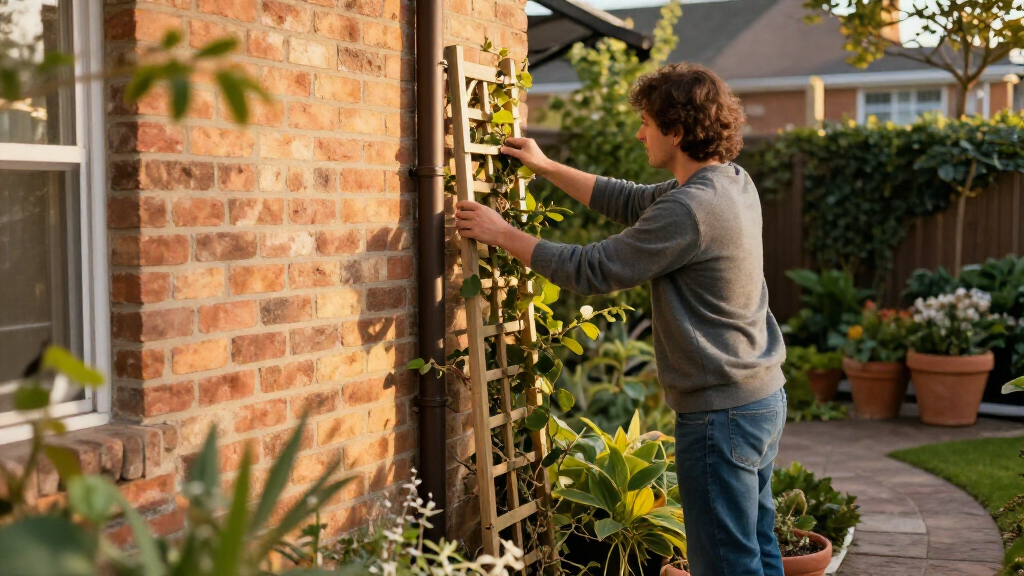
The report identifies Jesse Smith, a YouTuber, as an example of a DIYer using the approach. It lists a shovel, pipe and connection materials among the supplies, with extra soil, grass seed, stones or plants as possible finishing materials. It also suggests that a rain garden could be incorporated near the discharge area, though the source does not provide instructions for designing one.
The source’s guidance is general rather than a site inspection or engineering assessment. It notes that adjusting lawn grade and creating a slope can be technically demanding. Local rules and conditions may vary, and the supplied report does not specify pipe dimensions, required separation from a foundation, or a universal outlet location.
“He attached a pipe to the end of his downspout to carry the water further away, then hid the extra pipe by burying it.”
— Hunker report, describing the method
Site Conditions Shape the Result
The supplied report does not say how far a downspout should discharge from a particular home, how deep the pipe should be for different climates, or which pipe diameter and material will suit every roof and yard. It also does not provide test results showing how much the method reduces erosion or the risk of foundation damage. Those outcomes depend on local soil, rainfall, grading and drainage conditions.
It is also unclear whether a buried route is appropriate where a yard is flat, where water could flow toward neighboring property, or where the outlet could freeze or become blocked. The report advises research before changing a lawn’s grade but does not give a universal grading specification. Homeowners with recurring water near a foundation or complex drainage concerns may need advice from a qualified drainage professional rather than relying on a general DIY example.
Plan the Route Before Digging
Anyone considering the project should first map the downspout route, confirm that the pipe can slope toward a suitable outlet and locate underground utilities before excavation. They should clean the downspout, select a durable pipe and compatible adapter, and decide how the discharge end will remain accessible. If the yard needs substantial regrading, the report advises researching the work carefully before proceeding.
After installation, the lawn may need replacement turf, seed or other landscaping. The outlet and any cleanout should remain reachable for inspection and clearing. The source provides no follow-up results for Smith’s installation, so whether this design performs well at a particular home will depend on the property’s drainage and how the system is maintained.
Key Questions
What is the downspout-hiding method?
It connects a pipe extension to the downspout, places the pipe in a trench and leaves the far outlet exposed so roof runoff can exit farther away.
What supplies does the report recommend?
The report lists a durable flexible plastic, corrugated or PVC pipe, a compatible connection such as a downspout adapter, waterproof tape or PVC glue, and a shovel. Soil or grass seed may be needed to repair the lawn.
Does the buried pipe need a slope?
Yes. The report says the pipe should run downhill for water to flow. A flat yard may need grading, which the source describes as potentially technical.
What should homeowners check before digging?
Measure the planned route and depth, check the location of buried utilities, and choose a discharge point where water can flow out. The report also recommends cleaning the downspout before work begins.
Does this method guarantee protection from foundation damage?
No such guarantee is established in the report. It says concentrated runoff can wear away soil and may contribute to structural concerns, but the result of a buried extension depends on site conditions and proper drainage.
Source: rss
Halloween Picks
halloween
As an affiliate, we earn on qualifying purchases.