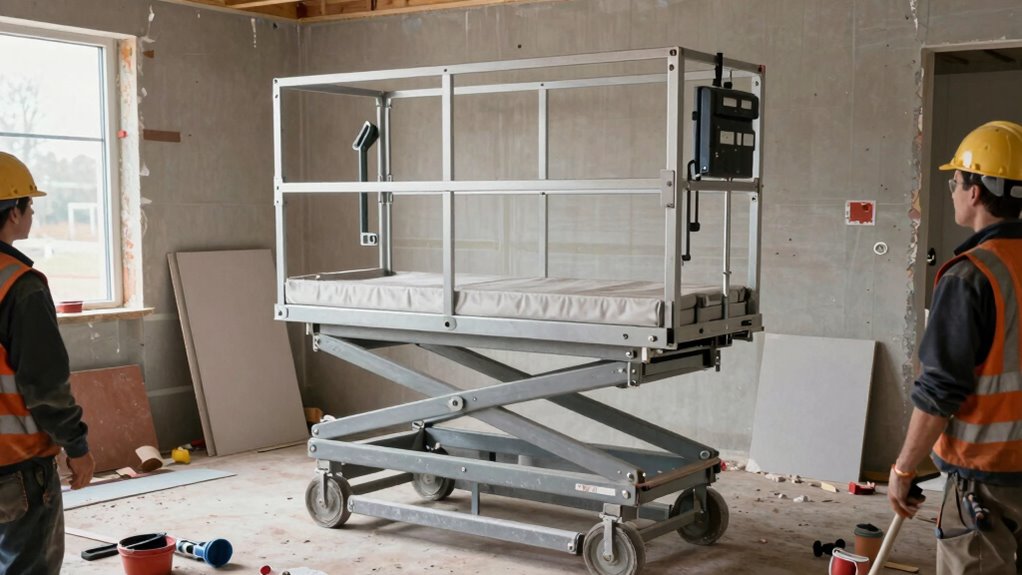

A drywall lift is essential when installing large sheets solo or working on ceilings, as it improves safety, speeds up the process, and helps with precise placement. However, for small projects or low heights, lightweight tools or assistance often do the job better. If you want to know when a lift makes sense for your project and what alternatives exist, keep exploring to find the best approach for your drywall installation needs.
Key Takeaways
- Use a drywall lift for installing ceiling or high wall panels to improve safety and efficiency, especially when working alone.
- Avoid lifts for small, low-height projects; lightweight carts or assistance may be more practical and cost-effective.
- Choose a drywall lift when handling large sheets to reduce physical strain and prevent damage during installation.
- Consider project size, sheet weight, and available space before renting or buying a drywall lift.
- Follow safety guidelines, inspect equipment regularly, and use proper techniques to ensure safe and effective operation.

Rovibek 11 FT Drywall Lift, Sheetrock Lift Drywall Lift for Ceiling, Drywall Panel Hoist with 360° Adjustable Telescopic Arm, 150lbs Heavy Duty for Ceiling Home Improvement (Black)
ONE-PERSON OPERATION: The drywall lift 11ft is a convenient tool for DIY projects or professional work, The drywall…
As an affiliate, we earn on qualifying purchases.
As an affiliate, we earn on qualifying purchases.
What Is a Drywall Lift and How Does It Work?
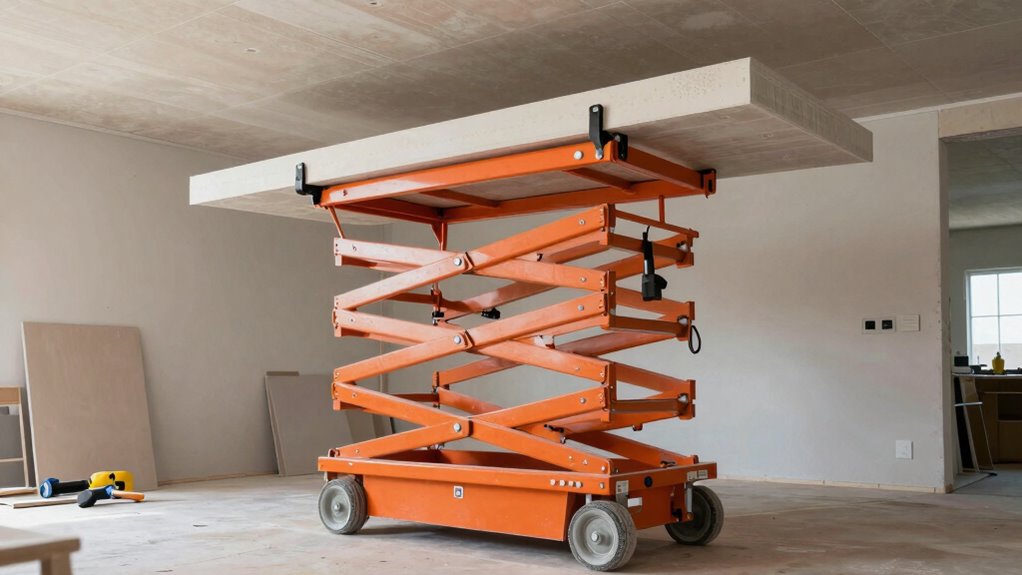
A drywall lift is a specialized tool designed to make installing large drywall panels safer and easier. It features sturdy lifting mechanisms that hold drywall sheets in place, freeing you from awkward positions or risking injury. It typically has a platform or cradle where you place the drywall, and adjustable arms or straps help secure it. Using the lifting mechanisms, you can raise the drywall to your desired height with minimal effort. This allows you to focus on aligning and securing the panels without needing extra hands. The lift’s design ensures stability as you position the drywall, reducing the risk of dropping or damaging sheets. Additionally, understanding the importance of proper tool selection can significantly improve safety and efficiency during installation. The right choice of ergonomic design tools can help prevent fatigue and injury. Recognizing the benefits of ergonomic features can further enhance comfort and safety during use. Incorporating ergonomic considerations into your equipment choices can lead to a safer and more comfortable working environment. Moreover, selecting tools with easy maneuverability can streamline workflow, especially in tight spaces. Overall, it streamlines drywall installation, making the process quicker, safer, and more precise.
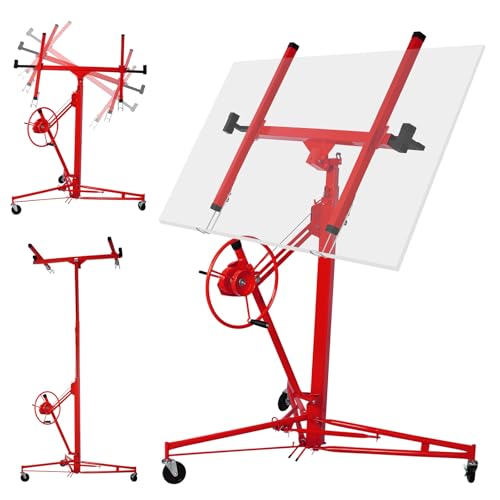
Rovibek Drywall Lift 11 ft Sheetrock Lift Drywall Hoist for Ceiling 360° Adjustable Drywall Lifter Foldable Sheetrock Jack 150lbs Heavy Duty for Home Improvement (Red)
【One-Person Operation】The drywall lift 11ft is a convenient tool for DIY projects or professional work, The drywall lift…
As an affiliate, we earn on qualifying purchases.
As an affiliate, we earn on qualifying purchases.
When Do You Need a Drywall Lift for Hanging Sheets?
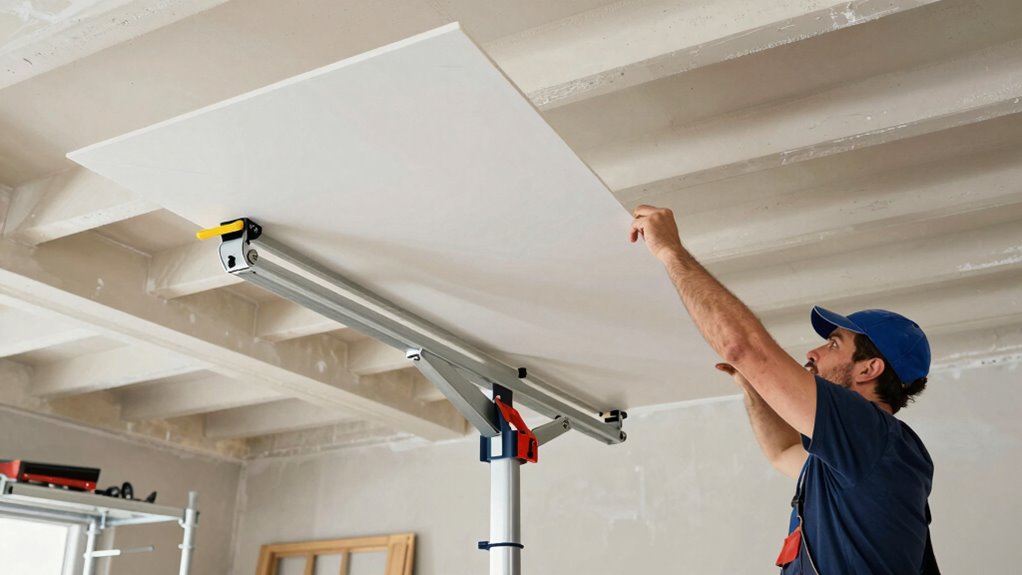
You should consider using a drywall lift when working on large or high drywall panels that are difficult to hold and position manually. This is especially true if you’re concerned about safety or want to streamline your workflow. A lift helps reduce physical strain and minimizes the risk of accidents. Before deciding, perform a cost analysis to compare rental or purchase costs with potential injury prevention benefits.
| Situation | Benefit of Drywall Lift | Safety Considerations |
|---|---|---|
| Installing high or ceiling drywall | Easier, faster installation | Use proper safety precautions |
| Working alone on large panels | Increased control and safety | Secure the lift properly |
| Repetitive drywall hanging tasks | Saves time and effort | Follow manufacturer safety guidelines |
Rovibek Drywall Lift 11 ft Sheetrock Lift Drywall Hoist for Ceiling 360° Adjustable Drywall Lifter Foldable Sheetrock Jack 150lbs Heavy Duty for Home Improvement (Red)
【One-Person Operation】The drywall lift 11ft is a convenient tool for DIY projects or professional work, The drywall lift…
As an affiliate, we earn on qualifying purchases.
As an affiliate, we earn on qualifying purchases.
How Do You Know If a Drywall Lift Is Right for Your Job?
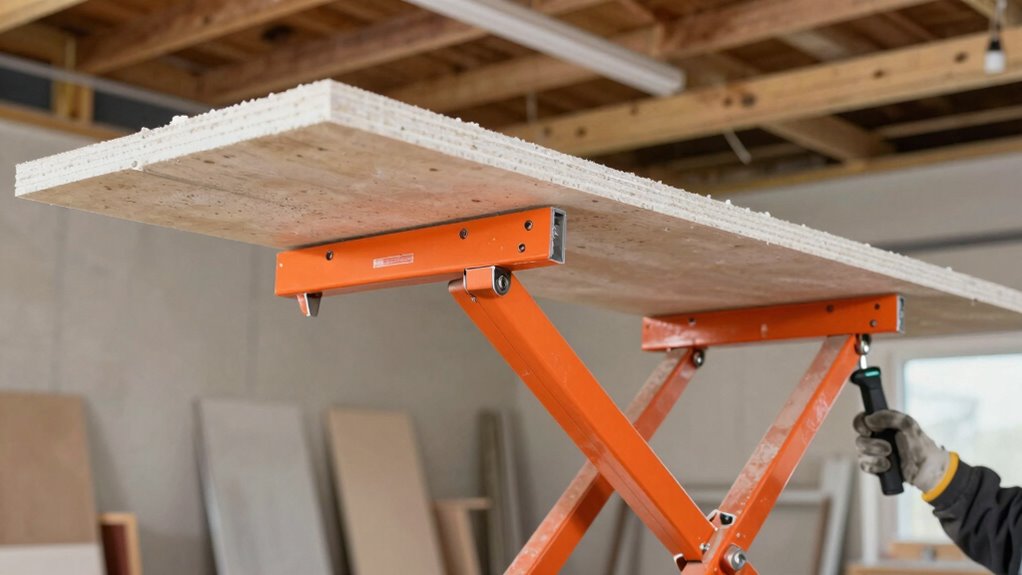
Determining if a drywall lift is right for your job depends on the size and complexity of the project. If you’re working on large or multiple drywall sheets, a lift offers significant drywall lift advantages by making the process safer and more efficient. It reduces physical strain and helps you position sheets accurately, which can improve overall safety by minimizing lifting injuries. Consider the lifting equipment safety benefits as well; using a drywall lift guarantees stability during installation, especially at higher elevations. Additionally, understanding construction safety practices can help you assess whether employing a lift aligns with best practices for site safety. Properly evaluating load capacity and the lift’s features can further ensure it meets your project needs. Also, assessing the cost-effectiveness of renting or buying a lift can influence your decision. However, for smaller projects or occasional drywall work, manual methods might suffice. Evaluate your project’s scope, your experience, and whether the lift’s benefits outweigh the costs. This assessment helps you decide if a drywall lift is a worthwhile investment for your specific job. Knowing when and how to use the right tools can also help prevent injuries and streamline your workflow. Incorporating proper piercing care and hygiene practices, such as ensuring clean tools and jewelry, can further help maintain safety and health on the worksite.

Multus Max Mover II Panel Lift – Must-Have Drywall, Plywood & Sheetrock Carrier Tool | Heavy Duty Ergonomic Handle for Pros & DIY Movers
Handy Panel Carrier Lift and carry drywall, plywood, sheetrock, doors, and panels with ease. The Multus Max Mover…
As an affiliate, we earn on qualifying purchases.
As an affiliate, we earn on qualifying purchases.
What Factors Should You Consider Before Renting or Buying a Drywall Lift?

Before renting or buying a drywall lift, understanding your project needs and budget is essential. Consider material compatibility to guarantee the lift can handle the weight and type of drywall you’re working with. Some lifts are better suited for specific thicknesses or materials, so check specifications beforehand. Storage requirements are also important; assess available space for storing the lift when not in use. If you have limited storage, a foldable or compact model might be preferable. Additionally, think about the lift’s height capacity and mobility to match your job site conditions. Evaluating the lift’s features ensures you select the right equipment for your project. Moreover, consulting with industry professionals can provide insights into the best options for your specific needs. It’s also helpful to consider safety features to ensure secure operation and minimize risk during use. Understanding equipment rental options can help you find cost-effective solutions and assess whether renting or buying is more suitable for your situation. Incorporating creative storytelling techniques into your planning process can help you visualize different scenarios and choose the most efficient setup. By evaluating these factors, you can make an informed choice that fits both your project demands and your budget, avoiding unnecessary expenses or inconvenience down the line.
Why Use a Drywall Lift Instead of Hanging Drywall Manually?
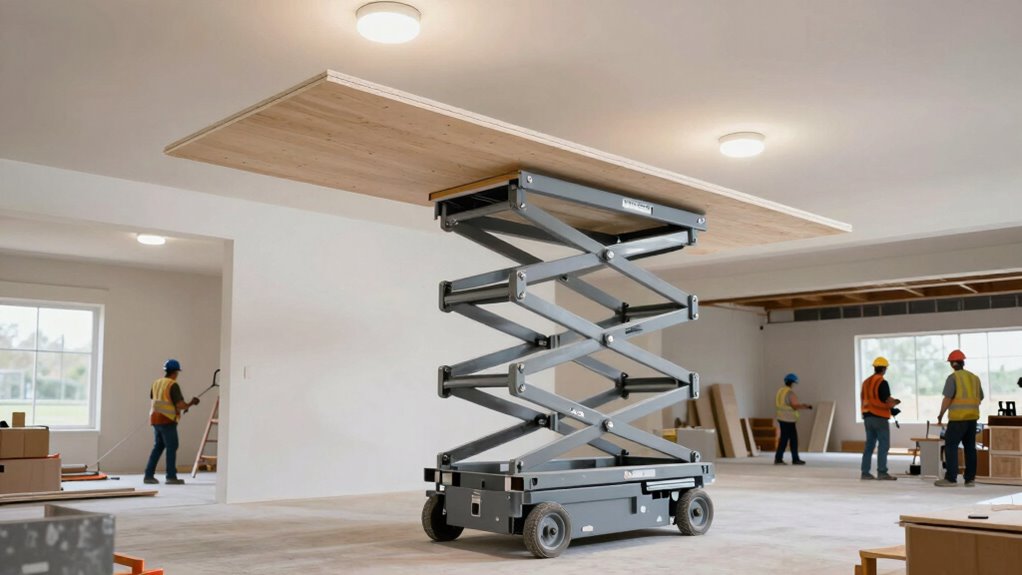
Using a drywall lift offers a safer and more efficient way to hang large sheets of drywall compared to doing it manually. It simplifies lifting techniques by reducing the physical strain on you and minimizes the risk of dropping or damaging the drywall. With a lift, you can position sheets precisely without awkward balancing or multiple people. This approach also promotes safety precautions by keeping heavy panels at a comfortable height and reducing the chance of injury. A drywall lift allows you to work faster and more accurately, especially on ceilings or high walls. Additionally, it helps improve installation quality by ensuring proper alignment and reducing the likelihood of mistakes. Employing a lift can also help maintain consistent results, which is crucial for professional-looking finishes. Using the right lifting equipment can significantly enhance your efficiency and safety during drywall installation. Furthermore, incorporating innovative tools like drywall lifts can elevate the overall quality and speed of your project. Overall, it streamlines the installation process, saves effort, and guarantees safer handling, making it the preferred choice over manual hanging in many projects. Recognizing the benefits of mechanized assistance can further optimize your workflow and outcomes.
How Can You Tell If You Can Hang Drywall Without a Lift?

You can often tell if you can hang drywall without a lift by evaluating the size and weight of the panels and your own physical ability. Consider these factors:
- Drywall weight: Standard panels weigh around 50 pounds. If it’s heavier, it’s harder to handle alone.
- Ceiling height: Higher ceilings require lifting panels overhead, which can be challenging without help or equipment.
- Panel size: Larger sheets (4×12 feet) are more difficult to manage solo compared to smaller ones.
- Your strength and experience: If you’re comfortable lifting and positioning panels, you might manage without a lift for lower ceilings and lighter drywall.
- Using appropriate tools and techniques can make hanging drywall safer and easier, especially for larger or heavier panels. For example, utilizing drywall lifting tools can reduce physical strain and improve safety during installation. Additionally, understanding load capacity and proper handling methods can help determine when a lift is necessary. Assessing manual handling skills is also important to ensure safe drywall installation without specialized equipment.
Are There Good Alternatives for Small or Low-Height Projects?
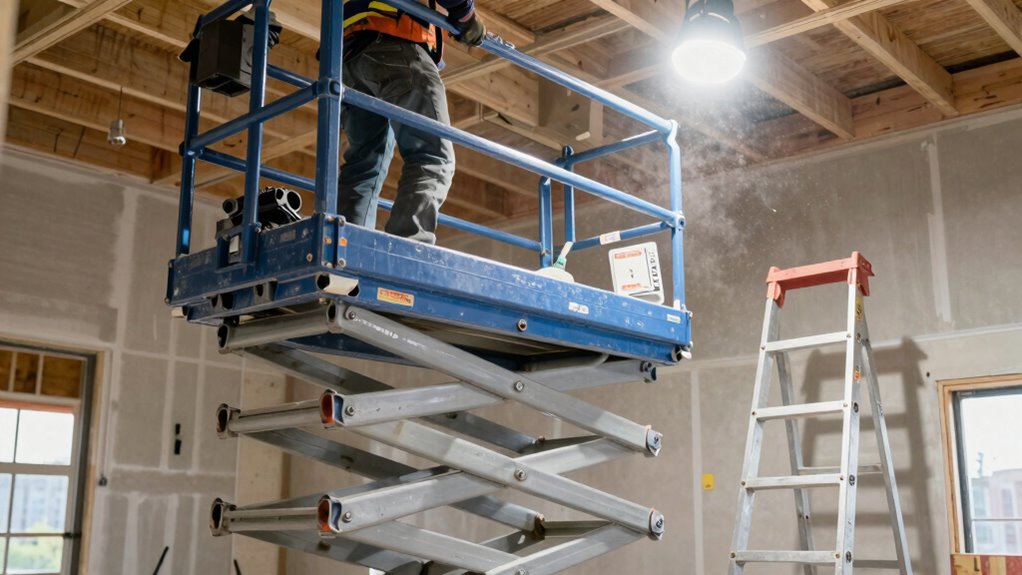
For small or low-height drywall projects, there are practical alternatives to using a full-sized drywall lift. Portable solutions like lightweight lift carts or adjustable scaffolding can make handling drywall easier without the need for heavy equipment. Manual alternatives, such as using a drywall lifting clamp or leveraging a partner’s help, also work well. These options are cost-effective and easier to set up, especially in tight spaces. If you’re working on a single wall or ceiling section, these tools give you enough lift assistance without the complexity of a full-sized lift. Keep in mind that while these alternatives are handy, they might not be suitable for larger or higher projects where a dedicated drywall lift provides more stability and safety. Additionally, understanding the physics behind bubble behavior in related fields can inspire innovative DIY solutions for challenging lifting tasks, and recognizing lifting capacity limits helps prevent accidents during installation.
How Do You Safely Operate a Drywall Lift and Avoid Common Mistakes?
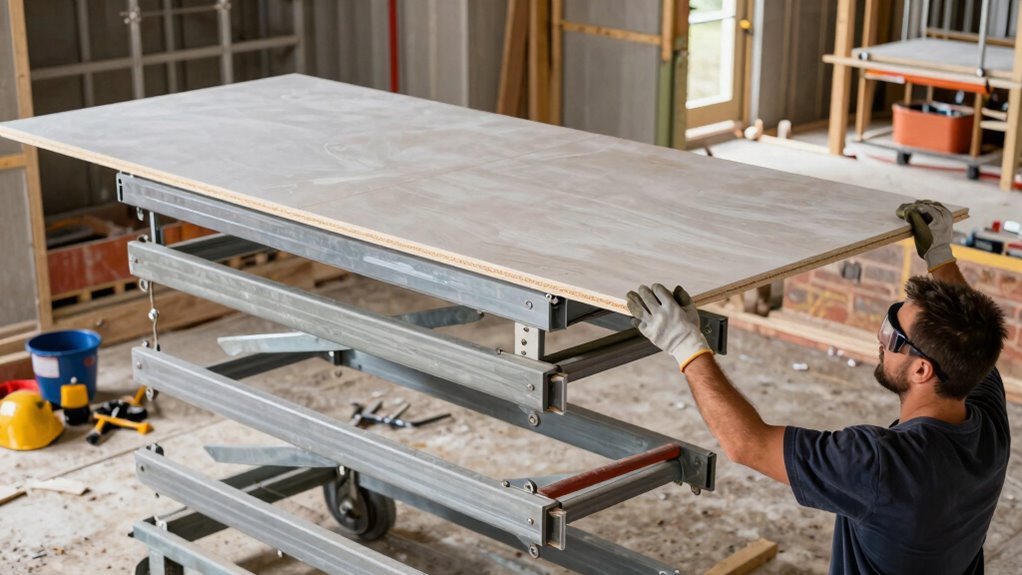
Operating a drywall lift safely begins with thoroughly reading the manufacturer’s instructions and inspecting the equipment before use. To avoid common mistakes and guarantee safety, follow these steps:
- Always check the lift’s stability and securing mechanisms before raising drywall.
- Keep hands and feet clear of moving parts to prevent injuries.
- Lift slowly and steadily, avoiding sudden movements that could cause tipping.
- Confirm the load weight matches the lift’s capacity to prevent overloading.
Is Investing in a Drywall Lift Worth It for DIYers and Pros?
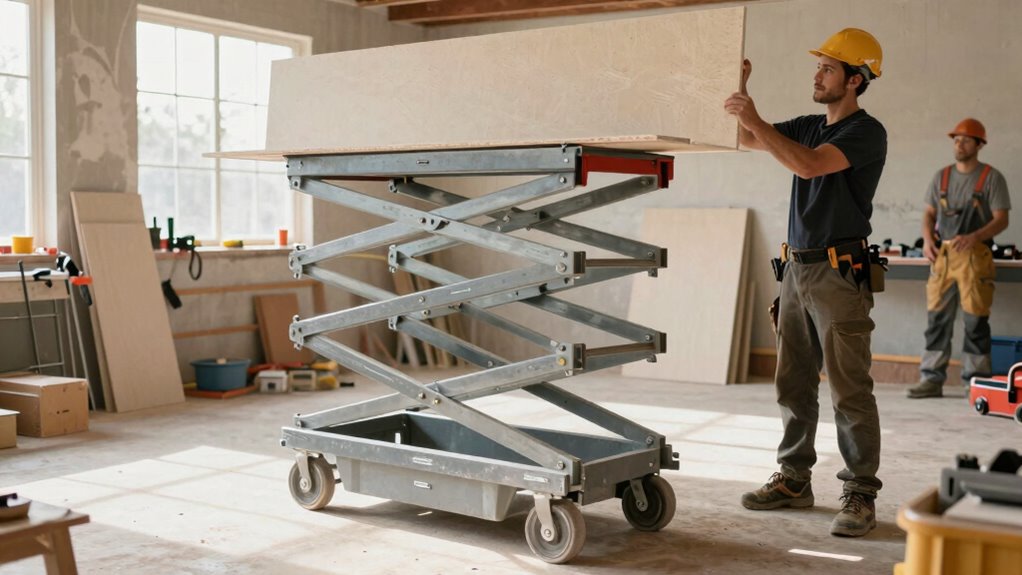
Deciding whether to invest in a drywall lift depends on how easy you find it to operate and your budget. For pros, it can boost efficiency and save time, justifying the upfront cost. As a DIYer, consider if the convenience outweighs the expense for your project scale.
Ease of Use for DIYers
While drywall lifts are designed to make hanging large sheets easier, many DIYers wonder if investing in one is worthwhile. Using a drywall lift can greatly simplify your project, but it takes some practice. Here are some DIY tips to improve ease of use:
- Read the manual carefully before your first use.
- Practice raising and lowering the lift with smaller sheets to build confidence.
- Ensure your lift is well-maintained; check for loose parts and lubricate moving components.
- Assign a helper if possible, as teamwork makes positioning easier.
A drywall lift can save time and reduce strain, but proper tool maintenance and familiarization are key. If you’re willing to learn, it’s a worthwhile investment that can make drywall hanging much more manageable for DIY projects.
Cost and Budget Considerations
Investing in a drywall lift can seem like a significant expense upfront, but for both DIYers and pros, it often pays off by saving time and reducing physical strain. When considering cost and budget planning, it’s essential to weigh initial costs against long-term benefits. Here’s a quick cost analysis:
| Equipment Cost | Time Savings | Labor Reduction |
|---|---|---|
| $200–$600 | Faster installation | Fewer helpers needed |
| Higher quality lifts cost more | Less fatigue | Less risk of injury |
| Maintenance costs | Increased efficiency | Reduced labor hours |
A thorough budget plan helps determine if a drywall lift fits your project scope. For larger or frequent projects, the investment is typically justified.
Professional Efficiency and Time
Using a drywall lift can considerably boost your efficiency by streamlining the installation process and minimizing physical effort. It allows you to work faster and safer, freeing up time for other tasks. When considering professional efficiency, think about these benefits:
- Quick setup saves time during large projects.
- Consistent positioning reduces errors and rework.
- Improved safety prevents delays caused by injuries.
- Better storage solutions keep your workspace organized and ready for subsequent tasks.
Additionally, mastering drywall installation techniques with a lift can lead to cleaner, more precise results. This efficiency helps both pros and DIYers complete projects faster, making the investment worthwhile for those aiming to save time and effort. Overall, a drywall lift can be a valuable tool in your workflow.
Frequently Asked Questions
Can Drywall Lifts Be Rented or Purchased?
You can definitely rent or purchase drywall lifts. Rental options give you flexibility for short-term projects and are often more affordable if you only need it temporarily. Buying might be a better choice if you frequently work with drywall, as it offers long-term savings and convenience. Consider your project scope and budget to decide whether a rental or purchase best suits your needs.
What Is the Maximum Weight Capacity of a Drywall Lift?
Think of a drywall lift as a trusty steed—its weight capacity is what keeps it steady. Most lifts can hold up to 150 pounds, but some heavy-duty models reach 250 pounds or more. Always check the manufacturer’s specifications to verify it meets safety standards. Knowing the maximum weight capacity helps you avoid accidents and keeps your project safe and efficient, preventing overloads that could cause damage or injury.
Are There Different Types of Drywall Lifts for Specific Tasks?
Yes, there are different types of drywall lifts designed for specific tasks. You’ll find models with unique drywall lift features such as adjustable height, tilting capabilities, or one-person operation, making your work easier. Specialized lift types include ceiling lifts, wall lifts, and adjustable lifts tailored for larger or heavier panels. Choosing the right drywall lift depends on your project needs, ensuring efficiency and safety during installation.
How Long Does It Typically Take to Set up a Drywall Lift?
A stitch in time saves nine, so you’ll want to know that setting up a drywall lift typically takes about 10 to 15 minutes. Your biggest challenge is overcoming installation challenges, but with good instructions and proper lift maneuverability, you can streamline the process. Guarantee all parts are ready, follow the manufacturer’s steps carefully, and you’ll have your lift ready quickly, saving time and effort on your project.
What Safety Gear Should Be Used When Operating a Drywall Lift?
When operating a drywall lift, you should wear personal protective equipment like gloves, safety glasses, and a hard hat to protect yourself. Make sure to verify electrical safety protocols by inspecting cords and switches for damage, and keep the work area dry to prevent shocks. Always stay alert, and never bypass safety features. Proper safety gear and precautions help prevent injuries and ensure safe operation of the drywall lift.
Conclusion
Think of a drywall lift as your loyal squire, ready to shoulder the burden of heavy sheets and make your project smoother. Whether you’re a seasoned pro or a weekend warrior, knowing when to summon this tool can save you time and strain. Like a trusty sword in battle, a drywall lift can be your secret weapon—just guarantee it’s right for your quest. With the right approach, you’ll conquer walls with confidence and ease.