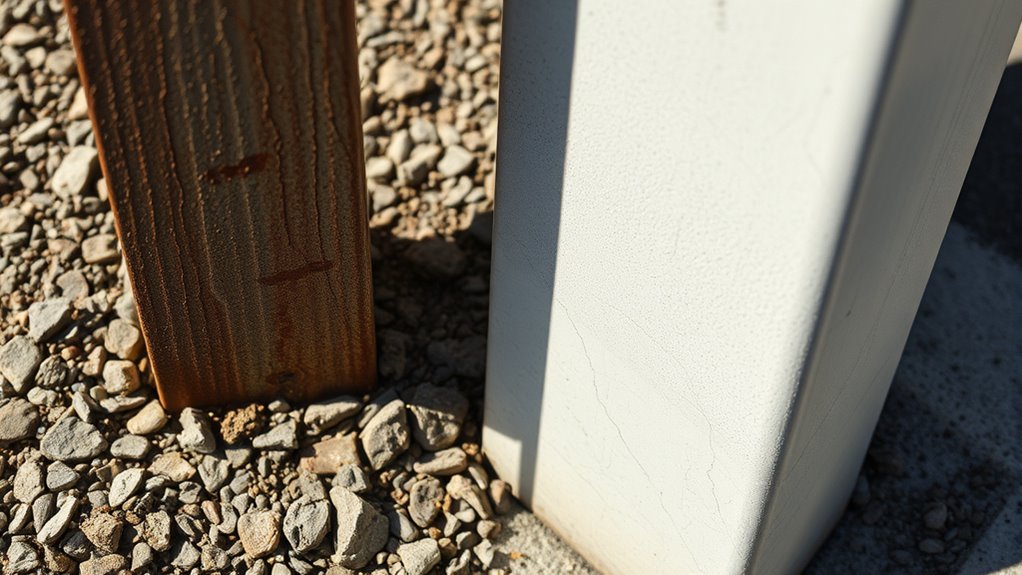

When choosing between gravel and concrete for setting fence posts, consider your budget, installation effort, and long-term durability. Gravel is cheaper and easier to install, but may need more maintenance over time. Concrete costs more upfront but offers stable, long-lasting support with less ongoing repair. Environmental impact also matters—gravel is more eco-friendly, while concrete has a bigger carbon footprint. Want to find the best option for your project? Keep exploring to learn more about these choices.
Key Takeaways
- Gravel is quick and easy to install with minimal tools, while concrete requires mixing, pouring, and curing time.
- Concrete offers superior stability and durability, resisting shifting, cracking, and environmental damage better than gravel.
- Gravel is more cost-effective initially and environmentally friendly but may need frequent replenishment.
- Concrete posts require higher upfront costs and labor but reduce long-term maintenance and repair needs.
- Consider long-term stability, environmental impact, and maintenance when choosing between gravel and concrete for fence posts.

Fence Post Repair Kit 2 Pack, Heavy Duty Fence Post Anchor for Wooden Post, Repair Tilted,Fix Broken Wood Support, Steel Ground Spike Fencing Stakes (Black)
【Repair Posts Easily】Thickened Steel Fence Post Repair Kit is crafted with heavy-duty metal,Army against corrosion, our coated Fence…
As an affiliate, we earn on qualifying purchases.
As an affiliate, we earn on qualifying purchases.
Cost and Budget Considerations
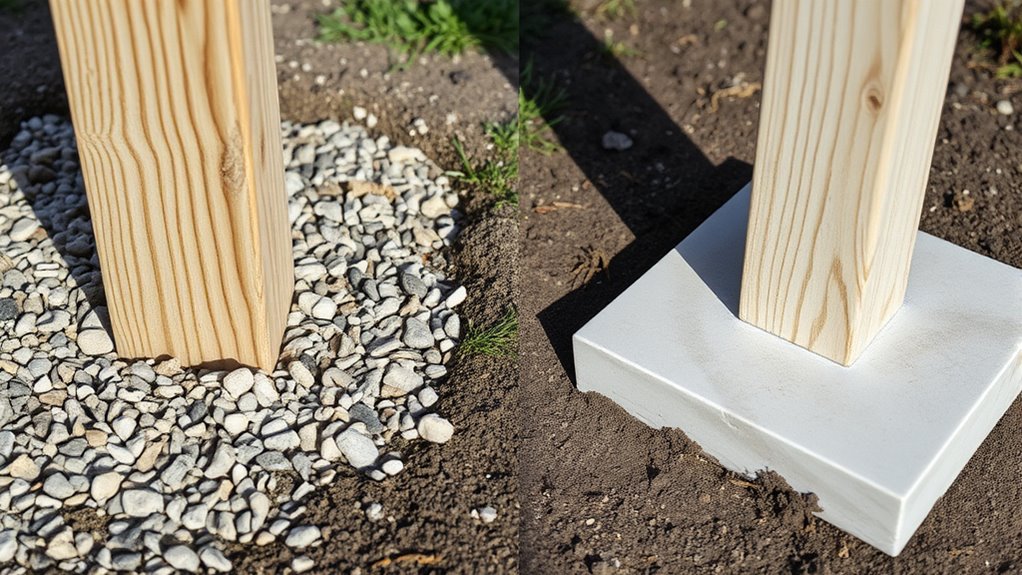
When planning to set a fence post, understanding your budget is vital to avoid overspending. Material selection plays an important role in your overall costs. Wood, vinyl, and metal posts vary markedly in price, and choosing the right one depends on your budget and durability needs. Conduct a thorough cost analysis to compare expenses across different materials. Consider not just the initial purchase price but also long-term maintenance costs. For example, while concrete might be more expensive upfront, it could reduce future repair costs. Gravel is typically cheaper initially but may require more frequent replacements. Additionally, being aware of small mistakes in budgeting and material selection can prevent costly errors that impact your overall project. Balancing your material choices with your budget ensures you make an informed decision that aligns with your financial constraints and project goals.

LADECH Fence Post Holder Ground Spike Use for Concrete Deck – Post Base Anchor Metal Black Powder Coated 4 Inches x 4 Inches (Inner Dia 3.5×3.5) 4 Pack
✅ Fit 3.5"x3.5" wood post.
As an affiliate, we earn on qualifying purchases.
As an affiliate, we earn on qualifying purchases.
Ease of Installation and Labor Requirements
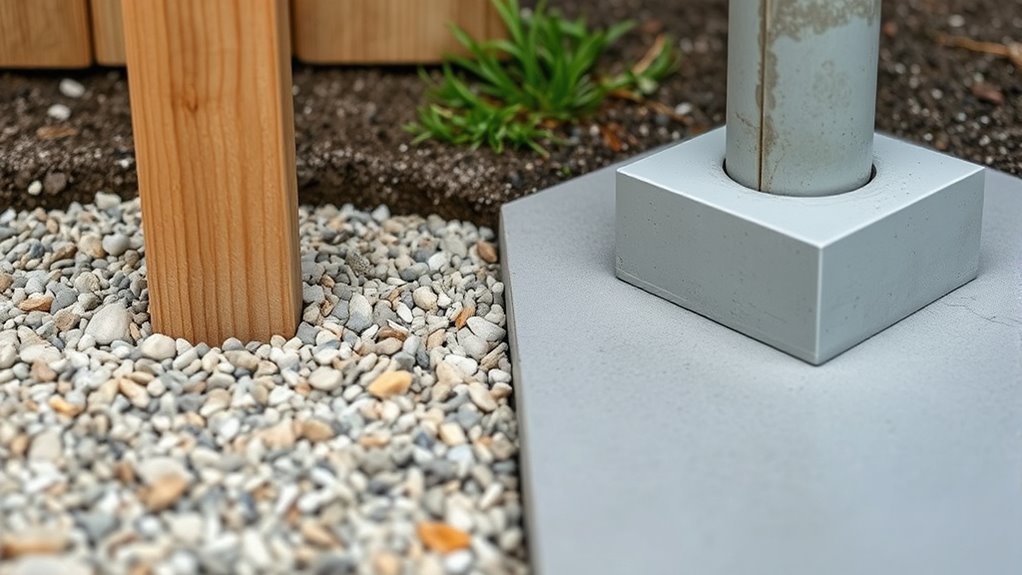
Choosing the right material impacts not only your budget but also how easily you can install your fence. Gravel offers installation simplicity because it’s quick to set and requires minimal tools, reducing labor intensity. You can often position fence posts directly into the gravel, saving time and effort. Concrete, on the other hand, demands more labor due to mixing, pouring, and waiting for it to cure. The process is more labor-intensive and requires additional equipment and skills. If you’re looking for faster, less strenuous installation, gravel is the better choice. Concrete provides a more stable foundation but involves more steps and longer setup time. Your decision should consider how much effort you’re willing to invest in installation versus long-term stability. Additionally, labor requirements play a significant role in determining the most suitable option for your project.

Sekcen Fence Post Driver T Post Driver with Handle Metal Pounder Rammer for U Channel Wooden Fence 8LB
POST DRIVER: This high-quality fence post driver makes it easy for you to drive fence posts deep into…
As an affiliate, we earn on qualifying purchases.
As an affiliate, we earn on qualifying purchases.
Durability and Long-Term Stability

The durability and long-term stability of your fence largely depend on the foundation material you select. Gravel foundations offer decent weather resistance but may have limited post strength over time, especially in freeze-thaw cycles or heavy rain. Concrete provides superior post strength, creating a solid anchor that resists shifting, cracking, and settling. It also offers excellent weather resistance, protecting posts from moisture damage and erosion. With concrete, your fence stays upright longer, maintaining its integrity through changing seasons. Gravel might require re-stabilization or reinforcement after years of exposure, whereas concrete minimizes these concerns. Choosing the right foundation material ensures your fence remains sturdy and stable, reducing the risk of future repairs and extending its lifespan considerably.

10 Pack Metal Fence Post, 7FT Heavy Duty Garden Fence Post for Wire Fence, Fence Posts No Dig U Post for Lawn, Garden, Farm
DURABLE HEAVY-DUTY GARDEN FENCE POST: Our garden fence posts are made of thickened galvanized steel and covered with…
As an affiliate, we earn on qualifying purchases.
As an affiliate, we earn on qualifying purchases.
Maintenance and Repair Needs

Regular maintenance is essential to keep your fence in good condition and prevent costly repairs. Gravel posts may require occasional refilling and leveling to maintain landscape aesthetics, while concrete posts are generally low-maintenance but can crack over time. Inspect your fence regularly to identify issues early, especially if wildlife habitat or visual appeal matter to you. Additionally, understanding survivalism principles can help you prepare for unexpected weather or environmental challenges that might affect your fencing.
Environmental Impact and Sustainability

Considering the environmental impact and sustainability of fence posts is essential when planning your landscape. Your choice affects the ecological footprint and resource use. Gravel is more eco-friendly because it’s a natural, recyclable material that requires less energy to produce. Concrete, however, has a higher environmental impact due to cement production, which releases CO₂. To make a greener decision, consider these points:
- Gravel minimizes the ecological footprint with its natural, recyclable properties.
- Concrete’s production consumes more energy and emits more greenhouse gases.
- Recyclable materials reduce waste and promote sustainability.
- Opting for eco-conscious options helps preserve the environment for future landscapes.
- Using sustainable materials can further reduce environmental impact and support eco-friendly landscaping choices.
Frequently Asked Questions
Which Fencing Types Are Compatible With Gravel or Concrete Posts?
You can install most fencing types, like wood, vinyl, and chain-link, with gravel or concrete posts, but their compatibility depends on your fence material and post installation methods. Concrete posts offer stability for heavy or long-lasting fences, while gravel posts work well for lightweight or temporary fences. Always choose the appropriate post material based on your fence’s weight, design, and durability needs, ensuring proper installation for long-term stability.
How Does Soil Type Influence Gravel or Concrete Post Installation?
Irony strikes—your soil type actually guides your choice between gravel or concrete posts. If your soil’s poorly compacted or drains poorly, you’ll want gravel, allowing for easier drainage and adjustments. For more stable soil, concrete posts provide durability. Soil compaction influences how well posts hold; poor drainage benefits from gravel’s permeability, while concrete works best in firm, well-compacted soils. So, your soil’s quirks shape your fencing success.
Are There Specific Local Codes for Using Gravel or Concrete Posts?
You should verify your local regulations and permit requirements before installing fence posts. Many areas have specific codes that dictate whether you can use gravel or concrete, as well as size and depth standards. Contact your local building department or review municipal codes online to ensure compliance. Following these regulations helps prevent fines or the need to redo your fence, saving you time and money in the long run.
Can Gravel or Concrete Posts Be Recycled or Repurposed?
Yes, you can recycle or repurpose gravel and concrete posts. Recycling options include crushing concrete for road base or landscaping, while gravel can be reused in drainage or fill projects. Concrete posts tend to be more durable, making them better suited for long-term reuse, but both materials can be repurposed effectively. Proper disposal or recycling reduces waste, supports sustainability, and maximizes post durability by giving them a second life.
How Do Weather Conditions Affect the Setting Process of Each Post Type?
Weather impact your fence post installation by affecting the setting process for both gravel and concrete posts. Heavy rain can delay concrete curing, making it weaker and prone to shifting. Cold temperatures slow down concrete hardening, while extreme heat can cause rapid drying and cracks. For gravel posts, weather impact mostly involves freeze-thaw cycles that can shift or settle the gravel over time. Plan your installation timing carefully to avoid adverse weather conditions.
Conclusion
Choosing between gravel and concrete fence posts depends on your priorities and budget. Gravel offers a quick, cost-effective fix but may need more upkeep over time. Concrete provides long-term stability but comes with higher initial costs. Remember, you get what you pay for, so weigh your options carefully. Whichever you pick, making an informed decision now will save you headaches down the road—after all, a stitch in time saves nine.