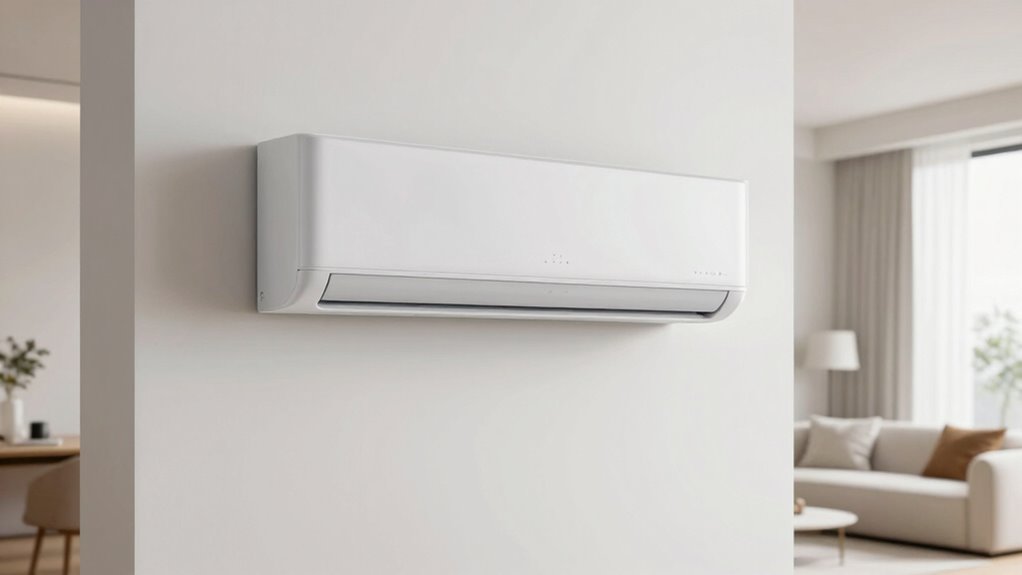

For ideal performance, place your mini-split indoor unit on an interior wall that’s central for even air distribution. Mount it about 7-8 feet high, ensuring it’s clear of furniture, curtains, and obstructions to maximize airflow. Avoid direct sunlight and heat sources that can disrupt operation. Keep it a few inches from the wall to allow proper ventilation. If you want to learn more about perfect placement for comfort and efficiency, keep exploring these tips.

Get furniture and decor delivered free with Prime
- Fast, free delivery on millions of items
- Prime Video, Amazon Music and more included
- Member-only deals all year
Key Takeaways
- Position the indoor unit on an interior wall about 7-8 feet high for optimal airflow and noise reduction.
- Avoid placing the unit behind furniture, curtains, or in corners to ensure unobstructed airflow and even temperature distribution.
- Install away from direct sunlight, heat sources, or electronics to prevent false readings and maintain efficiency.
- Choose a central location to promote balanced airflow and consistent cooling or heating throughout the room.
- Ensure the unit is accessible for maintenance but discreet enough to blend with room decor, minimizing visual clutter.
mini-split indoor unit wall mount bracket
As an affiliate, we earn on qualifying purchases.
As an affiliate, we earn on qualifying purchases.
Why Indoor Unit Placement Affects Your Mini-Split’s Performance

The placement of your indoor unit directly impacts how effectively your mini-split cools or heats your space. Proper placement ensures even temperature distribution and maximum comfort. When choosing a location, consider control options—placing the unit where remote signals are unobstructed helps you adjust settings easily. Additionally, good placement minimizes dust accumulation and reduces the need for frequent maintenance tips, like cleaning filters or checking vents. Proper placement also prevents airflow blockages caused by furniture or curtains, improving efficiency. Ensuring the unit is installed at the optimal height can also enhance airflow and overall performance. Placement at the correct height allows for better air circulation, which contributes to consistent temperature control. Additionally, strategic placement can help prevent noise disturbances and ensure the system operates quietly. Proper indoor unit placement is essential for energy efficiency, reducing operational costs and extending the lifespan of your mini-split system. An understanding of airflow dynamics can help you make informed decisions about placement, leading to better performance and comfort. Ultimately, strategic indoor unit placement enhances your mini-split’s performance, making control options more accessible and reducing maintenance efforts over time.
How to Choose the Best Location Based on Room Layout and Furniture
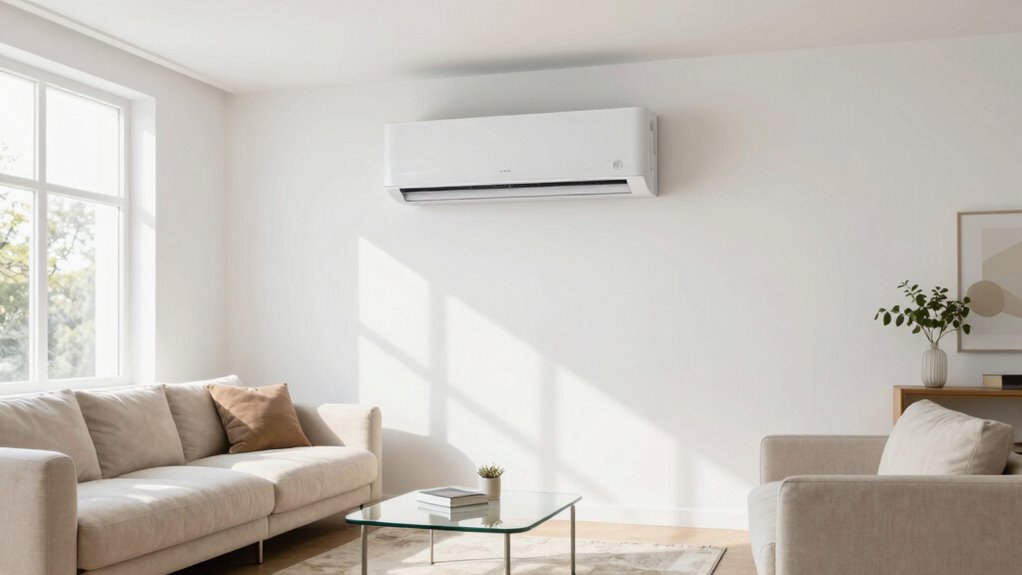
When selecting the best location for your indoor unit, considering your room layout and furniture arrangement is essential to optimize airflow and comfort. Position the unit where it can promote effective air circulation without being blocked by furniture or walls. Avoid placing it directly behind large furniture pieces or in corners that restrict airflow. Think about how the indoor unit’s placement can blend with your room’s aesthetic integration; choose a spot that minimizes visual impact while maintaining functionality. Keep in mind that unobstructed airflow ensures even cooling or heating throughout the space. Proper mini-split placement also involves understanding how to optimize airflow patterns for maximum efficiency. Additionally, considering air circulation can help you determine the best spot to ensure consistent temperature distribution, especially when factoring in airflow dynamics for more precise climate control. Recognizing the room’s airflow flow can guide you to select an optimal location that enhances overall climate comfort.
What’s the Ideal Height and Distance for Installing Your Indoor Unit?

Choosing the right height and distance for your indoor unit guarantees efficient cooling and comfort. You’ll want it mounted at an ideal height, usually around 7 to 8 feet, and positioned with enough space from walls and furniture. Avoiding obstructions will help your mini-split work effectively and distribute air evenly. Additionally, proper ventilation considerations ensure optimal performance and safety.
Optimal Mounting Height
Finding the ideal height for your indoor mini-split unit is essential to guarantee efficient cooling and heating. Mounting it too high or low can impact energy efficiency and increase noise levels. Generally, placing the unit 7-8 feet above the floor ensures optimal airflow and noise reduction. To help you visualize, here’s a quick guide:
| Mounting Height | Benefits |
|---|---|
| 7-8 feet | Efficient airflow, quiet operation |
| 5-6 feet | Easier access, less noise |
| Above 8 feet | Less visible, potential airflow issues |
| Below 5 feet | Harder to reach, possible airflow disruption |
Choosing the right height maximizes energy efficiency and minimizes noise, making your comfort a priority. Proper installation planning also considers cost‑of‑ownership, ensuring long-term satisfaction and performance. Additionally, considering the airflow pattern can help optimize the unit’s placement for even temperature distribution throughout the room. Ensuring proper ventilation can also enhance overall comfort and system efficiency. It’s also important to account for maintenance access to keep your system functioning efficiently over time.
Proper Distance From Walls
To guarantee your mini-split operates efficiently and quietly, it’s essential to take into account the proper distance from surrounding walls. Installing the indoor unit too close can restrict airflow, reducing cooling efficiency and increasing noise. Ideally, keep the unit about 6-8 inches from the wall to allow proper air circulation and prevent overheating. For DIY installation, precise placement saves time and effort, avoiding costly adjustments later. Considering cost, proper positioning minimizes the need for additional modifications or professional help. Remember, a well-placed unit enhances comfort and performance, making your investment worthwhile. Proper placement also helps maintain optimal airflow, which is crucial for the system’s efficiency and longevity.
- Feel confident knowing your DIY skills create a cozy, quiet space
- Enjoy savings by avoiding costly repositioning or repairs
- Experience the satisfaction of a seamless, efficient setup
- Revel in cool comfort all season long
Avoiding Obstructions
Installing your indoor unit at the right height and distance is essential to avoid obstructions that can hinder airflow and reduce efficiency. Place the unit at least 6 to 8 feet above the floor to promote ideal air circulation and prevent furniture or curtains from blocking airflow. Keep the unit away from large objects, electronics, or thick curtains that could obstruct airflow or cause noise issues. Proper placement minimizes airflow disruptions, boosting energy efficiency and ensuring consistent cooling or heating. Additionally, avoid placing the unit near vents or windows that could create drafts. By maintaining clear space around the indoor unit, you enhance noise reduction and airflow, resulting in a quieter operation and better overall performance. Correct placement is key to maximizing your mini-split’s efficiency and comfort. Ensuring the airflow path remains unobstructed helps maintain optimal performance and energy savings. To further improve efficiency, consider the location’s airflow dynamics to prevent uneven cooling or heating in the space.
How External Factors Like Sunlight Impact Indoor Unit Placement
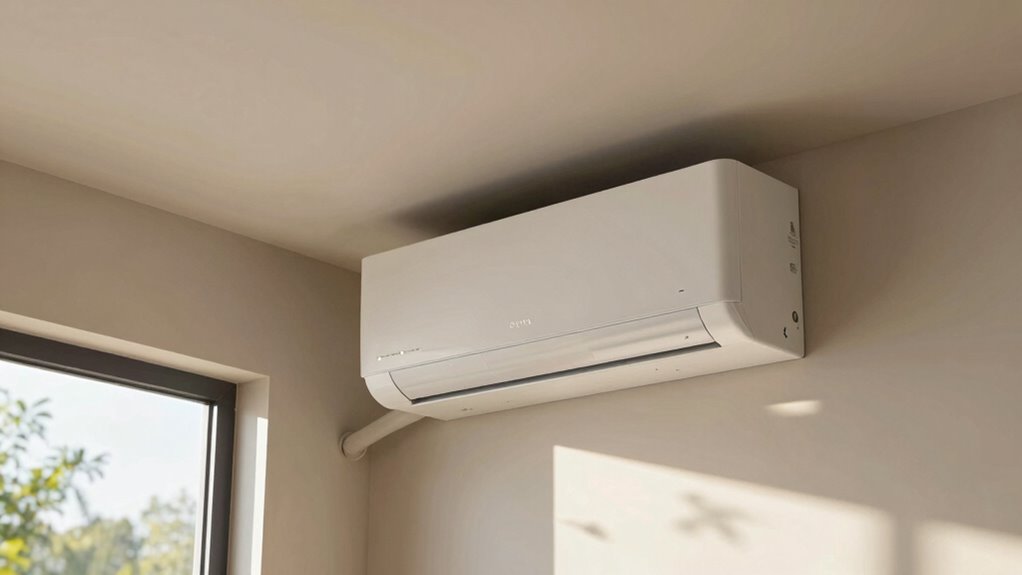
External factors like sunlight can considerably affect the efficiency and comfort of your mini-split system. Direct sunlight increases the sunlight impact, causing the indoor unit to work harder to maintain your desired temperature. To minimize this, consider external shading around the indoor unit to block harsh rays and prevent overheating. Proper placement can save energy and improve system longevity. Keep in mind:
- Sunlight exposure can cause uneven cooling, leading to discomfort.
- External shading helps reduce heat gain and energy costs.
- Avoid placing the indoor unit where sunlight hits directly for extended periods.
- Ideal placement considers shade to ensure consistent comfort.
- Understanding system efficiency is key to optimizing your mini-split setup and avoiding unnecessary energy consumption.
- Additionally, monitoring airflow patterns around the indoor unit can help enhance cooling performance and energy savings.
- Considering external factors during installation can further optimize overall system performance and durability.
- Being aware of solar gain can help you make more informed decisions about indoor unit placement and shading options.
- Recognizing how thermal dynamics influence heat transfer can further improve your system’s effectiveness and lifespan.
Where Are the Best Spots to Maximize Airflow and Comfort?
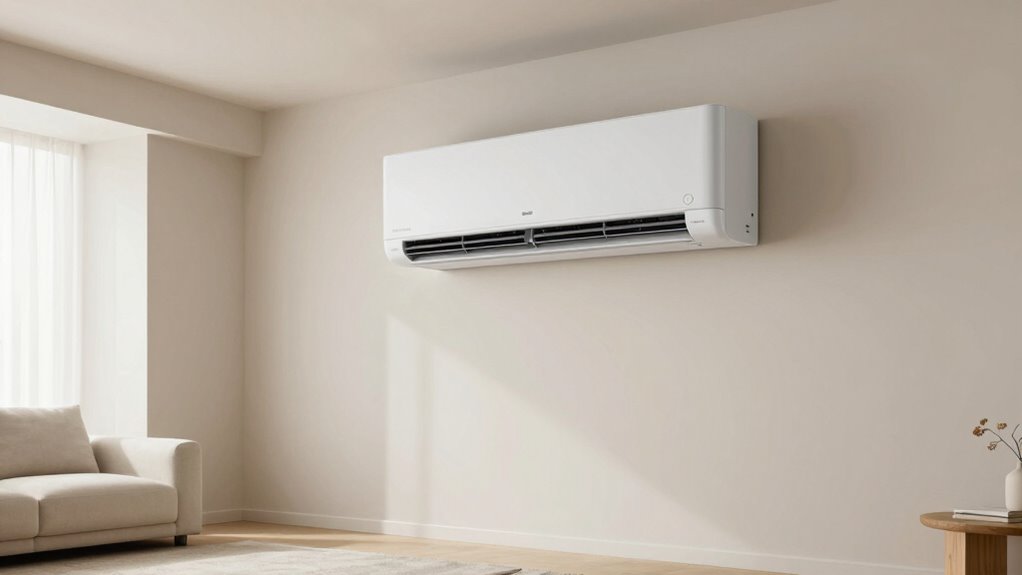
Choosing the right spots for your mini-split indoor unit is key to maximizing airflow and ensuring consistent comfort throughout your space. Place the unit where it can promote ideal air circulation without obstruction, such as away from furniture or curtains. Aim for a central location on an interior wall to distribute conditioned air evenly. Avoid corners or areas with poor airflow, which can create hot or cold spots. Proper placement helps the system operate more efficiently, reducing energy consumption and lowering bills. When airflow is unobstructed, your mini-split works smarter, providing steady comfort. Think about high-traffic areas where air can circulate freely, and avoid placing the unit where direct drafts might cause uneven temperature distribution. Proper placement also considers airflow patterns, which is essential for optimal system performance and energy efficiency. Ensuring the indoor unit is positioned to minimize airflow disruptions enhances both comfort and energy efficiency.
Common Placement Mistakes That Reduce Efficiency (and How to Avoid Them)
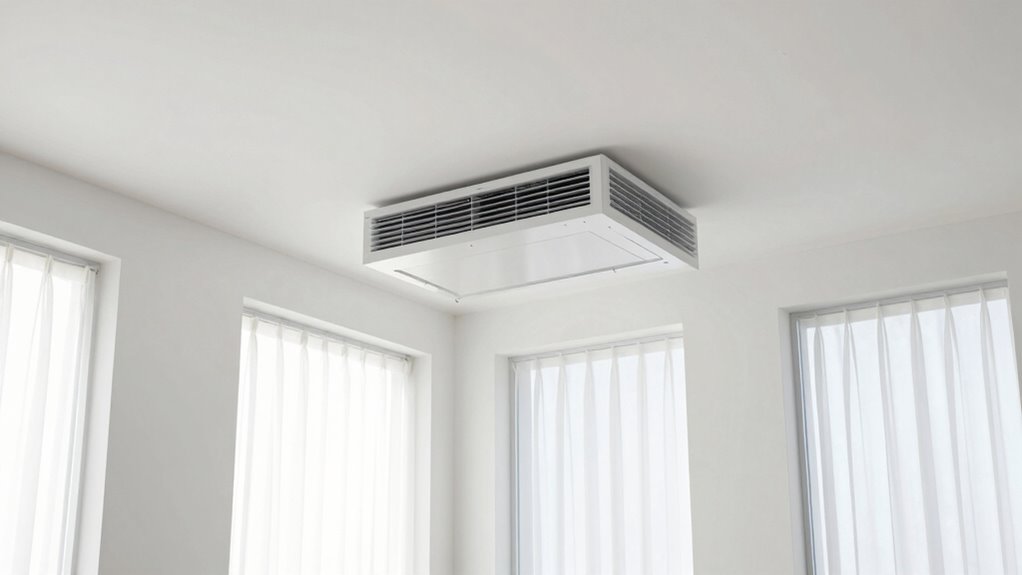
One common mistake is placing the mini-split unit in a spot where airflow is obstructed, such as behind furniture, curtains, or near closed doors. When airflow is blocked, your unit works harder to maintain comfort, wasting energy and reducing energy savings. Poor placement can also make it difficult to operate the remote controls effectively, leading to frustration.
Be mindful to avoid:
- Blocking vents with large furniture or drapes
- Mounting the unit too close to heat sources or drafts
- Placing it in a corner where airflow circulates poorly
- Ignoring the importance of accessible remote controls for ideal use
Tips for Installing the Indoor Unit in Different Room Types
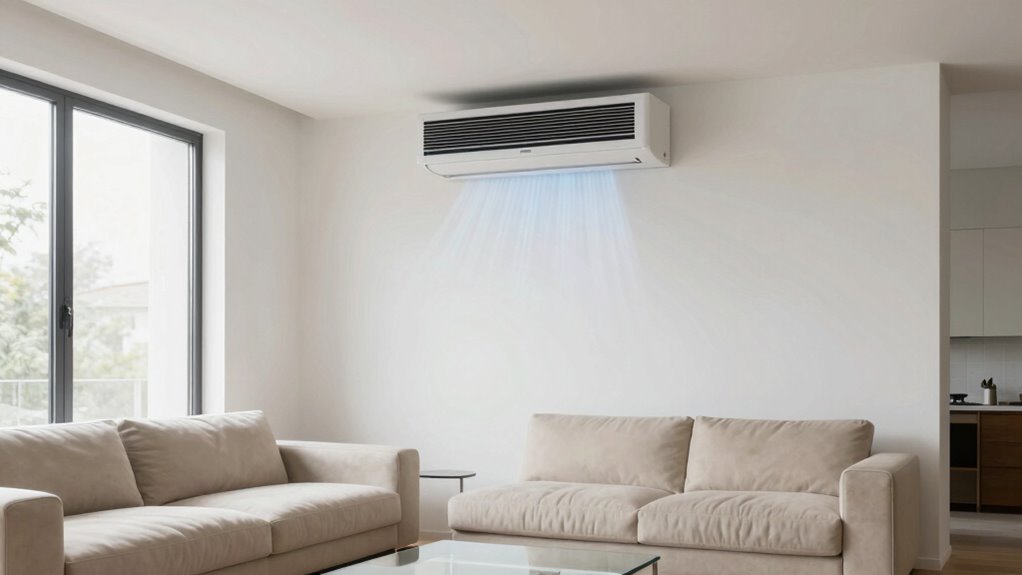
Proper placement of the indoor unit varies depending on the room type to maximize comfort and efficiency. In living rooms, install the unit near the center to ensure even airflow, which enhances energy efficiency and reduces hot or cold spots. For bedrooms, position the unit away from sleeping areas to minimize noise and promote restful sleep, while still providing effective cooling or heating. In kitchens, avoid placing the indoor unit directly above the stove or sink to prevent humidity and heat from affecting performance. In offices, install the unit where it won’t blow directly on occupants to reduce noise and drafts. Proper placement diminishes unnecessary energy consumption and noise, making your mini-split system operate smoothly and quietly, and ensuring consistent comfort throughout different room types.
How Using Multiple Indoor Units Can Improve Coverage and Comfort
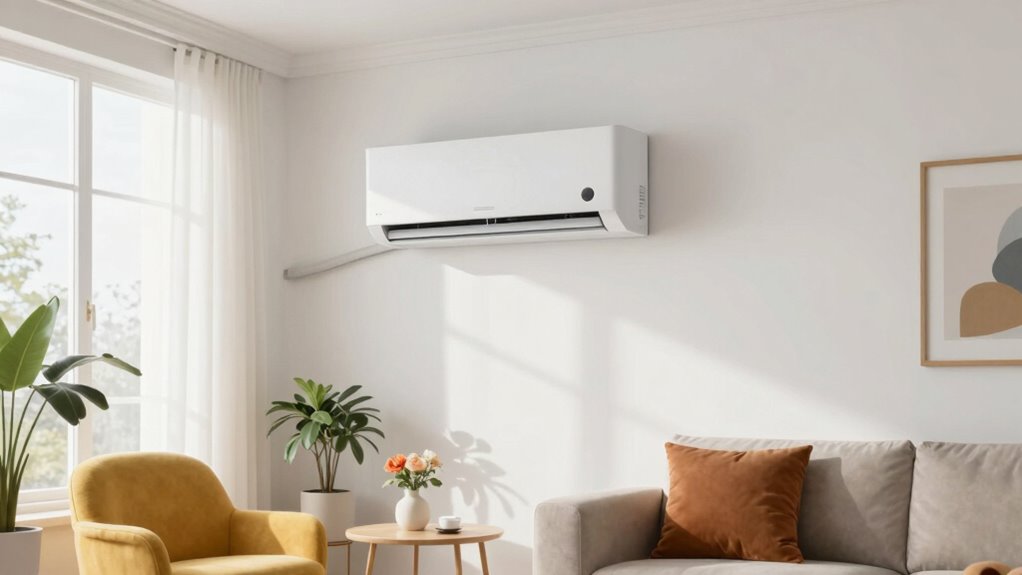
Using multiple indoor units allows you to target specific areas with ideal placement strategies, ensuring even airflow and temperature control. By zoning your system, you can customize comfort levels in different rooms, reducing energy waste. This approach helps you achieve better coverage and a more comfortable environment throughout your home.
Optimal Unit Placement Strategies
To maximize comfort and guarantee even cooling or heating, strategically placing multiple indoor units is essential. Proper placement assures each room receives the right airflow, reducing hot or cold spots. Focus on locations that minimize obstructions, promote efficient airflow, and allow easy access for maintenance tips, like filter cleaning. Position units away from noise-sensitive areas to enhance noise reduction, creating a peaceful environment. Consider mounting units at ideal heights to improve coverage and comfort. When planning, think about the entire layout to avoid overlaps or gaps in airflow, ensuring consistent temperature control. This strategic approach not only boosts comfort but also prolongs your system’s lifespan, making maintenance easier and more effective. Proper placement transforms your mini-split into a silent, efficient comfort solution.
Zoning for Enhanced Comfort
Implementing zoning with multiple indoor units allows you to tailor comfort levels throughout your space. By dividing your area into zones, you can heat or cool specific rooms based on usage, enhancing energy efficiency and reducing waste. This targeted approach minimizes unnecessary cooling or heating, saving you money on energy bills. Additionally, zoning offers aesthetic considerations, as you can select discreet indoor units that blend seamlessly with your decor. You won’t have to compromise style for comfort. Each zone can be controlled independently, ensuring occupants enjoy personalized climate control. This flexibility not only boosts overall comfort but also helps maintain consistent temperatures across your home or office. Overall, zoning with multiple indoor units maximizes efficiency and aesthetic appeal while delivering customized comfort.
Troubleshooting Placement Issues That Cause Uneven Heating or Cooling
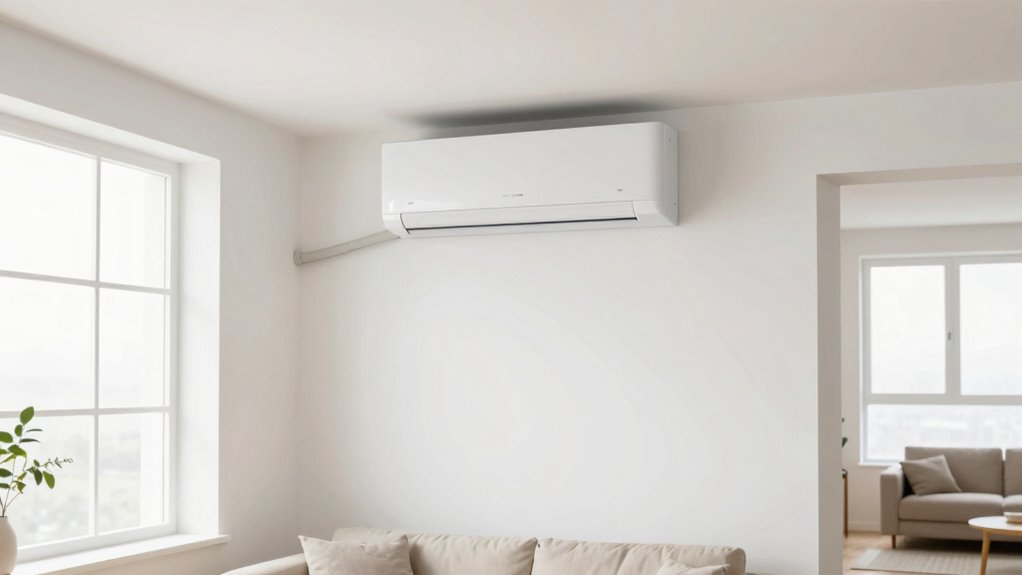
Uneven heating or cooling often stems from poor placement of your mini-split unit. If the indoor air isn’t circulating properly, you might notice hot or cold spots that disrupt comfort. To troubleshoot, check for obstructions that block airflow and ensure the unit isn’t pointed directly at seating areas. Poor duct insulation can cause temperature loss, making zones uneven. Also, improper placement can increase noise, disturbing your peace. Address these issues by adjusting the unit’s position, sealing duct leaks, and adding insulation where needed. Remember, a well-placed unit minimizes noise and improves efficiency. Taking these steps restores balance, ensuring every corner of your space feels just right and eliminating frustration caused by uneven temperatures.
Final Checklist: How to Pick the Perfect Spot for Your Mini-Split Indoor Unit
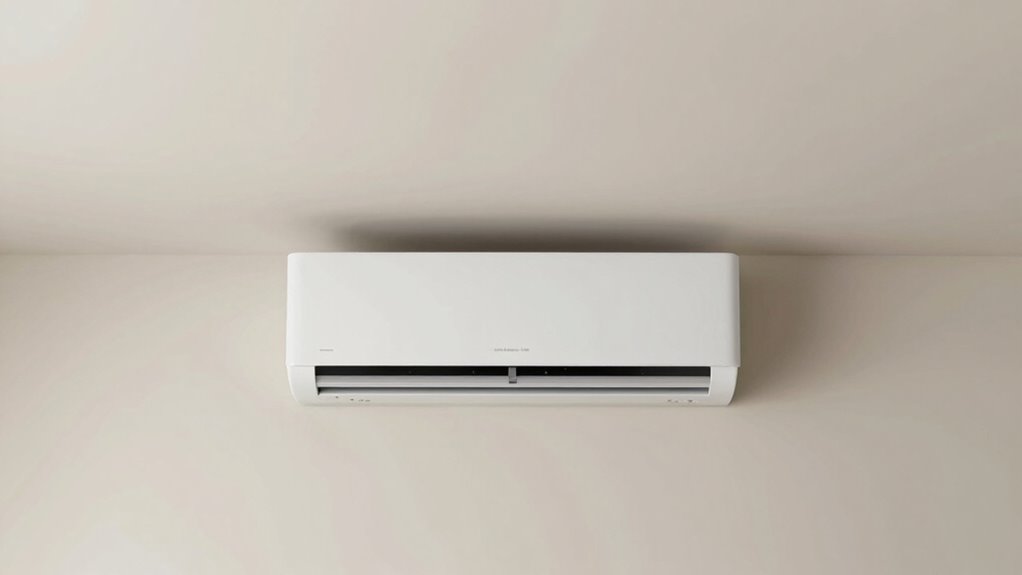
When choosing the perfect spot for your mini-split indoor unit, focus on ideal height placement to guarantee even airflow. Make sure to avoid obstructions and glare that could hinder performance or comfort. Additionally, consider the room’s airflow patterns to maximize efficiency and comfort.
Optimal Height Placement
Have you ever wondered how high to mount your mini-split indoor unit for ideal comfort and efficiency? The right height maximizes energy efficiency and guarantees seamless aesthetic integration into your space. Mounting too low can cause uneven airflow and discomfort, while too high might reduce efficiency and visibility. Aim for a height where the airflow circulates evenly without disrupting the room’s look.
Consider these key points:
- Position the unit around 7-8 feet high for balanced airflow and comfort
- Keep it above head level to avoid obstructions and maintain a sleek appearance
- Ensure the height complements your room’s design for aesthetic integration
- Think about easy access for maintenance without compromising style
Getting the height right makes your mini-split both effective and visually pleasing.
Avoid Obstructions and Glare
To guarantee your mini-split functions efficiently and remains discreet, it’s essential to select a spot free of obstructions and glare. Obstructions like furniture or curtains can block airflow and reduce efficiency, so keep the unit clear. When choosing a location, consider thermostat placement; it should be away from direct sunlight or heat sources to prevent false readings that could cause uneven cooling or heating. Glare from windows or bright lights can also affect the unit’s sensors and comfort levels. Additionally, think about noise considerations—pick a spot where the unit won’t disturb your daily activities or sleep, avoiding areas near bedrooms or quiet workspaces. Clear, unobstructed placement ensures ideal performance, comfort, and minimal disruption.
Consider Room Airflow
Ensuring proper room airflow is essential for your mini-split to operate efficiently and maintain consistent comfort. Good air circulation prevents hot or cold spots and helps balance temperature zones throughout the space. When selecting a spot, consider how air moves naturally in the room, avoiding areas where airflow is restricted. Proper placement allows the unit to distribute cool or warm air evenly, making sure every corner feels just right.
- Feel the room’s natural airflow and choose a spot that enhances it, not blocks it.
- Avoid placing the indoor unit near vents or windows that disrupt air circulation.
- Ensure airflow reaches all areas, preventing uncomfortable temperature zones.
- Think about how air moves around furniture to keep the space cozy and balanced.
Frequently Asked Questions
Can Indoor Unit Placement Affect Energy Consumption?
Yes, indoor unit placement can affect energy savings and noise levels. If you position the unit in a central, unobstructed spot, it distributes air more efficiently, reducing energy consumption. Avoid placing it near heat sources or direct sunlight, which can make it work harder. Proper placement also minimizes noise levels, ensuring a quieter environment. Careful positioning helps you save energy and enjoy a more comfortable, peaceful space.
How Does Room Size Influence Indoor Unit Positioning?
Room size greatly influences indoor unit positioning; larger rooms with dimensions over 300 square feet need the unit placed centrally for even cooling, while rooms with high ceilings (above 10 feet) benefit from higher placement to ensure proper air circulation. Did you know that improper placement can increase energy use by up to 30%? You should consider room dimensions and ceiling height to optimize comfort and efficiency.
Is It Better to Install Near Windows or Away From Sunlight?
You should install your mini-split away from direct sunlight and windows. Sunlight exposure can cause the indoor unit to work harder, reducing efficiency. Placing it far from window placement guarantees consistent cooling and prevents temperature fluctuations caused by sunlight. This placement also helps maintain comfort, as the unit won’t be affected by drafts or heat gain from sunlight, making your system more effective and energy-efficient.
Should the Indoor Unit Be Placed Higher or Lower on the Wall?
You should place the indoor unit higher on the wall, ideally near the ceiling, to guarantee ideal air circulation. Make sure there’s enough wall clearance for easy installation and maintenance, and consider aesthetic factors so the unit doesn’t dominate the room’s look. Positioning it higher helps distribute cool or warm air evenly, providing comfort while blending seamlessly with your interior design.
How Does Furniture Placement Impact Airflow Efficiency?
Furniture placement can considerably influence airflow efficiency by causing furniture obstruction and airflow disruption. You should keep furniture away from the indoor unit to prevent blockages and guarantee smooth circulation. Avoid placing large pieces directly in front of the unit, and leave clear space around it. This way, the cool or warm air flows freely, maximizing comfort and energy efficiency. Proper furniture arrangement is crucial to ideal mini-split performance.
Conclusion
Choosing the right spot for your mini-split indoor unit is like tuning a fine instrument—you want perfect harmony between comfort and efficiency. By considering room layout, airflow, and external factors, you can create a space where cool air flows smoothly like a gentle breeze. Remember, a well-placed unit is the conductor of your comfort symphony, ensuring every note—warm or cool—hits just right for a balanced, cozy home.
Columbus Day / Indigenous Peoples' Day Picks
long weekend sales
As an affiliate, we earn on qualifying purchases.