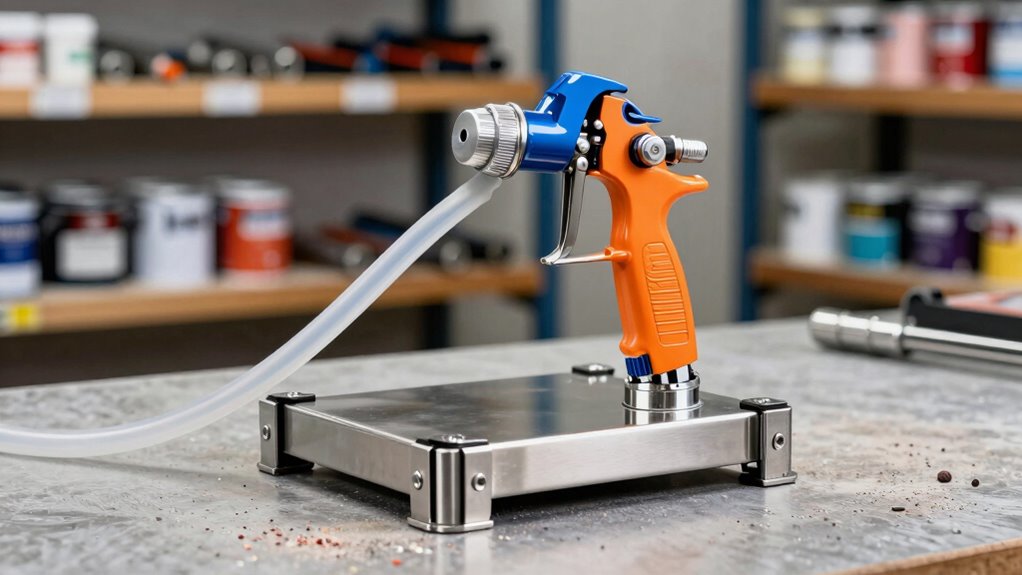

A thorough prep system for your paint sprayer involves properly cleaning and maintaining all components, including nozzles, filters, and hoses, to prevent clogs and guarantee smooth operation. Verifying paint compatibility and thinning it properly improves spray quality and reduces equipment damage. Regular upkeep, like inspecting seals and replacing worn parts, extends your sprayer’s lifespan and enhances performance. Mastering these steps makes your sprayer more efficient and reliable, leading to better results—if you keep exploring, you’ll uncover even more ways to optimize your system.
Open a free Amazon Business account
Business pricing, bulk buying and tax-exempt orders.
As an affiliate, we earn on qualifying purchases.
Key Takeaways
- Properly cleaning and maintaining sprayer components prevents clogs and ensures smooth operation.
- Using the right paint viscosity and thorough mixing improves spray quality and reduces nozzle issues.
- Inspecting and replacing worn seals and hoses maintains consistent spray patterns and prolongs equipment life.
- Verifying paint compatibility and proper thinning enhances finish quality and prevents damage.
- Following manufacturer guidelines and routine upkeep maximizes sprayer efficiency and minimizes downtime.
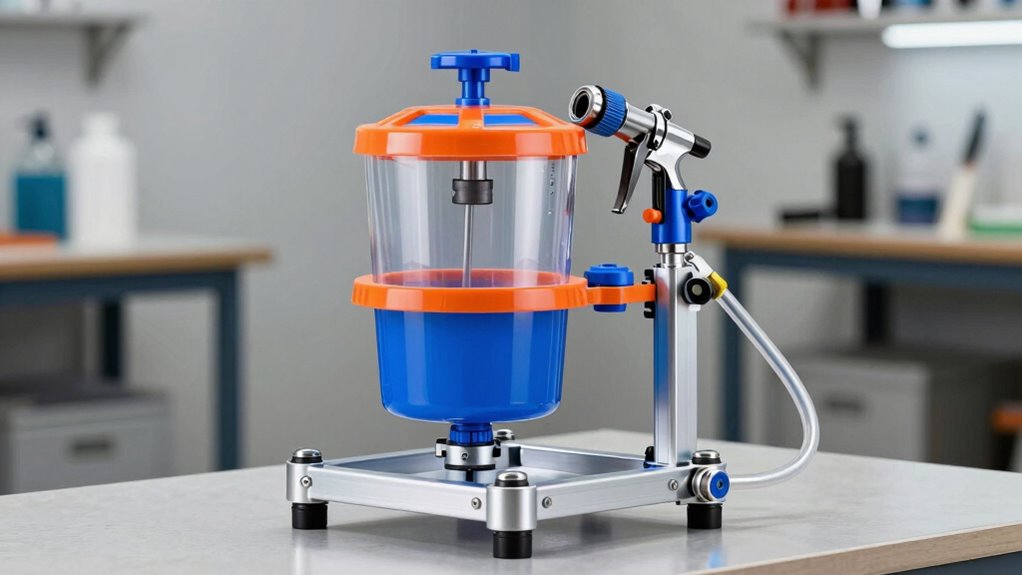
Preparing your paint sprayer properly can make all the difference in achieving a flawless finish. A well-prepared system guarantees your equipment functions smoothly, delivers an even coat, and lasts longer. Before you start, take time to perform sprayer maintenance, which involves cleaning, inspecting, and replacing worn parts. Regular maintenance prevents clogs, leaks, and uneven spray patterns, saving you time and frustration during the job. When you’re choosing paint, pay close attention to paint compatibility. Not all paints work well with every sprayer, so verifying that your paint matches your sprayer’s specifications is essential. Using incompatible paint can result in poor atomization, clogged nozzles, or damage to the equipment, which can be costly and time-consuming to repair.
Proper sprayer prep and paint compatibility ensure smooth operation and a flawless finish.
Starting with sprayer maintenance, you want to thoroughly clean all components—especially the nozzle, filters, and fluid passages—before use. Residual paint or debris can clog the system, causing inconsistent spray patterns or uneven coverage. Regularly inspect hoses and seals for cracks or wear, replacing parts that show signs of deterioration. This step guarantees your sprayer operates at peak performance, reducing downtime and preventing paint wastage. Proper equipment maintenance also helps in identifying potential issues early, thereby extending the lifespan of your tools and saving money in the long run. Maintaining your equipment consistently is key to ensuring equipment longevity, which reinforces the importance of routine upkeep. Additionally, following manufacturer guidelines for cleaning agents can help preserve the integrity of your equipment’s materials. Incorporating routine maintenance practices into your workflow can further enhance your sprayer’s reliability and efficiency.
Next, focus on paint compatibility. Not all paints are designed for spray application; some are too thick or contain additives that can clog your sprayer. Always check the manufacturer’s recommendations for viscosity and compatibility. If the paint is too thick, you might need to thin it with the appropriate solvent or reducer, ensuring it flows smoothly through your sprayer. Proper thinning improves atomization, giving you a fine, even spray. Using the right type of paint not only enhances the quality of your finish but also reduces the risk of damage to your equipment.
Additionally, preparing your paint involves mixing thoroughly to ensure uniform consistency. Stir the paint well and test it in a small container to observe how it sprays. Adjust the viscosity if necessary, following manufacturer guidelines. This preparation guarantees you won’t encounter surprises mid-job, like clogging or uneven coverage. When your equipment is clean, parts are in good condition, and the paint is compatible and properly thinned, you set yourself up for successful spraying. Remember, understanding the paint compatibility ensures a smooth spraying process and a professional finish. Proper paint preparation can further help in achieving optimal results.
paint sprayer nozzle cleaning kit
As an affiliate, we earn on qualifying purchases.
As an affiliate, we earn on qualifying purchases.
Frequently Asked Questions
Can the Prep System Be Used With All Paint Sprayer Brands?
Yes, the prep system can be used with most paint sprayer brands, but you should check brand compatibility first. Some systems are designed to fit specific models, so verify that your sprayer is compatible to guarantee proper operation. Additionally, consider maintenance requirements; regular cleaning and upkeep will keep the prep system functioning effectively across different brands, helping you achieve smooth, professional results every time.
How Long Does the Prep System Last Before Needing Replacement?
The prep system typically lasts around 6 to 12 months before needing replacement, depending on use and maintenance. Think of it as the heartbeat of your paint sprayer—its durability hinges on paint compatibility and proper care. If you regularly clean and use compatible paints, it prolongs the system’s life. However, heavy use or incompatible paints can wear it out sooner, so keep an eye on its performance to know when to replace it.
Is the Prep System Suitable for Outdoor or Extreme Conditions?
Yes, the prep system is suitable for outdoor and extreme conditions. Its weather resistance helps it withstand rain, sun, and temperature fluctuations, ensuring consistent performance. However, you should keep durability concerns in mind, as prolonged exposure to harsh elements might wear down certain components over time. Regular maintenance and proper storage will extend its life, allowing you to rely on it in various environmental conditions without worry.
Does the Prep System Require Special Cleaning or Maintenance?
You don’t need special cleaning protocols for the prep system, but regular maintenance is vital. After each use, rinse components thoroughly to prevent buildup, especially if you’re working with stubborn paints or outdoor debris. Follow the recommended maintenance frequency—typically after every few uses—to keep the system in top shape. Proper cleaning and periodic checks ensure longevity, peak performance, and prevent costly repairs down the line.
Can the Prep System Be Used With Both Water-Based and Oil-Based Paints?
Yes, you can use the prep system with both water-based and oil-based paints. Many users worry about paint compatibility, but this system is designed to handle different types without sacrificing environmental durability. By ensuring proper cleaning and setup, you enjoy versatile application and reliable results. This flexibility makes your painting projects easier, saving you time and effort while maintaining high-quality finishes with various paint types.
Conclusion
With the Prep System, you’ll breeze through painting projects, turning each spray into a smooth, even coat. Imagine the glossy finish unfolding beneath your hand, like a mirror reflecting your craftsmanship. As you work, the system’s precision makes cleanup effortless, leaving behind only the scent of fresh paint and a sense of accomplishment. Now, every stroke becomes a masterpiece in the making—your space transformed with ease and confidence, all thanks to this game-changing prep system.
NFL season / tailgating Picks
team gear
As an affiliate, we earn on qualifying purchases.