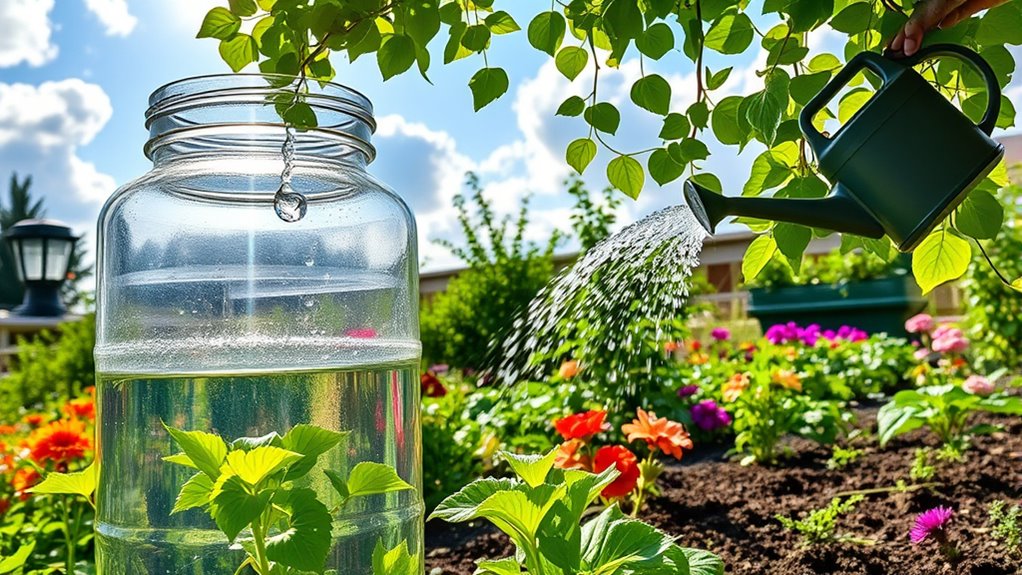

Rainwater harvesting is a smart way to water your garden sustainably. By collecting rainfall, you can reduce water bills while ensuring your plants thrive. You could harvest around 26,000 gallons during the growing season from a typical 2,000 square-foot roof. A well-designed system using gutters, storage tanks, and first-flush diverters can make it easy and efficient. Plus, it enhances your garden’s aesthetics and promotes healthier soils. Discover how to optimize your rainwater collection for even better results!
Key Takeaways
- Rainwater harvesting provides an independent, chemical-free water source for your garden, promoting healthier plant growth and improved soil quality.
- Installing a rainwater collection system, including gutters, downspouts, and storage tanks, maximizes water savings during dry periods.
- Utilizing rain barrels and decorative cisterns can enhance your garden’s aesthetics while effectively managing water resources.
- Regular maintenance, such as cleaning gutters and testing water quality, ensures the rainwater system functions efficiently and remains beneficial for plants.
- By adopting rainwater harvesting practices, you contribute to local conservation efforts while reducing water bills and reliance on chemical fertilizers.

Collapsible Rain Barrel Water Storage Containers-53 Gallon Portable Rainwater Collect System Water Tank to Collect Rainwater from Gutter Downspout Water Catcher with Spigots,Filter&Overflow Kits
【Leak-Proof Design】Unlike typical rain barrels, our product features an integrated design with a straightforward screw-in faucet, eliminating the…
As an affiliate, we earn on qualifying purchases.
As an affiliate, we earn on qualifying purchases.
Understanding Rainwater Harvesting

Rainwater harvesting is a smart way to make the most of nature’s resources, especially if you’re looking to reduce your gardening costs.
This sustainable practice involves collecting and storing rainfall for later use, which means you can rely less on municipal water supplies for irrigation. Just think about it: collecting one inch of rain from a 2,000 square-foot roof can give you around 1,240 gallons of water! Utilizing self-watering planters can further enhance the efficiency of your rainwater usage by maintaining consistent moisture levels in the soil.
In areas like New England, you might harvest up to 26,000 gallons during the growing season. Plus, rainwater is free from harmful chemicals and minerals, making it gentler on your plants. Additionally, incorporating renewable energy solutions into your irrigation system can further enhance sustainability. This method not only conserves water but also promotes healthy ecosystems by reducing runoff and protecting local waterways.
Implementing this method can also lead to cost-effective drainage solutions, like rain gardens, while supporting local conservation efforts. Additionally, utilizing harvested rainwater can significantly reduce energy costs by minimizing the need for energy-intensive water treatment processes.

Good Ideas Impressions 50 Gallon Nantucket Outdoor Home Rain Barrel Water Storage Collector with Garden Planter and Brass Spigot, Dark Brown
50 Gallon capacity rain barrel and 4 inch planter top
As an affiliate, we earn on qualifying purchases.
As an affiliate, we earn on qualifying purchases.
Key Benefits for Gardeners

Here are three key advantages:
- Healthy Plants: Rainwater is free from harmful chemicals, promoting healthier growth and improving soil quality. Additionally, utilizing natural water sources like rainwater can help sustain your garden during dry spells. Moreover, incorporating comfortable living spaces can create an ideal environment for gardening, enhancing overall enjoyment. Furthermore, using rainwater reduces the need for chemical fertilizers, which can harm the environment.
- Cost Savings: Collecting rainwater reduces your water bills while providing an independent source during droughts or restrictions.
- Eco-Friendly Practices: Rainwater harvesting supports local conservation efforts and encourages sustainable gardening practices. Additionally, implementing emergency preparedness essentials in your gardening routine can help ensure that your plants thrive even during unforeseen challenges.

Downspout First Flush Diverter Kit, 3 by Rain Harvesting Pty Ltd
As an affiliate, we earn on qualifying purchases.
As an affiliate, we earn on qualifying purchases.
How Much Water Can You Collect?

You can collect a substantial amount of water for your garden by harvesting rain. For instance, if you have a 2,000 square-foot house, just one inch of rainfall can yield about 1,240 gallons of rainwater.
In regions like New England, homeowners can gather up to 26,000 gallons during the growing season, helping meet outdoor watering needs. This natural water source not only reduces your reliance on municipal supplies but also supports sustainable gardening. Additionally, implementing heat pumps in your irrigation systems can provide energy-efficient solutions for watering your garden.
Plus, the slightly acidic nature of harvested rainwater can enhance plant fertilization, promoting overall garden health. By implementing rainwater harvesting systems, you’ll save money and use water more efficiently, especially during drought conditions. Additionally, utilizing renewable energy sources for your irrigation systems can further enhance sustainability in your gardening practices.
It’s a win-win for your garden and your wallet!

GreenShip 4-Pack Patented Self-Watering Spikes – DIY Plant Watering System for Indoor Plants, Fits Grower Pots, Reuse Containers, Automatic Self-Watering Stakes (Small)
Easy DIY Self-Watering: Transform your indoor plants into self-sufficient greenery by inserting these patented spikes into the bottom…
As an affiliate, we earn on qualifying purchases.
As an affiliate, we earn on qualifying purchases.
Essential Components of a Rainwater Collection System

To effectively harness the benefits of rainwater, a well-designed collection system is vital. Here are the key components you need:
- Gutters and Downspouts: These channel rainwater from your roof to the storage tank. Make sure they’re clean and unobstructed for maximum efficiency.
- Storage Tank: A properly sized tank can hold significant amounts of water, providing an independent source for your garden, especially during droughts.
- First-Flush Diverter: This prevents the initial dirty runoff from entering your tank, guaranteeing the water you collect is clean and suitable for irrigation.
Regular maintenance, like cleaning gutters and checking for leaks, is essential to keep your system running smoothly and maximize your water savings.
Start your rainwater collection journey today!
Innovative Rainwater Design Ideas

If you’re looking to enhance your garden’s sustainability, consider some creative rainwater collection systems that blend functionality with style.
You can incorporate aesthetically pleasing elements that not only capture rainwater but also add visual interest to your space.
Let’s explore how you can integrate these innovative designs into your gardening routine.
Creative Collection Systems
Rainwater harvesting can be both practical and visually appealing, thanks to a variety of creative collection systems.
Here are three innovative options to evaluate for your garden:
- Rain Barrels and Cisterns: These containers store rainwater and can be beautifully integrated into your landscape, enhancing both functionality and aesthetics.
- Bioswales and Rain Gardens: These systems not only capture runoff but also filter water, promoting groundwater recharge while adding a lush element to your garden.
- Gutter Systems with Underground Tanks: They direct rainwater out of sight, maximizing space and providing an efficient, hidden solution for collection.
Aesthetic Integration Techniques
Integrating aesthetic elements into your rainwater harvesting system can transform practical solutions into stunning garden features.
Consider incorporating decorative rain barrels as eye-catching focal points that store up to 60 gallons of rainwater for irrigation. A rain garden filled with native plants not only enhances your landscape but also promotes biodiversity while managing stormwater.
Using permeable paving for pathways allows rainwater to seep into the ground, creating a natural look and reducing runoff. You can also replace traditional downspouts with creative rain chains, adding an artistic touch as they channel water into collection systems.
Finally, installing a green roof on garden structures captures rainwater and reduces heat absorption, providing a vibrant visual while supporting sustainable water management.
Maintenance Tips for Your Collection System

To keep your rainwater collection system running smoothly, you need to perform regular inspections and clean your gutters and filters.
This not only prevents clogs but also guarantees ideal water quality for your garden.
Plus, monitoring the water quality will help you catch any issues before they become bigger problems.
Regular System Inspections
While you might be enthusiastic to enjoy the benefits of your rainwater collection system, regular inspections are essential to confirm it operates efficiently.
Here are three key areas to focus on during your inspections:
- Check for Leaks: Inspect storage tanks and pipes for any leaks. Even small ones can lead to significant water loss over time.
- Monitor Water Levels: Keep an eye on the water level in your storage system. This helps optimize usage and prevent overflow during heavy rain.
- Test Overflow Systems: Verify overflow systems work correctly to direct excess water away from your property, preventing erosion or flooding in your garden.
Clean Gutters and Filters
Maintaining clean gutters and filters is essential for maximizing the efficiency of your rainwater collection system. Clean your gutters at least twice a year to prevent debris buildup and guarantee peak water flow.
Using mesh filters or screens at downspouts can catch leaves and sediment, reducing maintenance needs and enhancing water quality. After heavy storms, inspect and clean your collection system to remove any blockages or contaminants.
Regularly flush all parts, including tanks and pipes, with a vinegar solution or a similar non-toxic cleaner to eliminate algae and bacteria.
Additionally, consider installing a first-flush diverter to discard the initial runoff, which often contains pollutants, guaranteeing only cleaner rainwater enters your storage system.
Monitor Water Quality
Once your gutters and filters are in top shape, it’s time to focus on monitoring the quality of your collected rainwater.
Regular checks can guarantee your water remains safe for your garden. Here are some key tips to keep in mind:
- Test pH Levels: Regularly check the pH, aiming for a slightly acidic range of 6.0 to 6.5, which supports plant growth.
- Inspect and Clean: Frequently clean gutters and downspouts to prevent debris build-up that can compromise water quality.
- Utilize Filtration: Implement a filtration system before water enters storage tanks to remove contaminants and particles.
Real-Life Success Stories and Testimonials

Many homeowners are reaping the benefits of rainwater harvesting, with some collecting up to 26,000 gallons during the growing season.
By using this sustainable water source, you can greatly cut down on municipal water usage. Many gardeners have noticed their plants thriving thanks to the slightly acidic rainwater, which enhances growth and fertilization.
Customers report lower outdoor watering costs and appreciate having an independent water supply during droughts or restrictions.
Positive testimonials highlight how rain gardens transform landscapes into eco-friendly spaces, improving aesthetics while managing drainage effectively.
Clients consistently praise the efficiency of their rainwater collection systems, enjoying long-term satisfaction from reduced water bills and healthier gardens.
Join the movement and experience these benefits for yourself!
Frequently Asked Questions
How Do You Collect Rainwater for Garden Watering?
To collect rainwater for your garden, start by installing a rain barrel or cistern beneath your downspouts to capture runoff.
Use a first flush diverter to keep debris out of your water supply.
Calculate potential harvest using a rainwater collection calculator based on your roof size and local rainfall.
Finally, connect a drip irrigation system for efficient watering and remember to maintain your setup regularly for peak performance.
Happy gardening!
Why Is Collecting Rainwater Illegal in Some States?
Collecting rainwater’s illegal in some states mainly due to water rights issues and potential ecological impacts.
You might find that certain regions impose strict regulations to prevent interference with existing water supplies and agricultural needs. These laws often require permits and specific collection systems to guarantee sustainable practices.
Additionally, restrictions may exist to avoid contamination, guaranteeing the quality of the water collected.
However, many states are revising these laws to promote eco-friendly initiatives.
How Sustainable Is Rainwater Harvesting?
How sustainable can your water source be?
Rainwater harvesting is incredibly sustainable, allowing you to tap into a natural resource that reduces reliance on municipal supplies. By collecting rainwater, you’re not only conserving water but also benefiting your plants with a chemical-free watering option.
Plus, using this method cuts down on energy costs associated with traditional water use. Embracing rainwater harvesting helps promote eco-friendly practices and supports a healthier environment for everyone.
What Are the 10 Disadvantages of Rainwater Harvesting?
When considering rainwater harvesting, you should be aware of several disadvantages.
First, initial setup costs can be high, requiring investment in tanks and filtration.
Rainwater quality might vary, needing proper treatment to guarantee safety.
Limited collection capacity can leave you reliant on municipal water, especially in dry areas.
Maintenance can be time-consuming, and unpredictable rainfall patterns mightn’t meet your water needs during prolonged dry spells, making it a less reliable option.
Conclusion
By embracing rainwater harvesting, you’re not just watering your garden; you’re nurturing a sustainable ecosystem. Like a well-tended plant, your efforts will bloom into a thriving, eco-friendly space. With the right system in place, you can enjoy the many benefits of rainwater while conserving precious resources. So, gather those raindrops and watch your garden flourish—it’s a small step that can make a big difference in our world. Start your journey today!