
To quickly fix seasonal home maintenance problems, start by clearing out clogged gutters with a scoop and hose, then install gutter guards to prevent future issues. Seal gaps around windows and doors to stop drafts or leaks. Insulate your attic to prevent ice dams and keep heat in. Fix small cracks or potholes promptly, and clear debris from your yard to protect your home’s exterior. Staying proactive helps prevent costly damage—keep going to discover more simple solutions.
Key Takeaways
- Regularly inspect and clean gutters to prevent clogs and water damage before storms or heavy rain.
- Install gutter guards to reduce debris buildup and ease ongoing maintenance efforts.
- Seal gaps around windows, doors, and attic vents to improve energy efficiency and prevent leaks.
- Ensure proper drainage by extending downspouts away from the foundation and checking for blockages.
- Schedule proactive inspections and repairs for driveways, roofs, and drainage systems to avoid costly seasonal damage.
Clearing Clogged Gutters Quickly and Effectively

Clogged gutters can cause water damage and foundation issues if not cleared promptly, especially during the rainy season. To tackle this efficiently, try some DIY hacks for gutter maintenance. First, safety is key—use a sturdy ladder and wear gloves to avoid debris and sharp edges. Remove leaves and twigs by hand or with a gutter scoop, then flush the system with a garden hose to clear remaining dirt. Installing gutter guards can reduce future clogs, making maintenance easier. Regularly inspecting your gutters after storms or heavy winds prevents buildup. Keep an eye out for sagging or overflowing sections, which signal blockages. Quick, proactive gutter cleaning protects your home from costly water damage and keeps your foundation solid. Consistent gutter maintenance is the best defense against seasonal issues. Additionally, understanding the importance of proper drainage and water flow can help you maintain an effective gutter system.
Preventing Ice Dams Before They Form
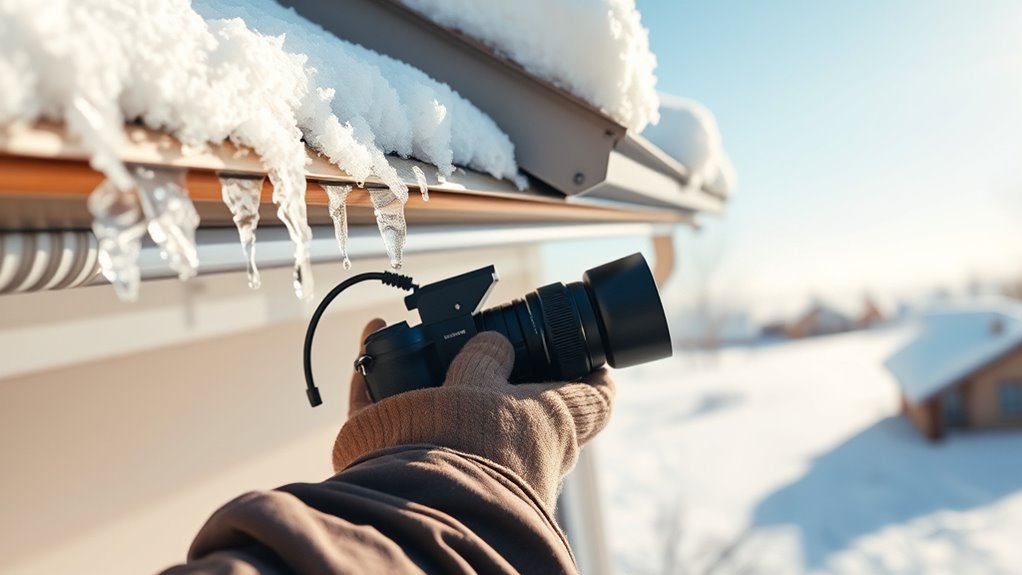
To prevent ice dams from forming, start by insulating your attic properly to keep heat from escaping. Make sure your gutters are clear and maintained regularly so melting snow flows away smoothly. These simple steps can save you from costly repairs and water damage later on. Additionally, staying informed about AI safety measures can help you understand emerging risks related to smart home systems and security devices.
Insulate Attic Properly
Proper attic insulation is essential for preventing ice dams before they form. When your attic isn’t properly insulated, heat escapes, melting snow on the roof’s surface. The melted snow refreezes at the eaves, creating ice dams that cause leaks and damage. To avoid this, guarantee your attic has adequate attic insulation and proper ventilation. Good ventilation keeps the attic cold, preventing snow from melting unevenly. Here are key tips:
- Seal air leaks around attic openings
- Add enough insulation to reach recommended R-values
- Ensure soffit vents are unobstructed
- Use baffles to promote airflow between insulation and roof deck
- Maintaining proper attic ventilation is crucial for temperature regulation and preventing moisture buildup.
Maintain Gutters Regularly
Regularly maintaining your gutters is essential for preventing ice dams before they form. Clear debris and leaves from your gutters so water flows freely, reducing the risk of ice buildup. Installing gutter guards can help keep debris out and make maintenance easier. Make certain your downspouts are directing water away from your home’s foundation; using downspout extensions prevents water from pooling near your house, which can contribute to ice dam formation. During fall and winter, inspect your gutters regularly, especially after storms, to catch any blockages early. Properly maintained gutters and downspout extensions keep water moving away from your roof and walls, minimizing ice dam risks and protecting your home’s structure during cold months. Ensuring your drainage system is effective can also prevent water pooling, further reducing the likelihood of ice dams.
Fixing Drafty Windows and Doors in a Flash
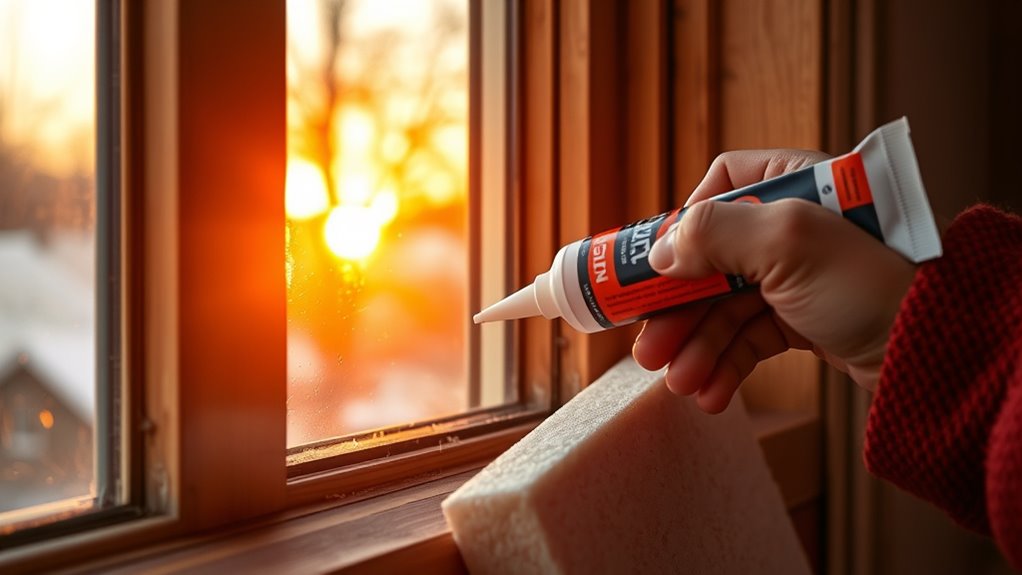
When you notice drafts around your windows and doors, sealing the gaps quickly can make a big difference. Use effective materials like weatherstripping or draft stoppers to block the air leaks right away. If you need a fast fix, temporary solutions such as plastic film or foam tape can help keep the cold out until you make permanent repairs. Embracing failure as a learning process can also lead to discovering even better long-term sealing solutions.
Seal Gaps Effectively
Sealing gaps around windows and doors is one of the quickest ways to improve your home’s energy efficiency. You can block drafts and prevent heat loss by applying simple fixes. Start by weatherproofing doors with weatherstripping or door sweeps, which stop air leaks effectively. Check for gaps around attic vents and seal them to prevent drafts from above. Use caulk to fill small cracks around window frames and door jambs. For larger gaps, foam sealant can be a quick fix. Don’t forget to seal any visible gaps around electrical outlets and switch plates. These small steps can make a big difference in maintaining your home’s temperature and reducing energy bills. Focus on sealing attic vents and weatherproofing doors for maximum impact.
Use Temporary Solutions
If you notice drafts coming through your windows or doors, quick fixes can provide immediate relief while you plan for more permanent solutions. Temporary patching is an effective way to block drafts quickly and keep your home comfortable. You can use materials like draft stoppers, weatherproofing strips, or even rolled-up towels to seal gaps temporarily. These quick fixes are inexpensive and easy to apply, giving you instant relief from cold air or heat loss. Keep in mind that these aren’t long-term solutions but are perfect for immediate comfort and energy savings. Use them until you can schedule proper repairs or replacements. Temporary solutions are a smart way to manage seasonal home problems without delaying your comfort or risking higher energy bills.
Maintaining the Heating System for Winter Readiness

As winter approaches, it’s essential to make certain your heating system is prepared to keep your home warm and comfortable. Start by checking your thermostat calibration to ensure it accurately controls the temperature. Replace your furnace filter to improve airflow and efficiency, preventing strain on your system. Schedule a professional inspection if you notice inconsistent heating or strange noises. Additionally, clean vents and registers to avoid blockages that hinder airflow. Consider sealing leaks around windows and doors to retain heat effectively. By taking these steps, you’ll boost your system’s performance and reduce energy costs. Incorporating predictive analytics can help you identify potential issues before they become costly repairs. Remember, a well-maintained heater keeps you cozy all winter long while preventing costly breakdowns. Staying proactive now means fewer surprises when the cold hits.
Preparing Your Lawn and Garden for Spring
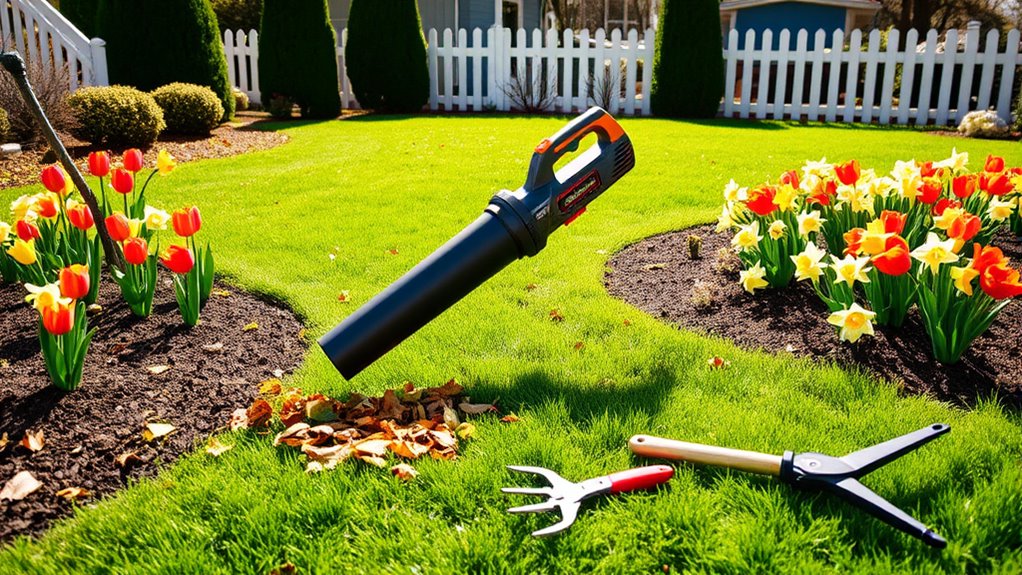
With winter behind you, now is the perfect time to prepare your lawn and garden for spring growth. Start by aerating your lawn to relieve soil compaction and promote healthy roots. Next, prune dead or damaged branches from trees and shrubs to encourage new growth. Proper garden pruning enhances plant health and appearance. Additionally, remove debris, fallen leaves, and weeds to prevent pests and diseases. Use the following table to plan your tasks:
| Task | Timing |
|---|---|
| Lawn aeration | Early spring |
| Garden pruning | Before new growth begins |
| Remove debris | After snow melts |
| Apply compost | As soil warms up |
| Water early | Once the weather stabilizes |
These steps set the stage for a lush, vibrant season. Understanding seasonal gardening cycles can help you optimize your maintenance schedule for maximum growth.
Addressing Potholes and Driveway Damage Post-Winter
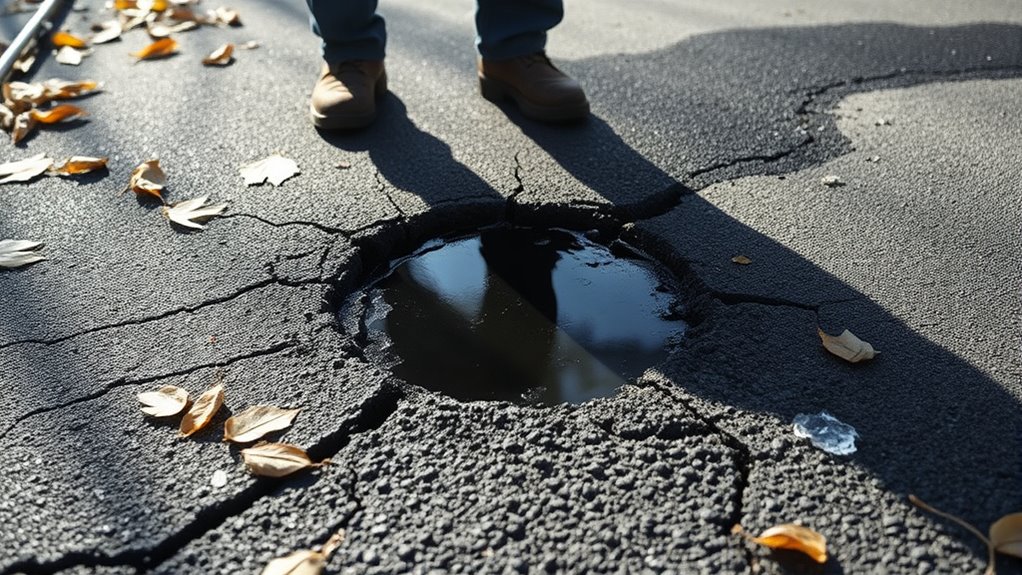
Winter’s harsh conditions often leave your driveway riddled with potholes and cracks. To prevent further damage, address these issues promptly. Start with asphalt repairs to fill potholes and smooth out cracks, preventing water infiltration that worsens deterioration. Consider driveway resurfacing if damage is extensive; it restores a smooth, durable surface quickly. Regular maintenance, including prompt repairs, is essential to prevent further damage and extend your driveway’s lifespan.
Here are some essential steps:
- Inspect your driveway for cracks and holes
- Fill small cracks with asphalt crack filler
- Patch larger potholes with cold patch asphalt
- Plan for driveway resurfacing if damage is widespread
Taking quick action helps maintain your driveway’s integrity and prolongs its lifespan. Regular maintenance and timely asphalt repairs are key to avoiding costly replacements later.
Sealing Leaks and Insulation Gaps for Energy Efficiency

Ever wonder how small leaks and gaps in your home can lead to big energy bills? Sealing these openings improves energy efficiency and keeps your home comfortable. Start by caulking window gaps to prevent drafts, especially in older windows. Use foam insulation patches to fill larger holes around pipes and vents. Focus on areas where warm air escapes or cold air enters. Here’s a quick overview:
| Step | Tools Needed | Tips |
|---|---|---|
| Caulking window gaps | Caulking gun, weatherstripping | Apply evenly for a tight seal |
| Foam insulation patches | Foam spray or pads | Ensure proper fit and coverage |
| Inspect for leaks | Flashlight, mirror | Check hidden spots |
| Seal gaps thoroughly | Tape or sealant | Double-check for complete coverage |
Sealing leaks conserves energy and money—don’t skip this quick fix. Properly sealing these gaps can significantly reduce energy loss, as indicated in the energy efficiency section of the knowledge.
Managing Leaf and Debris Accumulation in Fall

Keeping your home energy-efficient involves more than just sealing leaks; fall also brings an increase in leaves and debris that can block gutters and drainage. Regular leaf removal and debris cleanup are essential to prevent water damage and maintain proper flow. When leaves and debris accumulate, they can cause backups, leaks, or even ice dams in colder weather. To stay ahead, schedule weekly inspections and clear gutters before storms hit. Use sturdy gloves and tools to safely remove debris and prevent clogs. Don’t forget to check downspouts and extend drainage away from your foundation. Proper debris cleanup not only protects your home but also keeps your yard tidy. Additionally, understanding the importance of gutter maintenance can help homeowners develop a more comprehensive approach to seasonal home care. Stay proactive with these simple steps to avoid costly repairs and keep your home safe and efficient throughout the season.
Frequently Asked Questions
How Often Should I Inspect My Gutters During Different Seasons?
You should inspect your gutters at least twice a year, once in spring and once in fall, to stay on top of gutter cleaning and prevent clogs. During winter, check them after storms to make sure ice or debris haven’t caused blockages. In summer, do a quick inspection after heavy rains. Regular seasonal inspections help maintain proper drainage, avoid water damage, and keep your gutters functioning smoothly year-round.
What Are Quick Fixes for Minor Roof Leaks Before Professional Help Arrives?
If you notice a minor roof leak, start with DIY patching using roofing cement or waterproof tape to seal small cracks. For more urgent leaks, apply emergency tarping over the affected area to prevent further damage. make certain the tarp extends beyond the leak and secure it tightly. These quick fixes buy you time until professional help arrives, keeping your home protected from water damage.
How Can I Temporarily Prevent Drafts in Doors and Windows Without Replacing Them?
To temporarily prevent drafts in doors and windows, you can use draft stoppers or apply weather stripping. Place draft stoppers at the base of doors and windows to block cold air from seeping in. For windows, apply adhesive weather stripping around the edges to seal gaps. These quick solutions are affordable, easy to install, and effective at maintaining warmth until you can make more permanent repairs.
What Are Simple Steps to Ensure My Heating System Is Energy-Efficient?
You can guarantee your heating system is energy-efficient by scheduling regular HVAC maintenance, which keeps your system running smoothly. Change filters monthly to improve airflow and reduce strain. Seal leaks around vents and ducts with caulk or foam to prevent heat loss. Using a programmable thermostat helps you conserve energy when you’re not home. These simple steps boost energy savings and extend your system’s lifespan, making your home cozy and cost-effective.
How Can I Identify Early Signs of Driveway Deterioration After Winter?
You can identify early signs of driveway deterioration after winter by inspecting for driveway cracks and ice damage. Look closely at the surface for any new or expanding cracks, especially those that seem to form around edges or near existing damage. Also, check for areas where the pavement has lifted or become uneven, which often results from freeze-thaw cycles. Addressing these issues early helps prevent more extensive and costly repairs later.
Conclusion
With a few quick fixes, you’ll have your home humming like a well-tuned orchestra, ready to face each season’s symphony of challenges. Think of these maintenance tips as your home’s armor, shielding it from winter’s chill or summer’s scorch. Tackle problems now, and you’ll keep your sanctuary cozy and carefree, a fortress of comfort that stands strong through every seasonal storm and sunshine. Your home’s health is your peace of mind—so get started today!