To safeguard your property effectively, place smart leak detectors near water sources like under sinks, around water heaters, and along vulnerable pipes, especially in basements, laundry rooms, and garages. Avoid clutter and obstructions, and secure sensors at floor level for early detection. Regularly check calibration and battery life to guarantee reliability. To learn how to maximize coverage and ensure your system works flawlessly, keep exploring for more expert tips.
Key Takeaways
- Place sensors at floor level near common leak sources like under sinks, around water heaters, and appliances such as washing machines.
- Install detectors in high-risk areas such as basements, crawl spaces, and behind walls where leaks are likely to go unnoticed.
- Secure sensors on stable surfaces, avoiding clutter, and ensure proper calibration and placement after maintenance or ceiling work.
- Use extendable sensors or ceiling brackets for hard-to-reach spots like ceilings and tight spaces.
- Regularly check, calibrate, and maintain sensors to ensure early detection and reliable alerts.

Water Leak Detector Sensor Alarm: Home Water Flooding Monitor Smart Sink Overflow Monitoring Adjustable Wet Moisture Alert Pipe Leakage Drip Detection Warning for Basement Floor
Drip & Leak Alerts: Water leak detector alarm is designed with 4 rear water leakage detection probes and…
As an affiliate, we earn on qualifying purchases.
As an affiliate, we earn on qualifying purchases.
Why Strategic Placement Matters for Your Smart Leak Detectors
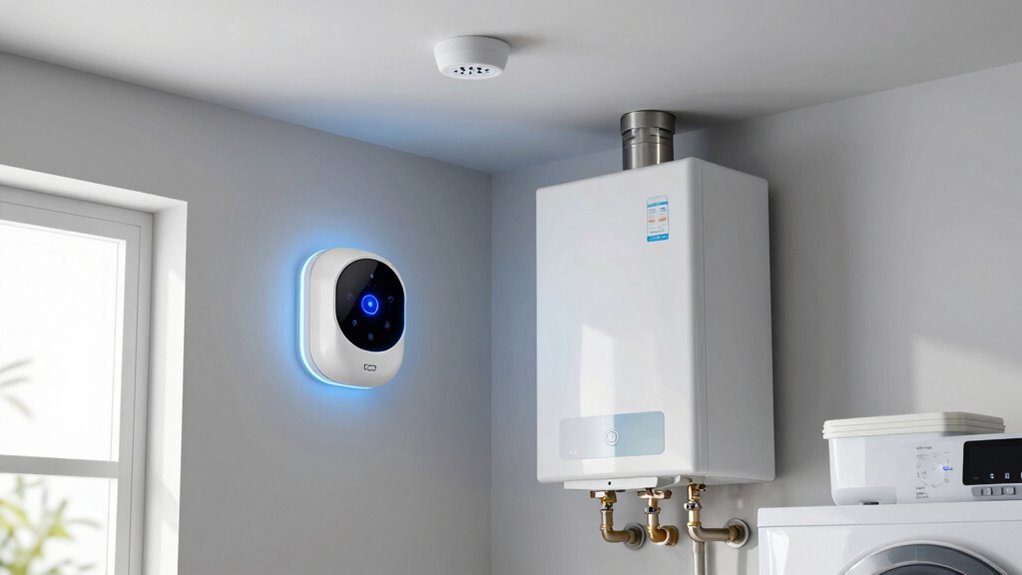
Strategic placement is essential to ensuring your smart leak detectors work effectively. Proper placement helps maintain accurate sensor calibration, so you receive reliable alerts when leaks occur. Position sensors where water exposure is likely, such as under sinks, near water heaters, or along pipes. Avoid placing them in areas prone to humidity or temperature fluctuations, which can affect sensor performance. Additionally, placement impacts battery life; sensors located in high-traffic or hard-to-reach spots may drain batteries faster due to frequent alerts or maintenance. Keep sensors accessible for periodic checks and battery replacements. Proper sensor placement not only enhances detection accuracy but also helps prevent false alarms caused by environmental factors. Understanding sensor performance and environmental influences can further optimize your setup. By carefully choosing locations, you optimize detection accuracy and extend battery life, ensuring your smart leak detectors provide continuous, dependable protection for your home or business. Considering environmental conditions is also vital, as extreme humidity or temperature variations can impair sensor function and lead to false positives or missed leaks. Regularly monitoring sensor calibration helps maintain optimal performance over time. Being aware of and adjusting for environmental factors can significantly improve the longevity and reliability of your sensors.
Water Leak Detector Sensor Alarm: Home Water Flooding Monitor Smart Sink Overflow Monitoring Adjustable Wet Moisture Alert Pipe Leakage Drip Detection Warning for Basement Floor
Drip & Leak Alerts: Water leak detector alarm is designed with 4 rear water leakage detection probes and…
As an affiliate, we earn on qualifying purchases.
As an affiliate, we earn on qualifying purchases.
Key Areas Most Vulnerable to Water Leaks in Your Home or Business
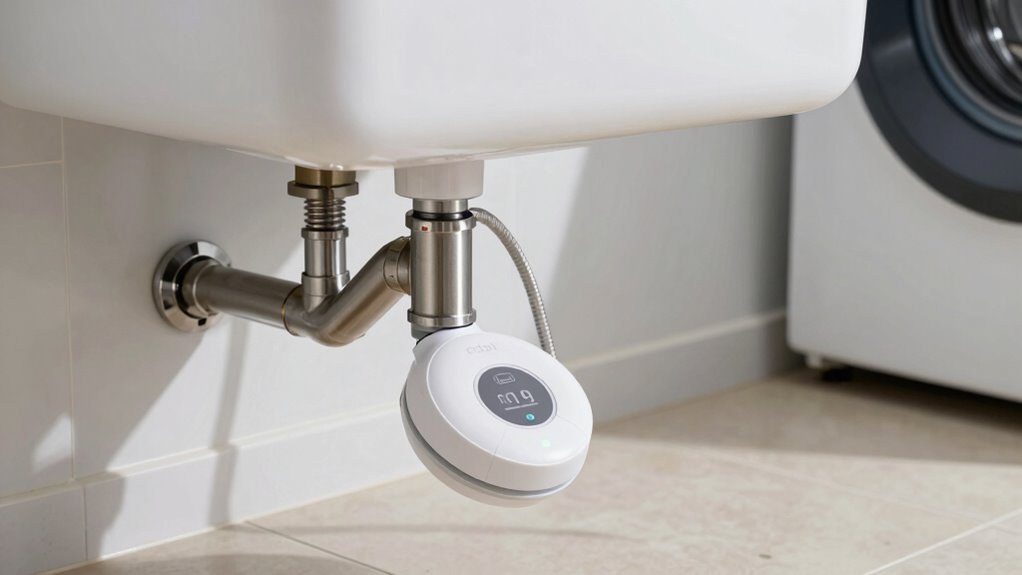
Water leaks can cause significant damage if you don’t catch them early, making it essential to know where they’re most likely to occur. Common vulnerable areas include under sinks, around water heaters, and near appliances like dishwashers and washing machines. High water pressure can increase the risk of leaks, so regularly monitoring these zones is crucial. Ensure your leak sensors are properly calibrated to detect even minor water presence, reducing false alarms. Pay attention to pipes in basements or crawl spaces, where unnoticed leaks can escalate quickly. Additionally, understanding the horsepower of electric dirt bikes can help you appreciate the importance of reliable leak detection in maintaining electrical components and batteries, preventing potential malfunctions. By focusing on these key areas and maintaining optimal sensor calibration, you’ll improve your chances of detecting leaks early, preventing costly damage and water wastage. Regular inspections of potential leak sources are also recommended to stay ahead of possible issues. For comprehensive protection, consider incorporating smart sensors that can alert you immediately when a leak occurs, giving you peace of mind. Proper placement of sensors in vulnerable zones can greatly enhance early detection efforts and minimize damage.
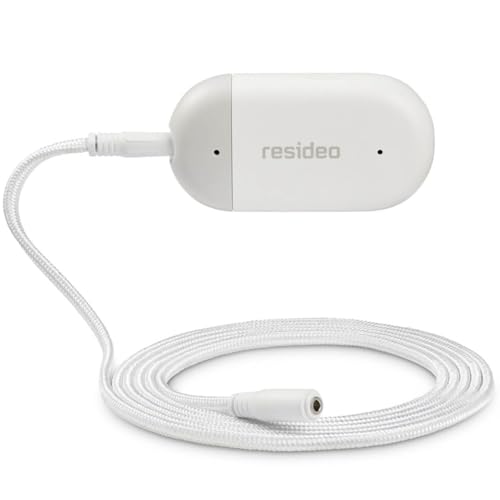
Resideo CHW3610W8001 WiFi Water Leak Detector For Home, Smart Water Sensor Alarm and Freeze Detector, Water Detector Alarm for Basement, Bathroom, and Under Sink
WiFi water leak sensor – When you're away, you can depend on the L1 WiFi water alarm leak…
As an affiliate, we earn on qualifying purchases.
As an affiliate, we earn on qualifying purchases.
Where to Place Smart Leak Detectors Near Water Heaters, Appliances, and Pipes
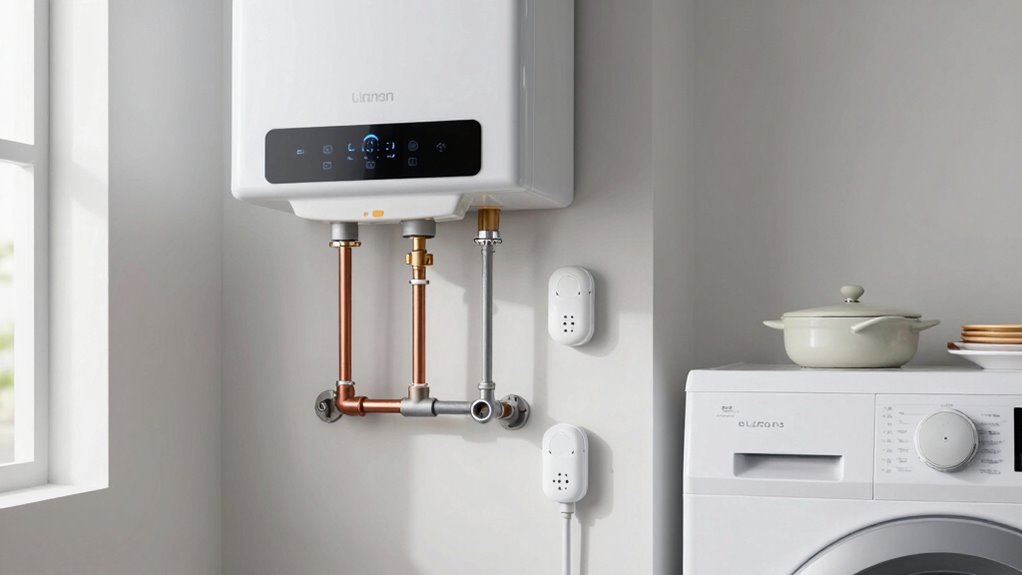
To effectively detect leaks early, you should place smart leak detectors close to water heaters, appliances, and pipes where leaks are most likely to occur. Position detectors near water heaters, especially at the base, where leaks from faulty valves or corrosion can happen. Install them along pipes that experience high water pressure, as increased pressure can lead to failures. Make certain they’re placed where pipe insulation is minimal, since exposed areas are more vulnerable to damage and leaks. Additionally, situate detectors near washing machines, dishwashers, and under sinks, where leaks can cause significant damage. Proper placement helps catch leaks quickly, even if they develop behind walls or under floors, providing you with early alerts and preventing costly water damage. Ensuring detectors are placed in seasonal checklists can help maintain their effectiveness over time and account for changing water conditions. Regularly inspecting and adjusting detector placement based on water usage patterns enhances leak detection reliability.
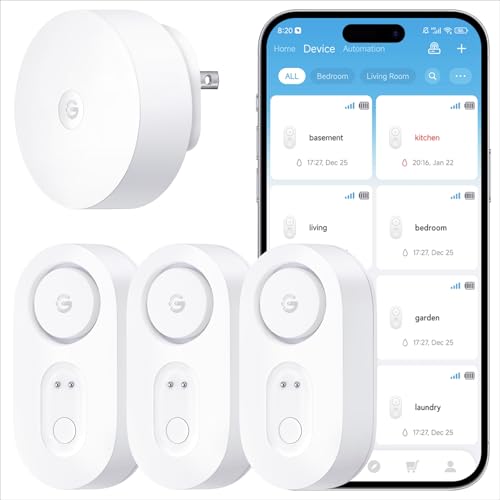
GoveeLife Upgraded Smart Water Leak Detector 1s with 1804ft Ultra-Long Range, WiFi Water Sensor with SMS/Email/APP Push and Sound Alarm, 5-Year Battery Life, Suit for Home, Basement, Kitchen, 3 Pack
Breakthrough 550m/1804ft Connectivity: Engineered with advanced Sub-1G long-range wireless tech, our leak detector maintains robust signals over unprecedented…
As an affiliate, we earn on qualifying purchases.
As an affiliate, we earn on qualifying purchases.
How to Install Leak Detectors in Basements, Garages, and Laundry Rooms

To effectively protect your basement, garage, or laundry room, you need to focus on proper sensor placement. Make sure detectors are installed where leaks are most likely to occur and avoid common mistakes like placing them too high or too low. Correct installation guarantees your leak detectors will alert you promptly and work reliably. Additionally, understanding proper sensor placement can help you optimize coverage and ensure early leak detection in critical areas. Be sure to consider sensor sensitivity to prevent false alarms and missed detections, ensuring your system functions as intended. Recognizing environmental factors can also improve the durability and effectiveness of your leak detection system. Proper installation techniques are essential for reliable operation and early leak detection. Taking into account real-world conditions helps adapt your setup to the specific environment, ensuring consistent protection.
Optimal Sensor Placement Strategies
Proper placement of leak detectors is essential for early detection and preventing water damage in basements, garages, and laundry rooms. Position sensors near appliances, pipes, and potential leak sources, guaranteeing they’re on a stable surface. Regularly calibrate sensors to maintain accuracy, and check battery life to avoid false alarms. For ideal coverage, install detectors at floor level, where leaks typically occur. Keep in mind that placement affects sensor calibration and battery longevity. To help you plan, here’s a quick guide:
| Location | Ideal Placement | Key Consideration |
|---|---|---|
| Basement | Near sump pumps and water heaters | Avoid clutter, ensure easy access |
| Garage | Adjacent to washing machines, pipes | Keep away from dust and debris |
| Laundry Room | Close to washing machines and sinks | Maintain proper calibration |
| Near Pipes | Along vulnerable pipe joints | Ensure stable mounting |
| Floor Level | Low, near potential leak spots | Regularly check battery status |
Additionally, proper placement can significantly influence the sensor’s ability to detect leaks early and reduce the risk of water damage.
Avoiding Common Installation Errors
Incorrect installation methods can greatly reduce the effectiveness of leak detectors, leading to missed leaks or false alarms. To avoid this, verify proper sensor calibration for accurate detection. Double-check that the power supply is stable and correctly connected to prevent false triggers or device failure. When installing in basements, garages, or laundry rooms, keep these tips in mind:
- Mount sensors at recommended heights and locations, avoiding areas with drafts or obstructions.
- Regularly calibrate sensors according to the manufacturer’s instructions to maintain accuracy.
- Use a reliable power supply, ensuring connections are secure and protected from moisture or power surges.
- Proper installation techniques are essential to ensure your leak detectors function correctly and provide reliable protection.
- Additionally, understanding smart home integration can help automate alerts and enhance overall leak detection safety.
- Proper placement also involves considering sensor positioning to maximize coverage and early leak detection, especially in high-risk areas.
- Ensuring correct sensor calibration is crucial for maintaining long-term accuracy and reducing false alarms.
- Implementing regular maintenance routines can further ensure consistent performance and early leak detection.
Tips for Installing Leak Detectors in Hard-to-Reach Spots

When installing leak detectors in hard-to-reach spots, consider using extendable sensors to make placement easier. Access ceiling areas or tight corners with ladders or specialized tools to guarantee proper coverage. Always install detectors near potential leak sources for the most effective alerts. Additionally, ensure that the placement of sensors accounts for airflow patterns to maximize detection efficiency and reduce false alarms. Incorporating proper placement strategies can further enhance the reliability of leak detection in complex spaces.
Use Extendable Sensors
Installing leak detectors in hard-to-reach spots can be challenging, but extendable sensors make the process much easier. These sensors help you place detectors precisely without risking damage or improper installation. When using extendable sensors, guarantee you regularly check sensor calibration to maintain accuracy, especially since some models may require recalibration after exposure to environmental changes. Also, consider battery life, as extendable sensors often have rechargeable or replaceable batteries that need attention for continuous protection.
- Adjust the sensor’s reach carefully to avoid false alarms
- Test the sensor after installation to confirm proper operation
- Keep an eye on battery status to prevent unexpected failures
Using extendable sensors simplifies placement while ensuring reliable leak detection in tough spots.
Access Ceiling Areas
Reaching ceiling areas can be tricky, but with the right approach, you can make certain your leak detectors are properly installed. Use ceiling mounting brackets or extendable poles to position sensors accurately in hard-to-reach spots. Make certain the detector is securely attached to avoid movement that could affect performance. Once mounted, perform sensor calibration to confirm the device detects leaks effectively at this height. Proper calibration accounts for environmental factors and sensor sensitivity, preventing false alarms or missed leaks. Take your time to verify the detector’s alignment and response. Regularly check the sensor’s position and calibration, especially after maintenance or ceiling work. Proper installation and calibration are key to reliable leak detection in ceiling areas, giving you peace of mind.
Install Near Potential Leaks
To guarantee your leak detectors catch issues early, place them as close as possible to potential leak sources, even if those spots are hard to access. When installing in tight or hard-to-reach areas, consider using waterproof materials to protect the sensors from moisture damage. Secure the detectors firmly to prevent movement that could affect sensor calibration over time. Ensure you select sensors designed for difficult environments, and regularly check calibration to maintain accuracy.
- Use waterproof materials to shield sensors in damp areas
- Mount detectors securely to prevent misalignment
- Regularly verify sensor calibration for reliable detection
How to Maximize Coverage and Effectiveness of Your Leak Detection System

Maximizing the coverage and effectiveness of your leak detection system requires strategic placement and regular maintenance. Guarantee sensors are properly calibrated so they respond accurately to leaks, reducing false alarms and missed detections. Take advantage of wireless connectivity to monitor sensor data remotely, enabling quick responses and troubleshooting. Position sensors in high-risk areas and avoid obstructions that could interfere with detection. Regularly check and calibrate sensors to maintain their sensitivity and reliability over time. Optimize coverage by layering sensors in critical zones, avoiding gaps that leaks could exploit. Keep firmware and software updated to improve system performance. Integrating wireless alerts ensures you stay informed instantly, no matter where you are, enhancing your overall leak protection.
How to Test and Maintain Your Leak Detectors for Reliable Protection

Regularly testing and maintaining your leak detectors is essential to guarantee they provide reliable protection. You should routinely check sensor calibration to assure accurate leak detection. This involves following the manufacturer’s instructions for testing sensor sensitivity and recalibrating when necessary. Battery maintenance is equally important; replace batteries before they run out to prevent false alarms or system failure. Additionally, keep the detectors clean and free of dust or debris that could interfere with sensor performance.
Regular testing, calibration, and cleaning ensure reliable leak detector performance and prevent false alarms.
- Perform regular sensor calibration checks according to the manufacturer’s guidelines
- Replace batteries proactively to avoid power loss
- Clean the detectors periodically to prevent dust build-up and maximize operation
Frequently Asked Questions
How Often Should I Replace or Upgrade My Leak Detectors?
You should replace or upgrade your leak detectors every 3 to 5 years, depending on sensor maintenance and device compatibility. Regularly check for signs of wear, corrosion, or malfunctions, and update the firmware when available. Keep your sensors current to guarantee maximum protection, as outdated devices may not detect leaks accurately. Staying proactive with maintenance and upgrades helps prevent costly water damage and keeps your system reliable.
Can Smart Leak Detectors Integrate With Existing Home Security Systems?
You can definitely integrate smart leak detectors with your existing home security system, provided you verify sensor compatibility and installation considerations first. Most modern detectors are designed to connect via Wi-Fi or Zigbee, making setup straightforward. Ensure your security hub supports these protocols, and follow installation guidelines to avoid false alarms. With proper integration, you’ll enjoy seamless protection and instant alerts, giving you peace of mind without overhauling your entire security setup.
Are There Specific Brands Recommended for Different Areas?
Yes, certain brands excel in specific areas, so your choice depends on sensor placement needs. For example, Honeywell and Fibaro offer reliable options for bathrooms and kitchens, where moisture is frequent. When selecting brand recommendations, consider compatibility with your existing system and sensor placement flexibility. Always opt for trusted brands known for accuracy and durability, ensuring effective leak detection in all critical areas of your home.
How Do Smart Leak Detectors Alert Me Remotely?
Smart leak detectors alert you remotely through notification methods like smartphone alerts, emails, or app notifications. When a leak is detected, the device instantly sends a remote alert, allowing you to act quickly regardless of your location. You can customize these notifications to make sure you’re immediately informed of potential water issues, giving you peace of mind and helping prevent costly damage before it escalates.
What Is the Typical Lifespan of a Smart Leak Sensor?
A stitch in time saves nine, and so does knowing your leak sensor’s lifespan. Typically, a smart leak sensor lasts about 2 to 5 years depending on the quality of the sensor battery life and how often you calibrate the device. Regular maintenance, like replacing batteries and recalibrating, guarantees it stays reliable. To maximize protection, check the manufacturer’s recommendations for device calibration frequency and battery replacement intervals.
Conclusion
Ironically, the best way to stay dry is to forget about those tiny leak detectors until disaster strikes. By placing sensors in the right spots and maintaining them, you might just prevent a flood and save yourself a headache. So, go ahead—be proactive, not reactive—because when it comes to water leaks, a little foresight can keep you high and dry. After all, who wants to learn the hard way?