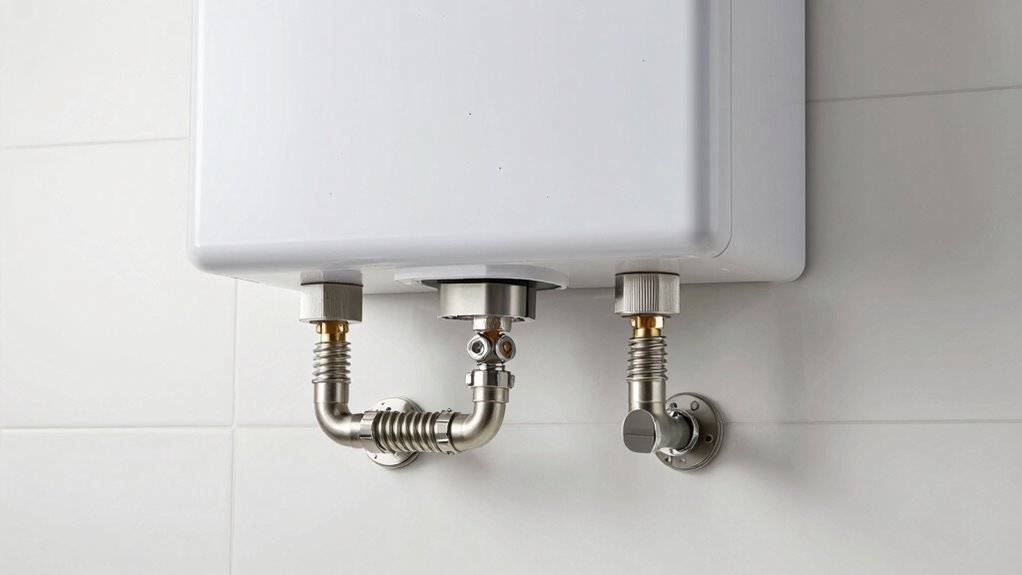

Proper venting is vital for your tankless water heater’s safety and performance. It safely expels harmful gases like carbon monoxide and prevents leaks, corrosion, or buildup that can threaten your health and the system’s lifespan. Using the right venting system and materials, following installation guidelines, and complying with regulations are essential steps. To keep your system safe and efficient, it’s important to understand how to install and troubleshoot venting properly—more details await if you continue exploring.
Key Takeaways
- Proper venting prevents dangerous buildup of combustion gases like carbon monoxide, ensuring safety and indoor air quality.
- Use appropriate vent materials resistant to high temperatures and corrosion for reliable operation.
- Follow manufacturer instructions and local codes meticulously during installation to avoid leaks and hazards.
- Regularly inspect venting systems for damage, corrosion, or blockages to maintain safety and efficiency.
- When issues arise or regulations are unclear, consult a qualified professional for proper troubleshooting and repairs.

DiversiTech CVENT-2 2-Inch Concentric Kit for Tankless Gas Water Heater, High Efficiency Furnaces, 7.75" x 34.75" x 6.75", White
2-INCH CONCENTRIC VENT: Facilitates a streamlined installation process by offering dual-pipe configuration, specifically designed to accommodate high-efficiency furnaces,…
As an affiliate, we earn on qualifying purchases.
As an affiliate, we earn on qualifying purchases.
Why Proper Venting Is Critical for Tankless Water Heaters
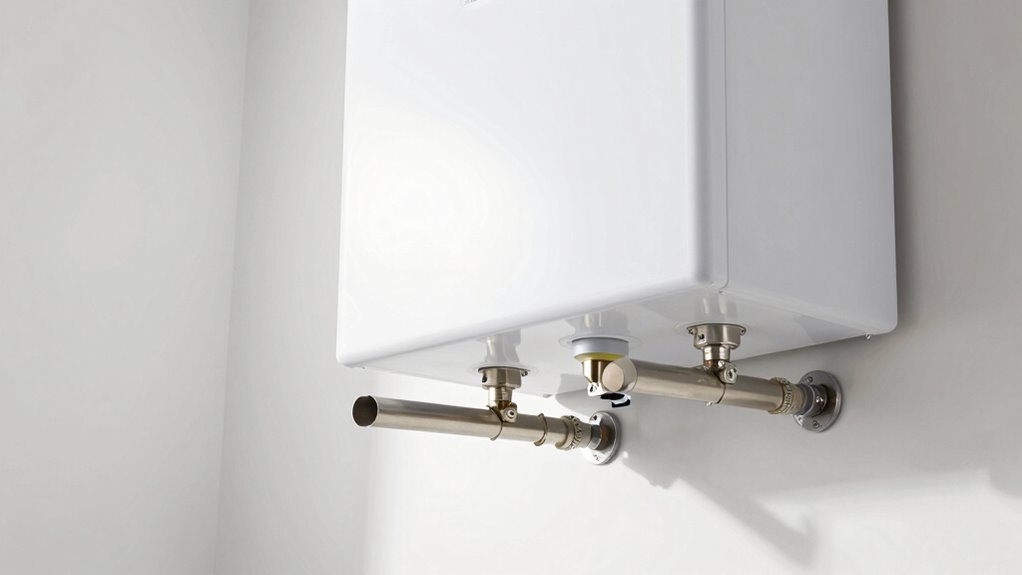
Proper venting is vital for the safe and efficient operation of your tankless water heater. Choosing the right venting material is paramount because it impacts durability and safety, preventing dangerous leaks or corrosion. You should regularly review your maintenance checklist to confirm vents are properly sealed, free of obstructions, and free of corrosion or damage. Using incompatible venting materials can lead to leaks or unsafe buildup of gases. Proper venting ensures that combustion gases are safely expelled and that your water heater functions at its best. Neglecting venting maintenance can cause efficiency drops and pose health risks. Additionally, understanding the importance of Free Floating design principles can help you select the best venting options for your setup. By selecting suitable venting materials and sticking to a thorough maintenance checklist, you protect your home, guarantee safety, and extend the life of your water heater. Incorporating vent system inspections into your routine can further ensure ongoing safety and optimal performance. Regularly inspecting venting connections can prevent potential hazards before they develop. Moreover, staying informed about venting standards can help ensure your system complies with safety regulations and industry best practices. Conducting proper installation techniques can also significantly reduce the risk of future venting issues.

NOWBALL 3in Automotive Air Duct Hose, Length 1 Meter-3.3ft, 3" Silicone Flexible Cooling Ducting, 76mm High Heat Brake Exhaust Hose for Car, Garage, Dryer Air System Black
【Air Cooling Duct Size】Diameter width:3in (7.62cm), Length: 3.3 feet (1 meter), Temperature Range: -95°F~575°F, suitable for using in…
As an affiliate, we earn on qualifying purchases.
As an affiliate, we earn on qualifying purchases.
How Combustion Gases Affect Your Water Heater’s Venting Needs
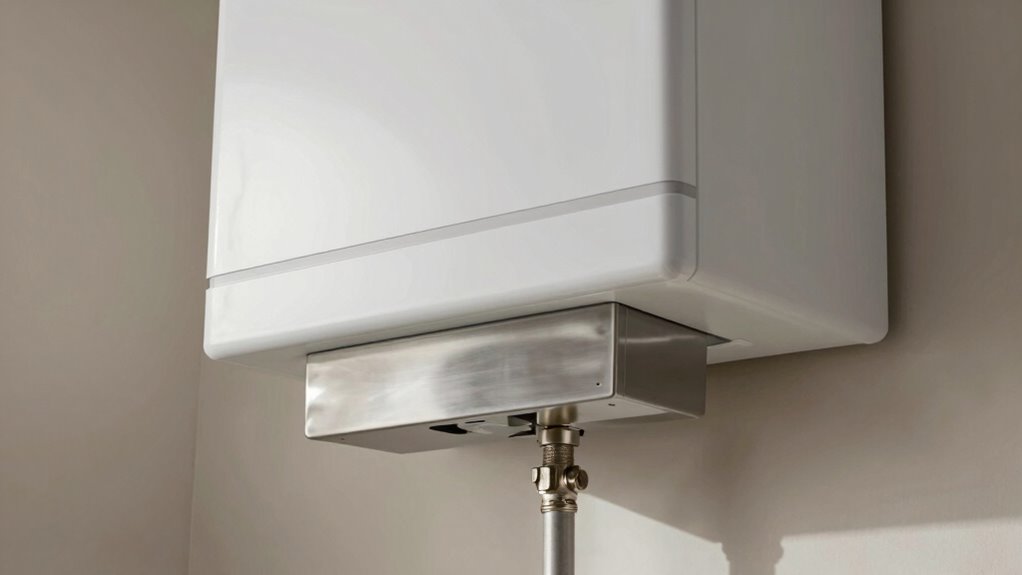
Since combustion gases are produced during the operation of your tankless water heater, understanding how they affect venting is essential for safety and efficiency. These gases, including carbon monoxide, need proper venting to prevent dangerous buildup and guarantee ideal fuel efficiency. Your installation location impacts how effectively these gases are vented away, affecting overall safety. Poor venting can lead to corrosion, decreased heater lifespan, and compromised indoor air quality. To maintain proper venting, consider factors like airflow, vent material, and the length of the venting system. Following venting standards is crucial for ensuring safe operation and preventing potential hazards. Proper venting design helps mitigate risks associated with combustion gases. Additionally, adhering to safety regulations ensures your system operates within safe limits and protects your household. Correctly managing combustion gases also involves monitoring for exhaust leaks, which can pose serious health risks. Ensuring proper venting, regular inspections, and maintenance will help maintain safe operation and extend the life of your water heater.

Hromee Water Heater Cleaning and Flushing Tool Gun with Air
Adjustable pressure industrial spray gun with air adapter and a stepped tip design for easy heater core flushing
As an affiliate, we earn on qualifying purchases.
As an affiliate, we earn on qualifying purchases.
Types of Venting Systems for Tankless Water Heaters
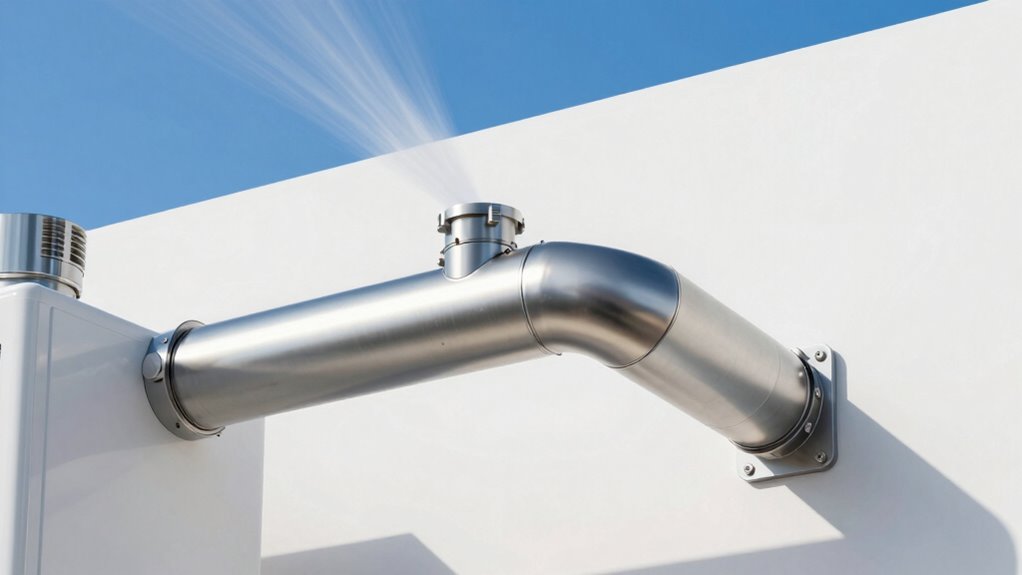
When choosing a venting system for your tankless water heater, you have several options to contemplate. These include direct vent systems, power vent options, and atmospheric venting methods, each with its own advantages. Understanding the differences helps you select the best fit for your home’s setup and safety requirements. Proper venting is crucial to prevent dangerous buildup of gases and ensure safe operation. Additionally, selecting the right venting system can impact the overall safety and efficiency of your water heater.
Direct Vent Systems
Direct vent systems are a popular choice for tankless water heaters because they efficiently exhaust combustion gases while bringing in fresh air. They seal the indoor environment, improving indoor air quality and ensuring safety. These systems draw air directly from outside and vent exhaust outdoors, maximizing ventilation efficiency. This setup reduces the risk of harmful gases leaking into your home and maintains a healthier living space. Additionally, these systems often incorporate sound design principles to minimize operational noise, enhancing overall comfort. Incorporating proper installation techniques is essential to ensure these systems operate safely and effectively over time, especially considering the importance of vetted safety standards for venting systems. Ensuring compliance with safety standards is crucial to prevent potential hazards and maintain optimal performance of your venting system. Proper maintenance and regular inspections further contribute to system longevity and safety assurance.
Power Vent Options
Power vent systems are an effective alternative for venting tankless water heaters, especially when traditional options aren’t feasible. They use fan-assisted combustion to expel exhaust gases horizontally, making indoor placement easier and reducing installation constraints. This flexibility allows you to position your water heater in more convenient locations, often improving aesthetic considerations by minimizing visible venting. Additionally, simplifying complex technology helps ensure safe operation and easier maintenance for homeowners. Proper venting techniques are crucial for safety and efficiency in these systems. Here’s how power vent options compare:
| Feature | Benefits | Considerations |
|---|---|---|
| Indoor placement | Frees up space, enhances design | Requires electrical connection |
| Horizontal venting | Easy installation, flexible layout | Needs proper sealing |
| Aesthetic integration | Less intrusive, blends into decor | May need custom venting solutions |
Furthermore, understanding installation considerations can help prevent potential issues and ensure optimal performance. Power vent systems often incorporate integrated safety features, adding an extra layer of protection for your home. Being aware of venting requirements can also help you choose the best system for your specific setup and local building codes.
Atmospheric Venting Methods
Are you exploring venting options for your tankless water heater? Atmospheric venting methods rely on natural draft to expel gases, making them straightforward to install. These systems are often used in indoor applications, but maintaining good indoor air quality is essential. Proper vent pipe materials, like corrosion-resistant metal, ensure safe venting and longevity. Key options include:
- Vertical venting through the roof for ideal draft
- Horizontal venting through exterior walls for easier installation
- Single-wall vent pipes suitable for indoor use
- Double-wall vent pipes for added safety and insulation
Choosing the right atmospheric venting method depends on your home’s layout and local codes. Always prioritize safe vent pipe materials and ensure proper sealing to prevent leaks and indoor air quality issues. Additionally, understanding proper ventilation is crucial to ensure gases are safely expelled and indoor air remains healthy. Proper vent pipe materials also play a significant role in maintaining system safety and efficiency.

First Alert Combination Smoke & Carbon Monoxide Alarm, Battery Operated Detector with Test & Silence Button, SMCO100, 1-Pack,White
First Alert's Precision Detection advanced sensing technology complies with new industry standards to reduce cooking nuisance alarms and…
As an affiliate, we earn on qualifying purchases.
As an affiliate, we earn on qualifying purchases.
What Factors to Consider When Choosing Venting Materials
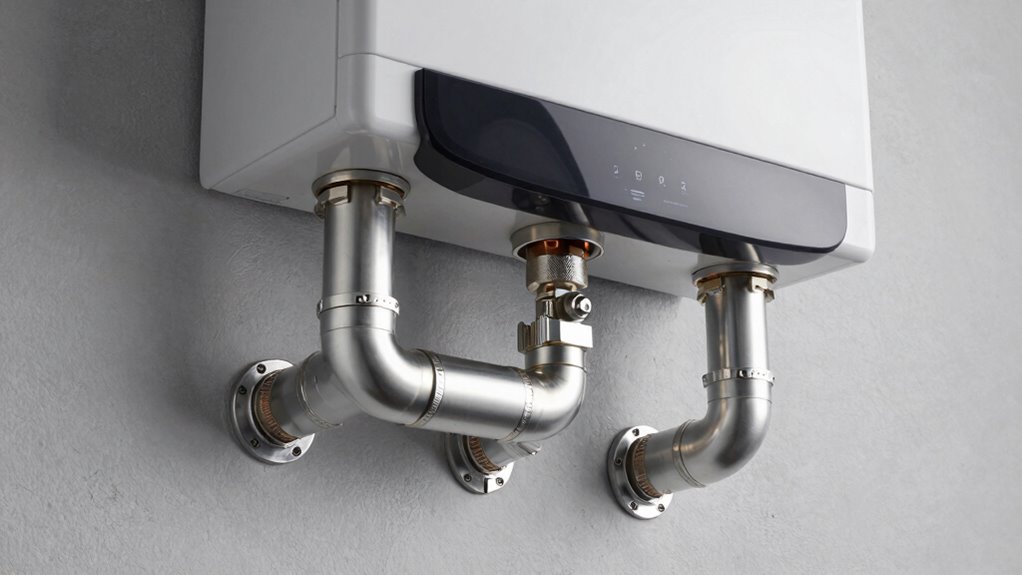
When choosing venting materials for your tankless water heater, it’s important to take into account factors like durability, compatibility with vent gases, and local building codes. Venting material selection should prioritize material durability to withstand high temperatures and corrosive gases produced during operation. You need materials that won’t degrade or emit harmful fumes over time. Additionally, ensure the materials are compatible with the specific vent gases your heater produces. material compatibility principles can help prevent corrosion and ensure proper venting performance. It’s also wise to verify that your chosen materials meet the requirements outlined in your local building codes, which are designed to ensure safety and compliance. Making informed choices now can prevent costly repairs or hazards down the line.
How to Install Your Tankless Water Heater Vent Safely
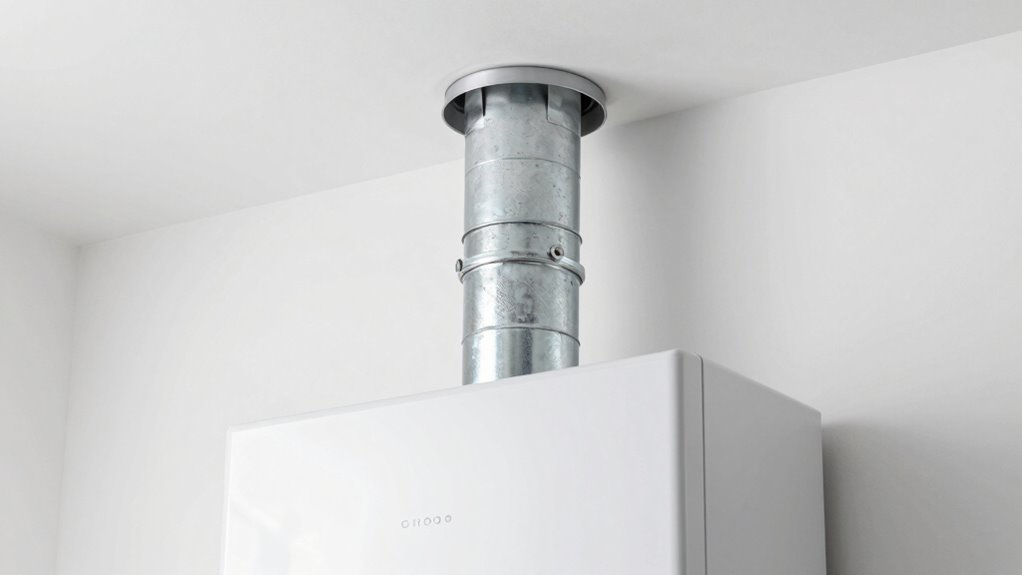
Installing your tankless water heater vent safely starts with carefully following the manufacturer’s instructions and local building codes. Proper installation prevents dangerous gas leaks and ensures efficient venting. Use appropriate insulation techniques around vent pipes to prevent heat loss and condensation, which can compromise safety. Make sure connections are airtight to avoid leaks that could lead to harmful gases escaping into your home. Secure all vent components firmly to prevent movement that could cause cracks or disconnections over time. Regularly inspect the vent for damage or corrosion, especially in areas exposed to moisture. Remember, a well-installed vent system not only keeps your household safe but also prolongs your water heater’s lifespan. Prioritize safety and precision at every step.
Common Venting Mistakes and How to Avoid Them
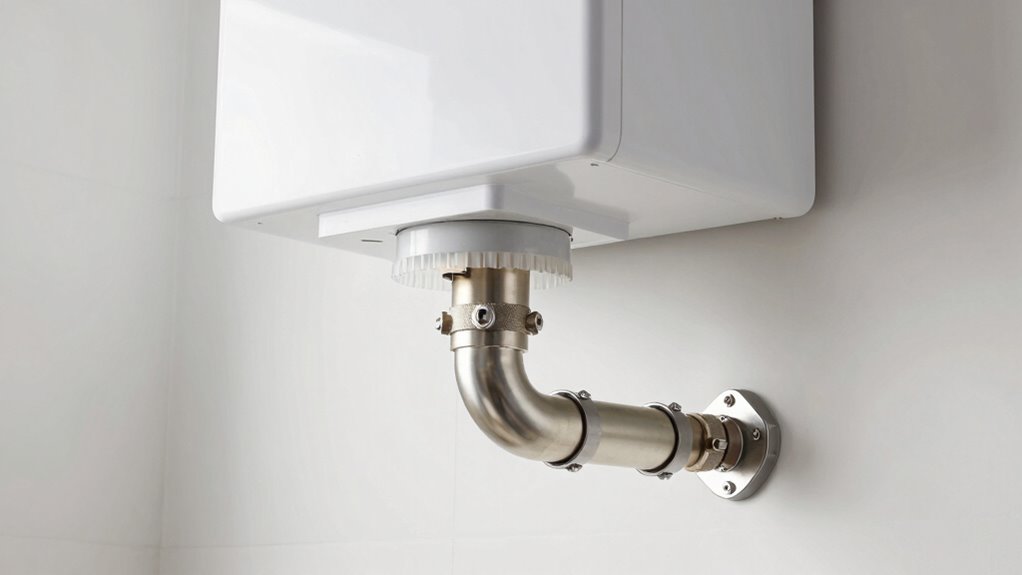
Even with careful installation, common venting mistakes can compromise your water heater’s safety and efficiency. One frequent error is selecting the wrong venting material, which can lead to corrosion or improper venting. Always choose materials approved for tankless water heaters and compatible with your venting system. Another common mistake is incorrect venting material selection, such as mixing incompatible materials or using substandard connectors. Additionally, mistakes like improper sealing, inadequate support, or vent runs that are too long or sharp can cause dangerous backdrafts or blockages. To avoid these common installation errors, follow manufacturer guidelines strictly, double-check connections, and make certain the vent system is correctly sealed and supported. Proper venting material selection and avoiding these errors are vital for safe, efficient operation.
Regulations and Codes for Venting Tankless Water Heaters
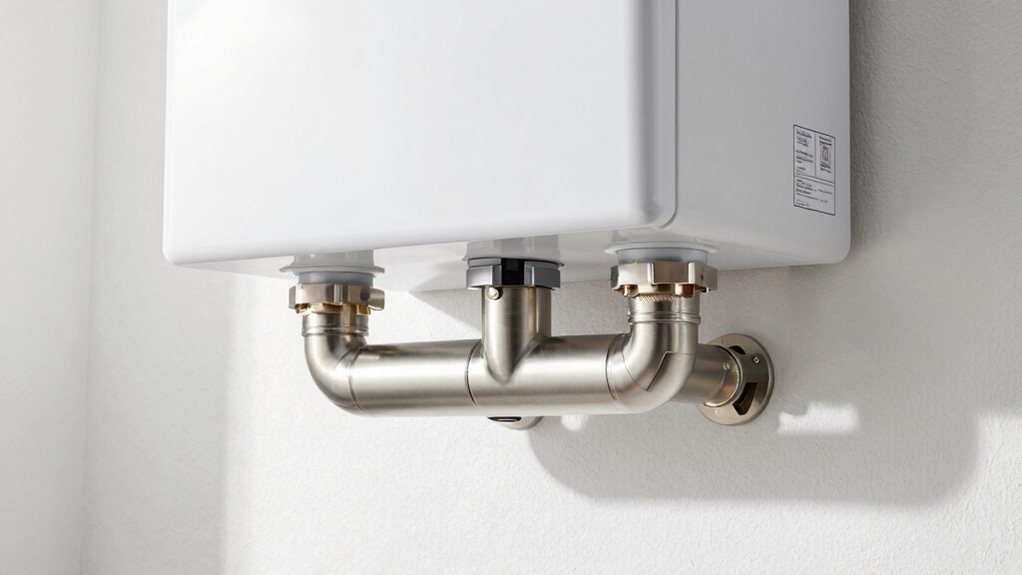
Regulations and codes for venting tankless water heaters guarantee safe and efficient operation by establishing clear standards that must be adhered to during installation. These venting regulations ensure proper vent placement, material use, and clearance requirements, helping you maintain code compliance. Adhering to these standards prevents dangerous issues like carbon monoxide buildup or vent leaks. It’s essential to consult local building codes and manufacturer instructions before installing your system. Failure to follow venting regulations can lead to penalties or safety hazards. Proper venting not only protects your home but also ensures your heater runs efficiently. Remember, strict compliance with these codes is your responsibility. Staying informed about the latest regulations helps you avoid costly mistakes and guarantees a safe, effective setup.
Proper venting is essential for safety and efficiency; always follow local codes and manufacturer instructions.
- Follow local building codes and manufacturer guidelines
- Use approved venting materials for your system
- Maintain proper clearance and vent termination points
- Schedule inspections to confirm code compliance
Troubleshooting Venting Problems and When to Call a Professional
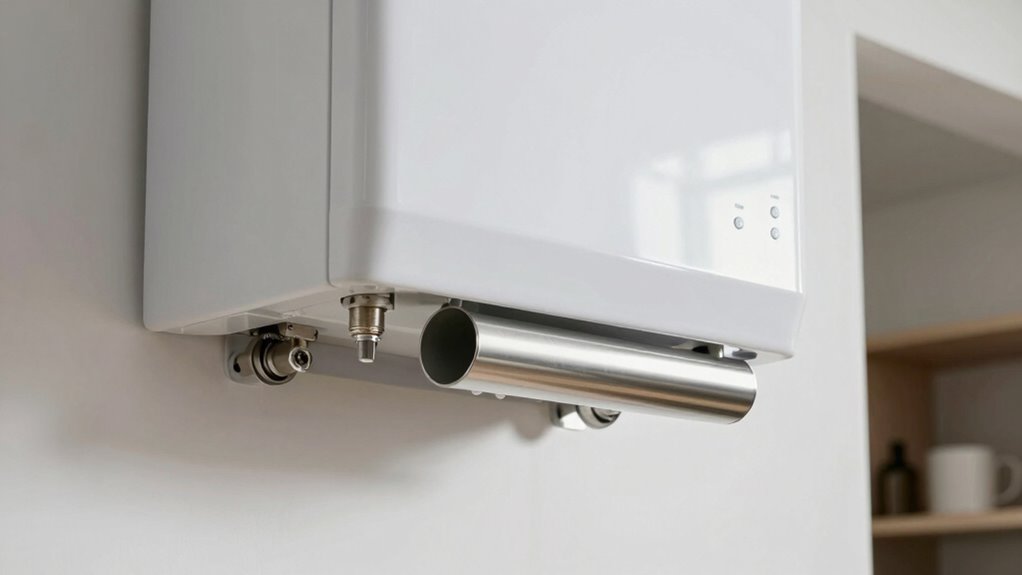
If you notice issues like strange smells or inconsistent hot water, you might have venting blockages or safety concerns. Recognizing these signs early can prevent dangerous situations and equipment damage. When in doubt, it’s best to call a professional to verify your system is safe and properly vented.
Identifying Venting Blockages
Venting blockages can substantially impact the performance and safety of your tankless water heater. To identify a vent blockage, perform a thorough inspection routine regularly. Look for signs such as slow water heating, unusual smells, or increased energy use. You might notice debris or nests near the vent outlet, which can cause blockages. Check for corrosion or soot buildup, indicating restricted airflow. Ensure the vent pipe is clear of obstructions and securely connected. Remember, a simple visual inspection can reveal many issues early. If you find any signs of blockage or suspect your vent isn’t functioning correctly, don’t delay calling a professional. Proper maintenance and routine inspections help prevent venting problems and keep your system running safely.
Recognizing Safety Hazards
Because venting problems can pose serious safety risks, recognizing the warning signs early is vital. If you notice any unusual odors, especially chemical smells near your water heater, it could indicate venting issues that release hazardous fumes. Yellow or orange flames instead of blue can signal improper combustion, risking carbon monoxide buildup. Be alert for signs of corrosion, rust, or soot around the venting system, which can lead to leaks and fire risks. Constant or excessive condensation on vent pipes might also suggest improper venting. Ignoring these hazards increases the chance of chemical hazards and fire risks, endangering your home and health. When you spot any of these signs, it’s best to consult a professional to troubleshoot and resolve the problem safely.
When to Seek Professional Help
Recognizing when to call a professional is crucial to ensuring your tankless water heater operates safely and efficiently. If you notice persistent venting issues, strange smells, or poor venting aesthetics, it’s time to seek expert help. Attempting DIY maintenance on venting systems without proper knowledge can cause safety hazards or damage. Additionally, if troubleshooting doesn’t solve airflow problems or if you’re unsure about venting configurations, a professional can assess and correct the setup.
You should call a professional if you encounter:
- Persistent exhaust odors or unusual fumes
- Obstructions or damage in venting components
- Inconsistent water heating or pressure issues
- Concerns about venting aesthetics affecting home safety
Frequently Asked Questions
Can Improper Venting Cause Health Issues?
Improper venting of your tankless water heater can definitely cause health issues. It may lead to poor indoor air quality and the buildup of carbon monoxide, which is colorless and odorless but deadly. You could experience symptoms like headaches, dizziness, or nausea. Ensuring proper venting is essential to keep your home safe, protect your family’s health, and prevent dangerous carbon monoxide from accumulating indoors.
How Often Should Venting Systems Be Inspected?
You should inspect your tankless water heater’s venting system at least once a year to guarantee safety and efficiency. Regular inspection frequency helps catch any vent blockages, corrosion, or leaks early. Proper vent maintenance is essential to prevent dangerous carbon monoxide buildup and ensure ideal operation. Don’t skip these annual checks; they’re important for keeping your system safe, efficient, and in good working order.
Are There Eco-Friendly Venting Options Available?
Like a gust of fresh air, eco-friendly venting options are now available for your tankless water heater. You can choose sustainable options such as stainless steel or PVC venting systems that reduce environmental impact. These eco-friendly venting solutions not only promote energy efficiency but also help lower your carbon footprint. By selecting greener options, you’re making a smart choice for the planet and ensuring safe, efficient operation of your water heater.
What Are the Costs Associated With Different Venting Types?
The cost comparison of venting types varies based on installation expenses and materials. Direct vent systems usually cost more upfront due to specialized components, but they offer better efficiency and safety. Power venting options tend to be less expensive initially, yet may incur higher energy costs over time. Consider your home’s layout and safety requirements to choose the most cost-effective venting method that fits your budget and needs.
How Does Venting Impact the Overall Efficiency of My Water Heater?
Venting impacts your water heater’s efficiency by ensuring proper airflow, which helps it operate effectively. Using quality venting materials prevents leaks and blockages, maintaining steady airflow and reducing energy waste. Proper venting design promotes airflow optimization, allowing the heater to heat water quickly with less energy. Poor venting, on the other hand, can cause inefficiencies, higher energy bills, and safety risks, so always choose the right materials and install it correctly.
Conclusion
Proper venting keeps your tankless water heater running smoothly and safely, much like a well-orchestrated symphony. Ignoring these rules can turn your home’s comfort into a dangerous chaos. By choosing the right system, following installation guidelines, and staying compliant with codes, you guarantee peace of mind. Remember, venting is the unsung hero in your water heater’s performance—treat it with the respect it deserves to keep everything flowing safely.