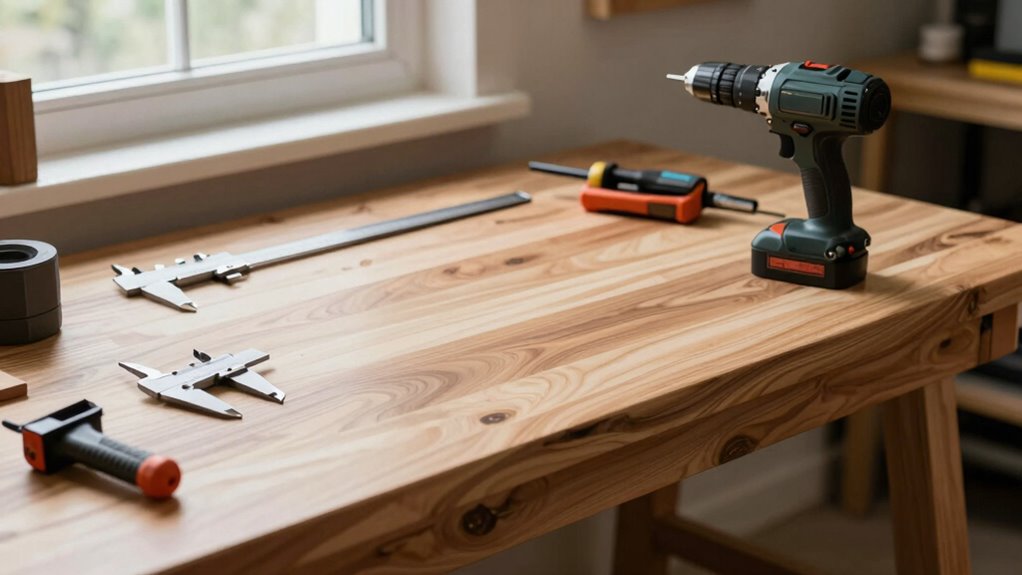

A better workbench improves your DIY accuracy by providing a stable, flat surface that resists warping and vibrations, ensuring precise measurements and cuts. Organized tools within easy reach save you time and reduce mistakes, while a well-maintained, level surface gives you a consistent reference point. Good lighting and a clutter-free workspace help you see detail clearly and work efficiently. Keep exploring, and you’ll discover even more ways to enhance your workspace for perfect results.

Get furniture and decor delivered free with Prime
- Fast, free delivery on millions of items
- Prime Video, Amazon Music and more included
- Member-only deals all year
Key Takeaways
- A flat, level work surface ensures consistent measurement references, reducing errors during cuts and assembly.
- Durable materials resist warping and damage, maintaining accuracy over time.
- Proper tool organization minimizes search time and prevents using incorrect or damaged tools.
- Calibrated tools and precise measurement techniques enhance the accuracy of DIY projects.
- Good lighting and stability improve visibility and reduce mistakes during detailed work.
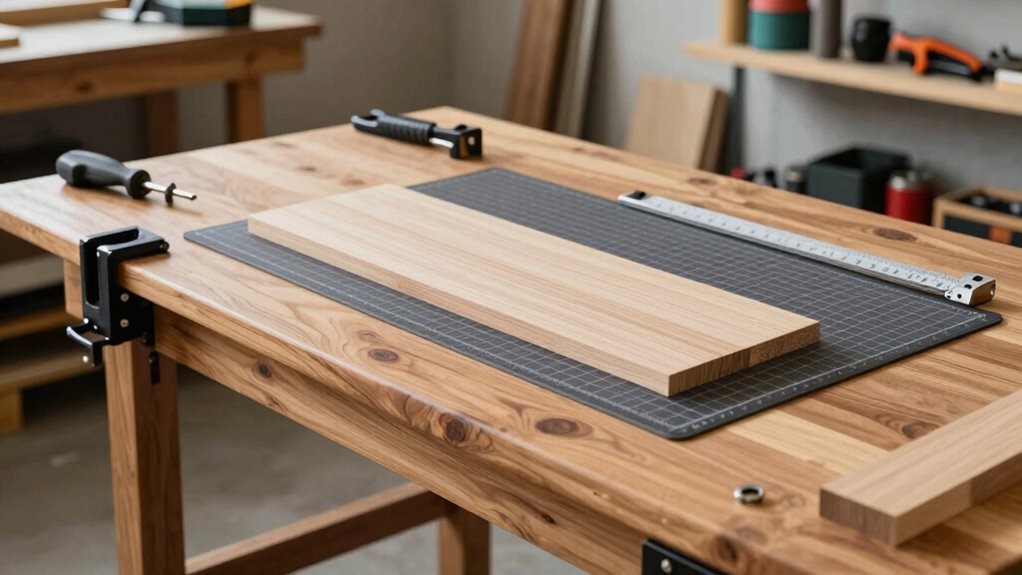
A well-designed workbench is essential for achieving precise DIY results. When your workspace is well-organized, you can work more efficiently and with greater accuracy. Tool organization plays a pivotal role in this. When your tools are within arm’s reach and neatly stored, you spend less time searching and more time focusing on your project. Consider installing drawers, pegboards, or magnetic strips to keep your essential tools easily accessible. This setup minimizes disruptions and helps you maintain a steady workflow, which is indispensable for detailed work. Proper tool organization also reduces the risk of damaging delicate tools or accidentally using the wrong one, both of which can compromise the quality of your project. Additionally, understanding number formatting tools can help you present measurements and calculations more clearly, ensuring precision in your work. A work surface durability of your bench is equally important for maintaining accuracy. A sturdy, resilient surface provides a stable foundation for every cut, drill, or assembly. When your work surface is durable, it resists warping, dents, and scratches that can throw off measurements or cause inaccuracies during your work. Materials like thick hardwood, laminated plywood, or metal are excellent choices because they hold up under repeated use. A durable work surface also dampens vibrations, which is especially helpful when working with power tools or delicate components. This stability allows you to make precise cuts and measurements without worrying about your work shifting or becoming uneven, ultimately improving the accuracy of your project. Incorporating a flat and level work surface can further enhance precision by providing a consistent reference point for all your measurements and cuts. When you combine good tool organization with a work surface designed to withstand daily use, you create an environment that fosters precision. Everything is where it should be, and your workspace can handle the demands of intricate tasks. Moreover, paying attention to proper lighting can significantly improve visibility and reduce errors during detailed work. Properly calibrated tools are also crucial, as they ensure that your measurements are accurate and consistent for every project. This setup eliminates clutter and instability that often lead to mistakes. You’ll find yourself more focused and confident, knowing your tools won’t slip or cause errors, and your work surface won’t warp or wobble. In turn, this consistency translates directly into higher-quality results. Whether you’re assembling furniture, crafting detailed woodwork, or repairing small appliances, a better workbench enhances your ability to work accurately and efficiently. It’s not just about comfort; it’s about providing the foundation for precision, so your DIY projects turn out exactly as you envision them.
sturdy workbench with flat surface
As an affiliate, we earn on qualifying purchases.
As an affiliate, we earn on qualifying purchases.
Frequently Asked Questions
What Materials Are Best for Building a Durable Workbench?
You should choose sturdy materials like hardwood or thick plywood for building a durable workbench. These materials guarantee great workbench stability and material longevity, which are essential for precise DIY work. Hardwood, like maple or oak, offers excellent durability, while thick plywood provides a cost-effective yet strong surface. Using quality bolts and proper reinforcement enhances stability further, so your workbench stays solid through all your projects.
How Much Should I Invest in a High-Quality Workbench?
They say “you get what you pay for,” and investing in a high-quality workbench is no exception. You should budget based on your project needs, aiming for a sturdy, ergonomic design that boosts accuracy and comfort. Consider workbench ergonomics to reduce fatigue, and plan your budget accordingly. While it might cost more upfront, a well-made workbench pays off with increased precision and safety, making your DIY projects more enjoyable and successful.
Can a Portable Workbench Improve DIY Accuracy?
Yes, a portable workbench can improve your DIY accuracy by offering enhanced portability and stability. When you set up on a stable surface, it reduces movement that could affect your measurements and cuts. Look for a portable workbench with sturdy construction and adjustable features, which boost stability and accuracy. This way, you can work confidently anywhere, ensuring precise results every time, no matter where your project takes you.
What Safety Features Should I Look for in a Workbench?
You should look for safety features like an ergonomic design that reduces strain and improves control, along with safety accessories such as clamps, guards, and anti-slip mats. These elements help prevent accidents and guarantee stability during your projects. An ergonomic workbench minimizes fatigue, while safety accessories provide extra protection. Prioritizing these features keeps you safe, enhances precision, and makes your DIY tasks more comfortable and secure.
How Do I Maintain and Clean My Workbench Effectively?
To maintain and clean your workbench effectively, start with regular workbench organization by decluttering and storing tools properly. Establish a cleaning schedule—wipe down surfaces after each project to remove dust, debris, and spills. Use appropriate cleaning supplies like a damp cloth and mild detergent, avoiding harsh chemicals. Periodically check for damage and tighten any loose parts. This routine keeps your workbench in top shape, ensuring accuracy and safety in your DIY projects.
Conclusion
A better workbench is your trusty sidekick in achieving DIY precision. With a sturdy surface and thoughtful features, you’ll find it easier to measure, cut, and assemble with confidence. Think of it as your modern-day Excalibur—cutting through mistakes and making every project feel like a quest won. So, invest in a quality workbench, and watch your accuracy soar, turning even the most humble project into a masterpiece worthy of King Arthur himself.
Columbus Day / Indigenous Peoples' Day Picks
long weekend sales
As an affiliate, we earn on qualifying purchases.