
Better air quality helps you sleep more soundly by reducing irritants, toxins, and allergens that disrupt rest. It also sharpens your focus during the day by minimizing distractions caused by poor air, such as congestion or headaches. Plus, fresh, odor-free air creates a more comfortable environment where you can relax and breathe easier. Improving your indoor air supports both physical and mental wellbeing, making your space healthier. Keep exploring to find simple ways to boost your indoor air quality even further.

Get furniture and decor delivered free with Prime
- Fast, free delivery on millions of items
- Prime Video, Amazon Music and more included
- Member-only deals all year
Key Takeaways
- Clean air reduces allergies and congestion, promoting deeper, uninterrupted sleep.
- Indoor plants naturally filter toxins, enhancing air quality and supporting better focus and mental clarity.
- Improved air quality decreases mental fatigue, allowing sustained attention during work or study.
- Fresh, odor-free environments foster relaxation and comfort, encouraging better breathing and posture.
- Combining ventilation and plants creates a healthier, more comfortable indoor space supporting overall well-being.
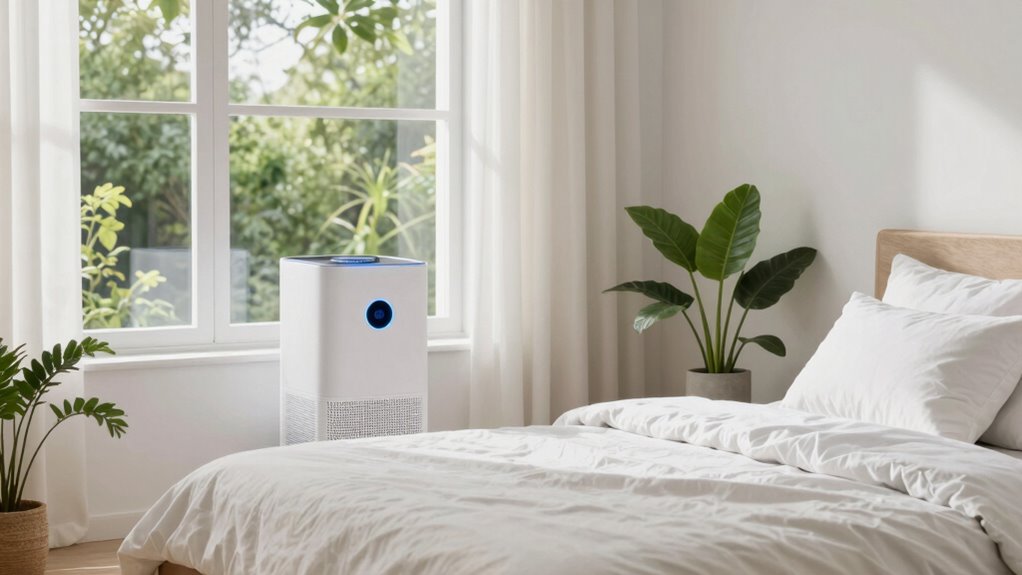
Good air quality is essential for your overall wellbeing, as it directly affects your health, energy levels, and mood. When the air inside your home is clean and fresh, it creates an environment that promotes better sleep, sharper focus, and greater comfort. One effective way to improve indoor air quality is by incorporating indoor plants. These natural additions not only enhance the aesthetic of your space but also serve as living air purifiers. Plants like snake plants, pothos, and peace lilies absorb common indoor pollutants such as formaldehyde, benzene, and trichloroethylene, helping to remove toxins from the air you breathe.
Indoor plants like snake plants, pothos, and peace lilies naturally purify your air, removing toxins and promoting a healthier home environment.
By increasing air purification through indoor plants, you reduce airborne irritants that can disrupt your sleep or cause discomfort. Poor air quality often leads to allergies, congestion, or even headaches, which make it harder to fall asleep or stay asleep through the night. When your environment is filled with cleaner, filtered air, you’re more likely to experience uninterrupted sleep cycles, allowing your body to rest and recover fully. Better sleep then translates into improved concentration and mood during your waking hours, reinforcing the importance of maintaining good indoor air quality.
Furthermore, well-ventilated spaces with effective air purification support your ability to focus. When pollutants and allergens are minimized, your brain doesn’t have to work as hard to process distractions like stuffiness or odors. This clarity helps you stay attentive during work or study sessions, boosting productivity. You’ll notice that in environments with fresh, clean air, mental fatigue diminishes, and you can sustain concentration longer. Indoor plants contribute to this by continuously filtering the air, providing a natural, ongoing air purification process that complements ventilation systems.
Comfort is also closely tied to air quality. When the air feels fresh and free of stale odors, you naturally feel more relaxed and at ease in your space. This sense of comfort encourages better posture, deeper breathing, and an overall feeling of well-being. If your indoor environment feels stuffy or has lingering smells, it can create a sense of discomfort that hampers your ability to unwind or relax fully. Using indoor plants and ensuring proper air purification helps maintain a balanced atmosphere, making your home or workspace a sanctuary of health and comfort.
In essence, prioritizing air quality through natural methods like indoor plants and air purification techniques isn’t just about aesthetics—it’s a crucial step toward supporting your sleep, sharpening your focus, and enhancing your overall comfort. When you breathe cleaner air, you’re giving your body and mind the best chance to thrive every day. Additionally, understanding the importance of ventilation can further enhance indoor air quality by reducing indoor pollutants and improving air circulation.
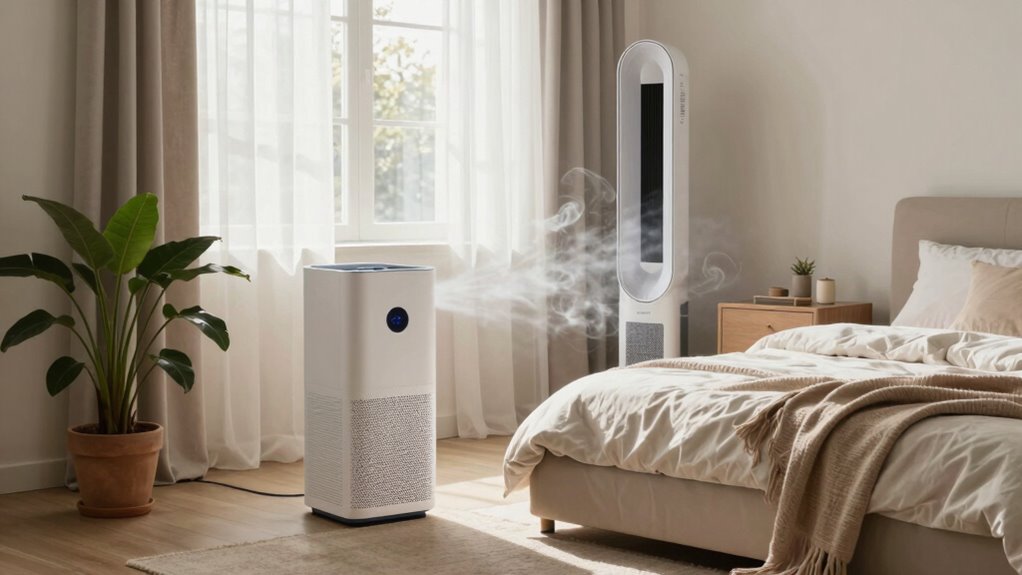
air purifiers for indoor air quality
As an affiliate, we earn on qualifying purchases.
As an affiliate, we earn on qualifying purchases.
Frequently Asked Questions
How Does Air Quality Affect Mental Health Long-Term?
Poor indoor pollution can negatively impact your mental well-being over time, leading to increased stress, anxiety, and difficulty concentrating. When you breathe polluted air regularly, it can cause inflammation and disrupt brain function, affecting mood and cognitive health. Maintaining good indoor air quality helps protect your mental health long-term by reducing exposure to harmful pollutants, supporting clearer thinking, emotional stability, and overall mental resilience.
Can Poor Air Quality Cause Headaches or Migraines?
Imagine a Victorian detective solving a mystery—poor air quality can indeed cause headaches or migraines. Indoor pollutants like dust, mold, and volatile organic compounds trigger these symptoms, especially if you’re sensitive. Regular air quality monitoring helps identify issues early, reducing exposure. When air quality worsens, you’re more prone to headaches and migraines. Improving ventilation and filtering your air can make a significant difference in easing these discomforts.
What Are the Best Indoor Plants for Air Purification?
You should choose plants like snake plants, pothos, and peace lilies for air purification. These plants effectively filter toxins and improve indoor air quality through their natural plant selection. By adding them to your space, you support better air purification, which can enhance your overall comfort and focus. Keep in mind, healthy plants are key, so water and care for them regularly to maximize their air-cleaning benefits.
How Often Should Air Filters Be Replaced for Optimal Health?
You should replace your air filters every 90 days for ideal health, but this can vary based on your home’s air filter lifespan and usage. If you have pets or allergies, consider replacing filters more frequently, around every 60 days. Regular replacement guarantees your HVAC system runs efficiently and maintains good air quality, supporting better sleep and focus. Keep an eye on the filter’s condition for the best indoor environment.
Does Air Quality Influence Allergies and Asthma Symptoms?
Yes, air quality directly influences your allergies and asthma symptoms. Indoor pollutant sources like pet dander, mold, and tobacco smoke worsen symptoms, especially when dust accumulates on surfaces, releasing allergens into the air. Poor ventilation traps these pollutants, intensifying effects. Regular cleaning, reducing indoor pollutant sources, and using air purifiers can help minimize dust accumulation and improve air quality, easing allergy and asthma issues.
Conclusion
Improving your air quality can considerably boost your sleep, focus, and overall comfort. Did you know that poor indoor air quality is linked to a 30% increase in sleep disturbances? By taking simple steps like ventilating your space and using air purifiers, you create a healthier environment. Better air means better rest, sharper focus, and greater daily well-being. Prioritize your air quality—you’ll notice the positive difference in every aspect of your life.
Halloween Picks
halloween
As an affiliate, we earn on qualifying purchases.