
TL;DR

Get furniture and decor delivered free with Prime
- Fast, free delivery on millions of items
- Prime Video, Amazon Music and more included
- Member-only deals all year
A MacBook Pro can make sense for college when you regularly compile large projects, edit demanding video, produce music, or use other intensive creative tools. Choose memory and storage for the apps you actually run because they are generally fixed at purchase, and check your major’s software requirements before committing to macOS. If your work is lighter, a MacBook Air or a carefully checked older Pro may cover your needs with less weight and complexity.
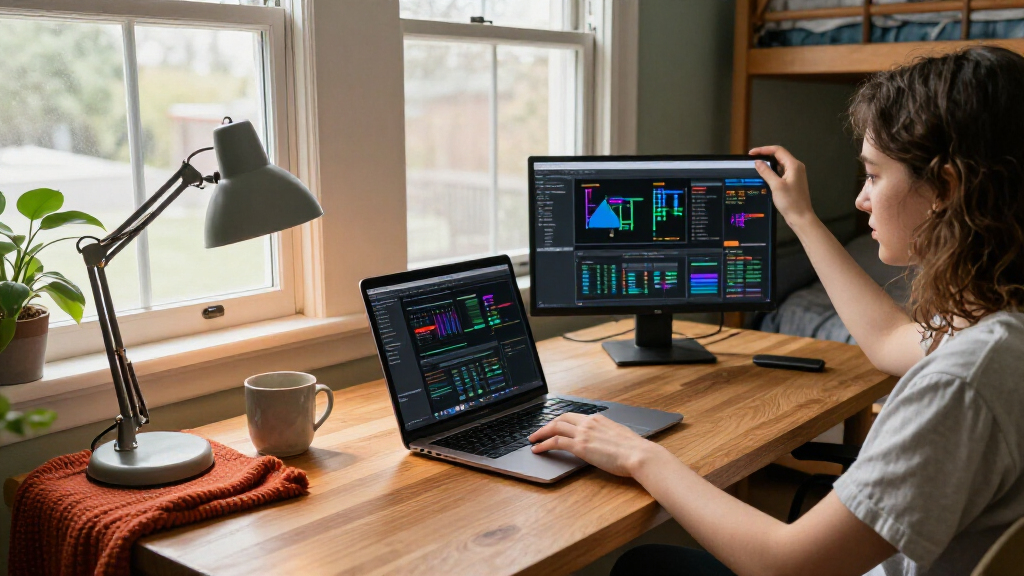
A laptop can turn into a space heater halfway through a video export, right when your class group is waiting for the final cut. If your college work regularly pushes a computer with coding tools, creative apps, or several heavy programs at once, choosing the right MacBook Pro can make long study days smoother. The name alone, though, won’t tell you which model fits.
This guide helps you compare MacBook Pro models by workload, memory, storage, battery, screen, ports, and software compatibility. It also looks at older Pro options and a 15-inch Air, so you can judge what each choice gives you and what you give up. The most useful question is simple: what must your laptop run for your major, and where will you use it?
Think of your laptop as a campus workbench. A filmmaker needs room for large footage files; a computer science student may care more about running a development environment alongside a browser and a local server. Start with those real tasks, then match the machine to them.
Choose a MacBook Pro when demanding apps such as large code builds, high-resolution editing, or music production show up in your regular coursework.
Check your department’s macOS and Windows requirements before buying; some specialized software can determine the operating system you need.
Memory and internal storage are generally fixed choices, so estimate your heaviest multitasking and largest active projects before checkout.
Compare the exact configuration and condition of older or renewed models, including battery health, warranty, and support for your required apps.
Include adapters, external storage, backups, repair access, and the weight you will carry in your campus-day decision.
Choose a Pro only when your coursework regularly pushes a laptop
A MacBook Pro for college power users makes the most sense when demanding apps are part of your normal week, not an occasional experiment. It can suit software development, high-resolution video editing, music production, data analysis, or 3D work that benefits from more CPU and GPU capacity, memory, or a better display. If you mostly write papers, read PDFs, and attend video calls, the extra performance may sit unused.
Imagine a computer science student compiling a large project while running an emulator, a dozen browser tabs, and a video call with a project partner. That workload asks more of a laptop than a document and two tabs do. A film student scrubbing through 4K footage has a different reason to want extra graphics and media performance: playback can feel more responsive, and exports can fit more comfortably between classes.
MacBook Pro models are aimed at that kind of heavier work, but the label covers a broad range of machines. The older 13-inch Intel model in the comparison has 8GB of RAM and a 256GB SSD; the 2021 14-inch M1 Pro option has 16GB and 512GB. Their shared family name doesn’t make those configurations interchangeable for a demanding workload.
Use your actual course list as the test. Ask whether your busiest week involves editing, compiling, virtual machines, large datasets, or simply many browser tabs. If the intense work happens only in a campus lab, a lighter personal laptop may be enough; if you carry it home every night, local performance matters more.
Buy for the work you repeat, not for a hypothetical project you may never start.
Products Worth Considering

TCL 43-Inch 4K UHD Smart LED Roku TV (43S435, 2021 Model)

Philips Hue Bridge Pro Starter Kit with 4 A19 E26 Smart Bulbs

Arlo Pro Wireless Security Camera, 2K HDR, 6th Gen, 4-Camera Kit
As an affiliate, we earn on qualifying purchases.
Match the chip to the apps you actually run
For a MacBook Pro for college power users, choose a chip according to the programs your major requires and the size of your daily workload. Apple silicon combines CPU, GPU, and memory in one system, which can deliver strong performance per watt. That helps explain why newer Apple-silicon laptops can handle intensive work while still serving as portable campus machines, though specific performance varies by chip and task.
For coding, think about the compiler, IDE, emulator, and containers you plan to run together. A student who builds small web projects has different needs from someone compiling large native apps or running multiple virtual machines. For video, ask which formats your editing program uses and whether its media acceleration features support your footage. For music, count the tracks, effects, and virtual instruments you expect to run at once.
The provided comparison includes an 18-core CPU and 20-core GPU configuration in a listed 14-inch M5 Pro setup, as well as M1 Pro configurations in older 14- and 16-inch models. Those figures identify different hardware generations and configurations; they are not a simple ranking of how fast every student task will feel. Software support, cooling, memory, and the type of work all matter.
Recent Apple-silicon generations have developed beyond the original Intel-to-M-series shift, with changes to CPU and GPU performance, connectivity, displays, and media workflows. Product lineups change frequently, so confirm the exact chip and features on the model you’re considering. If your course requires Windows-only engineering software, check that requirement before comparing chip cores: the right operating system can matter more than a faster processor.
A practical example: if you edit a short film once a semester and spend the rest of your time writing scripts and reports, a high-end chip may not improve your daily routine much. If you render footage every week, the extra capacity could save time when deadlines bunch up.
Buy enough memory for your busiest semester
Unified memory is shared by the CPU and GPU, and it generally cannot be upgraded after you buy the MacBook. Choose enough for the heaviest combination of apps you expect to use, rather than counting only the program open in front of you. When memory is crowded, the system has less room to keep active work readily available; switching between apps or handling large files can become less responsive. Because you cannot add memory later, the cost of too little may follow you through several years of coursework.
Consider a student who uses an IDE, a local database, an emulator, a browser full of documentation, and a video meeting. Each one takes a slice of memory, so launching another tool can affect the whole session. A design student might run a large image editor beside a browser and video app; a data science student may find that opening a dataset changes an otherwise comfortable setup into a sluggish one. In both cases, the question is not simply which app needs the most memory, but which tasks must stay open together.
In the supplied configurations, the 2019 13-inch model has 8GB of DDR3 memory, the 2021 14-inch M1 Pro has 16GB of unified memory, and the 2021 16-inch M1 Pro has 32GB. These numbers help compare the listed models, but do not establish one universal requirement for every major. More memory offers room for bigger projects and more simultaneous apps, but it also adds to the purchase cost. Your department’s software recommendations and multitasking habits are better guides than choosing the largest figure by default.
Before buying, list the applications you expect to keep open at once and check their current requirements. If you work with virtual machines, large creative projects, or extensive datasets, leave more headroom than a student who mainly uses an editor and browser. Memory is a fixed choice, so research now can protect several school years of daily use. If your budget forces a tradeoff, compare the likely benefit of extra memory with storage or other features: an external drive can expand where files live, but it cannot provide more working memory for active apps.
- Light workload: papers, browsing, lectures, and occasional light creative work.
- Mixed workload: coding or creative apps used alongside a large number of browser tabs and other tools.
- Heavy workload: large projects, several virtual machines, high-resolution media, or demanding datasets.
For example, if your engineering course names a specific simulator, ask the department whether it runs on macOS and how much memory they recommend. That answer is more useful than buying based on a generic “future-proof” claim.
Keep large projects under control with a storage plan
Storage fills fastest when your course work includes footage, sample libraries, datasets, or virtual machines. Internal SSD capacity is generally fixed after purchase, so estimate what you’ll keep on the laptop and plan where older projects will live. A roomy drive makes daily work easier, but an external SSD or cloud storage can extend a smaller internal drive when your campus routine supports it.
The compared machines range from a 256GB SSD in the 2019 13-inch model to 512GB in several alternatives and 1TB in the listed 14-inch M5 Pro configuration. Those figures describe capacity, not how much you will have free after macOS, apps, and course files take their share. A film student with several projects on the go will use space differently from a student whose assignments are mostly code and documents.
Picture a student who records interviews for a documentary. Raw video can occupy a large amount of space, so keeping every clip on the internal drive may crowd out editing caches and other projects. A fast external SSD can hold completed footage, but it adds another item to carry and remember to back up; a cloud folder depends on reliable connectivity and enough account storage.
Make a simple estimate before checkout: list your largest active projects, software libraries, and the files you need offline. Decide which work must stay internal and which can move to an external drive after submission. Back up important work in a second place, because one laptop or drive can be lost, damaged, or left in a library study room.
- Check how much space your current computer uses for active coursework.
- Add the size of the largest project you expect to keep open this year.
- Choose internal capacity with room for apps and temporary work files.
- Pick a backup plan, such as an external SSD plus a separate cloud copy.
That process is more dependable than buying the smallest drive and hoping to sort things out during finals week, when a nearly full disk is one more problem you do not need.
Pick a screen size that works in lecture halls and studios
A screen should fit both your work and your campus routine. A 14-inch MacBook Pro is easier to carry between lecture rooms than a larger 16-inch model, while the bigger display gives you more room for editing timelines, code, and side-by-side documents. Decide whether you spend more hours moving around campus or spreading out at a desk.
The supplied comparison lists a 14.2-inch Liquid Retina XDR display on one configuration, a 14-inch Liquid Retina XDR screen on the 2021 M1 Pro alternative, and a 16.2-inch XDR screen with 3456 × 2234 resolution and 120Hz ProMotion on the 2021 16-inch model. A 13-inch Retina LCD and a 15.3-inch Liquid Retina screen appear in the older Pro and Air comparisons. Brightness, color, and refresh features can help creative work, but they do not replace the software or color-management tools your course may require.
Imagine reviewing a color-heavy design in a sunlit campus studio, then carrying the computer to a lecture where the desk barely fits a notebook. A larger screen can reduce the urge to plug into a monitor, but its size and weight become part of every walk. A smaller screen may feel cramped for a video timeline, yet it is pleasant on a crowded train table.
The display’s value depends on your eyes and tasks. If you grade footage or work with detailed visual layouts, wide color and high brightness may matter often. If your work is mainly text, spreadsheets, and code, a standard screen may serve just as well, especially when you can connect an external monitor at your room or lab.
Try to evaluate screen size in the places you actually study: a lecture desk, a shared library table, or a crowded café. A machine that looks spacious on a product page can feel cumbersome in a packed backpack, and a portable screen can feel small after hours of editing.
Compare the listed alternatives by what each one gives you
The alternatives cover different tradeoffs in age, memory, screen size, and portability. The listed 2021 14-inch M1 Pro has a strong balance of display and capacity for demanding student work; the 16-inch version offers more screen and memory but takes up more room. The 2019 Intel 13-inch is a much more limited configuration, while the 15-inch Air brings a larger display in a lighter-workload category.
| Listed option | What stands out | Best fit to investigate | Check before choosing |
|---|---|---|---|
| 2019 13-inch MacBook Pro, Intel | 8GB RAM, 256GB SSD, 13-inch Retina LCD | Basic coursework or a tight budget when required apps support it | Age, battery condition, OS and app support, and whether 8GB is enough |
| 2021 14-inch MacBook Pro, M1 Pro | 16GB unified memory, 512GB SSD, XDR display | A portable mix of coding and creative workloads | Renewed condition, support horizon, ports, and exact configuration |
| 2021 16-inch MacBook Pro, M1 Pro | 32GB unified memory, 512GB SSD, 16.2-inch 120Hz display | Screen-heavy projects or heavier multitasking | Weight, battery condition, service access, and whether the size suits class |
| 15-inch MacBook Air with M5 | 16GB unified memory, 512GB SSD, 15.3-inch display | General coursework with a larger screen and lighter creative work | Whether your apps need Pro-level sustained performance, ports, or display features |
This comparison is a starting point, not a guarantee about current listings or condition. The older models are described as renewed in the source brief, so inspect the seller’s battery, return, and warranty terms before relying on one for a full degree. Product lineups and specifications can change; verify the precise model identifier and configuration.
For instance, a student who edits short social videos and writes papers might prefer the Air’s 15-inch screen and lower weight. A student running demanding video projects with many simultaneous apps may value the M1 Pro’s additional memory and Pro display. The better match depends on hours of real work, not the badge.
Check your major’s software before committing to macOS
Software compatibility can decide the purchase before performance does. macOS supports many professional applications, but some engineering, gaming, and Windows-only programs may work better on a Windows PC or require a specific campus setup. Check the department’s requirements and ask whether a Mac is supported for every required course, including labs and exams.
A civil engineering student might need a building-design tool that instructors demonstrate on Windows. A computer science program may use cross-platform tools that work well on macOS but expect students to connect to a Linux server for certain assignments. Those situations are very different, even though both students may say they need a computer for engineering or coding.
Do not assume that running Windows on a Mac will solve every gap. Compatibility options depend on the Mac’s chip, the Windows version, and the specific application; some programs need drivers or hardware features that a virtual machine cannot provide. If a course names a particular app, contact the instructor or IT desk and ask for the supported platforms and any known limitations.
Write down the required applications for your first-year courses and mark each as macOS, Windows, browser-based, or lab-only. Ask how students complete assignments when their personal computer cannot run a tool. You may find that campus remote desktops cover a specialized app, or you may learn that a Windows laptop is the safer everyday choice.
For example, a student who uses a Mac for coding but must take a course with a Windows-only exam application should confirm access well before exam week. A campus computer lab can be a useful backup, but relying on a busy lab during a deadline adds friction. Compatibility is part of your study plan, not a technical detail to discover after buying.
Plan for battery, ports, and the weight you carry all day
A laptop’s campus usefulness comes from more than its processor: it also has to last between outlets, connect to your equipment, and feel manageable in your bag. The supplied comparison lists up to 24 hours for one 14-inch configuration, up to 20–21 hours for the 16-inch M1 Pro depending on workload, and up to 18 hours for the 15-inch Air. These are stated maximums, not a promise for a day of bright-screen editing, video calls, and compiling. Treat them as a rough comparison under particular conditions; your own mix of high brightness and demanding apps may draw power much faster.
Battery use changes with screen brightness, app load, wireless activity, and video meetings. A student who streams lectures and writes notes may see a different day from a student rendering footage in a studio. If you have a long timetable, check where outlets are available and carry the charging cable; a number measured under light use will not predict every class day. Consider whether your busiest days happen where you can charge, since that may matter more than an advertised maximum.
Ports matter when you arrive at a seminar room with a projector, an external SSD, and a USB-A device. Recent Pro generations brought back useful connections such as HDMI, an SD card slot, and MagSafe alongside Thunderbolt/USB-C, though the port mix depends on the model. A built-in port can save setup time and avoid a dongle, while an adapter can cover occasional needs at a cost in money and something else to carry. Check the exact machine against your monitor, dock, drives, headphones, and classroom equipment, and include adapter costs in your plan.
Weight changes how you experience the day. A 16-inch display can make a split-screen research session feel calm, but carrying it from a morning lecture to an evening lab is different from using it at one desk. A 14-inch model may be easier on your shoulders, while a 15-inch Air can offer generous screen space with a different performance and port tradeoff. The choice is a daily exchange: more room to work on-screen versus less bulk on every walk between classes.
Try the whole setup in your mind: charger, laptop, notebook, water bottle, and the external drive you use for projects. A laptop that fits your workload but turns your bag into a brick may spend more time on a desk than you expect.
Protect your work and budget for the years ahead
Plan for the full cost of owning a college laptop, not just the configuration itself. Adapters, external storage, software licenses, service coverage, and a backup drive can all affect what you spend over several school years. A model that fits your workload can still become a frustrating choice if it leaves no room for required accessories or repairs.
MacBooks can remain useful for years, but their memory and storage choices are fixed at purchase, and battery service or repairs can be costly. If you are considering a renewed older model, examine the battery condition, return terms, warranty, and how repairs work near campus. A lower-spec machine may make sense for writing and browsing; it is harder to recommend for coursework that depends on several demanding apps at once.
Think of backups like a spare key: you hope you won’t need one, but the day you do, it matters. Keep active work on your laptop, then copy it to a separate external drive or a trusted cloud service. For a graduating senior’s film project, having a second copy can matter far more than squeezing another few minutes out of an export.
Ask campus IT about repair options, loaner devices, and warranty support before classes start. If your school offers student discounts or certified refurbished devices, compare the terms and exact configuration, not just the headline savings. A good deal on an old laptop can turn sour if the battery is worn or the software your major needs no longer runs on it.
One practical choice is to preserve part of your budget for a USB-C or HDMI adapter, a reliable external SSD, and backup storage. Those items can make a smaller internal drive or port selection workable, but they cannot replace memory that was too limited for your workload.
Frequently Asked Questions
Is a MacBook Pro worth it for college, or is a MacBook Air enough?
A MacBook Air can be enough for papers, browsing, lectures, and lighter creative work. A Pro makes more sense when you regularly compile large projects, edit demanding video, run music-production sessions, or use other apps that benefit from more performance, memory, display features, or ports. Compare the apps your major requires before choosing.
How much unified memory do I need, and can I upgrade it later?
Choose memory based on your heaviest combination of apps, such as an IDE, emulator, browser, and video call running together. Unified memory is generally fixed after purchase, so check the software recommendations for your major and leave headroom for the tasks you expect to do over several years. The right amount depends on your workload rather than a universal student rule.
Can I rely on an external SSD instead of buying more internal storage?
An external SSD can hold completed projects, media libraries, or backups and help a smaller internal drive go further. You still need internal space for macOS, apps, active files, and temporary project data, and you must remember to carry the drive. Keep a second copy of important coursework in a separate place.
Will the software required by my major run on macOS?
Many professional and student applications support macOS, but some engineering, gaming, or specialized Windows-only tools may not. Check your department’s course requirements and ask campus IT or instructors whether each required program works on a Mac. Do this before buying, especially if exams or labs depend on a specific application.
Is a 16-inch MacBook Pro worth carrying around campus?
The larger screen can help with video timelines, code, and side-by-side documents, and the listed 2021 16-inch model has 32GB of unified memory. You also carry a larger machine through every class and commute. Choose it if the extra screen and capacity help your daily work enough to justify the added size.
What should I check before buying a renewed older MacBook Pro?
Confirm the exact chip, memory, storage, operating-system support, and compatibility with your required apps. Check battery condition, warranty and return terms, and whether repairs are practical near campus. An older 13-inch Intel model with 8GB memory and 256GB storage has very different limits from a 2021 M1 Pro configuration with 16GB and 512GB.
Conclusion
Choose the laptop that fits the hardest work your major asks you to do repeatedly, then check that it can run the required software. A Pro earns its place when its performance, memory, display, or ports make those real tasks easier; otherwise, a capable Air or older model may leave you with a lighter bag and enough computer for the day.
Before you buy, ask your department about compatibility, check the exact configuration, and picture carrying it through a full week of classes. The right laptop should feel like a dependable workbench in your backpack, ready when the deadline lights up your screen.